BasideWT- Whole Home Water Filtration System & Replacement


How to Make FRP Tank?
While the idea of building an industrial tank may seem simple in theory, it requires a wealth of skills to ensure success. This extensive process demands careful engineering, expertise materials knowledge, professional curing validation by veteran professionals and stringent final acceptance testing. As a result, the present article provides a guided “tour” through the entire manufacturing process—from design to fabrication and from testing to in-service optimization—so that industry professionals gain an understanding of how structurally sound, high-performance FRP tanks are created and engineered for long-term service life.
BasideWT has 20 years’ experience in the composite industry and has been serving global industrial water treatment and chemical storage industries with FRP tanks. Thus, the subsequent pages are not only a form of description of how these products are built, but an investigation into each key design decision and the engineering that lies behind it – in adherence to SEO guidelines and for ease of reference by those working within relevant industries.
A Brief Overview of FRP Basics (because it never hurts): So, What is an FRP Tank?
Prior to getting into the process of making FRP Tanks one need to understand the materials used in it. FRP is the abbreviation of Fiber Reinforced Plastic, an integrated material of fiber and resin.
What Exactly Is FRP?
FRP is made from polymer resin and fiberglass strands. The fibers provide tensile strength and the resin keeps the fibers in place and protects them from chemicals. When cured, the composite is a lightweight, durable and corrosion resistant structure.
Withstand aggressive chemicals
Have better corrosions resistance than metal
Require minimal maintenance
Provide high strength-to-weight ratios
Can be custom shaped and ordered
The above translated benefits explain why companies from other industries are now researching how to produce FRP tanks for big scale applications.
BasideWT Material Standards
BasideWT is based on the following material system:
Inner lining: PE, PP, PVC or epoxy resin-rich type
Reinforcement: E-glass glass fiber reinforcement/chopped strand mat/filament-winding roving
Outer Shell: UV resistant resin compound for outdoor use
Curing Type: Controlled temperature thermal curing cycle
DIY Production Process – FRP Tank Manufacturing from Beginning to End
This is the heart of the article. The below steps highlight how Frp BasideWT produces industrial frp tanks. Every process is explained and we emphasize the importance of each operation so that you can follow along with an example.
Step 1 — Design and Modeling of the Tank
The path of manufacture starts with an engineering design. Engineers calculate:
Tank diameter
Wall thickness
Hydrostatic pressure
Chemical compatibility
Temperature resistance
Reinforcement angle
Safety factors
Drawings are modeled in CAD/CAE and stress simulations guarantee the tank´s load resistance. During this process engineers can confirm that the tank is safe for what it will be used.
Step 2 — Preparation of the Mold
An exact mould is needed for every FRP tank. BasideWT works with steel rotation molds or fixed mandrels. Steps include:
Scratching the mold surface for visual inspection
Applying a release agent
Polishing the mold
Rotational speed of the mould if using filament winding
The mold surface is cleaned and the interior of the tank is smooth to help reduce biofouling in water applications.
Step 3 – Inner Liner Construction
Involved here is a protective liner that protects the composite against chemical corrosion. We typically employ:
PE for potable water tanks
PP for chemical tanks
Epoxy Resin-Bonded wood for industrial pressure vessels
Heat and form the liner, then fix it firmly to the mold. A few use a seamless blow-molded liner and some use hand-layup base layer.
Step 4 — Fiberglass Lay-Up or Filament Winding
Subsequently, the reinforcing structure is built up in layers.
Hand Lay-Up Process: In this method workers will apply resin and lay fiberglass mats onto the surface while removing air with rollers.
Filament Winding Technology: Fibers are applied in computer program-controlled winding machines around rotating mandrels, where they follow helical and circumferential paths, providing strength.
BasideWT uses filament winding as its unique fabrication process, offering:
Precise fiber ratio control
Repeatable strength performance
Uniform wall thickness
Step5—Resin Impregnation and Curing
The entire fiber glass must be wet out completely, with no dry spots. The tank is then cured after the impregnation process. Controlled curing is important; if cured too fast, microcracks will form otherwise the product may become brittle. Multi-Stage Curing Process: BasideWT uses multi-stage drying to relieve stress and increase stability.
Step6 — Unmolding and Final Strengthening
Curing finished, the completed tank is painstakingly demolded by technicians. Following we perform a final inspection of the inner surface for any possible defects our quality engineers may find. During this crucial time, they immediately add more reinforcement if certain parts need to be strengthened.
Step 7 — Appurtenances, Nozzles, and Assembly
Our production process includes many critical parts that guarantee the perfect performance. The first step, we install strengthening flanges which are applied to create firm connection points. Further, we also incorporate standard manholes for easy access to store inside dimension and maintain. We also simultaneously embed precision threaded connectors that engage all of your accessories and never lose momentum. In addition, we place strategically-inlaid inlets and outlets for improved flow. Finally, we provide reinforced base supports to ensure stable installation and permanent structural stability.
Step 8 — Surface Finish
Sanding and coating is applied to the tank. A UV resistant top coat prevents the sun from damaging elements, and a color layer can be introduced for branding.
Step 9 — Quality Testing
BasideWT applies a strict 6-phase quality control process to make absolutely certain that each tank is manufactured to the very highest standard. We begin with a hydrostatic pressure test on each tank that verifies its structural integrity when it is filled to capacity. Then our engineers ensure perfect sealing while conducting a vacuum test. In addition, we perform UT wall thickness testing to confirm consistent build in the tank body.
It also employs a human team of inspectors who scrutinize each surface for potential cracks or defects. Additionally, we perform accurate resin-to-fiber ratio tests to ensure the desired material quality. As a result, all the tanks are put through a complete inspection protocol and come up to optimum safety and brilliant construct before they leave our factory.
Important Engineering Aspects for FRP Tank Fabrication
Gesture of understanding the steps is just one part of learning how to produce FRP tanks, but engineers need more to know why theyre making decisions. The design principles are described in this section.
Fiber Orientation Determines Strength
Hoop fibres The circumferential fibres take the hoop stress.
Axial stress is resisted by helical fibers.
Random mat layers can reduce local cracking.
Therefore, fiber angles need to be carefully designed.
Chemical Resistant Depend On The Type Of Resin Chosen
The performance properties vary among different resins. The epoxy resin provides strength and durability to the otherwise fragile material.Polyester Resin: An option for the standard water tank and also cost effective in price. Vinyl ester resins are known for their excellent chemical resistance. It is worth noting that vinyl ester resin performs better than stainless steel against corrosion in most of the acidic industrial environment.
Safety Factor is a Function of Wall Thickness
Performance Enhanced and Best Value Wall Thickness
The optimal wall thickness is determined by our engineering team after considering a number of factors. We determine the best compromise between mechanical resistance and material economy which depends on both the tank diameter and desired pressure rating. Also, we consider the stored liquid density and consider environmental safety margins. So while thicker walls give you more resistance to pressure, we measure thickness wise to determine how much we need and again how much is enough to avoid adding weight unnecessarily.
If you ever worked on a backpack sprayer, mower or even the surge tank of an irrigation system this is for you.
FRP tank behaviour is affected largely by temperature changes. Despite having a higher thermal expansion rate than steel, FRP material keeps its shape better than ordinary plastics. As a result, our engineers consider expected temperature cycles at the design stage in order to provide long term dimensional stability.
Essential Maintenance Practices for Longevity
Proactive Maintenance Tips to Prolong the Lifespan of Your FRP Tank To prolong the service life of your container, here are certain preventive maintenance tips that you should follow. Clean often inside and out using recommended methods. “Ensure all connections and fittings are checked regularly too. Maintain good ventilation for around the installed tank and check the surface of the tank regularly. Through these steps you will get the best quality and longevity from your purchase.
This section offers pragmatic advice.
Tip 1 — Select the Right Material for Your Application
Vinyl ester resin is recommended for chemical storage. Polyethylene (PE) liner with qualified certificate is suitable for drinking water.
Tip 2 — Fit Tanks on Level ground
Discrepancies the foundations can cause stress concentration.
Tip 3 — Say No to Those Impacts
FRP is scratch resistant, but sharp impacts can cause internal delamination.
TIP 4 — Inspect your systems annually
Our quality personnel perform a detailed inspection on each tank for important defects. They are particularly checking for surface cracks that could compromise structural integrity. At the same time, they check for discoloration, which can be a sign of an inconsistency in the materials used. At the same time, they detect chemical odors which may indicate incomplete curing. In addition, they check deformation of the tank body. With such a rigorous review program in place, we can identify problems at their sources.
Why BasideWT is the leader FRP tank companion Better choice for cost-effective FRP tank This will be a absolute win-win.
Superior quality over its competitorWe produce everything in our facility, so you really know what youre getting.
BasideWT University and Institutional tanks are known worldwide for as our quality is always the best.
Manufacturing Expertise
Our sophisticated filament winding machines enable us to fabricate tanks with the same structural integrity every time. We have carefully controlled calibration ovens for superior resin polymerization and optimal material strength. This accuracy is complemented by our automatic resin mixing systems with premetered and precisely adjustable resin ratios. And also, we will provide rigorous quality testing on our factory floor for each tank to let you receive every single tank allowing zero defect because of your using safely in the future.
Custom Engineering Solutions
Leveraging our expertise in manufacturing we custom engineer tanks to fit your specific needs. Custom solutions for desalination plants that need to be resistant to corrosion as well as chemical plants with specific material compatibility are built by our engineering team. In addition, we develop tanks specifically suited to the needs of municipal water systems that want high performance and long-term durability as well as food processing plants which require FDA approved materials for storage of liquids.
RELATED POSTS
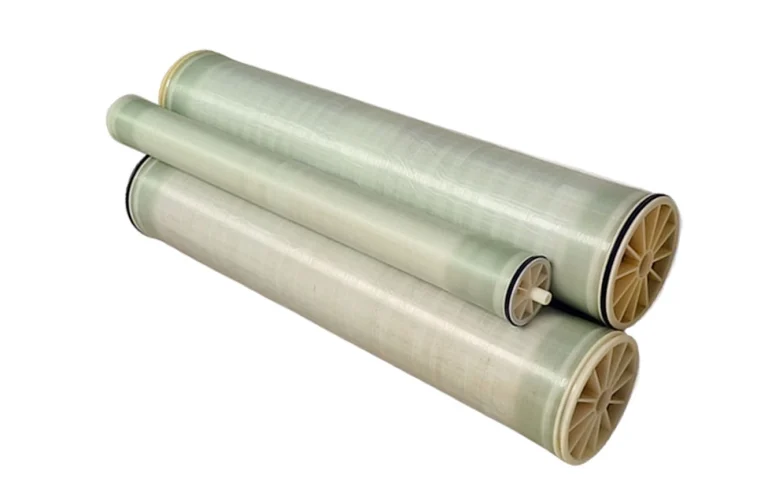
Reverse Osmosis Membrane | BasideWT
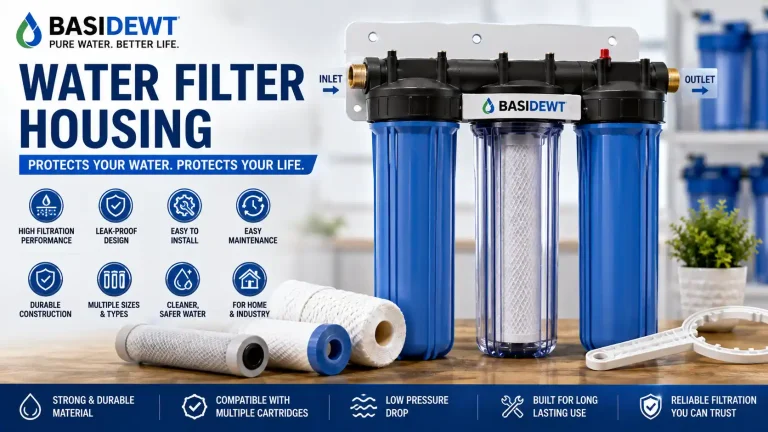
Water Filter Housing: Types, Sizes, Benefits, Installation, Maintenance & Buying Guide

How to Clean a Reverse Osmosis System: A Step-by-Step Guide for Maintenance
Whole House Water Softener Cost
UV Water Sterilizer Parts and Components Explained