BasideWT- Whole Home Water Filtration System & Replacement

Anion Ion Exchange Resin | BasideWT Ion Exchange Resin Suppliers
What is Anion Ion Exchange Resin?
- What it is: Tiny, insoluble plastic beads with a special molecular structure.
- How it works: Each bead has fixed ions (which are permanently attached) and mobile counter-ions (which can be released). When a solution passes through the resin, the counter-ions swap places with similarly charged ions from the solution.
- Example: A common cation exchange resin (charged with sodium, Na⁺) can remove hardness ions like calcium (Ca²⁺) from water. The resin releases Na⁺ and traps the Ca²⁺.
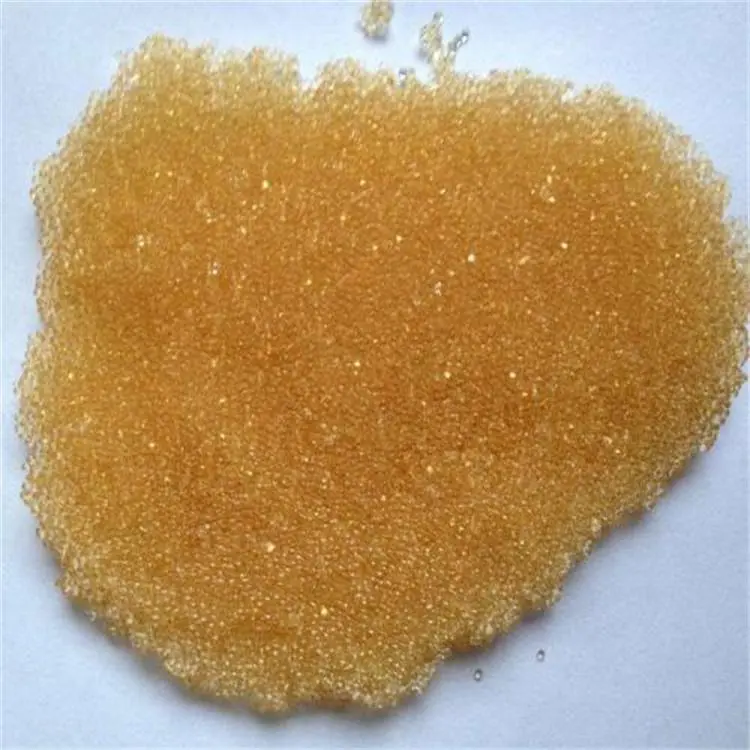
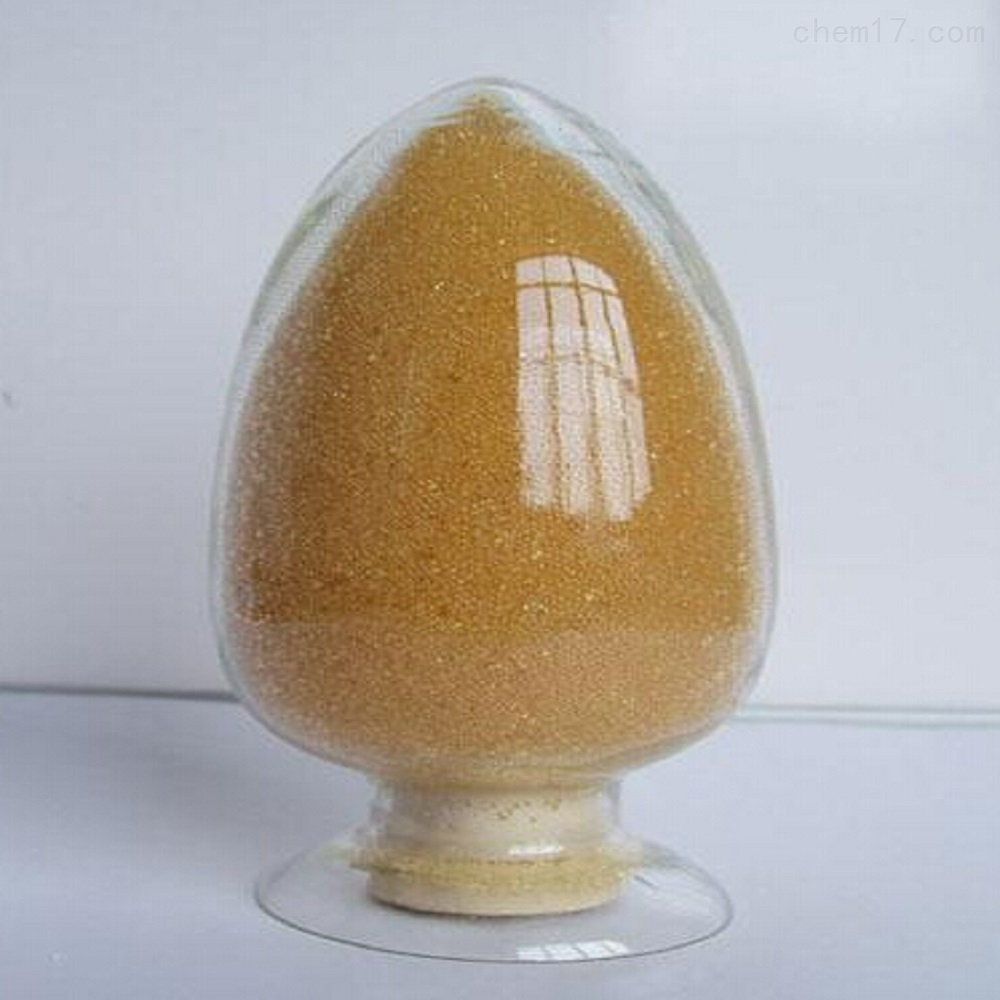
Anion Ion Exchange Resin Key Characteristics:
- Matrix: The backbone polymer (common types: styrene-based or acrylic-based).
- Functional Groups: The chemical sites that give the resin its exchange properties (e.g., sulfonic acid groups for strong acid cation resins, quaternary ammonium groups for strong base anion resins).
- Porosity: Can be gel-type (microporous) or macroporous (with larger, permanent pores for bigger molecules).
Ion Exchange Resins: Product Descriptions & Primary Applications
001*7 (732) Strongly Acidic Styrene-Based Cation Exchange Resin
Primarily used for water softening, desalination, production of pure and high-purity water, hydrometallurgy, separation of rare earth elements, and extraction of antibiotics.
201*7 (717) Strongly Basic Styrene-Based Anion Exchange Resin
Mainly used for the preparation of pure and high-purity water, wastewater treatment, and the extraction of biochemical products.
001*4 (734) Strongly Acidic Styrene-Based Cation Exchange Resin
Primarily used for high-purity water preparation and antibiotic extraction.
201*4 (711) Strongly Basic Styrene-Based Type I Anion Exchange Resin
Mainly used for pure water preparation, extraction of radioactive elements, decolorization of sugar solutions, and preparation of serialized products.
D001 Macroporous Strongly Acidic Styrene-Based Cation Exchange Resin
Primarily used for high-velocity mixed bed condensate polishing, high-purity water treatment, secondary demineralization mixed beds, treatment of water with high organic content, and as a catalyst in organic reactions.
D201 Macroporous Strongly Basic Styrene-Based Anion Exchange Resin
Used for high-velocity mixed bed condensate polishing systems, wastewater treatment, and heavy metal recovery.
D113 Macroporous Weakly Acidic Acrylic-Based Cation Exchange Resin
Primarily used for removing bicarbonate, carbonate, and other alkaline salts from water. When used in combination with 001*7 (732), it significantly reduces water alkalinity and hardness.
D202 Macroporous Type II Strongly Basic Styrene-Based Anion Exchange Resin
Used for the preparation of pure and high-purity water, suitable for high-salinity water sources, extraction of biochemical substances, and decolorization of sugar solutions.
D301 Macroporous Weakly Basic Styrene-Based Anion Exchange Resin
Mainly used for advanced water preparation and treatment of electroplating wastewater containing chromium.
002*7 Super-Strong Styrene-Based Cation Exchange Resin
Mainly used for softening water in boilers under 10 tons, hydrometallurgy, separation of rare elements, and antibiotic extraction.
001*10 (002SC) Strongly Acidic Styrene-Based Cation Exchange Resin
Primarily used as the supporting resin for weak acid resins in double-layer bed configurations.
001*8IR Ultra-Strong Uniform-Pore Double Polystyrene Cation Resin
Primarily used for water softening, pure water preparation, and extraction of substances like lysine and glutamic acid. (Analogous to Amberjet 1200Na)
D002 Catalyst Resin (Dry Hydrogen Form Resin) – Macroporous Strongly Acidic Styrene-Based Cation Exchange Resin
Primarily used as a catalyst in the synthesis of MTBE via etherification of methanol and isobutylene.
D254 (D204) Macroporous Strongly Basic Quaternary Ammonium Type I Anion Exchange Resin
Primarily used in the pharmaceutical industry for drug extraction, such as extracting heparin sodium from intestinal mucosa.
D-61 Macroporous Strongly Acidic Styrene-Based Cation Exchange Resin
Primarily used for high-purity water treatment and, in combination with D-92 resin, for circulating water treatment in ethylene glycol and methyl ethyl ketone production processes.
D-62 Macroporous Strongly Acidic Styrene-Based Cation Exchange Resin
Primarily used in the food fermentation industry (e.g., Vitamin C, MSG production) to improve conversion rates, and for pure water treatment.
D-85 Macroporous Weakly Acidic Acrylic-Based Cation Exchange Resin
Used for the separation and purification of biochemical products.
D301-G Macroporous Weakly Basic Styrene-Based Anion Exchange Resin
Primarily used for deacidification and decolorization in the production of pharmaceuticals, food products, and sugar.
D311 Macroporous Weakly Basic Acrylic-Based Anion Exchange Resin
Primarily used in the food and pharmaceutical industries for extracting biochemical drugs, decolorizing sugar solutions, and decolorizing pharmaceuticals.
D318 Macroporous Weakly Acidic Acrylic-Based Anion Exchange Resin
Primarily used for the extraction and decolorization of biochemical substances such as ascorbic acid (Vitamin C).