BasideWT- Whole Home Water Filtration System & Replacement


What is a TDS Meter?
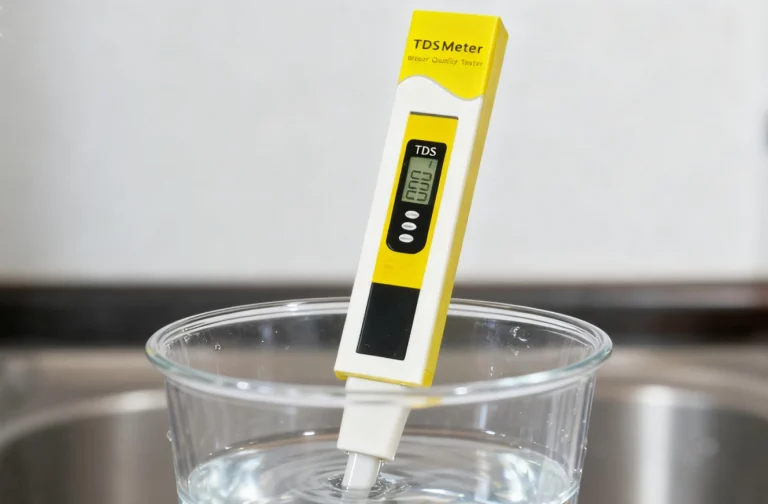
If you care about your water’s purity, you’ve likely asked: what is a TDS meter? Simply put, a TDS (Total Dissolved Solids) meter is a compact, vital tool. It measures the concentration of dissolved particles in water. These particles can include minerals, salts, and metals. Therefore, understanding your water’s TDS level is the first step toward ensuring its safety and quality. BasideWT designs intuitive TDS testers for everyone.
How Does a TDS Tester Actually Work?
A TDS water tester operates on a simple principle: electrical conductivity. Dissolved ions in water conduct electricity. The meter applies a small voltage between two probes. It then measures the current. Higher conductivity means a higher TDS reading. What is a TDS meter’s core function? It converts this conductivity reading into a TDS value, displayed in parts per million (PPM). It’s fast, efficient, and remarkably accurate for a handheld device.
Key Applications: Where is a TDS Meter Used?
This tool is incredibly versatile. People use it in numerous daily scenarios.
- Drinking Water Safety: Check your tap, filtered, or bottled water.
- Aquarium & Hydroponics: Maintain ideal conditions for fish and plants.
- Coffee & Brewing: Achieve perfect taste by monitoring water minerals.
- Pool & Spa Maintenance: Ensure balanced and safe water chemistry.
- RO/DI System Verification: Confirm your water filter is working effectively.
Choosing the Right Water Quality Meter: A Buyer’s Guide
Not all TDS meters are created equal. Consider these factors:
- Accuracy & Calibration: Look for reliable, auto-calibrating models like BasideWT’s.
- Measurement Range: Ensure it covers typical drinking water levels (0-1000 PPM).
- Ease of Use: A clear, backlit screen and one-button operation are essential.
- Build Quality: A durable, waterproof body lasts longer.
- Value: Get a complete kit. Our BasideWT meter comes with a protective case and calibration solution.
However, it’s noteworthy that a low TDS reading isn’t always “good,” and a high reading isn’t always “bad.” Some healthy minerals contribute to TDS. The context of your use is key.
Interpreting Your Results: What Do the Numbers Mean?
So, you have a number on your screen. What next? Here’s a general guide:
- 0-50 PPM: Very pure water, like distilled or highly filtered.
- 50-150 PPM: Ideal for drinking; indicates good filtration with some beneficial minerals.
- 150-250 PPM: Common for municipal tap water.
- 250-500 PPM: Acceptable, but consider filtering if used for drinking.
- 500+ PPM: May indicate hard water or high contamination levels. Further investigation is recommended.
Interestingly, while what is a TDS meter answers the question of “how much” is dissolved, it does not identify “what” is dissolved. For that, more advanced testing is needed.
Best Practices for Using Your BasideWT TDS Pen
To ensure lasting accuracy, follow these simple steps:
- Calibrate Regularly: Use the included 342 PPM solution for precise calibration.
- Clean the Probe: Rinse with clean water after each use to avoid residue buildup.
- Avoid Extreme Temperatures: Test water at room temperature for best results.
- Store Properly: Keep the cap on and store in a dry place.
Counter-intuitively, pure deionized water can damage the probe if stored in it. Always store your meter dry or with a few drops of calibration solution.
RELATED POSTS
What is the Best Disinfection System for Water Treatment?
How to Filter Hard Water at Home?
why is my under sink water filter making noise
How To Filter Arsenic From Water?
The Ultimate Guide to TDS Meters for Drinking Water