BasideWT- Whole Home Water Filtration System & Replacement


UF Filter Membrane: Types, Working, Pore Size, Applications, Maintenance & Buying Guide
A UF filter membrane sits at the center of modern water filtration. It removes bacteria, sediment, and other suspended matter without chemicals, using nothing more than physical pressure and a finely engineered barrier. If you are researching water treatment equipment, choosing a system for your home, or specifying membranes for a commercial project, understanding how ultrafiltration membranes work will help you make a confident decision.
This guide brings together everything you need to understand UF filter membranes in one place. It covers how they work, the different types available, what they remove, where they are used, and how to keep them performing well over time. Wherever a topic goes deeper than this overview allows, we point you toward more detailed resources so you can explore further.
Water treatment can feel technical, especially when terms like MWCO, flux, and transmembrane pressure enter the conversation. This article breaks each concept down in plain language first, then adds the technical detail professionals need. By the end, you should be able to talk confidently about UF filter membranes, understand where they fit in a wider treatment system, and know what questions to ask before buying one.
What Is a UF Filter Membrane?
A UF filter membrane is a semi-permeable barrier used in water treatment to separate suspended solids, bacteria, and other microscopic particles from water. UF stands for ultrafiltration, a membrane filtration process that sits between microfiltration and nanofiltration on the filtration spectrum.
Unlike cartridge filters or sand beds, a UF membrane does not trap particles inside a bed of material. Instead, water passes through thousands of narrow channels in the membrane structure. Particles larger than the membrane’s pore size stay behind, while water and smaller molecules pass through as clean permeate.
Manufacturers build UF membranes from polymer materials such as polyvinylidene fluoride (PVDF), polyethersulfone (PES), or polysulfone. Each material offers a different balance of durability, chemical resistance, and cost. We explore these material differences in more depth elsewhere in this content series, so this section keeps the focus on the basic concept.
How UF Membrane Filtration Works
Ultrafiltration relies on pressure-driven separation. Feed water enters the membrane under moderate pressure, and the membrane structure physically blocks particles based on size. This process is called size exclusion, and it does not involve any chemical reaction.
Water molecules and dissolved substances smaller than the membrane’s pores pass through to become permeate. Larger particles, including bacteria, cysts, colloids, and suspended solids, remain on the feed side and get flushed away during cleaning cycles.
Compared to reverse osmosis, ultrafiltration filtration membrane systems require far less pressure to operate. This makes UF systems energy-efficient and well suited for continuous operation in both residential and industrial settings. A separate article in this series explains the working mechanism in full technical detail, including flow configurations and membrane module design.
UF Membrane Pore Size and What It Means
Pore size is the single most important specification for any UF filter membrane. It determines exactly which particles the membrane can capture and which pass through freely.
Ultrafiltration membranes typically have pore sizes between roughly 0.01 and 0.1 microns, corresponding to a range of about 1 to 100 nanometers. This places them well below the pore size of microfiltration membranes but above nanofiltration and reverse osmosis membranes. Independent technical references confirm that ultrafiltration sits squarely between these two neighboring technologies, and readers who want the underlying separation science can review this detailed overview of ultrafiltration membrane processes and pore size ranges.
Membrane manufacturers also describe UF membranes using molecular weight cut-off, or MWCO, measured in daltons. MWCO indicates the smallest molecular weight a membrane can reliably retain. Because pore size and MWCO vary by manufacturer and membrane grade, always check the specific technical datasheet for any membrane you are considering rather than relying on a single universal number. A dedicated article in this cluster walks through pore size selection in far greater depth.
Types and Configurations of UF Filter Membranes
UF membranes come in several physical configurations, each suited to different flow conditions and maintenance needs. Choosing the right configuration affects flow rate, cleaning frequency, and footprint.
Hollow Fiber UF Membranes
Hollow fiber membranes are the most common configuration in both residential and commercial ultrafiltration systems. Each membrane consists of thousands of narrow, straw-like fibers bundled inside a housing. Water flows either through the inside of the fibers or around their outer surface, depending on the system design.
This configuration offers a large surface area within a compact housing, which improves filtration efficiency. Hollow fiber membranes also allow for straightforward backwashing, making them a practical choice for continuous operation. You can review a dedicated hollow fiber UF membrane product page for construction details and specifications.
Tubular, Spiral-Wound, and Plate Membrane Configurations
Beyond hollow fiber designs, ultrafiltration membranes are also manufactured in tubular, spiral-wound, and plate-and-frame formats. Tubular membranes handle high-turbidity feed water well because their wider channels resist clogging. Spiral-wound membranes pack a large surface area into a compact cylindrical module, though they are more sensitive to particulate fouling.
Plate-and-frame systems are less common in water treatment but appear in some industrial and food-processing applications where membranes need frequent physical access for cleaning or replacement.
Common UF Membrane Materials
Material choice affects chemical resistance, mechanical strength, and expected service life. PVDF membranes are known for strong chemical and oxidation resistance, which makes them popular for demanding water conditions. PES membranes offer high flux rates and a smoother hydrophilic surface that resists fouling. Polysulfone membranes provide a reliable, cost-effective option for general-purpose filtration.
Beyond material choice, engineers also describe UF systems by flow direction. In an inside-out configuration, feed water travels through the center of each hollow fiber, and permeate collects on the outside. In an outside-in configuration, feed water surrounds the fibers, and permeate is drawn through the fiber walls into the core. Each approach has trade-offs in fouling resistance and cleaning ease, which is why manufacturers often recommend a specific flow direction for a given water source.
A dedicated comparison article in this cluster evaluates PVDF and PES membranes side by side, so this overview keeps the discussion at a general level.
What UF Filter Membranes Can and Cannot Remove
Understanding what a UF membrane removes, and what it does not, prevents unrealistic expectations and mismatched system choices.
UF membranes are effective at removing:
- Bacteria and most protozoa, including cysts such as Giardia and Cryptosporidium
- Suspended solids, sediment, and turbidity-causing particles
- Colloidal material and many larger organic molecules
- Most viruses, depending on membrane pore size and MWCO
UF membranes do not remove dissolved salts, minerals, or other dissolved solids. This is an important distinction. Total dissolved solids, commonly referred to as TDS, consist of ions and molecules far smaller than any UF membrane’s pore size. Because these substances stay dissolved in the water rather than existing as suspended particles, they pass straight through the membrane along with the water itself.
If your water contains high TDS, hardness, or dissolved contaminants like heavy metals, a UF membrane alone will not solve the problem. Reverse osmosis, ion exchange, or other dissolved-solids treatment methods handle that job instead. A dedicated article in this series covers exactly what UF membranes remove in far more technical depth.
UF Membrane vs Other Filtration Technologies
Water treatment professionals often compare ultrafiltration against reverse osmosis, nanofiltration, microfiltration, and UV disinfection. Each technology targets a different category of contaminant, and many systems combine two or more for complete treatment.
Reverse osmosis membranes have far smaller pores than UF membranes, allowing them to remove dissolved salts and ions. Because of this, RO systems require significantly higher operating pressure and produce lower flow rates than UF systems. You can explore the range of RO membrane products available if your application also requires dissolved-solids reduction.
UV disinfection, by contrast, does not filter particles at all. It uses ultraviolet light to inactivate microorganisms, leaving physical particles and turbidity in the water. UF membranes physically remove particles, so they often perform better in water with visible sediment or cloudiness.
The table below offers a quick, high-level snapshot of how these membrane technologies compare. Exact figures vary by manufacturer and product line, so treat this as a general reference rather than a specification sheet.
| Technology | Typical Pore Size | Removes Dissolved Solids | Typical Operating Pressure |
|---|---|---|---|
| Microfiltration (MF) | 0.1–10 microns | No | Low |
| Ultrafiltration (UF) | 0.01–0.1 microns | No | Low to moderate |
| Nanofiltration (NF) | 0.001–0.01 microns | Partial (mainly divalent ions) | Moderate |
| Reverse Osmosis (RO) | Below 0.001 microns | Yes | High |
Because these comparisons involve many technical variables, this cluster includes separate articles dedicated to UF versus RO, and UF versus UV and RO together, where you will find detailed, side-by-side breakdowns.
Where UF Filter Membranes Are Used
Ultrafiltration technology serves a wide range of water treatment needs across residential, commercial, and industrial settings.
Drinking water treatment. UF systems remove bacteria and sediment from municipal, well, or surface water sources, producing safe drinking water without adding chemicals.
RO pretreatment. Many reverse osmosis systems rely on ultrafiltration as a pretreatment step. Removing suspended solids and bacteria before water reaches the RO membrane extends membrane life and reduces fouling.
Industrial process water. Manufacturing facilities use UF membranes to filter process water, recycle wastewater, and protect downstream equipment from particulate damage.
Food and beverage processing. UF membranes concentrate proteins, clarify juices, and separate specific molecular components in food production lines.
Municipal and wastewater treatment. Large-scale UF systems handle municipal water supplies and treat wastewater for reuse, often as part of a multi-barrier treatment train.
Rural and well water systems. Private wells often carry bacteria, sediment, or turbidity that municipal water does not. UF membranes give rural households a chemical-free way to treat water drawn directly from the ground.
If you are researching options for home use, our UF water filter and UF water purifier product pages outline configurations built specifically for residential water quality needs.
Benefits of UF Filter Membranes
UF membrane filtration offers several practical advantages over older filtration methods.
- No chemical disinfection required. UF removes bacteria and protozoa physically, reducing dependence on chlorine or other disinfectants.
- Low energy consumption. UF systems operate at much lower pressure than reverse osmosis, which keeps running costs down.
- Consistent water quality. Because separation relies on a fixed pore size, UF systems deliver predictable filtration performance regardless of minor feed water fluctuations.
- Compact footprint. Hollow fiber configurations pack a large filtration surface into a small housing, suiting space-limited installations.
- Long operational life. With proper maintenance, UF membranes can operate reliably for years before replacement becomes necessary.
- Simple integration. UF systems fit easily ahead of RO units, carbon filters, or disinfection stages, making them a natural building block within a larger treatment train rather than a standalone solution.
These advantages explain why ultrafiltration has become a default first step in so many modern water treatment designs, from single-home systems to municipal plants.
Limitations You Should Understand
No filtration technology solves every water quality problem, and UF membranes are no exception.
UF cannot reduce TDS, hardness, or dissolved contaminants. It also performs poorly on water with very high turbidity unless adequate pretreatment removes larger debris first. Membranes can become fouled by oils, scale, or heavy organic loads, which reduces flow rate over time and requires cleaning or eventual replacement.
Feed water quality, temperature, and pressure all influence how consistently a UF system performs. Systems installed without proper pretreatment or maintenance planning tend to underperform their rated specifications.
Factors That Affect UF Membrane Filtration Performance
Several variables determine how well a UF filter membrane performs in real-world conditions.
Feed water quality. Higher turbidity, oil content, or organic load increases fouling risk and reduces flux over time.
Operating pressure. UF membranes function within a defined pressure range. Operating outside that range can reduce efficiency or shorten membrane life.
Temperature. Warmer feed water generally increases permeate flow, while colder water reduces it. Systems designed for one climate may need adjustment for another.
Membrane pore size and surface area. Smaller pores capture finer particles but may reduce flow rate. Larger membrane surface area compensates by increasing total throughput.
Pretreatment. Removing large sediment, iron, or manganese before water reaches the UF membrane significantly extends membrane life and maintains consistent flow.
Because operating pressure and flow rate involve system-specific engineering decisions, dedicated articles in this cluster explore both topics individually.
How to Read a UF Membrane Datasheet
Every UF filter membrane comes with a technical datasheet, and knowing how to read it saves you from guesswork later. A few specifications matter most.
Nominal pore size or MWCO tells you the smallest particle size the membrane reliably captures. Compare this figure against your water quality goals rather than choosing the smallest number by default, since tighter pore sizes also reduce flow.
Rated flux describes how much permeate the membrane produces per unit of surface area under specified conditions. Real-world flux drops as fouling accumulates, so treat the rated number as a starting point, not a guarantee.
Maximum operating pressure and temperature define the safe operating envelope. Running a membrane outside these limits can cause permanent damage.
Chemical resistance notes which cleaning agents and pH ranges the membrane material can tolerate. This detail matters most when your feed water needs frequent or aggressive chemical cleaning.
Fouling, Cleaning, and Backwashing Basics
Membrane fouling happens when particles, organic matter, or scale accumulate on or inside the membrane surface, gradually reducing flow. Fouling is a normal part of UF operation rather than a sign of failure, and most systems are designed to manage it through routine cleaning.
Backwashing reverses the flow of water through the membrane at intervals, dislodging accumulated particles from the fiber surface. Many UF systems automate this process, running short backwash cycles every few minutes to maintain steady performance.
Beyond backwashing, periodic chemical cleaning removes fouling that backwashing alone cannot dislodge, such as biofilm or mineral scale. Cleaning frequency depends on feed water quality and system design. This series includes separate articles dedicated to fouling causes and cleaning procedures, covering chemical selection and cleaning schedules in detail.
How Long a UF Membrane Lasts and When to Replace It
UF membrane lifespan depends on feed water quality, maintenance consistency, and operating conditions, so it varies between installations. Many membranes remain effective for several years under proper care, though heavily fouled or poorly maintained systems may need replacement sooner.
Watch for a steady drop in flow rate that cleaning cannot restore, a decline in filtration performance, or visible membrane damage. These signs typically indicate that replacement, rather than further cleaning, is the right next step. A dedicated lifespan and replacement article in this cluster covers warning signs and replacement planning in more detail.
Choosing the Right UF Filter Membrane
Selecting a UF filter membrane involves matching membrane specifications to your water source, intended use, and system requirements.
Start by testing your feed water to understand turbidity, bacteria levels, and any dissolved contaminants that UF alone will not address. Next, consider required flow rate, since undersized membranes struggle to keep pace with household or facility demand. Finally, weigh membrane material against your water’s chemistry, since chlorine tolerance and chemical resistance vary between PVDF, PES, and polysulfone options.
For most buyers, working with a supplier that offers a complete UF filter membrane lineup makes it easier to match specifications to your exact application rather than settling for a generic, one-size-fits-all product. If your project also needs housings, pumps, or complementary components, browsing a broader water filtration system selection can help you plan a complete setup rather than sourcing parts individually.
Before you commit to a specific product, it also helps to confirm a few practical details with your supplier. Ask about certified test data for the pore size or MWCO, expected flux under your actual water conditions rather than ideal lab conditions, and the recommended cleaning chemicals for your membrane material. Suppliers with manufacturing experience can usually tell you within a few minutes whether a given membrane suits your feed water, which saves you from costly trial and error after installation.
It also pays to think beyond the membrane itself. Housing size, pump capacity, and pretreatment stages all affect how well the finished system performs, so plan the full setup rather than treating the membrane as an isolated purchase.
This overview intentionally stays general. A dedicated buying guide elsewhere in this cluster walks through selection criteria step by step, including sizing calculations and application-specific recommendations.
Residential vs Commercial and Industrial UF Membrane Use
Residential UF systems typically prioritize compact size, low maintenance, and steady low-flow performance suited to household water demand. Homeowners often choose UF systems for well water treatment or as a pretreatment stage ahead of an RO unit under the sink.
Commercial and industrial UF systems, by comparison, need to handle much higher flow volumes and more variable feed water conditions. These systems often include automated backwashing, larger membrane arrays, and more robust pretreatment stages to manage continuous operation.
Because system sizing, automation needs, and maintenance schedules differ significantly between these use cases, this cluster includes a dedicated article comparing residential and commercial UF membrane applications directly.
Final Thoughts
A UF filter membrane offers a reliable, chemical-free way to remove bacteria, sediment, and suspended particles from water. It works through simple size-exclusion filtration, requires relatively low operating pressure, and fits into everything from household drinking water systems to large industrial treatment plants.
Just remember that ultrafiltration handles particles and microorganisms, not dissolved solids. If your water also needs TDS reduction, pair your UF system with reverse osmosis or another dissolved-solids treatment method.
Whether you are troubleshooting an existing system, comparing membrane materials, or planning a new installation, the topics introduced in this guide connect to deeper, more focused resources throughout this content series. Use this article as your starting point, and explore the linked topics as your specific questions come up.
RELATED POSTS
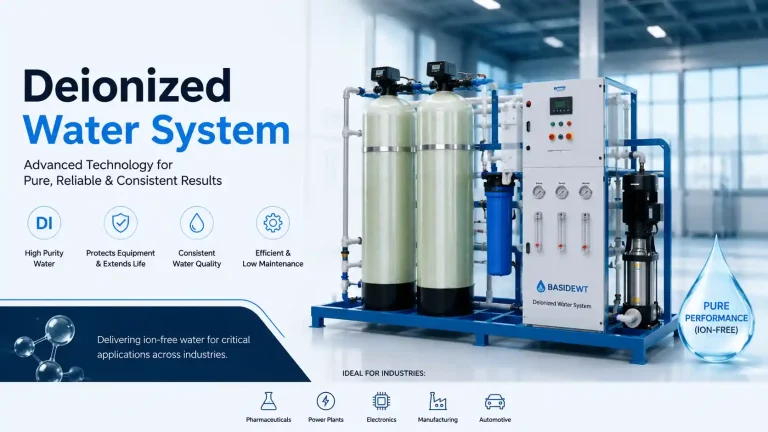
Deionized Water System: The Complete Guide for Car Wash, Window Cleaning & Industrial Use
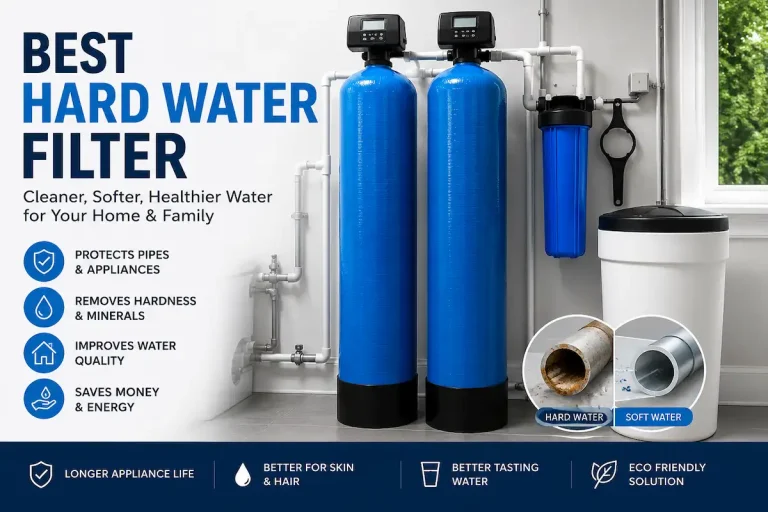
Hard Water Filter: A Complete Guide to Cleaner, Softer Water at Home
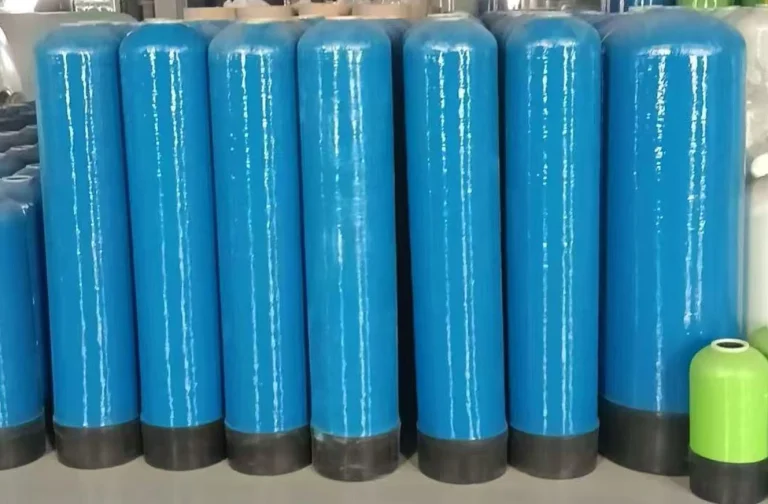
Frp Water Storage Tank | BasideWT
RO Water System Cost Guide: Prices, Installation & Long-Term Value
High Flow Water Filter Housing: Applications, Benefits & Selection Guide