BasideWT- Whole Home Water Filtration System & Replacement


UF Membrane vs UV vs RO: Which Water Treatment Method Is Better?
Choosing a water treatment method starts with one question: what is actually in your water? UF membrane, UV, and RO solve different problems, and confusing them leads to wasted money or unsafe water. This guide compares UF membrane vs UV vs RO side by side, so you can match the right technology to your feed water and treatment goals.
Each technology plays a distinct role in a water treatment train. UF membrane filtration physically removes particles and microorganisms. UV water treatment disinfects without removing anything. Reverse osmosis reduces dissolved contaminants at the molecular level. Understanding these differences prevents costly mistakes, whether you are treating well water at home or designing an industrial process line.
Quick Answer: UF vs UV vs RO
Here is the short version before the technical detail.
UF membrane filtration physically blocks suspended solids, bacteria, and larger viruses using a porous membrane. It does not reduce TDS or dissolved salts.
UV water treatment inactivates bacteria and viruses using ultraviolet light. It removes nothing physically and requires clear, pre-filtered water to work well.
Reverse osmosis pushes water through a dense semi-permeable membrane. It reduces dissolved salts, most heavy metals, and many organic contaminants, alongside biological contaminants.
No single method covers every contaminant category alone. Many effective systems combine two or three of these technologies in sequence.
What Is UF Membrane Treatment?
Ultrafiltration is a physical filtration process. Water passes through a semi-permeable membrane under low pressure. The membrane’s pores, typically between 0.01 and 0.1 micron, block particles larger than the pore size while letting water and small dissolved molecules through.
BasideWT covers UF membrane fundamentals in detail in the complete UF filter membrane buying guide, which explains membrane types, pore sizes, and material choices.
UF membranes retain suspended solids, colloids, bacteria, and many viruses, while allowing dissolved minerals and salts to pass through the permeate. This is why UF is often described as a physical barrier rather than a chemical or disinfection process.
What Is UV Water Treatment?
UV water treatment uses ultraviolet light, typically in the UV-C range, to disinfect water. It does not filter anything out of the water physically. Instead, UV light damages the DNA and RNA of microorganisms, preventing them from reproducing.
Because UV does not remove particles, cloudy or turbid water blocks the light from reaching organisms effectively. UV systems therefore need clear, pre-filtered water as feed. This is one reason UV is rarely used as a standalone treatment method for untreated source water.
What Is Reverse Osmosis?
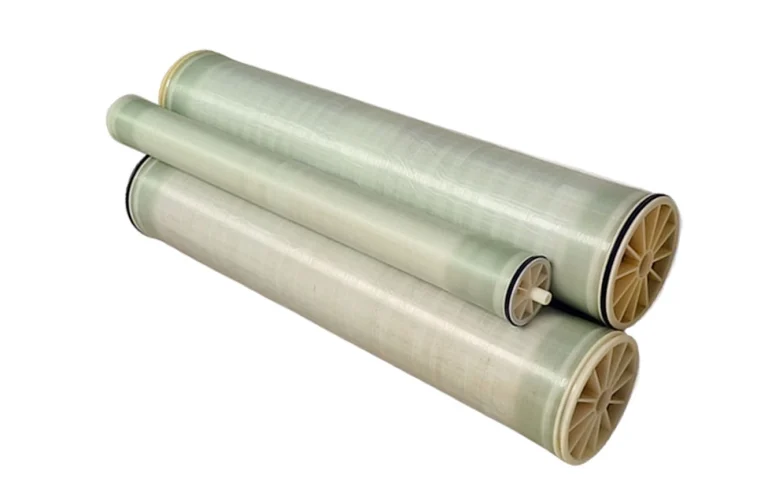
Reverse osmosis is a pressure-driven membrane process. Water is forced through a dense, semi-permeable RO membrane with pores around 0.0001 micron, far smaller than UF pores. This membrane rejects dissolved salts, many organic molecules, and most microorganisms, producing purified permeate on one side and a concentrated reject stream on the other.
RO systems typically require significantly higher operating pressure than UF systems. As a result, RO reduces total dissolved solids substantially, something neither UF nor UV can do on its own.
UF vs UV vs RO: Key Differences
The three technologies differ in mechanism, target contaminants, and energy demand. UF relies on physical size exclusion. UV relies on light-based disinfection. RO relies on pressure-driven molecular separation.
These differences directly affect what each system can and cannot achieve. A UF membrane will not disinfect water the way UV does, and neither UF nor UV will lower TDS the way RO does. For a deeper look at how UF specifically compares to RO in terms of membrane structure and rejection performance, see UF membrane vs RO membrane: what’s the difference.
Comparison Table
| Factor | UF Membrane | UV Treatment | Reverse Osmosis |
|---|---|---|---|
| Mechanism | Physical size-exclusion filtration | Ultraviolet light disinfection | Pressure-driven membrane separation |
| Pore/process scale | 0.01–0.1 micron | Not applicable (light-based) | About 0.0001 micron |
| Removes suspended solids | Yes | No | Yes |
| Removes bacteria | Yes | Inactivates, does not remove | Yes |
| Removes/inactivates viruses | Partially, depends on pore size | Yes, when water is clear | Yes |
| Reduces TDS/dissolved salts | No | No | Yes, significantly |
| Removes hardness (calcium/magnesium) | No | No | Yes, largely |
| Removes heavy metals | Minimal | No | Yes, largely |
| Operating pressure | Low | Not pressure-driven | High compared to UF |
| Energy use | Low to moderate | Low, mainly lamp power | Higher, due to pump pressure |
| Wastewater/reject stream | Minimal | None | Yes, concentrate stream |
| Water recovery | High | Not applicable | Lower than UF |
| Consumables | Membrane cleaning/replacement | UV lamp replacement | Membrane replacement, pre-filters |
| Typical role | Standalone or RO pretreatment | Final disinfection step | Dissolved-contaminant reduction |
What Does UF Remove?
UF membrane filtration removes suspended solids, turbidity-causing particles, colloids, and most bacteria. Many UF membranes also retain larger viruses, though virus rejection varies by membrane pore size and structure.
UF does not remove dissolved salts, most dissolved metals, or many dissolved organic compounds. It also retains beneficial minerals in the water, which some households and industries consider an advantage over RO. A full breakdown of what UF filtration removes appears in what contaminants does UF membrane filtration remove.
What Does UV Remove or Inactivate?
UV treatment inactivates bacteria, viruses, and protozoan cysts by disrupting their genetic material. Importantly, UV does not physically remove these organisms from the water. Dead or inactivated cells remain in the water stream.
UV provides no reduction in TDS, dissolved salts, sediment, or chemical contaminants. It also does not remove chlorine, taste, or odor issues. According to the CDC, ultraviolet treatment systems that filter water before UV disinfection perform better than those without pre-filtration, since particles can shield microorganisms from the light. You can read more from the CDC’s overview of home water treatment systems.
What Does RO Remove?
Reverse osmosis reduces total dissolved solids, dissolved salts, many heavy metals, nitrates, fluoride, and a wide range of organic contaminants. It also rejects bacteria and viruses in most cases, functioning as both a filtration and disinfection barrier.
RO does not remove all dissolved gases, and some low-molecular-weight organic compounds can pass through depending on membrane type. RO also strips beneficial minerals along with contaminants, which is why some systems add remineralization after treatment.
UF vs UV vs RO for TDS Reduction
This is one of the clearest differentiators among the three technologies. UF membranes do not reduce TDS at all, since dissolved ions pass freely through the pores. UV treatment has zero effect on TDS, because it does not filter anything.
RO is the only one of the three that meaningfully reduces TDS. A well-maintained RO system typically brings high TDS feed water down substantially, though the exact percentage depends on membrane type, feed concentration, and system pressure.
UF vs UV vs RO for Bacteria and Viruses
UF physically captures most bacteria through size exclusion, and it captures many viruses depending on pore size and membrane integrity. However, UF cannot guarantee complete biological safety on its own for every water source.
UV inactivates bacteria and viruses effectively, provided the water is clear and the UV dose is sufficient. Cloudy water reduces UV performance significantly, since suspended particles block light transmission.
RO also rejects most bacteria and viruses through its dense membrane structure, in addition to reducing dissolved contaminants. This dual capability is why RO is often selected when both biological and chemical contamination are concerns.
UF vs UV vs RO for Dissolved Contaminants
Dissolved contaminants include salts, heavy metals, nitrates, and many organic chemicals. UF membranes have essentially no effect on these substances, since their pore size is too large to reject dissolved ions.
UV treatment similarly has no impact on dissolved contaminants, since it disinfects rather than filters. RO stands apart here, rejecting a wide range of dissolved substances through its dense, non-porous membrane structure. This is the primary reason RO is chosen for high-TDS or heavy-metal-affected water sources.
UF vs UV vs RO for Suspended Solids
Suspended solids and turbidity are UF’s strength. The membrane physically traps particles above its pore size, producing consistently clear permeate even from moderately turbid feed water.
UV cannot remove suspended solids, and turbidity actually reduces UV effectiveness by shielding microorganisms from light exposure. RO membranes can also remove suspended solids, but their fine pore structure fouls quickly if raw water carries high turbidity, which is why UF pretreatment is common ahead of RO systems.
Pressure, Energy, and Water Waste Comparison
UF operates at relatively low pressure, typically under 30 psi in many residential and light commercial applications, and produces minimal reject water. This makes it energy-efficient compared to RO.
UV systems are not pressure-driven at all. Their energy use comes mainly from powering the UV lamp, which is generally lower than RO pump energy. UV also produces no reject water, since nothing is filtered out physically.
RO requires higher operating pressure to overcome osmotic pressure and push water through its dense membrane. This translates into higher energy consumption and a concentrate reject stream that must be managed, especially at industrial scale.
Maintenance and Replacement Comparison
UF membranes need periodic cleaning to manage fouling, along with eventual membrane replacement based on flux decline and pressure differential. Maintenance frequency depends heavily on feed water quality.
UV systems require lamp replacement on a regular schedule, since UV output naturally decreases over the lamp’s service life even before failure. Quartz sleeves also need periodic cleaning to maintain light transmission. BasideWT’s category page for UV sterilizers outlines available lamp and sleeve options for different flow rates.
RO systems require pre-filter replacement, periodic membrane cleaning, and eventual RO membrane replacement, typically driven by declining rejection performance or rising differential pressure. Because RO membranes handle dissolved contaminants, fouling and scaling risks are generally higher than with UF.
Which Is Better for Drinking Water?
For drinking water, the right technology depends on source water quality. If the water is biologically contaminated but low in dissolved salts, UF combined with UV disinfection often provides adequate protection while preserving natural minerals.
If the water also carries elevated TDS, heavy metals, or chemical contaminants, RO becomes necessary. Many household drinking water systems combine sediment pre-filtration, RO, and a UV or carbon polishing stage for comprehensive protection. BasideWT’s under-sink RO purifier with UV sterilization illustrates this layered approach for residential kitchens.
Which Is Better for Well Water?
Well water often carries both biological risk and variable dissolved-mineral content, which makes a combined approach practical. UF handles turbidity and bacteria reduction, while UV addresses biological safety at the point of use.
If well water testing shows high TDS, nitrates, arsenic, or hardness, RO treatment becomes the more appropriate solution for dissolved contaminant reduction. A water test should always guide this decision rather than assumptions about well water quality.
Which Is Better for Commercial Water Treatment?
Commercial applications vary widely, from food and beverage processing to boiler feedwater. UF frequently serves as a pretreatment step protecting downstream equipment from fouling, particularly ahead of RO systems.
UV commonly provides final-stage disinfection in food service, bottling, and process water applications where chemical-free disinfection matters. RO is typically selected when dissolved solids must be reduced for product quality, equipment protection, or regulatory compliance. BasideWT’s UF filter membrane product line is commonly specified for exactly this pretreatment role.
Can UF, UV, and RO Be Used Together?
Yes, and combining these technologies is common in well-designed water treatment systems. A typical treatment train places UF ahead of RO to protect the RO membrane from particulate fouling, then adds UV as a final polishing or disinfection step.
This layered approach addresses limitations that exist when each technology works alone. UF handles particles and much of the biological load, RO reduces dissolved contaminants, and UV provides an added disinfection barrier against any microorganisms that pass through earlier stages.
When a Combined Treatment System Makes More Sense
A combined system makes sense when feed water carries multiple contaminant categories at once, such as turbidity plus high TDS plus biological risk. It also makes sense in applications where regulatory or process purity requirements demand multiple barriers rather than a single treatment step.
For lower-risk applications, such as clear municipal water needing only disinfection, a single technology may be sufficient. Feed water testing and application requirements should always guide this decision rather than defaulting to the most complex system available.
Pros and Cons of UF
UF offers low energy use, minimal wastewater, and preservation of beneficial minerals in the treated water. It also handles moderately turbid feed water well, making it a strong standalone or pretreatment option.
However, UF cannot reduce TDS, dissolved salts, or many dissolved chemical contaminants. It also provides incomplete virus protection compared to RO, depending on membrane pore size.
Pros and Cons of UV
UV disinfects without chemicals and without altering water taste or mineral content. It also uses relatively little energy and produces no reject water stream.
On the downside, UV removes nothing physically, requires clear pre-filtered water, and provides zero protection against dissolved chemical contaminants. Lamp replacement is also a recurring maintenance cost.
Pros and Cons of RO
RO delivers the strongest reduction in dissolved solids, heavy metals, and many organic contaminants among the three technologies. It also provides strong biological rejection as a secondary benefit.
The tradeoffs include higher energy consumption, higher operating pressure, reject water that must be managed, and removal of beneficial minerals unless remineralization is added afterward.
How to Choose Between UF, UV, and RO
Start with a water quality test rather than guessing based on symptoms like taste or clarity. Test results reveal whether turbidity, biological contamination, or dissolved solids are the primary concern.
Next, match the technology to the dominant contaminant category. Suspended solids and turbidity point toward UF. Biological risk in otherwise clear water points toward UV. Elevated TDS, hardness, or heavy metals point toward RO.
Finally, consider whether your application needs multiple contaminant categories addressed simultaneously. Many real-world situations call for a combined system rather than a single technology.
Decision Guide / Selection Checklist
Use this checklist alongside your water test results.
- Cloudy or turbid water with unknown biological risk: consider UF as a first-stage barrier.
- Clear water needing biological disinfection only: consider UV.
- High TDS, hardness, or heavy metals: consider RO.
- Multiple contaminant categories present: consider a combined UF, RO, and UV treatment train.
- Protecting downstream RO equipment from fouling: add UF pretreatment.
- Minimizing wastewater generation: prioritize UF, since it produces less reject water than RO.
Conclusion
The UF membrane vs UV vs RO comparison ultimately comes down to what your water actually contains. UF excels at removing suspended solids and most bacteria while preserving minerals. UV disinfects efficiently but removes nothing physically. RO delivers the deepest reduction in dissolved contaminants, at the cost of higher energy use and reject water.
Rather than picking one technology as universally superior, match the treatment method to your water test results and application requirements. In many real-world systems, UF, UV, and RO work best as complementary stages within a single treatment train rather than as competing standalone options.
FAQs
Is UF better than UV for water purification?
Neither is universally better. UF physically removes particles and most bacteria, while UV disinfects without removing anything. Many systems use both together for complete protection.
Is RO better than UF?
RO reduces dissolved contaminants that UF cannot touch, but RO uses more energy and generates reject water. UF is often the better choice when dissolved-solid reduction is not required.
Does UF remove TDS?
No. UF membranes do not reduce total dissolved solids, since dissolved ions pass through the pores along with water.
Does UV reduce TDS?
No. UV treatment disinfects water but has no effect on dissolved solids, salts, or minerals.
What does RO remove that UF cannot?
RO removes dissolved salts, most heavy metals, nitrates, fluoride, and many dissolved organic compounds, none of which UF membranes reject.
Is UV enough for drinking water?
UV alone is often insufficient for untreated or turbid source water, since particles block UV light and UV does not address dissolved contaminants. UV works best as one stage within a larger treatment system.
Can UF, UV, and RO be used together?
Yes. A common configuration places UF ahead of RO for pretreatment, followed by UV as a final disinfection stage.
Which is better for well water?
It depends on test results. Biologically contaminated well water with low TDS may only need UF and UV, while well water with elevated TDS or heavy metals typically needs RO.
Which system is best for dissolved salts?
Reverse osmosis is the only one of the three technologies designed to reduce dissolved salts significantly.
Which treatment method is best for bacteria?
UV and RO both provide strong bacteria control, though through different mechanisms. UF also removes most bacteria physically, though its performance varies with membrane pore size.