BasideWT- Whole Home Water Filtration System & Replacement


What Is a Water Filter Housing? Complete Guide for Beginners
A water filter housing is the container that holds a replaceable filter cartridge and lets water pass through it under pressure. It does not filter water on its own. Instead, it protects the cartridge, seals the system, and directs the flow so filtration can actually happen.
If you have ever looked at a plumbing diagram or a filtration cabinet and wondered what that plastic or steel cylinder near the pipes was for, this article will clear that up. We will keep things simple and beginner-friendly, so you walk away with a solid grasp of what a water filter housing is, what it does, and where it fits into a larger filtration setup.
What Is a Water Filter Housing? (Simple Definition)
A water filter housing is a sealed vessel, usually cylindrical, that holds a filter cartridge in place while water flows through it. Water enters through an inlet port, passes through the cartridge inside, and exits through an outlet port. The housing supplies pressure containment and structure; the cartridge supplies the actual filtration.
This distinction matters. Many beginners assume the housing itself removes contaminants. It does not. The cartridge inside does the filtering work. The housing simply makes that work possible under real plumbing pressure.
To picture it more concretely, imagine a coffee filter. The paper filter traps the grounds, but you still need a dripper or basket to hold that paper filter in place while hot water pours through it. A water filter housing plays the same supporting role, just built for continuous pipeline pressure instead of a single pour. Without that supporting structure, even the best filter cartridge on the market would be useless in a real plumbing system.
This role becomes clearer once you see it in an everyday setting. A homeowner installing a drinking water filter under the kitchen sink, for example, is really installing a small housing that holds a sediment or carbon cartridge and connects directly to the cold water line. The housing itself rarely changes. What changes over time is the cartridge inside it.
Why Filter Cartridges Need a Housing
A loose filter cartridge cannot do much by itself. It has no way to contain water pressure, no way to seal against leaks, and no way to connect to a pipe. For this reason, every cartridge-based filtration setup needs a water filter housing that can hold the cartridge securely and manage the flow around it.
Think of the housing as a frame. Without it, water would simply bypass the filter media or leak out around the edges. With it, the entire flow is forced through the cartridge before it reaches your tap, appliance, or downstream equipment. This is also why housings are built to a specific pressure rating. A poorly matched housing can crack, leak, or allow untreated water to sneak past the seal.
How a Water Filter Housing Fits Into a Filtration System
In a typical setup, the housing sits inline with the water supply, usually right after the main shutoff valve or before a specific appliance. Water flows in one side, moves through the cartridge, and leaves clean on the other side.
The basic sequence looks like this:
- Water enters the housing through the inlet port.
- The housing directs the water into the filter cartridge.
- The cartridge traps sediment, chlorine, or other contaminants depending on its media type.
- Filtered water exits through the outlet port and continues into your plumbing.
Because the entire water supply has to pass through this narrow path, the housing needs to hold its shape under constant pressure. A cracked housing or a loose cap does not just cause a leak. It also lets unfiltered water slip past the cartridge, which defeats the purpose of the whole system. This is why manufacturers rate every housing for a maximum working pressure and recommend regular inspection of the seal.
This is a simplified overview. If you want a full breakdown of pressure behavior, flow direction, and internal mechanics, our step-by-step guide on how a water filter housing works covers that in more depth.
Basic Components of a Water Filter Housing
Most housings share the same core parts, even though sizes and materials vary widely. Knowing these terms will help you follow product descriptions and installation instructions later on.
| Component | Function |
|---|---|
| Body (Sump) | Holds the filter cartridge and contains the bulk of the water under pressure |
| Cap (Head) | Connects to the plumbing and seals the body when tightened |
| Inlet Port | Allows unfiltered water to enter the housing |
| Outlet Port | Allows filtered water to exit toward your plumbing |
| O-Ring Seal | Creates a watertight seal between the body and cap |
| Mounting Bracket | Secures the housing to a wall or frame for stability |
Body (Sump)
The body, sometimes called the sump or bowl, is the lower section where the cartridge sits. It is designed to withstand the working pressure of your water supply without cracking or deforming.
Cap (Head)
The cap threads onto the body and usually contains the inlet and outlet ports. This is the part your plumbing actually connects to.
O-Ring Seal
A small rubber ring sits between the cap and the body. It prevents leaks when the housing is closed and pressurized. Over time, this seal can wear out and may need replacing, which is a maintenance detail covered elsewhere in our resource library.
Inlet and Outlet Ports
These threaded openings connect the housing to your existing plumbing. In most designs, the inlet sits on one side of the cap and the outlet on the other, so water is forced to travel down through the cartridge and back up before it can exit. Some housings label these ports with directional arrows, which helps avoid installation mistakes.
Mounting Bracket
Larger housings, especially whole-house units, are heavy once filled with water. A mounting bracket secures the housing to a wall or frame so the weight does not pull on the plumbing connections. Smaller point-of-use housings sometimes skip this component if they are supported entirely by rigid piping.
The Relationship Between the Housing and the Filter Cartridge
The housing and the cartridge work as a pair, but they serve different jobs. The housing is reusable and rarely needs replacement. The water filter cartridge inside it is a consumable part that gets swapped out on a regular schedule as it becomes loaded with trapped particles.
This is one of the most useful things for a beginner to understand early on. You buy the housing once, in most cases. You buy new cartridges repeatedly, based on your water quality and usage. Because the housing dictates cartridge size and diameter, choosing the right housing from the start avoids compatibility headaches down the road.
Common Configurations You’ll Encounter
Water filter housings show up in a few basic arrangements, depending on the filtration goal.
- Single housing: One housing holding one cartridge, often used for a single filtration stage such as sediment removal.
- Dual or triple housing setups: Two or three housings connected in sequence, each holding a different cartridge type, for example sediment followed by carbon.
- Whole-house housings: Larger housings installed at the main water line to filter all water entering a property. Our whole house water filter housing line is built specifically for this purpose.
- Clear or transparent housings: Housings made from clear material so you can visually check cartridge condition without opening the unit, similar to our clear water filter housing options.
These are only the basic shapes you will run into as a beginner. A full breakdown of housing types, including size standards and material differences, deserves its own dedicated guide rather than a quick summary here.
Where Water Filter Housings Are Used
Water filter housings show up across a wide range of settings, from a single kitchen tap to a full industrial pre-treatment line.
Residential Applications
At home, housings are commonly used for whole-house filtration, under-sink drinking water systems, and point-of-use setups near a specific faucet. A homeowner dealing with sediment or chlorine taste in tap water, for example, might install a single housing right after the main shutoff valve.
A whole-house setup works a little differently. Instead of sitting under one sink, the housing installs at the point where water enters the building, so every fixture in the home benefits from filtered water. This arrangement typically calls for a larger housing than a single under-sink unit, simply because it has to handle the combined flow of the entire property rather than one tap.
Commercial Applications
Restaurants, offices, and small facilities often rely on housings to protect equipment such as ice machines, coffee brewers, and espresso systems from sediment and scale-forming minerals. In these settings, flow rate matters more, so housings tend to be larger or arranged in multiple stages. A commercial filtration line in a café, for instance, might use a sediment housing followed by a carbon housing in sequence, so incoming water is progressively cleaned before it reaches the espresso machine.
Industrial Applications
Manufacturing plants, food processing lines, and pre-treatment stages ahead of reverse osmosis systems frequently use larger-capacity housings. A facility running a high-volume production line, for instance, might rely on a high flow cartridge filter housing to handle greater throughput without becoming a bottleneck. According to a technical overview from Watertech Shanghai, pre-filtration housings placed ahead of finer membrane stages help extend the service life of downstream equipment by reducing particulate load early in the process.
What Beginners Often Misunderstand
A few misconceptions come up again and again when people first learn about water filter housings.
The housing does not filter water by itself. It only holds and protects the cartridge that does the actual filtering. Buying a housing without the right cartridge inside will not improve your water quality.
A bigger housing is not automatically better. Housing size should match your flow rate and available cartridge length, not just your budget or available space.
Housings are not universal. Cartridge diameter, connection thread size, and port configuration all need to match. A housing built for a 10-inch cartridge will not accept a 20-inch one, for example.
Clear housings are not automatically better than opaque ones. Transparency helps with visual inspection, but material strength, pressure rating, and UV exposure matter just as much for long-term performance.
A housing lasts much longer than a cartridge. Many first-time buyers expect to replace the whole unit on the same schedule as the filter media inside. In practice, a well-maintained housing can last for years, while the cartridge inside gets swapped every few months depending on water quality and usage.
What to Understand Before Choosing a Water Filter Housing
Before you start comparing products, it helps to have a basic sense of what factors actually matter. This is not a full buying framework, just the essentials worth knowing as a beginner.
- Application: Residential, commercial, or industrial use changes flow requirements and durability needs.
- Water source: Municipal water, well water, and pre-treated water each bring different contaminant loads.
- Cartridge compatibility: The housing must match your intended cartridge size and micron rating.
- Flow requirement: Higher demand usually means a larger housing or a multi-housing setup.
- Connection size: Inlet and outlet port sizes need to match your existing plumbing.
- Material: Polypropylene, reinforced nylon, and stainless steel each offer different durability and chemical resistance.
- Pressure rating: The housing must be rated for your system’s working pressure with a reasonable safety margin.
Each of these points connects to a much larger topic that we cover in dedicated articles, including sizing, materials, and pressure ratings specifically. For now, this list should be enough to help you recognize what matters once you start looking at real products, including the range of options in our industrial bag filter housing lineup for heavier-duty applications.
Conclusion
A water filter housing is the container that holds a filter cartridge and directs water safely through it under pressure. On its own, it does not remove contaminants. Paired with the right cartridge, it becomes the structural backbone of nearly every cartridge-based filtration system, from a single kitchen tap to a full industrial pre-treatment line.
Understanding this relationship between the housing and the cartridge is the first real step toward choosing the right filtration setup. As your water needs get more specific, whether that means sizing, materials, or application type, our complete BasideWT resource library breaks each of those topics down in detail so you can move from the basics to a confident buying decision.
RELATED POSTS
Reverse Osmosis Membrane | BasideWT
Whole House Water Filter Housing: Benefits, Types & Buying Guide
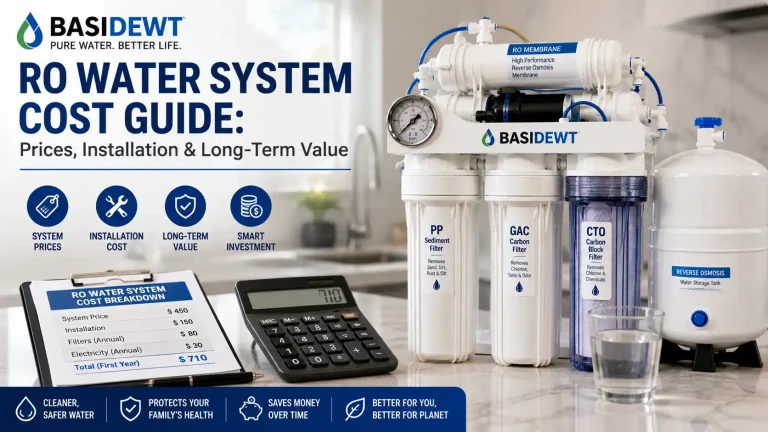
RO Water System Cost Guide: Prices, Installation & Long-Term Value
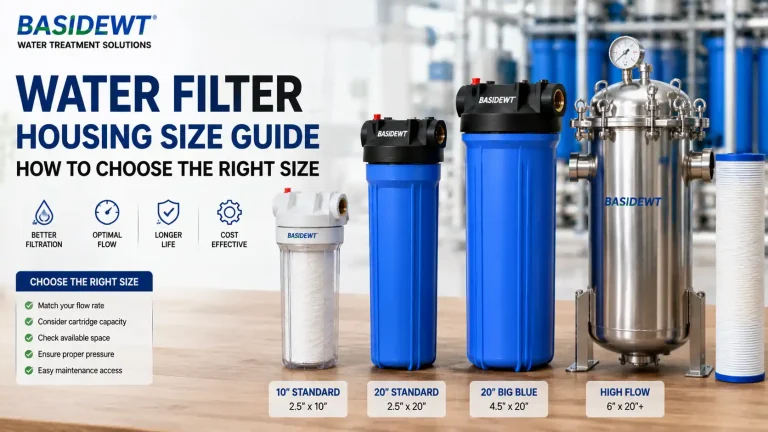
Water Filter Housing Size Guide: How to Choose the Right Size
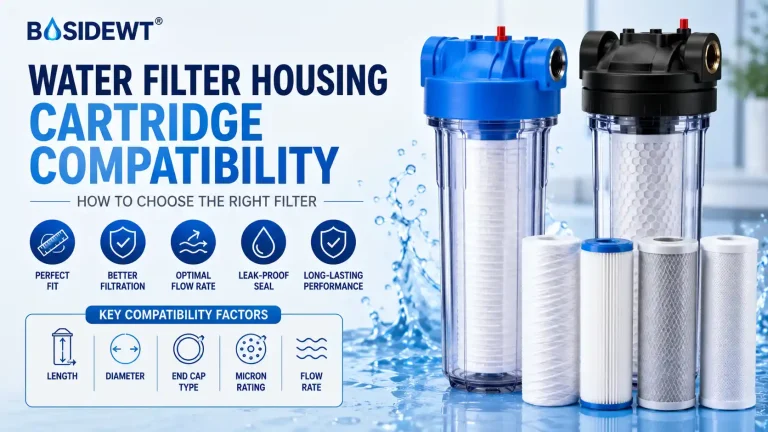
Water Filter Housing Cartridge Compatibility: How to Choose the Right Filter