BasideWT- Whole Home Water Filtration System & Replacement


UF Membrane Replacement: When, Why & How to Replace It
UF membrane replacement keeps a filtration system running at its rated performance. Every ultrafiltration membrane eventually reaches a point where cleaning no longer restores flow, pressure, or water quality. At that point, replacement is the only reliable fix.
This guide explains when replacement becomes necessary, how to pick a compatible membrane, and how to install it correctly. If you want the full picture of membrane types and specifications first, our UF filter membrane guide covers that ground in detail.
What Is UF Membrane Replacement?
UF membrane replacement means removing a worn, damaged, or underperforming ultrafiltration membrane and installing a new one. It differs from cleaning, which only removes surface fouling. Replacement addresses problems that cleaning cannot fix, such as cracked fibers, collapsed pores, or permanent loss of permeability.
A correct replacement restores flow rate, filtration precision, and pressure stability. An incorrect replacement — using the wrong membrane, skipping flushing, or ignoring compatibility — can create new problems instead of solving old ones.
When Should You Replace a UF Membrane?
Most UF membranes signal trouble before they fail completely. Watch for these indicators:
- Persistent low flow that cleaning does not fix
- Steadily declining permeability over several cycles
- Rising operating pressure at the same flow rate
- Poor filtration performance or cloudy permeate
- Frequent fouling with shorter intervals between cleanings
- No flow recovery after a full cleaning cycle
- Visible cracks, tears, or fiber breakage
- Irreversible fouling confirmed by lab or field testing
- Water quality that no longer meets your target specification
Before you replace anything, diagnose the root cause. A pump problem, a valve fault, or a pretreatment failure can mimic membrane failure. Replacing a healthy membrane will not fix a system-level issue, and it wastes money.
Signs Your UF Membrane Needs Replacement
Use this table to match symptoms with likely causes and next steps.
| Symptom | Possible Cause | Replacement Indication |
|---|---|---|
| Flow rate drops and stays low | Irreversible fouling, fiber damage | High — clean first, replace if flow does not recover |
| Rising transmembrane pressure (TMP) | Pore blocking, scaling, compaction | High if TMP keeps climbing after cleaning |
| Cloudy or off-spec permeate | Fiber breakage, seal failure | High — inspect for physical damage |
| Frequent, short cleaning cycles | Chronic fouling, feed water problems | Moderate — check pretreatment first |
| Visible cracks or brittleness | Chemical degradation, age | High |
| Sudden pressure drop across module | Broken fiber, bypass leak | High — confirm with an integrity test |
UF Membrane Replacement vs Cleaning
Cleaning and replacement solve different problems. Cleaning removes reversible fouling — the buildup that responds to backwashing or chemical cleaning. Replacement addresses damage or degradation that cleaning cannot reverse.
Try a full cleaning cycle first whenever performance drops. If flow, pressure, and water quality return to normal, the membrane is still usable. If performance stays flat after cleaning, or if you find physical damage, replacement is the better option. Replacing a membrane unnecessarily adds cost without solving the underlying issue.
If you’re unsure whether your membrane is nearing the end of its useful life or simply due for a deeper clean, our guide on how long a UF membrane lasts breaks down the typical service life and the factors that shorten or extend it.
Why UF Membranes Need Replacement
Several factors drive the need for replacement over time:
- Irreversible fouling — foulants that bond permanently to the membrane surface or pores
- Physical damage — cracked fibers, torn sheets, or damaged seals
- Chemical degradation — repeated exposure to aggressive cleaning agents
- Aging — natural material breakdown after years of service
- Repeated cleaning — each cycle removes a small amount of usable membrane life
- Loss of permeability — reduced water passage even under normal pressure
- Poor maintenance — skipped cleaning schedules or neglected pretreatment
Understanding which factor applies to your system helps you choose a replacement membrane that resists the same failure mode. For a closer look at how fouling develops and how to catch it early, see our guide to UF membrane fouling causes and prevention.
How to Choose the Right Replacement UF Membrane
Compatibility matters more than price. Check these factors before you buy:
- Membrane type — hollow fiber, flat sheet, or tubular
- Material — PVDF, PES, PAN, or another polymer
- Module configuration — inside-out or outside-in flow
- Dimensions — length, diameter, and connection points
- Pore size — matched to your filtration requirement
- Flow requirements — rated capacity for your demand
- Operating pressure — within your system’s design limits
- Feed water conditions — turbidity, organics, and chemical load
- Temperature range — matched to your operating environment
- Chemical compatibility — resistance to your cleaning chemicals
- System design — fit with existing piping and housings
- Connection interface — matching fittings and seals
Do not assume every membrane with similar specs will perform the same way. Manufacturing quality and fiber construction affect real-world durability. If you need a refresher on matching pressure and flow to your system before you buy, our guide on UF membrane operating pressure, flow rate, and temperature walks through those parameters in detail.
UF Membrane Compatibility Checklist
Run through this list before you purchase a replacement:
- Confirm exact module dimensions match your housing
- Match membrane material to your feed water chemistry
- Verify pore size meets your filtration target
- Confirm rated flow capacity meets your demand
- Check maximum operating pressure and temperature limits
- Confirm chemical compatibility with your cleaning protocol
- Verify connection type and fitting compatibility
- Request technical documentation from the supplier
How to Replace a UF Membrane Step by Step
Every system is slightly different, but most replacements follow this sequence:
- Shut down the system completely before starting any work.
- Isolate the membrane module using the appropriate valves.
- Relieve pressure from the module and connected piping.
- Drain the module if the design requires it.
- Remove the old membrane or module carefully to avoid damaging fittings.
- Inspect connections and seals for wear, cracks, or debris.
- Install the compatible replacement, following the manufacturer’s torque and orientation instructions.
- Check all seals and connections before restoring pressure.
- Restore the system gradually, monitoring pressure as you go.
- Flush the new membrane to remove preservatives and manufacturing residue.
- Check for leaks at every joint and connection.
- Test flow and filtration performance against your baseline specification.
Adapt these steps to your specific module and housing design. Not every UF system uses the same replacement procedure, so always check the manufacturer’s instructions for your exact model.
What to Check After UF Membrane Replacement
After installation, confirm the system is working correctly:
- No leaks at seals, fittings, or housing joints
- Flow rate matches the rated specification
- Operating pressure sits within the expected range
- Permeability matches or exceeds the previous baseline
- Water quality meets your target parameters
- System pressure stays stable during operation
- No unusual pressure drop across the module
- No trapped air affecting flow or readings
- Flushing removed all preservative residue
Common UF Membrane Replacement Mistakes
Avoid these frequent errors:
- Choosing a membrane based on price alone, ignoring compatibility
- Skipping a dimension check before ordering
- Ignoring material compatibility with feed water chemistry
- Installing a membrane without fully depressurizing the system
- Skipping the flushing step after installation
- Reusing worn or damaged seals instead of replacing them
- Failing to inspect the housing or module for hidden damage
- Replacing the membrane without diagnosing the actual cause of failure
- Ignoring an underlying feed water problem that will damage the new membrane too
How to Extend the Life of a New UF Membrane
Good habits after installation protect your investment:
- Follow a consistent backwashing and chemical cleaning schedule
- Monitor transmembrane pressure and flow trends regularly
- Maintain effective pretreatment to reduce fouling load
- Avoid exceeding the manufacturer’s pressure and temperature limits
- Train operators on correct startup and shutdown procedures
Research on membrane ageing shows that cleaning chemistry and frequency directly affect how long a membrane stays usable, which is why the right maintenance approach matters as much as the initial installation. For a step-by-step schedule, see our guide on UF membrane cleaning and backwashing.
UF Membrane Replacement Checklist
A quick summary for planning your next replacement:
- Diagnose the cause of performance loss
- Confirm cleaning cannot restore performance
- Check compatibility of the replacement membrane
- Shut down and isolate the system safely
- Remove the old membrane carefully
- Install the new membrane correctly
- Flush thoroughly before use
- Test flow, pressure, and water quality
- Set a maintenance schedule to extend service life
Conclusion
UF membrane replacement is a decision that deserves a clear diagnosis, not a guess. Confirm that cleaning cannot restore performance, choose a membrane that matches your system’s specifications, and follow a careful installation process. Doing this correctly protects your water quality and your equipment investment.
If you are ready to source a replacement, browse our UF membrane solutions or explore our PVDF UF filter membrane and hollow fiber UF membrane options for a compatible, high-performance replacement.
RELATED POSTS
RO Water System Membrane Guide: Types, Lifespan, Replacement & Maintenance
UV vs Ozone Water Treatment: Key Differences Explained
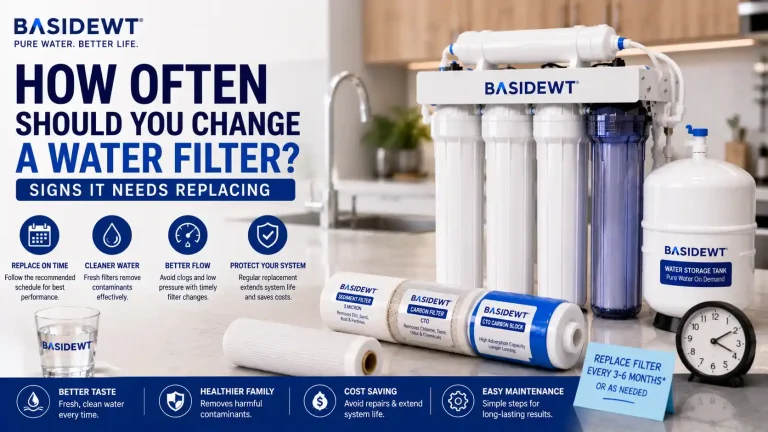
How Often Should You Change a Water Filter? Signs It Needs Replacing
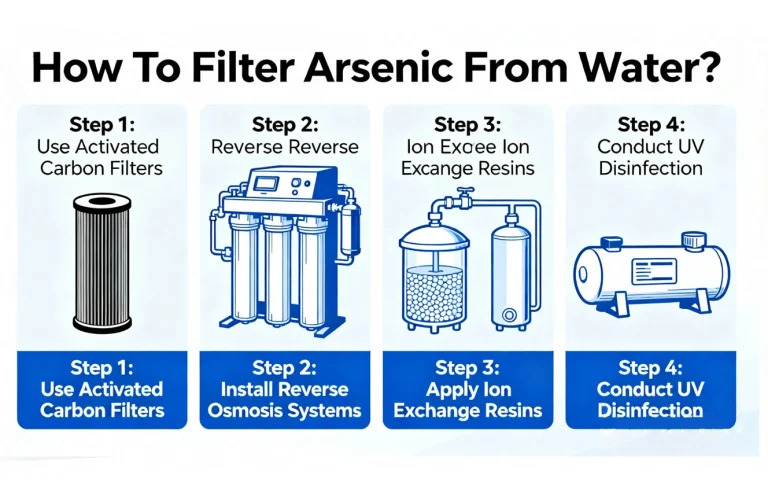
How To Filter Arsenic From Water?
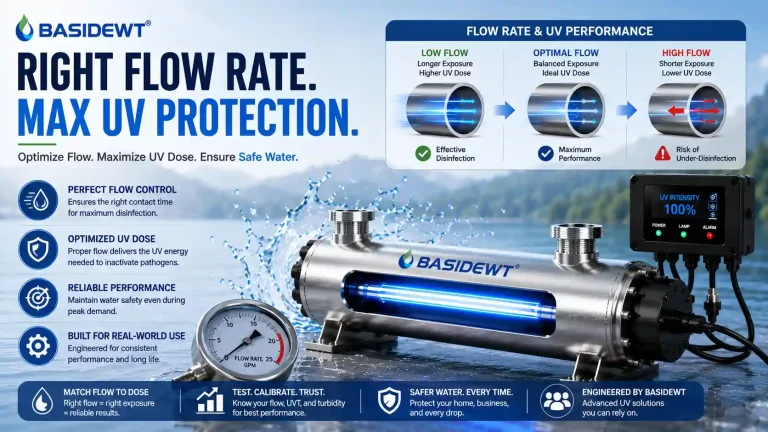
UV Water Sterilizer Flow Rate: How to Calculate and Optimize Performance