BasideWT- Whole Home Water Filtration System & Replacement


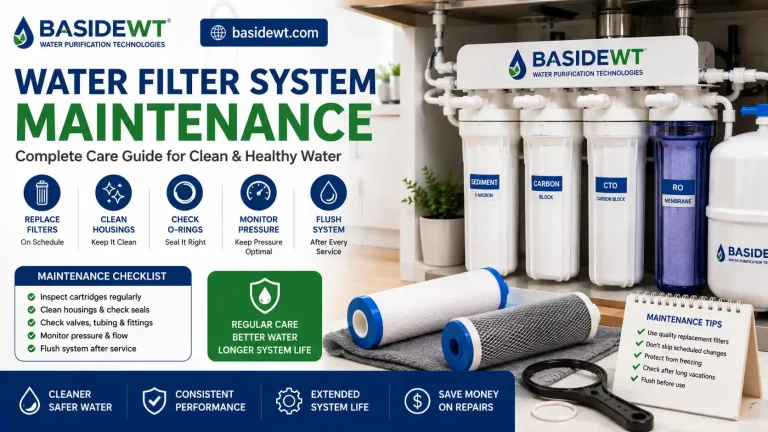
How Often Should You Change a Water Filter? Signs It Needs Replacing
Water filter replacement timing depends on the filter type, your water quality, and how much water your household uses. Manufacturer specifications also play a major role in how often should you change a water filter. A filter can still look clean while it has already stopped working effectively. That is because contaminants build up inside the filter media, not always on its visible surface. Reduced water flow, changes in taste or odor, and the physical condition of the cartridge can all signal that replacement is due. This guide will help you determine the right replacement schedule for your specific filter, recognize the warning signs early, and avoid running a filter past its useful life.
Quick Answer
There is no single replacement interval that fits every water filter. Most filters need replacement somewhere between one month and twelve months, depending on the filter type. The right timing depends on the manufacturer’s rated capacity, your water quality, daily usage, and contaminant load. Watch for reduced flow, taste or odor changes, and any system indicator lights. When in doubt, follow the manufacturer’s stated service life rather than guessing based on appearance alone.
How Often Should You Change a Water Filter?
The honest answer is: it depends on the filter. A sediment prefilter in a high-sediment area may need monthly replacement. A whole-house carbon filter in cleaner municipal water might last several months longer. This variation is normal, not a flaw in the product.
Manufacturers rate each filter for a specific service life. That rating is based on a defined flow rate, water quality, and contaminant load during testing. Your actual household conditions may differ from that test environment. As a result, real-world replacement timing can be shorter or longer than the printed number.
For this reason, treat the manufacturer’s rated capacity as your starting point. Then adjust based on your own observations, such as flow reduction or taste changes. This combined approach is more reliable than relying on a single fixed number for every situation. If you’re still deciding which system fits your household, our guide on choosing the best water filter system for your home covers the selection process in more depth.
What Determines How Often a Water Filter Needs Replacing?
Several factors combine to determine actual replacement frequency. Understanding each one helps you set a realistic schedule instead of guessing.
Filter type matters most. Sediment filters, carbon filters, and reverse osmosis membranes each have different media and different service lives.
Water quality has a direct impact. High turbidity, elevated sediment, or heavy chlorine content can shorten a filter’s working life significantly.
Daily water consumption also plays a role. A household of six will exhaust filter capacity faster than a household of two, because more water passes through the media.
Filter capacity is the rated volume, usually listed in gallons or liters, that the manufacturer expects the filter to treat before performance drops. Once that capacity is reached, filtration effectiveness declines even if water still flows normally.
Flow rate and pre-filtration affect wear as well. A system without adequate pre-filtration forces the primary filter to work harder, which shortens its service life. In addition, operating conditions such as water pressure and temperature can influence how quickly media becomes saturated. Because so many variables interact, the manufacturer’s recommendation remains the most reliable baseline for your specific product.
Typical Water Filter Replacement Intervals by Filter Type
Replacement timing varies widely across filter categories. The ranges below reflect commonly cited industry patterns, not a universal rule for every product. Always confirm the specific rating printed on your filter or listed in its documentation.
| Filter Type | Typical Replacement Range | Primary Influencing Factor |
|---|---|---|
| Sediment filters | 1–3 months | Sediment and turbidity load |
| Activated carbon filters | 2–6 months | Chlorine and organic contaminant load |
| Whole-house cartridge filters | 3–6 months | Household usage and water quality |
| Inline filters | 6–12 months | Flow volume and filter capacity |
| Under-sink cartridges | 6–12 months | Usage frequency and rated capacity |
| Reverse osmosis prefilters | 6–12 months | Sediment and chlorine exposure |
| Reverse osmosis postfilters | 6–12 months | Taste and polish stage saturation |
| Specialty filters (fluoride, arsenic, etc.) | Varies by media | Contaminant type and concentration |
These figures are general starting points. Your actual replacement schedule should follow the manufacturer’s rated capacity and your own performance observations. For a deeper look at how each filter type functions, see our guide on what a water filter system actually removes from your water.
10 Signs Your Water Filter Needs Replacing
Not every sign applies to every system. Use this list as a practical checklist, and interpret each item based on your specific filter type.
- Reduced water flow. A noticeable drop in pressure often means the filter media is clogged.
- Changes in taste. A metallic, chemical, or “off” taste can indicate exhausted carbon media.
- Changes in odor. Unusual smells, especially chlorine-like or musty odors, suggest reduced filtration performance.
- Visible sediment or discoloration. Cloudy or discolored water can point to a saturated sediment stage.
- Filter reaches its rated capacity. Once the manufacturer’s gallon or time rating is met, replace the filter regardless of appearance.
- Replacement indicator activates. Many modern systems include a light or digital counter that tracks remaining filter life.
- Unusual pressure behavior. Sudden pressure spikes or drops can signal a failing or clogged cartridge.
- Filter cartridge appears heavily loaded. Visible buildup on a removed cartridge is a useful, though not definitive, indicator.
- Water quality changes at the source. A shift in your municipal or well water can shorten filter life unexpectedly.
- The recommended service interval has passed. Time-based replacement remains valid even without obvious symptoms.
Some of these signs overlap with other plumbing issues. Therefore, always confirm the filter itself before assuming it is the sole cause of a problem.
Does Slow Water Flow Mean the Filter Needs Replacing?
Reduced flow is one of the most common reasons people check their filter. In many cases, a clogged filter is indeed the cause. As particles accumulate inside the media, they restrict the path water takes through the cartridge.
However, low flow is not always a filter problem. Low incoming water pressure, a partially closed valve, or blocked tubing can produce the same symptom. A fouled membrane in a reverse osmosis system can also mimic filter clogging.
Before replacing the filter, check these other possibilities first. If flow improves after ruling them out and replacing the cartridge, the filter was likely the cause. If you’re troubleshooting flow issues in more depth, our step-by-step guide on how a water filter system works explains how each stage affects overall pressure.
What Happens If You Do Not Replace a Water Filter?
Running a filter past its useful life carries real, though variable, consequences. The severity depends on the filter’s purpose and how far past its rated capacity it has gone.
Filtration performance declines first. Contaminants the filter was designed to reduce may begin passing through in higher concentrations. Flow can also drop as media becomes increasingly restricted, which places added stress on some system configurations.
Taste and odor control typically suffer as well, since exhausted carbon media loses its ability to adsorb organic compounds and chlorine. In sediment-heavy systems, prolonged use past capacity can also cause debris to break loose downstream.
It’s worth noting that consequences differ by filter type and target contaminant. Not every expired filter creates an immediate safety issue. Even so, delayed performance and reduced protection are reasons enough to follow the recommended schedule closely.
Should You Replace a Water Filter by Time or Usage?
Filter manufacturers typically suggest replacement based on one or more of the following methods. Each has strengths, and combining them often works best.
- Calendar-based replacement uses a fixed time interval, such as every three months. This method is simple and predictable, but it does not account for actual usage.
- Usage-based replacement tracks the volume of water passed through the filter, often via a flow meter. This approach is more precise for households with variable water use.
- Capacity-based replacement follows the manufacturer’s rated gallon or liter capacity. It works well when paired with a usage tracker or flow meter.
- Performance-based replacement relies on observed signs, such as flow reduction or taste changes. This method catches real-world issues that a calendar might miss.
- Manufacturer-recommended replacement combines time and capacity guidance from the product documentation.
In practice, the most reliable approach blends manufacturer guidance with your own observations. Set a calendar reminder based on the rated interval, then adjust it if you notice performance changes sooner.
How Water Quality Affects Filter Life
Source water conditions have a direct effect on how quickly a filter reaches the end of its useful life. Understanding these factors helps you set realistic expectations.
Sediment and turbidity are the most common culprits for shortened filter life. Higher particle content clogs filter media faster, especially in sediment prefilters.
Hardness can contribute to scale buildup within certain filter types, which reduces flow over time. Chlorine levels affect carbon filters specifically, since carbon media adsorbs chlorine until its capacity is exhausted.
Organic matter in the source water adds to the overall contaminant load a filter must handle. This means two households with identical filters may need different replacement schedules simply because their source water differs.
Because filters are designed to target specific contaminants, no single filter removes every possible substance in the water. Match your filter choice to your actual water quality for the best results, as covered in our guide on selecting a system based on your water quality.
How Household Water Usage Affects Filter Replacement
Usage volume is one of the clearest predictors of how soon a filter reaches capacity. More water through the system means faster media saturation.
A household with more occupants naturally uses more water each day. As a result, filters in larger households often need replacement more frequently than the same product in a smaller home. Commercial and facility settings face this even more acutely, since peak demand periods can push usage well above typical residential levels.
Whole-house systems filter all water entering the property, so they process significantly higher volumes than point-of-use filters under the sink or at a single tap. This difference explains why replacement intervals vary so much between system types, even when the underlying filter media is similar.
How to Check a Water Filter Before Replacing It
Follow these steps to confirm whether replacement is actually needed, rather than guessing.
- Check the service date. Compare the current date against your installation or last replacement date.
- Check the manufacturer’s rated capacity. Confirm whether you have reached the gallon, liter, or time-based limit.
- Check flow. Compare current flow to the system’s normal baseline performance.
- Check taste and odor where relevant to your filter type, particularly for carbon-based filters.
- Check visible condition where applicable, understanding that appearance alone does not confirm effectiveness.
- Check system indicators, such as replacement lights or digital counters, if your system includes them.
- Consider recent changes in source water quality, such as a boil-water notice or visible turbidity increase.
- Replace when the applicable service limit is reached, even if the filter still appears functional.
Appearance alone is not a reliable safety indicator. A filter can look clean while its internal media is already exhausted, so rely on rated capacity and performance checks instead.
How to Replace a Water Filter Cartridge Safely
A basic cartridge replacement follows a consistent sequence across most residential systems. This overview covers the general process; always follow your product’s specific instructions.
First, shut off the water supply to the filter housing. Then relieve any residual pressure, since many housings include a pressure-release button or valve for this purpose. Next, remove the old cartridge and inspect the housing and O-ring seals for damage or wear.
After that, install the correct replacement cartridge, making sure it matches the specified model and micron rating. Reassemble the housing carefully, then restore water flow slowly to check for leaks. Finally, flush the new filter according to the manufacturer’s instructions before regular use. For a complete installation walkthrough covering the full system setup, see our step-by-step water filter installation guide.
How to Keep a Water Filter Working Longer
While every filter eventually needs replacement, a few practices can help you get consistent, predictable performance throughout its rated life.
Use the correct filter for your specific water conditions and system model. Match filter capacity to your household’s actual water demand rather than choosing the smallest available option. Where required, use appropriate pre-filtration to reduce the load on your primary filter stage.
Follow the manufacturer’s replacement schedule closely, and monitor flow periodically so you notice changes early. Avoid running a filter past its rated capacity, since this accelerates performance decline. These steps won’t guarantee a specific lifespan extension, but they support consistent results within the filter’s designed service life.
When Should You Replace a Water Filter Immediately?
Certain situations call for prompt replacement or inspection rather than waiting for the scheduled interval.
- Known physical damage to the filter cartridge or media
- Visible damage to the housing or seals
- Persistent unusual taste or odor that does not resolve
- A major, sudden reduction in performance or flow
- The rated service capacity has clearly been exceeded
- A suspected contamination event in your water supply
- A manufacturer recall or service notice, where applicable
These situations are less common than routine scheduled replacement. Still, recognizing them helps you respond quickly when something changes unexpectedly, without creating unnecessary alarm over normal wear.
Filter Replacement Checklist
Save this checklist for quick reference during routine maintenance.
- Filter type identified
- Manufacturer recommendation checked
- Installation date checked
- Rated capacity checked
- Water usage considered
- Flow checked
- Taste and odor checked where relevant
- Filter replaced when required
- System flushed after replacement
- Leaks checked
- New replacement date recorded
According to independent guidance on water treatment device performance standards, following a manufacturer’s rated service life is one of the most reliable ways to maintain consistent filtration performance over time.
Conclusion
So, how often should you change a water filter? The honest answer depends on your filter type, water quality, household usage, and the manufacturer’s rated capacity. Sediment filters may need monthly attention, while some whole-house or under-sink cartridges can last six months or longer. Watch for practical signs like reduced flow, taste changes, or a system indicator light, and treat the manufacturer’s recommendation as your primary guide. Staying on schedule protects both water quality and system performance over the long term. If your current filtration setup is due for an upgrade, you can explore BasideWT’s water filtration systems to find options suited to your household’s needs.
FAQs
How often should you change a water filter?
Replacement frequency depends on the filter type, water quality, and usage. Most residential filters need replacement somewhere between one and twelve months. Always follow the manufacturer’s rated capacity as your primary guide.
What are the signs that a water filter needs replacing?
Common signs include reduced water flow, changes in taste or odor, visible sediment buildup, and an active replacement indicator. Reaching the manufacturer’s rated capacity or service interval is also a clear signal, even without obvious symptoms.
Can a water filter last longer than the recommended replacement time?
It might function past the recommended interval, but filtration performance typically declines once rated capacity is exceeded. Running a filter beyond its intended life is not recommended, since effectiveness cannot be visually confirmed.
What happens if you do not replace a water filter?
Filtration performance and flow both tend to decline over time. Taste and odor control often suffer first, particularly in carbon-based filters. The severity depends on the filter type and its intended purpose.
Does slow water flow mean a filter needs to be replaced?
Often, yes, but not always. Low incoming pressure, closed valves, or blocked tubing can cause similar symptoms. Rule out these other causes before assuming the filter itself is the problem.
RELATED POSTS
How to Choose the Right RO Water System: Complete Buying Guide
How Does Water Treatment Work? A Complete Guide
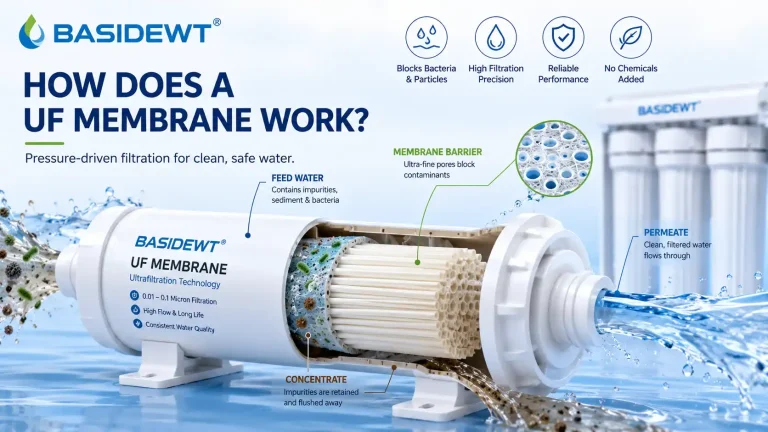
How Does a UF Membrane Work? Step-by-Step Guide
Water Treatment Products FAQ – Key Questions
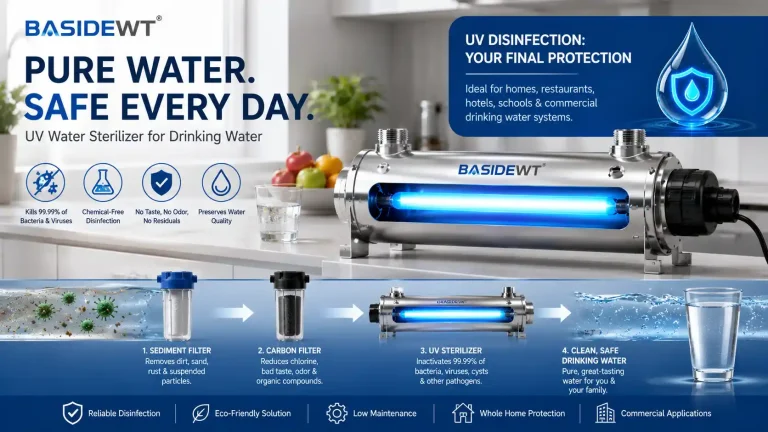
UV Water Sterilizer for Drinking Water: Benefits, Limits and Applications