BasideWT- Whole Home Water Filtration System & Replacement


What Does a UV Water Sterilizer Remove From Water?
A UV water sterilizer does not remove particles or chemicals from water. It is a disinfection technology. It works by exposing microorganisms to UV-C radiation, which damages their DNA or RNA so they can no longer reproduce or cause infection.
This means UV treatment controls bacteria, viruses, and protozoa. But it does not generally remove sediment, dissolved salts, hardness, heavy metals, or most chemical contaminants. Those problems need a different treatment method.
Below, we explain exactly what UV disinfection can and cannot do, and which technologies handle the contaminants that UV leaves behind.
UV Disinfection vs. Removal: Why the Distinction Matters
Many buyers assume “sterilizer” means the unit strips contaminants out of water. It does not. Understanding the real mechanism helps you choose the correct combination of equipment for your water source.
- Removal means a contaminant is physically taken out of the water, usually by filtration or a membrane.
- Inactivation means a microorganism is damaged so it cannot infect or multiply, even though its body may still be present in the water.
- Disinfection is the general process of reducing microbial risk, which UV, chlorine, and ozone all achieve through different mechanisms.
- Filtration physically separates particles, sediment, or dissolved substances from water using media, cartridges, or membranes.
- Purification is a broader term covering any process, or combination of processes, that improves overall water quality.
A UV water sterilizer performs disinfection through inactivation. It does not filter or purify water in the physical sense. If you are new to the technology, our beginner’s guide to UV water sterilizers explains the core concept in more depth.
Microorganisms a UV Water Sterilizer Controls
UV-C radiation, typically around 254 nanometers, penetrates the outer structure of microorganisms and damages their genetic material. Once the DNA or RNA is disrupted, the organism cannot replicate. This is the entire basis of UV disinfection.
Bacteria
UV effectively inactivates common waterborne bacteria such as E. coli, Salmonella, and Legionella. Bacteria are relatively large and absorb UV-C readily, which is why properly dosed UV systems achieve high inactivation rates against them.
Viruses
Viruses are smaller and can require a higher UV dose than bacteria for equivalent inactivation. Well-designed systems still achieve strong performance against common waterborne viruses, provided the dose and exposure time meet the system’s design specifications.
Protozoa and Cysts
Protozoa such as Giardia and Cryptosporidium form protective cysts that resist chlorine disinfection. UV radiation, however, damages their genetic material directly, making it one of the few practical methods for controlling these organisms in decentralized water systems.
If you want to understand the physical process behind this inactivation, our detailed explanation of how a UV water sterilizer works step by step covers the dose, exposure time, and system design involved.
What a UV Water Sterilizer Does Not Remove
This is the part many buyers overlook. UV light has no effect on non-living contaminants. It cannot break down chemical compounds, and it cannot physically capture particles. The table below summarizes the main categories.
| Contaminant | Does UV Remove or Inactivate It? | Typical Treatment Needed |
|---|---|---|
| Bacteria, viruses, protozoa | Inactivated (not physically removed) | UV disinfection |
| Sediment and suspended solids | No | Sediment filtration |
| Turbidity | No, and it reduces UV performance | Pretreatment filtration |
| Iron and manganese | No | Oxidation and filtration media |
| Water hardness | No | Water softening |
| Dissolved salts | No | Reverse osmosis |
| Heavy metals | No | RO, specialized adsorption media |
| Chlorine, taste, and odor compounds | No | Activated carbon filtration |
| Dissolved organic contaminants | Generally no | Activated carbon or RO |
Sediment, Dirt, and Suspended Solids
UV systems have no filtration media, so particles pass straight through the reactor chamber. Sediment filtration is a separate step that must happen before or after UV treatment, depending on system design.
Iron and Manganese
Dissolved iron and manganese are not affected by UV exposure. Worse, these minerals can coat the quartz sleeve around the UV lamp, blocking UV transmission and weakening disinfection performance over time. Iron and manganese require dedicated oxidation and filtration equipment.
Hardness
Calcium and magnesium ions, which cause water hardness, pass through UV systems unchanged. Only ion exchange, commonly known as water softening, addresses hardness.
Dissolved Salts and Heavy Metals
UV radiation cannot alter the chemical structure of dissolved salts or heavy metal ions. Reverse osmosis is generally required to reduce these dissolved contaminants to safe levels.
Chlorine, Chemicals, Taste, and Odor Compounds
Free chlorine and many organic chemical compounds pass through UV disinfection without any change. Activated carbon filtration is the standard method for removing chlorine, common taste and odor compounds, and many organic chemicals.
Turbidity
Turbidity deserves special mention because it does not just pass through untreated. Suspended particles can shield microorganisms from UV-C exposure, lowering the effective dose that reaches them. Research on suspended-solid interference in UV disinfection has shown that particle association with microorganisms can reduce disinfection efficiency even at relatively low turbidity levels, which is why most manufacturers specify a maximum turbidity limit for reliable performance.
Factors That Affect What UV Treatment Can Actually Achieve
Even within its intended role of microorganism inactivation, a UV system’s real-world performance depends on several variables working together.
- UV dose: the combination of intensity and exposure time that reaches the water.
- UV transmittance: how easily UV-C light passes through the specific water being treated.
- Flow rate: higher flow reduces contact time inside the reactor chamber.
- Turbidity: particles can absorb or scatter UV-C before it reaches microorganisms.
- Lamp condition and quartz sleeve cleanliness: aging lamps and fouled sleeves both reduce delivered dose.
- System design and sizing: reactor geometry affects how evenly water is exposed to UV-C.
These factors interact, so a system rated for one water condition may underperform in another. For a closer look at the hardware involved, see our breakdown of UV water sterilizer parts and components, which explains how the lamp, sleeve, and sensor each contribute to consistent dosing.
When Pretreatment or Additional Filtration Is Required
Because UV disinfection depends on clear water and unobstructed light transmission, pretreatment is often necessary rather than optional. Common scenarios include:
- Well water with visible sediment or high turbidity, which needs sediment filtration before the UV stage.
- Water with iron or manganese staining, which needs oxidation and filtration to protect the quartz sleeve.
- Water with strong chlorine taste or odor, where activated carbon is added either before or after UV treatment.
- Water with high hardness, where softening protects downstream fixtures and appliances, even though it has no bearing on UV performance itself.
Skipping pretreatment does not stop a UV system from running. It simply means the delivered dose may fall short of what the microorganisms actually need for reliable inactivation.
Matching Contaminants to the Right Technology
Because UV only addresses microorganisms, most real-world water systems combine it with one or more additional processes. The table below outlines the general division of responsibility.
- UV disinfection → bacteria, viruses, and protozoa inactivation
- Sediment filtration → suspended particles and turbidity
- Activated carbon → chlorine, taste, odor, and select organic compounds
- Water softening → calcium and magnesium hardness
- Reverse osmosis → dissolved salts and many dissolved contaminants
- Iron and manganese treatment → dissolved iron and manganese
Consider a hypothetical example: a facility drawing from a shallow well finds coliform bacteria in a water test, along with moderate turbidity and mild iron staining. UV disinfection alone would inactivate the bacteria, but the turbidity would compromise dosing accuracy, and the iron would gradually foul the quartz sleeve. In this case, sediment and iron pretreatment ahead of the UV stage would be necessary for the system to perform as designed. If you’re deciding between a stand-alone UV unit or a more complete purification setup, our comparison of a UV water sterilizer versus a UV water purifier explains how these configurations differ.
Conclusion
A UV water sterilizer removes nothing in the physical sense. Its role is to inactivate bacteria, viruses, and protozoa by disrupting their DNA or RNA with UV-C radiation. Sediment, hardness, dissolved salts, heavy metals, and most chemical contaminants pass through unaffected, and turbidity can even weaken disinfection performance if left untreated.
For most water sources, reliable results come from pairing UV disinfection with the right pretreatment or complementary filtration, matched to your specific water quality and system conditions. If you are planning a system for a home, facility, or commercial site, our complete UV water sterilizer buying guide walks through how to evaluate water quality, sizing, and equipment selection before you invest in a solution.
RELATED POSTS
20 x 2.5 Replacement Water Filters Cartridges | High-Capacity, Universal Fit
UV Water Sterilizer for RO Water Treatment: Where Should UV Be Used?
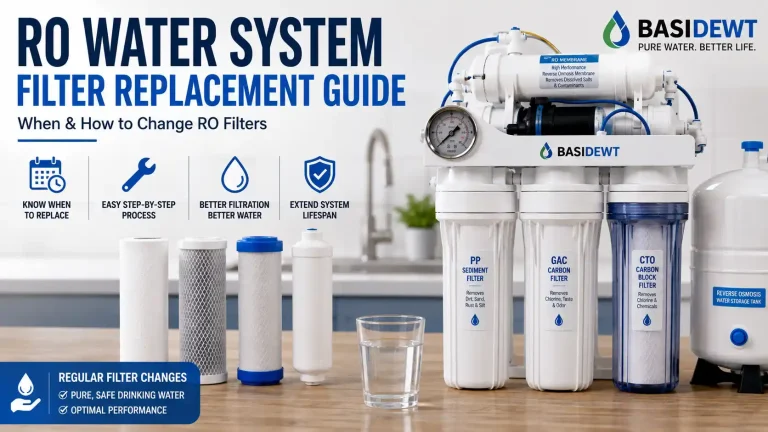
RO Water System Filter Replacement Guide: When & How to Change RO Filters
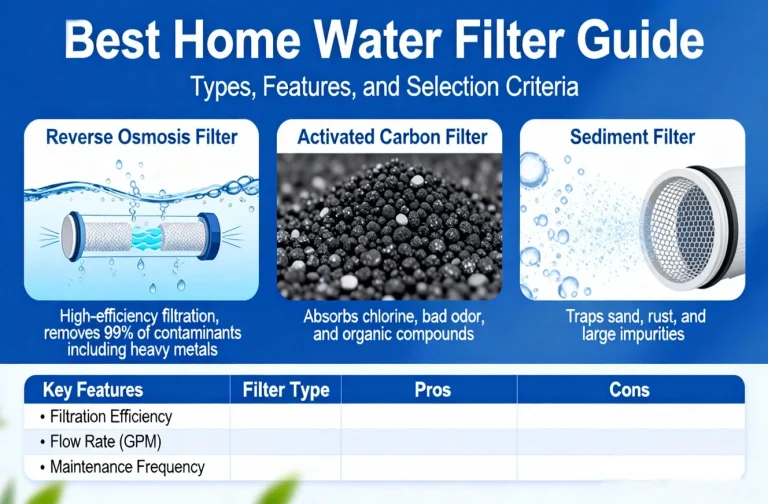
What Is the Best Home Water Filter?
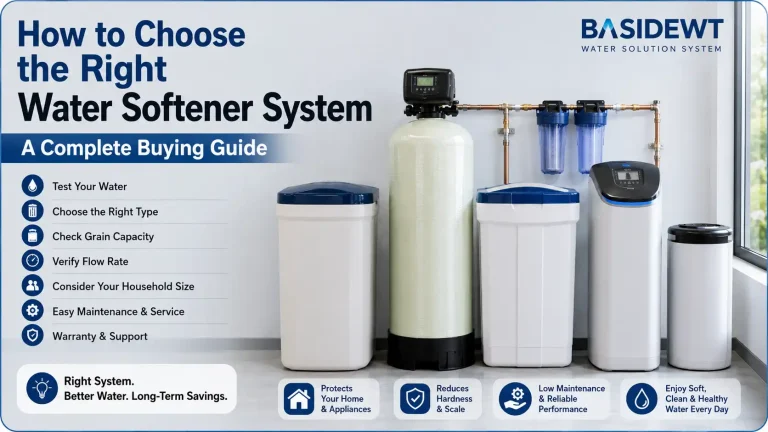
How to Choose the Right Water Softener System: A Complete Buying Guide