BasideWT- Whole Home Water Filtration System & Replacement


Resources
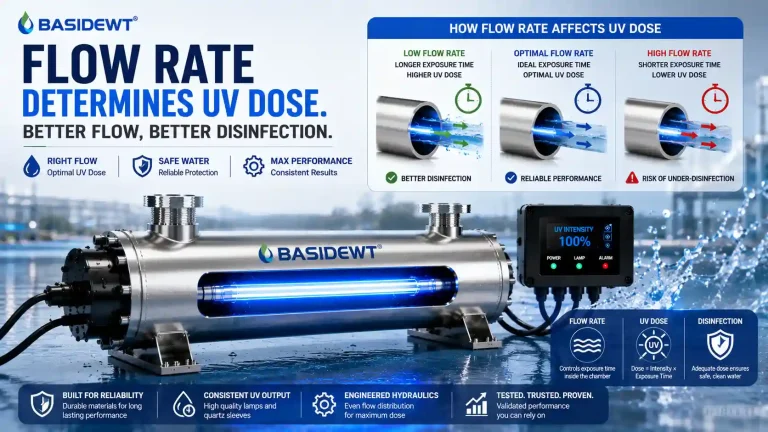
How Flow Rate Affects UV Dose and Disinfection Performance
Flow rate and UV dose are directly connected. When water moves faster through a UV chamber, it spends less time near the UV lamp. Less exposure time usually means less UV energy…
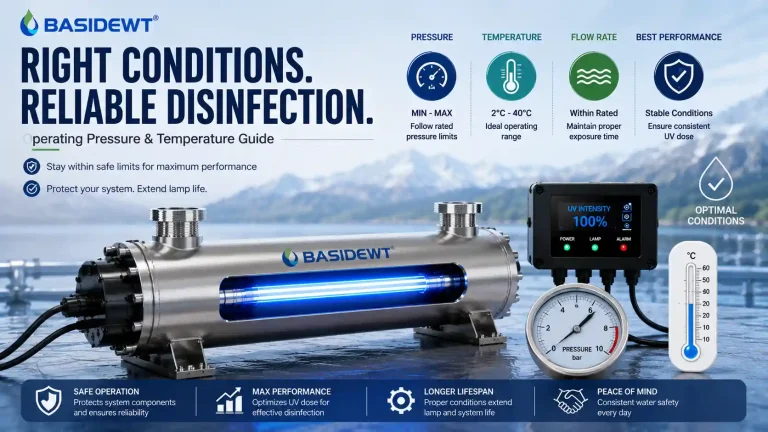
UV Water Sterilizer Operating Pressure and Temperature Guide
UV water sterilizer operating conditions describe the pressure, temperature, and flow environment a system needs to disinfect water reliably. Get these conditions wrong, and even a well-sized UV reactor can underperform, leak,…
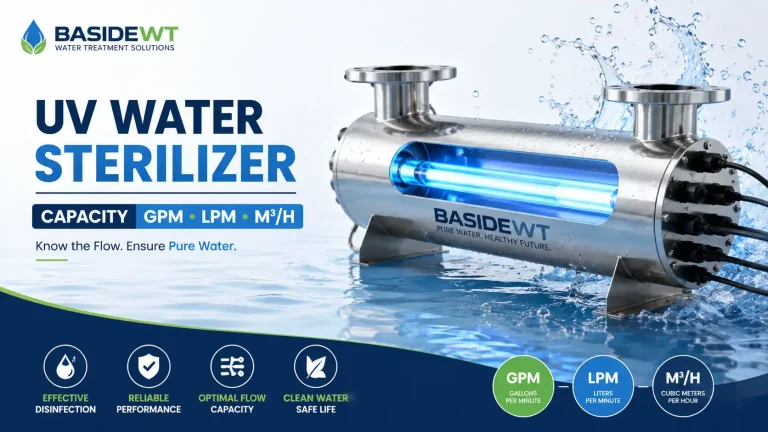
UV Water Sterilizer Capacity: GPM, LPM and m³/h Explained
UV water sterilizer capacity describes the maximum water flow a system can treat while still delivering its intended disinfection performance. This rating usually appears as GPM (gallons per minute), LPM (liters per…
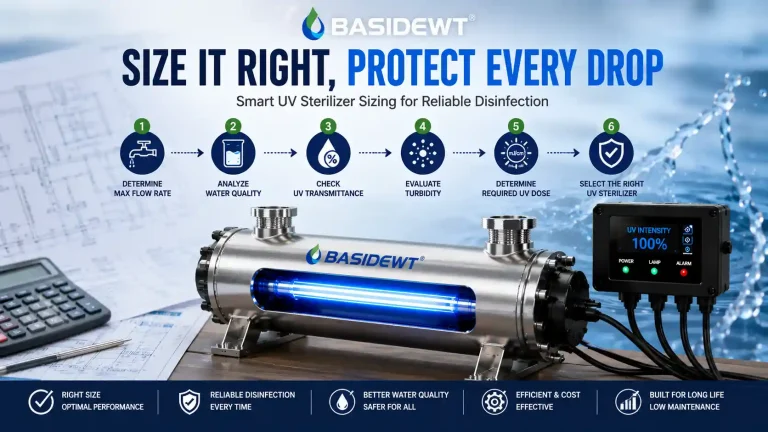
How to Size a UV Water Sterilizer for Your Water System
UV water sterilizer sizing comes down to matching your system’s real operating flow rate with a UV dose that stays effective under your actual water conditions. Get the flow rate wrong, and…
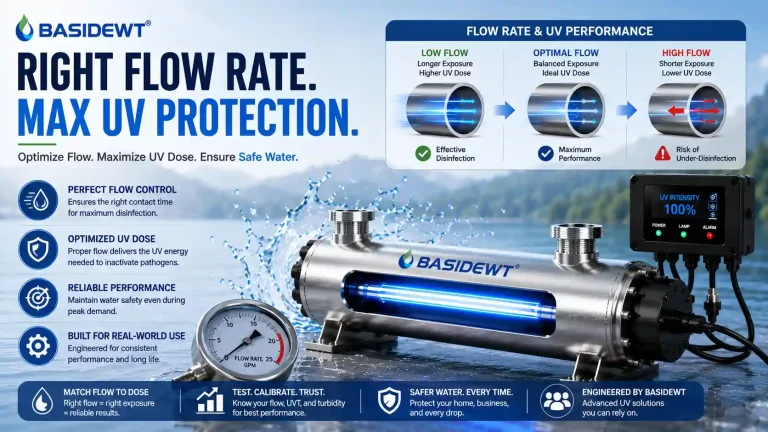
UV Water Sterilizer Flow Rate: How to Calculate and Optimize Performance
UV water sterilizer flow rate is the speed at which water moves through the UV reactor chamber, measured in gallons per minute (GPM), liters per minute (LPM), or cubic meters per hour…
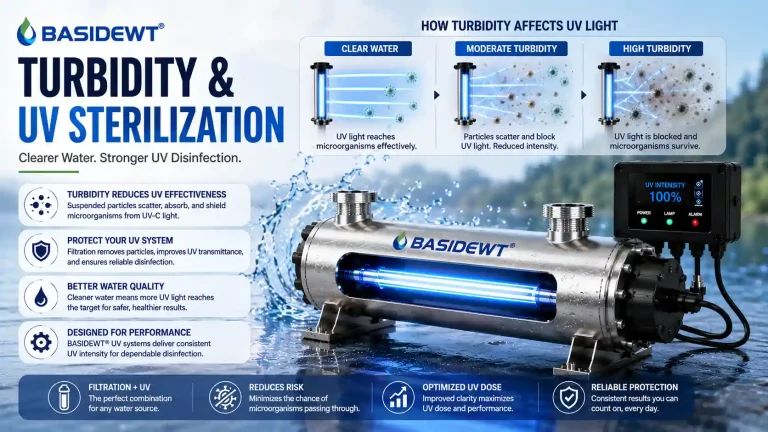
How Water Turbidity Affects UV Water Sterilization
Water turbidity and UV sterilization are directly connected because suspended particles in water can block, scatter, or absorb UV-C light before it reaches microorganisms. When water carries silt, algae, rust, or organic…
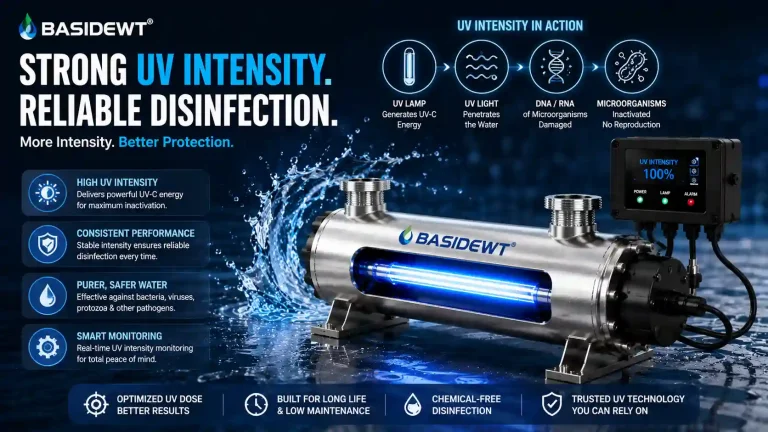
UV Intensity in Water Sterilization: How It Affects Performance
UV intensity is the amount of germicidal UV energy available at a specific point inside a UV reactor. It’s usually measured as power per unit area, such as mW UV intensity tells…
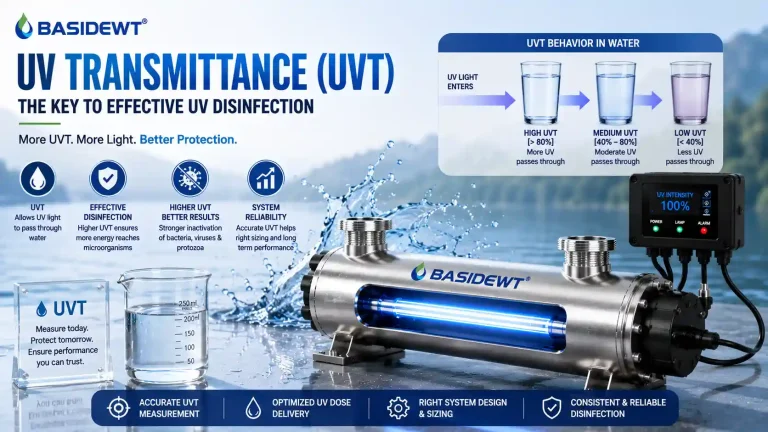
UV Transmittance (UVT) in Water Treatment Explained
UV transmittance (UVT) measures the percentage of ultraviolet light that passes through water. Water absorbs or scatters the rest before it reaches the far side of the sample. Operators usually measure UVT…
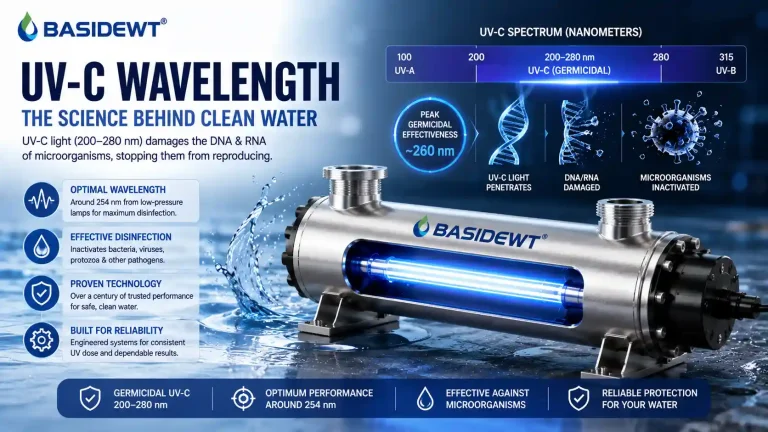
UV-C Wavelength for Water Sterilization Explained
UV-C wavelength refers to the specific band of ultraviolet light, roughly 200–280 nanometers (nm), that carries enough energy to damage the DNA and RNA of microorganisms. In water sterilization, this wavelength range…
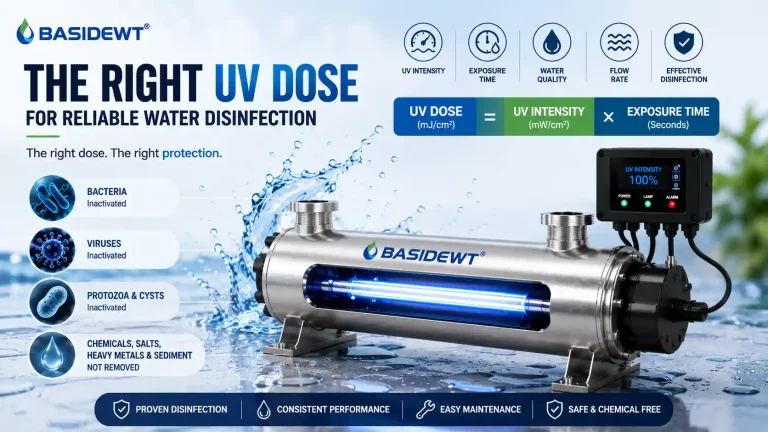
UV Dose for Water Disinfection: How It Works and Why It Matters
UV dose for water disinfection is the amount of UV-C energy that actually reaches a microorganism as water passes through a UV reactor. It is not the same as lamp power, and…
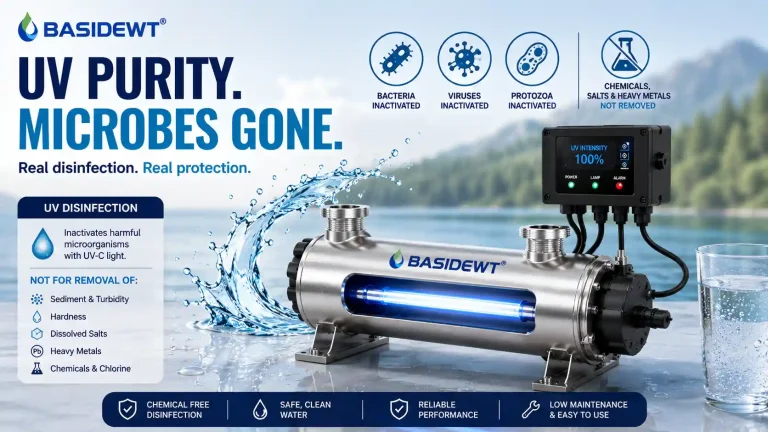
What Does a UV Water Sterilizer Remove From Water?
A UV water sterilizer does not remove particles or chemicals from water. It is a disinfection technology. It works by exposing microorganisms to UV-C radiation, which damages their DNA or RNA so…
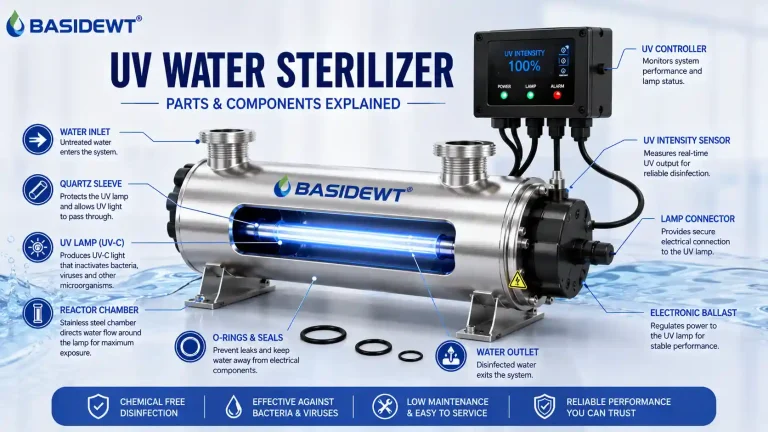
UV Water Sterilizer Parts and Components Explained
A UV water sterilizer is built from a small set of core parts that work together to treat water: a UV lamp, a quartz sleeve, a reactor chamber, electrical connectors, and sealing…