BasideWT- Whole Home Water Filtration System & Replacement


Resources
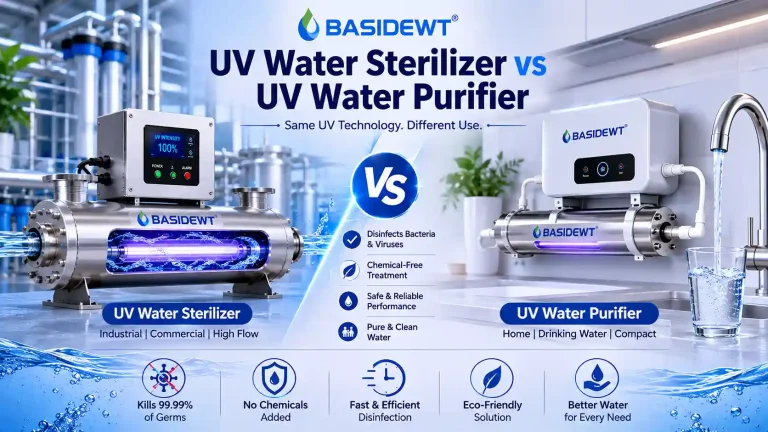
UV Water Sterilizer vs UV Water Purifier: What Is the Difference?
A UV water sterilizer and a UV water purifier are usually the same core technology sold under two different names. Both rely on ultraviolet light to inactivate bacteria, viruses, and other microorganisms…
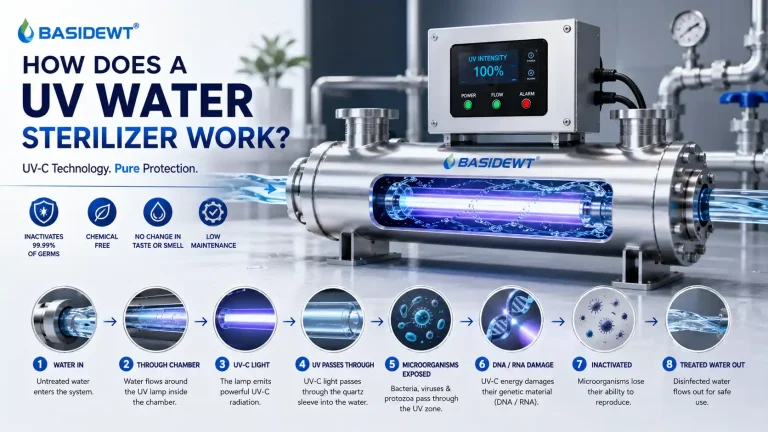
How Does a UV Water Sterilizer Work? Step-by-Step Guide
A UV water sterilizer works by passing water through a sealed chamber where UV-C light exposes microorganisms to ultraviolet energy. This energy damages the DNA and RNA inside bacteria, viruses, and other…
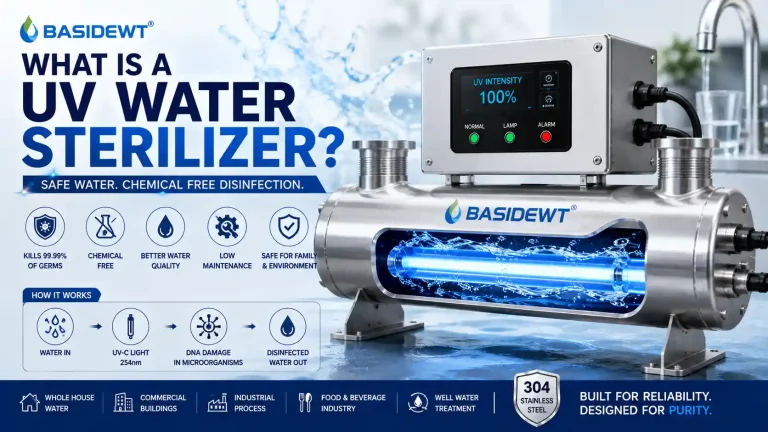
What Is a UV Water Sterilizer? Complete Beginner’s Guide
A UV water sterilizer is a water-disinfection device that uses ultraviolet light, usually in the UV-C range, to inactivate microorganisms as water flows through a sealed UV chamber. It is a disinfection…
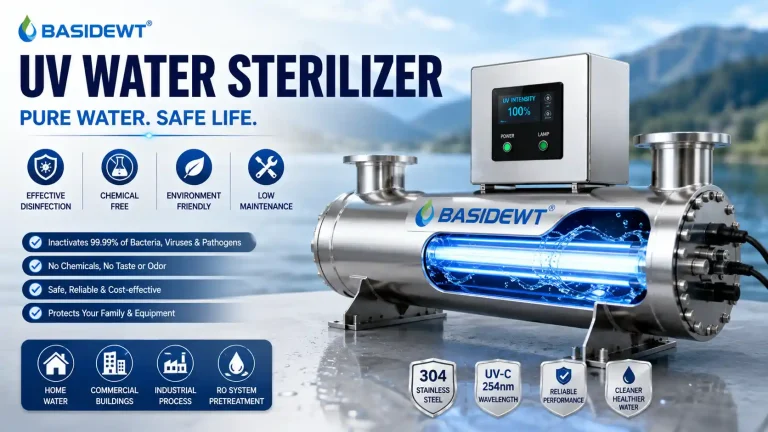
UV Water Sterilizer: Types, Working, Benefits, Applications, Maintenance & Buying Guide
A UV water sterilizer disinfects water by exposing it to ultraviolet-C (UV-C) light inside a sealed treatment chamber. As water flows past the UV lamp, the radiation damages the genetic material of…
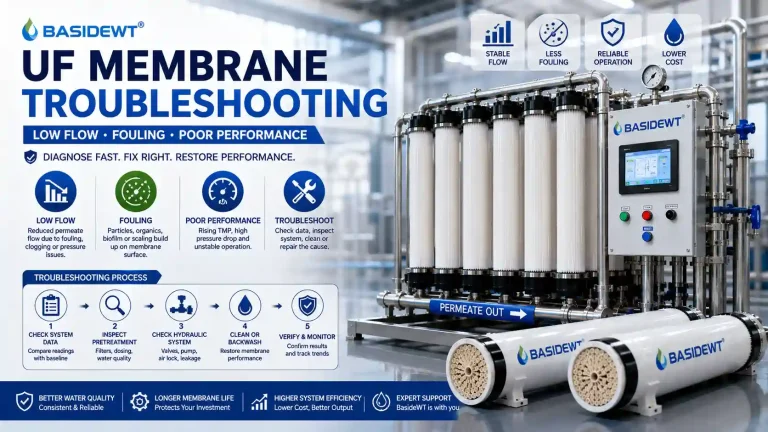
UF Membrane Troubleshooting: Low Flow, Fouling & Poor Performance
UF membrane troubleshooting means working through a system’s symptoms in a logical order: check the operating readings first, then the water quality, then the mechanical flow path, before deciding whether cleaning, pretreatment…
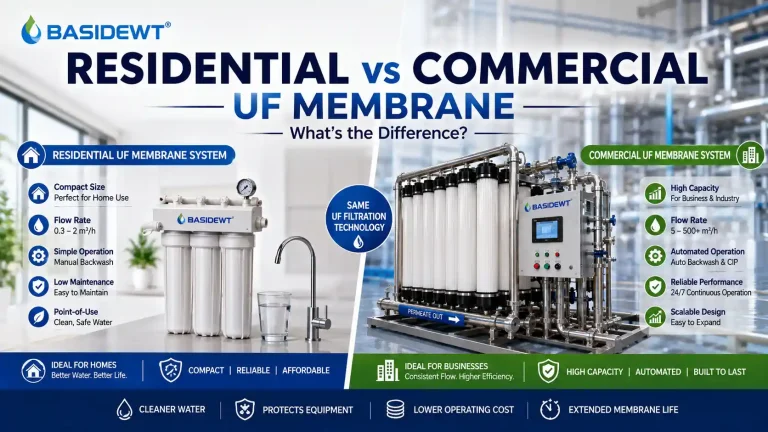
Residential vs Commercial UF Membrane: What’s the Difference?
The main difference between residential and commercial UF membrane systems is not the filtration technology itself. Both use the same hollow fiber ultrafiltration process. The real difference lies in scale: flow rate,…
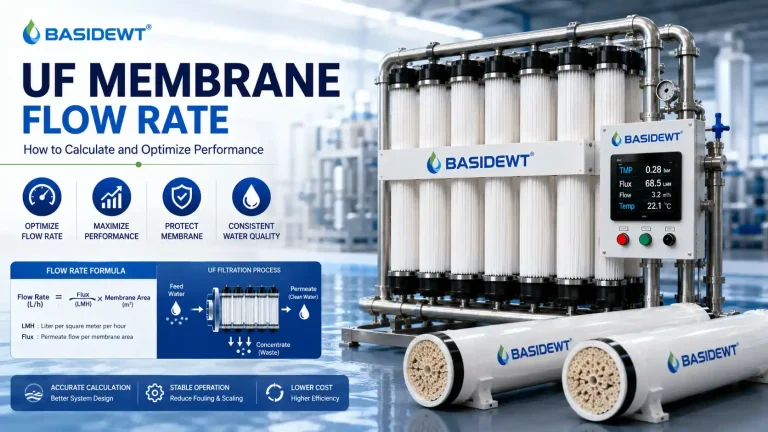
UF Membrane Flow Rate: How to Calculate and Optimize Performance
UF membrane flow rate is the volume of water a membrane produces over time. It’s usually measured in liters per hour or gallons per minute. This flow rate depends on membrane area,…
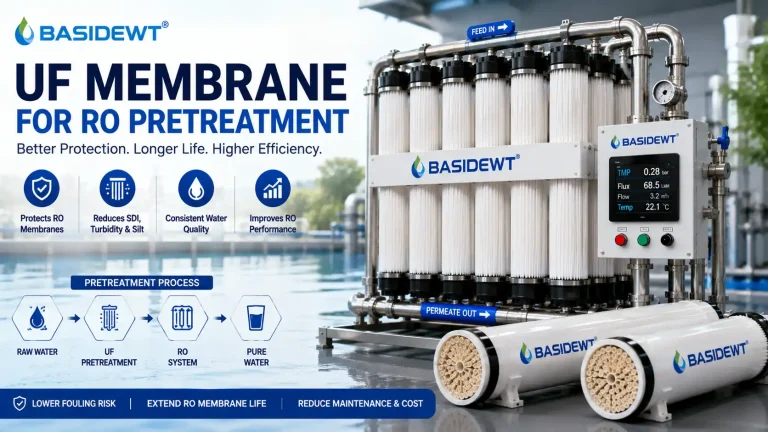
UF Membrane for RO Pretreatment: Why and When Is It Used?
A UF membrane for RO pretreatment is used to physically remove suspended solids, colloids, turbidity, and microorganisms from feed water before it reaches a reverse osmosis system. This protects RO membranes from…
UF Membrane for Drinking Water: Benefits, Limitations & Applications
A UF membrane for drinking water removes suspended solids, turbidity, bacteria, and many protozoa through physical size exclusion. It does this without chemicals and at relatively low pressure. However, it does not…
UF Membrane for Well Water: Selection, Performance & Maintenance
A UF membrane for well water can work very well, but only when it is matched to what is actually in your water. Well water varies enormously from one property to the…
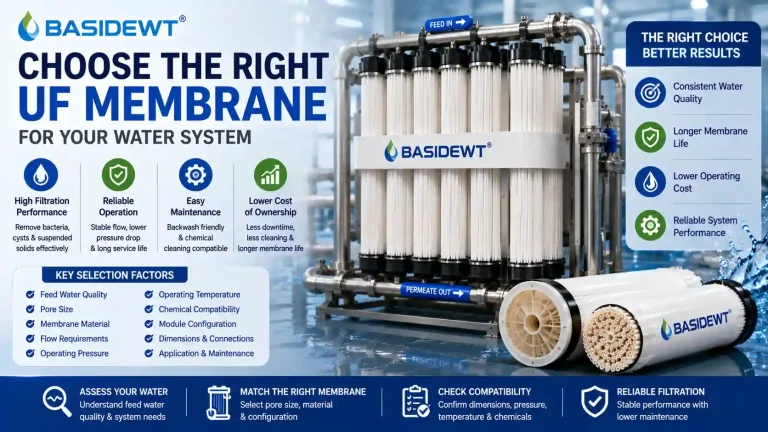
How to Choose a UF Membrane for Your Water System
Learning how to choose a UF membrane is not just a technical exercise. It affects water quality, system uptime, and long-term operating costs. Get it wrong, and you face fouling, poor flow,…
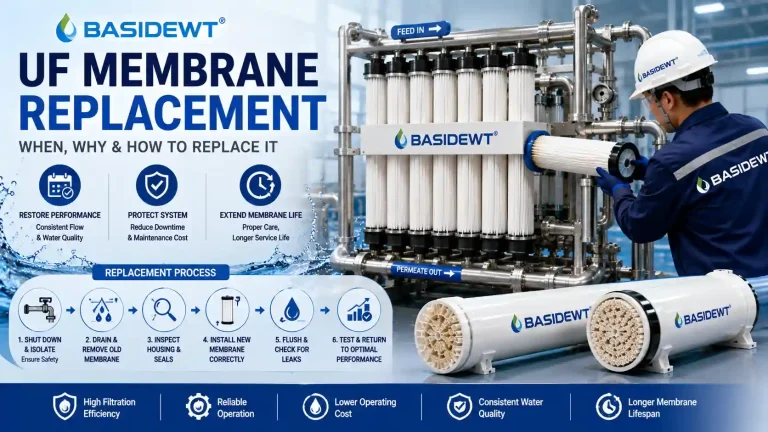
UF Membrane Replacement: When, Why & How to Replace It
UF membrane replacement keeps a filtration system running at its rated performance. Every ultrafiltration membrane eventually reaches a point where cleaning no longer restores flow, pressure, or water quality. At that point,…