BasideWT- Whole Home Water Filtration System & Replacement


Water Filter System: How It Works, Types, Benefits & Buying Guide
A water filter system is a device or set of connected devices that removes sediment, chemicals, and other unwanted substances from water before it reaches your tap, appliance, or storage tank. It works by forcing water through one or more filter media — such as sediment screens, activated carbon, or membranes — that trap particles and reduce contaminants while letting clean water pass through. The right system depends on what’s actually in your water supply, how much water you use, and where filtration needs to happen in your home or facility. Choosing well starts with understanding your water quality and matching it to the correct filtration method.
Quick Answer
A water filter system is equipment that treats water by passing it through physical, chemical, or biological filter media to reduce sediment, chlorine, odors, heavy metals, and other contaminants. Systems range from single point-of-use filters under a sink to whole-house units that treat every tap. The best choice depends on your water test results, daily water demand, and whether you need filtration at one fixture or across an entire property.
Choosing a water filter system isn’t a one-size-fits-all decision. Two households on the same street can have completely different water chemistry, especially if one uses municipal supply and the other draws from a private well. Before buying anything, it helps to understand what these systems actually do and how the different types compare.
What Is a Water Filter System?
A water filter system is a combination of components — housings, cartridges, membranes, and sometimes tanks or pumps — designed to remove or reduce impurities from water. Unlike a single filter cartridge sold on its own, a full system usually includes multiple filtration stages working together.
Most systems fall into two broad categories:
- Point-of-use (POU) systems treat water at a single location, such as a kitchen faucet or refrigerator line.
- Point-of-entry (POE) systems, also called whole-house systems, treat water as it enters the building, so every fixture receives filtered water.
The core purpose is the same in both cases: to improve water quality by physically or chemically separating contaminants from the water stream. What differs is scale, filtration method, and where the treated water ends up.
How Does a Water Filter System Work?
At a basic level, a water filter system works by forcing water through a barrier that traps particles or reacts with dissolved substances. The specific mechanism depends on the filtration technology used.
Mechanical filtration physically blocks particles larger than the filter’s pore size. Sediment filters, for example, catch sand, rust, and silt as water passes through a woven or pleated material.
Adsorption filtration uses materials like activated carbon, which has a highly porous surface that attracts and holds chlorine, certain organic compounds, and substances that affect taste and odor. Water molecules pass through while the targeted compounds stick to the carbon surface.
Membrane filtration, including reverse osmosis and ultrafiltration, pushes water through a semi-permeable membrane with microscopic pores. This method can remove much smaller particles, dissolved solids, and some microorganisms, depending on the membrane’s rating.
Ion exchange swaps unwanted ions, such as calcium and magnesium in hard water, for other ions like sodium or potassium, using a resin bed.
Many systems combine two or more of these methods in sequence. Water might pass through a sediment pre-filter first, then a carbon block, and finally a finer polishing filter, with each stage targeting a different type of contaminant. This staged approach is why multi-stage systems generally perform better than single-cartridge filters.
Why Use a Water Filter System?
Municipal water treatment plants and private wells both aim to deliver safe water, but “safe” doesn’t always mean “ideal.” Water can pick up chlorine byproducts, sediment, minerals, or trace substances after it leaves the treatment facility and travels through aging pipes.
Common reasons people install a water filter system include:
- Reducing chlorine taste and smell in drinking water
- Removing sediment that clouds water or clogs appliances
- Addressing specific contaminants identified through water testing
- Protecting plumbing and water-using appliances from scale and particulate buildup
- Improving the consistency of water quality across a property
- Meeting requirements for certain commercial or industrial processes
Filtration needs vary widely by source, region, and household. Someone on a well with high iron content has very different priorities than someone on a city supply concerned mainly about chlorine taste. This is why a proper assessment of water quality should always come before choosing equipment.
What Can a Water Filter System Remove?
The substances a system can address depend entirely on the filtration technology and filter media used. No single filter removes everything, which is why understanding target contaminants matters before buying.
| Contaminant Type | Common Examples | Typical Filtration Approach |
|---|---|---|
| Sediment and particulates | Sand, rust, silt, dirt | Sediment filters, mechanical screens |
| Chlorine and chloramine | Taste and odor compounds | Activated carbon |
| Dissolved minerals | Calcium, magnesium (hardness) | Ion exchange (softening) |
| Heavy metals | Lead, some forms of iron | Specialized carbon blends, media filters |
| Dissolved solids | Salts, certain organic compounds | Reverse osmosis |
| Microorganisms | Bacteria, some cysts | Ultrafiltration, UV treatment (separate technology) |
Performance always depends on the specific product, filter media, water pressure, and how well the system is maintained. Manufacturer specifications and independent water testing are the only reliable ways to confirm what a given system actually removes for your water source. Results vary by installation, and no filter can guarantee removal of every possible contaminant.
Main Types of Water Filter Systems
There are several established types of water filter systems, each suited to different needs.
Sediment filtration systems target physical particles like sand, rust flakes, and silt. These are often used as a first stage ahead of finer filtration, protecting downstream equipment from clogging.
Carbon filtration systems use activated carbon to reduce chlorine, certain organic compounds, and unpleasant taste or odor. They’re common in both point-of-use and whole-house configurations.
Reverse osmosis (RO) systems use pressure to push water through a semi-permeable membrane, which can reduce dissolved solids and a broader range of contaminants than carbon alone. RO systems typically pair a membrane with pre-filters and post-filters and are most often installed as point-of-use units, such as under a kitchen sink.
Water softeners address hardness by exchanging calcium and magnesium ions for sodium or potassium. While softening is technically a separate process from contaminant filtration, softeners are frequently discussed alongside filter systems because they’re often installed together.
Multi-stage combination systems integrate sediment, carbon, and sometimes membrane stages into one unit, offering broader treatment than any single-stage filter.
Each type has trade-offs in cost, maintenance, water waste (relevant for RO systems), and the specific contaminants it addresses. There’s no universally “best” type — only the type that matches your water quality and usage needs.
Water Filter System Components
Understanding the core components makes it easier to evaluate different products and troubleshoot problems later.
- Filter housing — the casing that holds the filter cartridge and connects to your plumbing.
- Filter cartridge or media — the actual material doing the filtration work, such as sediment mesh, carbon block, or resin.
- Membrane (in RO or ultrafiltration systems) — a semi-permeable barrier for finer filtration.
- Pressure gauge or flow indicator — shows whether a filter is restricting flow, often signaling it’s time for replacement.
- Shut-off valves and fittings — allow the system to be isolated for filter changes or maintenance.
- Storage tank (common with RO systems) — holds treated water for on-demand use.
- Mounting bracket or frame — secures the system, especially important for whole-house installations.
Products like a complete water filtration system typically package these components together, which simplifies installation compared with sourcing each part separately.
Understanding Filter Stages and Micron Ratings
Filter stages refer to the sequential steps water passes through, with each stage designed to target a specific type of contaminant. A three-stage system, for example, might use sediment removal first, carbon filtration second, and a fine polishing filter third.
Micron ratings describe the size of particles a filter can physically capture, measured in microns (one micron equals one-millionth of a meter). A lower micron rating means the filter can trap smaller particles, but it also typically restricts water flow more and requires more frequent replacement. A common way to think about scale is that a human hair is roughly 40 to 50 microns in diameter, which puts into perspective how fine sub-micron filtration actually is.
Choosing the right micron rating is a balancing act. Extremely fine filtration captures more particles but reduces flow rate and shortens filter life. Coarser filtration preserves flow but lets smaller particles through. Multi-stage systems solve this by using progressively finer filters at each stage rather than relying on one filter to do everything.
Whole-House vs Point-of-Use Water Filtration
This is one of the most common decision points for buyers, so it’s worth comparing directly.
| Factor | Whole-House (Point-of-Entry) | Point-of-Use |
|---|---|---|
| Coverage | Every tap and appliance in the building | One specific fixture |
| Typical installation point | Main water line entry | Under sink, on faucet, or inline with a fridge |
| Upfront cost | Generally higher | Generally lower |
| Best for | Protecting plumbing, treating water for bathing and laundry too | Drinking and cooking water specifically |
| Maintenance | Fewer filters to manage overall, but larger cartridges | Multiple small filters if used at several fixtures |
Whole-house systems make sense when water quality concerns affect the entire property, such as high sediment or chlorine levels that also impact pipes, water heaters, and appliances. Point-of-use systems make sense when the primary concern is drinking water quality and a full-property investment isn’t necessary.
Some households use both: a whole-house sediment and carbon system to protect plumbing generally, plus a point-of-use RO system under the kitchen sink for drinking water specifically. This layered approach often delivers better results than relying on either type alone.
How to Choose a Water Filter System
Selecting the right system comes down to a few structured questions rather than guesswork.
Start with a water test. Before comparing products, find out what’s actually in your water. Municipal suppliers usually publish annual water quality reports, and private well owners should get water tested independently, since well water quality can vary significantly by location and season.
Identify your primary concern. Sediment, chlorine taste, hardness, and dissolved solids each call for different filtration methods. A system built for one issue won’t necessarily solve another.
Calculate your flow rate needs. Flow rate, usually measured in gallons per minute (GPM) or liters per minute, determines whether a system can keep up with household demand, especially for whole-house units serving multiple fixtures at once. Undersized systems cause noticeable pressure drops.
Check filter capacity and replacement frequency. Filter capacity indicates how much water a cartridge can treat before it needs replacing. Higher-capacity filters cost more upfront but may reduce long-term maintenance frequency.
Consider installation space and plumbing compatibility. Whole-house systems need adequate space near the main water line, while point-of-use systems need to fit within existing cabinetry or faucet configurations.
Factor in maintenance commitment. Some systems require simple cartridge swaps every few months; others need more involved servicing. Be realistic about how much upkeep you’re prepared to handle.
A multi-stage residential water filtration system is often a practical starting point for households dealing with a combination of sediment, chlorine, and general water quality concerns, since it addresses several issues in one installation rather than requiring separate standalone filters.
Water Filter System Installation
Installation complexity varies by system type. Point-of-use filters, such as faucet-mounted or under-sink units, are often straightforward enough for a confident DIY installer, typically involving connecting the unit to an existing water line and mounting the housing.
Whole-house systems are more involved. They require cutting into the main water line, ensuring proper flow direction, installing bypass valves for maintenance, and confirming the system is rated for your home’s water pressure and flow demand. Because this affects the entire property’s plumbing, many homeowners choose professional installation for whole-house units, particularly when it involves modifying existing pipework or electrical connections for any powered components.
Regardless of system type, a few installation basics matter:
- Confirm water pressure falls within the manufacturer’s specified range.
- Install according to correct flow direction, usually marked on the housing.
- Leave accessible space for future filter changes.
- Test for leaks at all fittings before full use.
- Flush new filters as instructed before regular use, since some media release fine particulate or carbon dust initially.
Water Filter System Maintenance
Ongoing maintenance is what keeps a water filter system performing as intended. Neglected filters don’t just become less effective — they can also restrict flow or, in some cases, become a breeding ground for bacteria if left unchanged for too long.
Basic maintenance tasks include:
- Replacing cartridges according to the manufacturer’s recommended schedule or usage-based capacity, whichever comes first.
- Monitoring flow rate and pressure for gradual decline, which often signals a clogging filter.
- Sanitizing housings periodically, especially for systems that have gone through a filter change.
- Checking for leaks or wear at fittings and seals during each filter replacement.
- Keeping a simple log of installation and replacement dates, particularly for whole-house systems with multiple stages.
Replacement frequency depends on water quality, household usage, and filter type. Heavily sediment-laden water requires more frequent sediment filter changes, while carbon filters in cleaner water sources may last longer. Manufacturer guidance should always take priority over generic timelines, since capacity and performance vary by product.
Common Water Filter System Problems
Even well-chosen systems can run into issues over time. Recognizing common problems helps with faster troubleshooting.
Reduced water flow is usually caused by a clogged filter that has reached or exceeded its capacity. The fix is typically a straightforward cartridge replacement.
Water still tastes or smells off after filtration can indicate an exhausted carbon filter, incorrect filter type for the specific contaminant, or a filter that was never properly flushed after installation.
Leaks at fittings often result from improper installation, worn O-rings, or cross-threaded connections, and usually require re-seating or replacing the affected seal.
Inconsistent pressure across the house after installing a whole-house system may point to an undersized unit relative to household demand, or a partially closed bypass valve.
Cloudy or discolored water returning after a period of clear output can suggest a filter nearing the end of its service life or, in some cases, sediment buildup elsewhere in the plumbing that predates the filter installation.
Most problems trace back to either filter capacity being exceeded or a mismatch between the system and the actual water conditions it’s treating — which reinforces why proper water testing and system sizing matter so much upfront.
Common Buying Mistakes
Several recurring mistakes lead buyers to disappointing results:
- Skipping water testing and choosing a system based on assumptions rather than actual water quality data.
- Undersizing a whole-house system, leading to weak pressure across multiple fixtures.
- Choosing based on price alone, without checking filter replacement costs, which often outweigh the initial purchase price over time.
- Ignoring flow rate requirements for households with multiple bathrooms or simultaneous water use.
- Assuming one filter type solves every problem, when sediment, chlorine, hardness, and dissolved solids each need different filtration approaches.
- Neglecting maintenance schedules, which shortens system lifespan and reduces filtration effectiveness over time.
- Overlooking installation space and plumbing compatibility before purchase, resulting in fitting problems later.
Avoiding these mistakes generally comes down to one habit: matching the system specifically to tested water conditions and realistic household demand, rather than buying based on marketing claims alone.
Advantages and Limitations
Advantages of a properly matched water filter system include improved taste and odor, reduced sediment and scale affecting plumbing and appliances, more consistent water quality across a property, and the ability to target specific contaminants identified through testing.
Limitations are just as important to understand. No filter removes every possible contaminant, and performance depends heavily on correct sizing, timely maintenance, and appropriate filter selection for the specific water source. Systems also require ongoing costs for filter replacement, and some, like reverse osmosis, produce wastewater as part of the filtration process. Filtration effectiveness can decline gradually as filters near capacity, which is why monitoring and scheduled replacement matter more than a “set it and forget it” mindset.
Practical Buying Checklist
Before purchasing, confirm the following:
- Water has been tested, and you understand the specific contaminants present
- The system type matches your primary concern (sediment, chlorine, hardness, dissolved solids, or a combination)
- Flow rate meets your household’s peak demand
- Filter capacity and replacement cost fit your budget over time, not just at purchase
- Installation space and plumbing compatibility have been verified
- You understand the maintenance schedule and are prepared to follow it
- The system includes accessible components for future filter changes
- Manufacturer specifications, not marketing claims, guided the final decision
Conclusion
A water filter system is only as effective as how well it matches your actual water conditions. The process starts with understanding what’s in your water, then choosing a filtration method — sediment, carbon, membrane, or a combination — that targets those specific issues. Flow rate, filter capacity, and installation location all shape whether a whole-house or point-of-use setup makes more sense for your situation, and ongoing maintenance determines whether the system keeps performing the way it did on day one.
There’s no single system that fits every household or facility, which is why testing your water and clarifying your priorities matters more than chasing the most advertised product. If you’re comparing options for your home or business, reviewing a water filtration system built for multi-stage treatment is a reasonable place to start once you know what your water actually needs addressed.
FAQs
What is a water filter system?
A water filter system is equipment — often combining multiple filter stages like sediment, carbon, and sometimes membrane filtration — that removes or reduces contaminants from water before use. It can be installed at a single fixture or at the point where water enters a building.
How often should a water filter be replaced?
Replacement frequency depends on the filter type, water quality, and household usage, and generally ranges from a few months to about a year for common cartridge types. Manufacturer specifications and observed changes in flow rate or taste are the most reliable indicators of when a filter needs changing.
Which water filter system is best for a home?
There isn’t one best system for every home, since the right choice depends on your water test results and specific concerns. Households dealing with sediment and chlorine often start with a multi-stage system, while those needing to reduce dissolved solids may add reverse osmosis at the kitchen tap.
Do water filter systems remove all contaminants?
No single system removes every possible contaminant. Different filtration methods target different substances, so the specific contaminants addressed depend on the filter media, technology, and how well the system matches your water source.
Can I install a water filter system myself?
Point-of-use systems, like under-sink or faucet-mounted filters, are often manageable as a DIY project. Whole-house systems typically involve modifying the main water line and are more commonly installed by a qualified plumber, especially where local plumbing codes or warranty terms require professional installation.
RELATED POSTS
How To Make A Reverse Osmosis Water Filter?
Deionized Water System Maintenance: How to Keep Your DI System Performing at Its Best
RO vs DI Water for Car Wash: Which System Is Better in 2026?
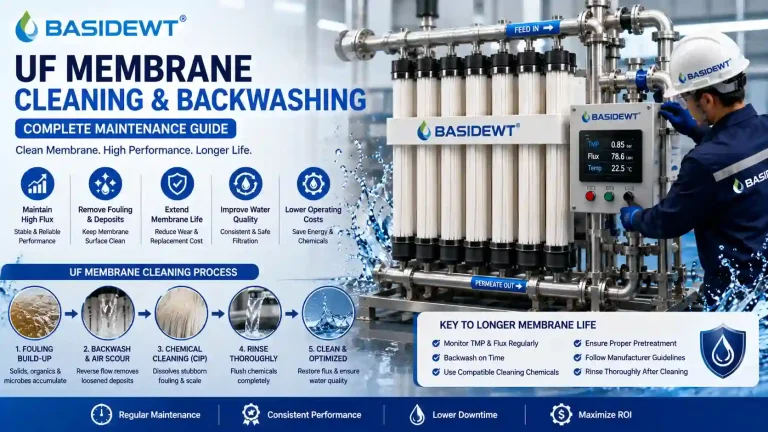
UF Membrane Cleaning & Backwashing: Complete Maintenance Guide
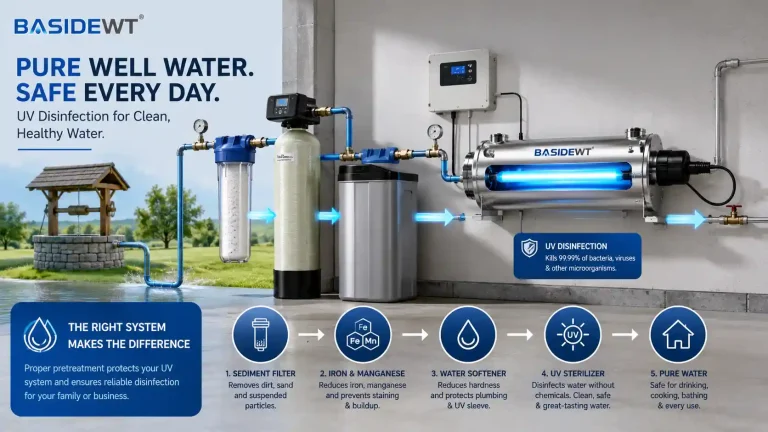
UV Water Sterilizer for Well Water: Selection and Application Guide
