BasideWT- Whole Home Water Filtration System & Replacement


Water Softener System: Types, Benefits, Installation & Buying Guide
A water softener system removes calcium and magnesium from your water supply, turning hard water into soft water that protects pipes, appliances, and skin. If you have ever noticed white scale on your faucets or dull, scratchy laundry, hard water is likely the cause. This guide explains everything homeowners, distributors, and industrial buyers need to know before choosing a water softening system.
Whether you manage a single household or source equipment for commercial clients, understanding how these systems work will help you make a confident buying decision. Throughout this guide, we will point you toward more detailed articles that dive deeper into specific topics.
What Is a Water Softener System?
A water softener system is a treatment device that reduces water hardness by removing dissolved minerals, mainly calcium and magnesium. These minerals enter water naturally as it passes through rock and soil, and their concentration determines how “hard” your water is.
Hard water is not dangerous to drink. However, it causes practical problems. It leaves scale deposits inside pipes and water heaters, reduces soap and detergent effectiveness, and shortens the lifespan of appliances like dishwashers and washing machines.
Soft water, by contrast, contains little to no calcium or magnesium. It lathers better, rinses cleaner, and protects your plumbing system from mineral buildup over time. Because water hardness varies significantly by region and source, testing your water is the first step before choosing a system.
Understanding your specific hardness level matters because it directly affects which unit size and type will work best for your household or facility. We cover this hardness testing process in more depth in our dedicated hard water guide.
Water hardness is usually measured in grains per gallon (GPG) or milligrams per liter (mg/L). Water below 1 GPG is considered soft, while anything above 10 GPG counts as very hard. Municipal water reports often list hardness values, but private well owners should test independently, since groundwater composition can vary even between neighboring properties.
Experienced water treatment engineers recommend testing at least once a year, since seasonal rainfall and groundwater shifts can change mineral concentration over time. A simple test strip gives a quick estimate, while a laboratory analysis provides precise numbers for accurate system sizing.
How Does a Water Softener System Work?
Most residential and commercial units rely on a process called ion exchange. Water flows through a resin tank filled with tiny negatively charged resin beads. These beads attract and hold onto positively charged calcium and magnesium ions, replacing them with sodium ions.
As water passes through the resin bed, hardness minerals stick to the beads while softened water exits the tank. Over time, the resin becomes saturated and loses its exchange capacity. This is where the brine tank and control valve come into play.
The control valve monitors water usage and triggers a regeneration cycle once the resin needs refreshing. During regeneration, a concentrated brine solution from the brine tank flushes through the resin bed. The sodium ions in the brine displace the trapped calcium and magnesium, washing them down the drain and restoring the resin’s capacity.
This cycle repeats automatically, which is why modern control valves are so important to system efficiency. A well-calibrated valve balances water flow, salt consumption, and regeneration frequency to keep your soft water supply consistent without wasting resources. You can explore valve options in more detail through our water softener control valve product page.
Consider a practical example. A family of four using around 300 gallons of water daily, with a hardness level of 15 GPG, removes roughly 4,500 grains of hardness every day. A properly sized resin tank handles this load comfortably, regenerating on a predictable schedule rather than constantly running low on capacity.
Modern control valves also use demand-initiated regeneration, meaning they track actual water usage instead of regenerating on a fixed timer. This approach reduces unnecessary salt consumption and water waste, which matters for both cost savings and environmental impact.
Water Softener vs Water Filter
People often confuse water softeners with water filters, but they serve different purposes. A water softener specifically targets hardness minerals through ion exchange. A water filter, on the other hand, removes sediment, chlorine, contaminants, or odors, depending on the filter media used.
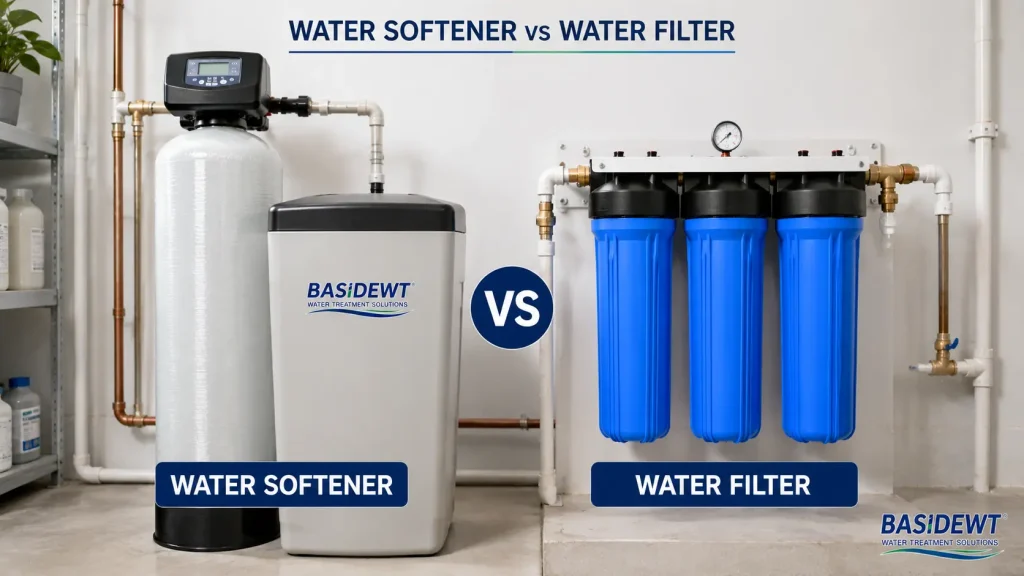
If your primary concern is scale buildup, spotty dishes, or dry skin, a softener addresses that directly. If your concern is taste, chlorine smell, or particulate matter, a filtration system is the better solution.
Many households actually benefit from combining both. A softener handles hardness, while a filter improves overall water quality and taste. Our broader water filtration system range covers both approaches, so you can build a complete treatment setup rather than choosing just one function.
Types of Water Softener Systems
Choosing the right type depends on your water usage, budget, and application. Here are the main categories available today.
Salt-based systems use the traditional ion exchange process described earlier. They are highly effective, widely available, and suitable for most homes and businesses.
Salt-free systems condition water rather than removing minerals entirely. They use a template-assisted crystallization process that prevents scale from forming, without adding sodium to your water. These units require less maintenance but are generally less effective for very hard water.
Dual tank systems use two resin tanks so one can regenerate while the other continues supplying soft water. This ensures a continuous supply, making dual tank units ideal for larger households or businesses with round-the-clock water demand.
Magnetic and electronic systems use magnetic fields to alter mineral behavior, reducing scale formation without chemicals or salt. Results vary, and these systems work best as a supplementary solution rather than a primary softening method.
Commercial systems are built for higher flow rates and heavier daily usage, commonly found in restaurants, laundromats, and hotels.
Industrial systems handle much larger volumes and often integrate with boilers, cooling towers, or manufacturing processes where consistent water quality is critical.
| Type | Best For | Maintenance Level | Salt Use |
|---|---|---|---|
| Salt-Based | Homes, businesses | Moderate | Yes |
| Salt-Free | Low-maintenance homes | Low | No |
| Dual Tank | Large households | Moderate | Yes |
| Magnetic | Supplementary use | Very Low | No |
| Commercial | Restaurants, hotels | Moderate to High | Yes |
| Industrial | Factories, plants | High | Yes |
For home applications, our water softener for home collection offers compact, efficient options. For larger operations, the industrial water softener range is engineered for high-capacity performance.
Benefits of Installing a Water Softener System
The advantages of softening your water extend well beyond convenience.
Appliance protection comes first. Scale buildup inside water heaters, dishwashers, and washing machines forces them to work harder, which shortens their lifespan and raises repair costs.
Pipe protection follows closely. Mineral deposits gradually narrow pipe diameter, reducing water pressure and increasing the risk of clogs over time.
Scale prevention keeps fixtures, glassware, and surfaces looking clean, since soft water does not leave the chalky residue hard water creates.
Better soap efficiency means you use less detergent and soap to get the same cleaning results, which saves money over time.
Lower energy consumption results from scale-free heating elements. Even a thin layer of scale can significantly reduce heating efficiency.
Longer equipment life ties all these benefits together. Softened water reduces wear across your entire plumbing and appliance network, which translates into fewer replacements and lower long-term costs.
How to Choose the Right Water Softener System
Selecting the correct water softener system depends on several practical factors.
Family size determines your daily water consumption, which directly influences the unit’s required capacity. Larger households need higher grain capacity to avoid frequent regeneration cycles.
Water hardness should always be tested before purchasing. Higher hardness levels demand larger resin tanks or more frequent regeneration.
Grain capacity refers to how many grains of hardness a system can remove before needing to regenerate. This is typically measured in thousands of grains, and choosing correctly prevents both undersizing and unnecessary oversizing.
Flow rate matters because it determines whether the system can supply enough softened water during peak usage, such as simultaneous showers and laundry cycles.
Water usage patterns in commercial applications differ significantly from residential ones, often requiring dual tank or commercial-grade equipment to maintain constant supply.
Commercial applications also require considering local water regulations, discharge limits, and integration with existing plumbing infrastructure.
Water Softener Size Guide
Sizing a water softener correctly avoids two common mistakes: undersizing, which leads to frequent regeneration and higher salt consumption, and oversizing, which wastes money on unnecessary capacity.
A simple sizing approach multiplies your household’s daily water usage by your water hardness level, then adds a buffer for peak demand. Commercial and industrial buyers typically work with engineers to calculate exact grain capacity requirements based on flow rate and operational hours. We explore detailed sizing calculations, including step-by-step formulas, in our dedicated sizing guide.
As a general reference, a household of two people with moderately hard water often performs well with a 24,000-grain system, while larger families with harder water may need 32,000 to 48,000 grains of capacity. Commercial facilities with continuous demand frequently require multiple units working in tandem to avoid supply gaps during peak hours.
Choosing between weekly and daily regeneration schedules also affects sizing. A system sized for daily regeneration can use a smaller resin tank, while weekly regeneration requires more capacity upfront but reduces how often the regeneration cycle runs.
Whole House Water Softener Systems
A whole house water softener treats all the water entering your property, rather than softening water at a single point of use. This ensures every faucet, shower, and appliance receives consistently soft water.
Whole house systems are typically installed near the main water line, right after the meter and before the water heater. This placement protects the heater from scale buildup while ensuring softened water reaches every outlet in the building. Homeowners who want comprehensive protection, rather than isolated fixes, generally choose this whole-property approach.
This approach differs from point-of-use softening, which only treats water at a single fixture, such as a kitchen tap. While point-of-use units cost less upfront, they leave the rest of the plumbing system exposed to hardness minerals, which limits their long-term value for pipe and appliance protection.
For larger homes with multiple bathrooms, a whole house system also simplifies maintenance, since you only manage one unit instead of several smaller devices scattered throughout the property.
Best Water Softener System for Well Water
Well water often contains higher mineral content and sometimes iron, which requires a system built to handle these additional challenges. A standard softener designed for municipal water may struggle with well water’s variability.
The best water softener system for well water usually includes iron-fighting resin or a pre-filter stage to remove sediment before the softening process begins. Testing well water regularly is essential, since mineral content can fluctuate seasonally and affect system performance.
Well water systems often benefit from a sediment pre-filter installed ahead of the softener. This protects the resin bed from sand, silt, and debris that could otherwise reduce its lifespan and clog the control valve over time.
Iron content above 3 mg/L typically requires specialized iron-removal resin or a dedicated iron filter, since standard softening resin can become fouled quickly under heavy iron loads. Working with an experienced water treatment company helps well owners avoid costly trial-and-error when selecting the right combination of equipment.
Water Softener Installation
Installing a water softener system correctly ensures reliable performance and prevents pressure loss throughout your plumbing. The unit typically connects to your main water line, with bypass valves allowing maintenance without shutting off your entire water supply.
Professional installation is recommended for whole house and commercial systems, since incorrect plumbing connections can affect both water pressure and softener efficiency. Proper drainage for the regeneration cycle also needs careful planning, particularly for larger commercial water softener installations. We cover step-by-step installation guidance in a separate, detailed article.
Before installation begins, the site should have adequate space for both the resin tank and brine tank, along with access to a drain line and electrical outlet for the control valve. Ambient temperature also matters, since freezing conditions can damage internal components if the unit sits in an unheated space.
Commercial and industrial installations often require additional planning around peak flow rate, backup capacity, and integration with existing water treatment infrastructure. Engineers typically review blueprints and water usage data before finalizing placement to avoid costly rework later.
Water Softener Maintenance
Routine water softener maintenance keeps your system running efficiently for years. This includes checking salt levels in the brine tank regularly and refilling as needed to maintain consistent regeneration.
Periodically inspecting the resin bed for buildup or fouling helps catch performance issues early. The control valve should also be checked to confirm regeneration cycles are occurring at the correct frequency. For dosing components, our brine tanks selection includes options built for consistent, low-maintenance operation.
Neglecting maintenance leads to reduced softening capacity, higher salt consumption, and eventually resin damage that requires costly replacement.
A simple monthly maintenance routine includes checking salt levels, looking for signs of salt bridging, and confirming the brine tank is free of debris. Annual maintenance should involve a deeper inspection of the resin bed, valve seals, and injector system to catch wear before it affects performance.
Commercial and industrial systems typically need more frequent professional servicing due to higher water throughput. Establishing a documented maintenance schedule helps facility managers track performance trends and plan for resin replacement before efficiency drops noticeably.
Common Water Softener Problems
Even reliable systems can develop issues over time. Resin fouling occurs when iron, sediment, or bacteria build up on the resin beads, reducing their exchange capacity.
Valve malfunctions sometimes prevent regeneration cycles from starting or completing correctly, leading to hard water bypassing the system entirely. Salt bridging, where hardened salt forms a crust in the brine tank, can also stop regeneration from happening properly.
Low water pressure after installation often points to an undersized system or a clogged resin bed. Addressing these problems early prevents more expensive repairs and protects your equipment investment.
Another frequent issue is water that remains hard even after softening. This usually traces back to bypass valves left open, incorrect regeneration settings, or resin that has reached the end of its service life. Checking these three areas first often resolves the problem without needing a technician visit.
Unusual noises during regeneration, such as gurgling or hissing, are normal and indicate the brine draw and rinse cycles are functioning correctly. However, persistent leaks around the valve head or bypass fittings should be addressed promptly to prevent water damage.
Water Softener Resin
Resin is the core component responsible for the ion exchange process. High-quality resin beads offer greater exchange capacity, longer lifespan, and better resistance to fouling from iron or sediment.
Over time, resin naturally degrades due to chlorine exposure, iron fouling, or general wear, which reduces its softening capacity. Replacing resin at the right interval restores your system’s original performance. Our water softener resin selection includes options suited for both residential and industrial applications, depending on your water quality and usage volume.
Standard resin typically lasts between 10 and 15 years under normal conditions, though heavy iron content, chlorine exposure, or excessive water usage can shorten this lifespan considerably. Signs that resin needs attention include a noticeable drop in softening performance, increased salt consumption, or resin beads appearing in the water supply.
For industrial and commercial buyers, resin selection depends heavily on water chemistry and throughput requirements. High-capacity resin formulated for iron resistance or chlorine tolerance often justifies its higher cost through extended service life and fewer regeneration cycles.
Signs It’s Time to Replace Your Water Softener
Several warning signs indicate your system needs replacement rather than repair. Declining water quality, despite regular maintenance, often signals that the resin or internal components have reached the end of their useful life.
Frequent breakdowns, rising salt consumption without improved performance, and visible scale returning to fixtures are all signs your current unit can no longer keep up with demand. Systems older than 10 to 15 years also become less efficient compared to newer technology, making replacement a more cost-effective choice than continued repairs.
Water Softener System Cost
Water softener system cost varies based on type, capacity, and installation complexity. Salt-based systems generally cost less upfront than salt-free or dual tank alternatives, though ongoing salt purchases add to long-term expenses.
Commercial and industrial systems involve higher upfront investment due to larger tanks, higher-capacity valves, and more complex installation requirements. However, these systems often deliver better long-term value through reduced maintenance and consistent performance at scale. Factoring in resin replacement, salt consumption, and occasional part replacements gives a more accurate picture of total ownership cost beyond the initial purchase price.
Installation cost also varies depending on plumbing complexity, drain accessibility, and whether existing infrastructure needs modification. Retrofitting an older home often costs more than installing during new construction, since additional plumbing work may be required.
For distributors and OEM buyers, sourcing directly from a manufacturer typically reduces per-unit cost compared to retail channels, particularly for bulk orders involving whole house or commercial-grade equipment.
Water Softener Buying Guide
Bringing all these factors together, a smart water softener buying guide comes down to a few key steps. First, test your water hardness to understand what you are working with. Second, calculate your household or facility’s daily water usage and required grain capacity.
Third, decide between salt-based, salt-free, dual tank, or specialized systems based on your specific needs and maintenance preferences. Fourth, consider your budget not just for the unit itself, but for ongoing salt, resin, and maintenance costs over its lifespan.
Finally, choose a supplier with proven experience across residential, commercial, and industrial applications. For a deeper technical understanding of ion exchange principles and resin performance, the Pentair Learning Center offers helpful educational resources worth reviewing before you finalize your decision.
Conclusion
A water softener system is one of the most practical investments you can make for your home, business, or facility. It protects appliances, extends pipe lifespan, and improves everyday water quality by eliminating hardness minerals through ion exchange.
From choosing the right type and size to understanding installation, maintenance, and long-term costs, every decision affects how well your system performs over time. Explore our complete water softener system range to find equipment suited to your specific needs, and browse our soft water system category for additional configurations. Each supporting article linked throughout this guide covers its topic in greater depth, helping you make a fully informed decision.
RELATED POSTS
Water Treatment Products FAQ – Key Questions
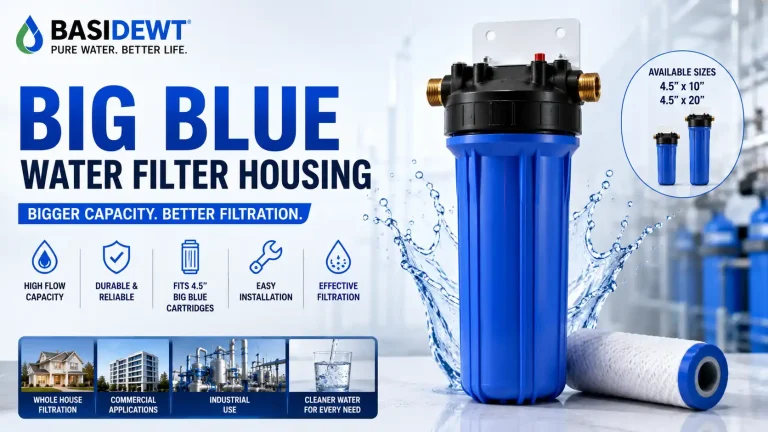
Big Blue Water Filter Housing: Sizes, Benefits & Applications
How Often Do I Need to Change My Filters?
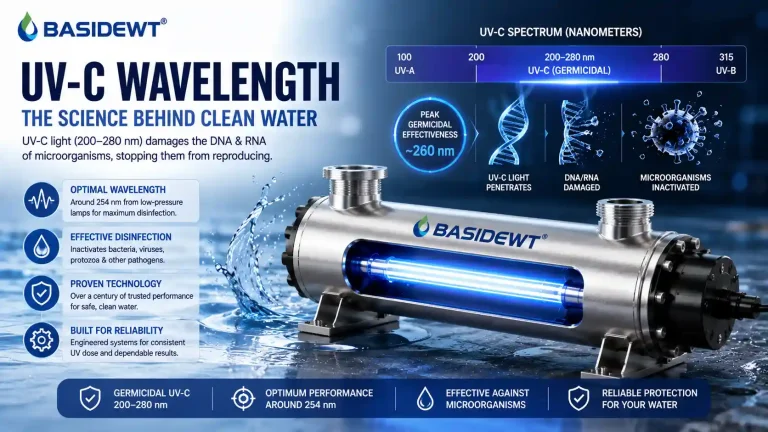
UV-C Wavelength for Water Sterilization Explained
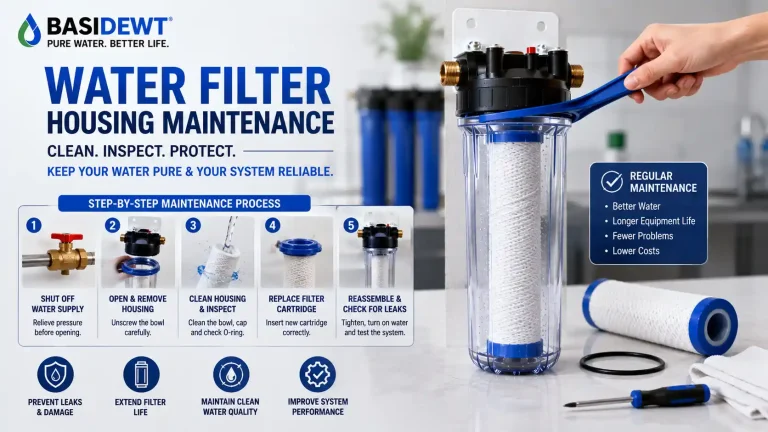
Water Filter Housing Maintenance: Cleaning, Inspection & Care Guide