BasideWT- Whole Home Water Filtration System & Replacement


Common Water Softener System Problems and How to Fix Them
Water softener system problems usually start small, and that is exactly why so many homeowners ignore them until the damage gets worse. A slight taste change, a noisy tank, or a sudden spike in salt use can all point to an issue that needs attention right away. Left unchecked, these small warning signs often turn into bigger repair bills or a complete system replacement.
That is why early diagnosis matters so much. A water softener system is a mechanical device, and like any mechanical device, it wears down over time. Salt bridges form, resin beads lose their charge, and control valves stick. Once you understand the pattern behind these failures, you can usually fix them yourself, without calling a technician or replacing the entire unit.
This guide walks you through the most common water softener system problems, why they happen, and how to solve each one. If you want to understand the full mechanics first, our guide on how a water softener system works explains the regeneration cycle in detail.
Water Softener System Problems: Quick Overview
Before diving into each issue, it helps to see the full picture. The table below summarizes the most frequent problems, their likely causes, and a quick fix direction.
| Problem | Likely Cause | Quick Fix Direction |
|---|---|---|
| Water isn’t softening | Low salt, salt bridge, exhausted resin | Refill brine tank, break bridge, check resin |
| Salt bridge or mushing | Humidity, wrong salt type, overfilling | Break up crust, switch salt type |
| Poor resin performance | Iron fouling, chlorine damage, age | Clean resin bed or replace |
| Low water pressure | Clogged screen, undersized valve, sediment | Clean injector, check valve sizing |
| Continuous running | Valve stuck, timer error, faulty motor | Reset controller, inspect valve |
| Salty tasting water | Improper regeneration, valve leak | Adjust settings, inspect drain line |
| Noises or leaks | Worn seals, cracked tank, loose fittings | Inspect seals, tighten connections |
Keep this table handy as a starting checklist. Then, use the detailed sections below to confirm the cause and apply the correct fix.
Water Softener Is Not Softening Water
This is the most common complaint homeowners report, and it usually has more than one cause. Fortunately, most causes are easy to identify once you know where to look.
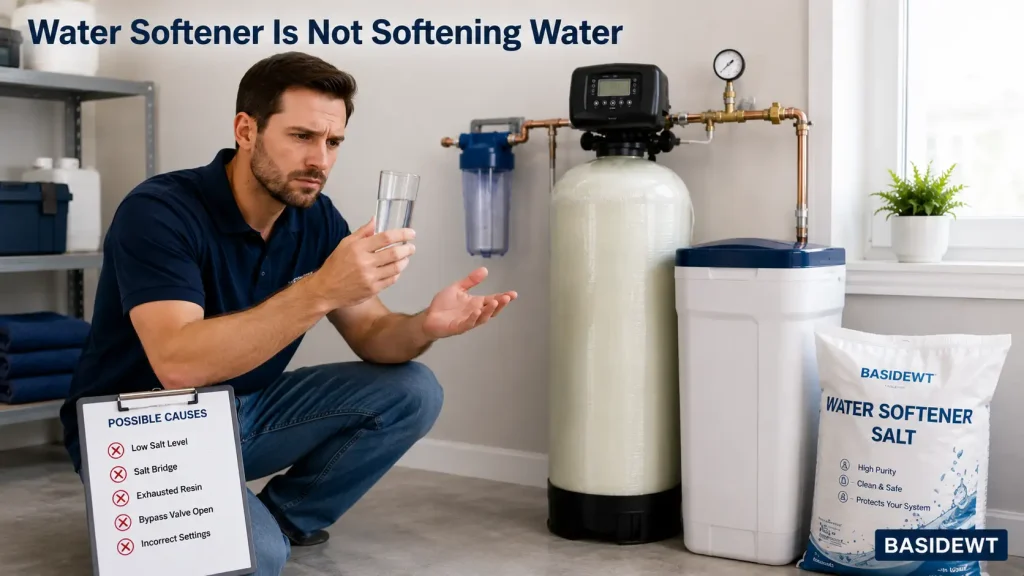
Possible causes include an empty or low brine tank, a hardened salt bridge, exhausted resin, or a bypass valve left in the wrong position. Sometimes the control valve simply needs reprogramming after a power outage.
Diagnosis starts with a simple hardness test. Run your tap water through a test strip or drop kit. If the reading shows hard water right after regeneration, the resin bed may not be recharging properly. Check the salt level next, since low brine concentration weakens the regeneration cycle.
Solutions are usually straightforward. Refill the salt to the recommended level, and confirm the bypass valve is set to “service” rather than “bypass.” If the resin has not been recharged in months, run a manual regeneration cycle. When none of these steps restore softness, the resin itself may be exhausted and need replacement.
It also helps to check the hardness setting on your control head. If someone reprogrammed the unit, or if a recent power surge reset the controller to factory defaults, the system may regenerate far less often than your water actually requires. Confirm the setting matches your local water hardness, which most municipal suppliers list on their annual water quality report. A mismatch here is one of the most overlooked causes of a softener that suddenly stops performing.
Salt Bridge and Salt Mushing Problems
A salt bridge forms when a hard crust develops above the water level inside the brine tank. This crust blocks salt from dissolving, even though the tank looks full from the outside.
Causes include high humidity, using the wrong salt type, or overfilling the tank. Cheap rock salt tends to form bridges more often than solar or pellet salt.
Symptoms include a hollow sound when tapping the tank, water that never softens despite a full salt supply, and unusually low salt usage over several weeks.
Prevention starts with choosing the right salt for your climate and system type. Our comparison of salt-based and salt-free softeners explains how salt choice affects long-term performance. Keeping the tank in a dry, stable environment also reduces bridging.
Fixes are simple. Use a broom handle or similar tool to gently break the crust apart, then stir the loose salt at the bottom. Avoid using sharp objects that could puncture the tank. Salt mushing, a related problem where salt turns into thick sludge, usually requires draining and cleaning the tank completely before adding fresh salt.
After clearing a bridge, keep the salt level between one third and one half full rather than topping it off completely. A partially filled tank allows more airflow around the salt, which lowers humidity buildup and reduces the chance of another bridge forming within the same season.
Resin Bed Problems
The resin bed does the actual work of softening your water, so problems here directly affect performance. Resin issues fall into a few categories.
Fouled resin happens when iron, manganese, or sediment coat the resin beads. This coating blocks the ion exchange process, even though the beads themselves remain intact. A resin cleaner designed for iron removal can often restore performance without replacement.
Damaged resin occurs when chlorine or chloramine breaks down the bead structure over time. Once resin degrades this way, cleaning will not help, and replacement becomes necessary.
Resin lifespan typically ranges from ten to fifteen years, depending on water quality and usage. Homes with high iron content or heavy chlorine tend to see shorter resin life. According to the Pentair Learning Center, resin degradation accelerates significantly when systems run without regular maintenance checks.
Cleaning vs replacement depends on the resin’s condition. If beads look intact but discolored, a cleaning solution usually solves the issue. If beads appear cracked, undersized, or stuck together, replacement is the only reliable fix. Comparing your unit against a standard water filter system can also help you understand whether resin fatigue or filtration limits are causing the drop in quality.
To check resin condition yourself, scoop out a small sample from the top of the tank and rinse it in a clear glass. Healthy beads look uniform in size and color, usually amber or dark brown depending on the brand. Beads that appear crushed, pitted, or noticeably smaller than a fresh sample have likely reached the end of their service life, and topping off the tank will not restore softening capacity at that point.
Low Water Pressure After Installing a Water Softener
Pressure drops after installation frustrate many homeowners, but the cause is often mechanical rather than related to the unit’s core function.
Common reasons include a clogged inlet screen, an undersized control valve, sediment buildup inside the resin tank, or improperly sized piping during installation. A softener that is too small for household demand can also restrict flow during peak usage.
Solutions start with checking the inlet and outlet screens for debris. Clean or replace them if clogged. Next, inspect the injector and venturi assembly, since a partially blocked venturi reduces flow during regeneration. If the pressure issue began right after setup, revisit the installation itself. Our detailed installation guide covers correct pipe sizing and valve placement, both of which affect long-term pressure performance.
A useful test is to compare pressure before and after the softener using an outdoor spigot on each side of the plumbing line. A significant drop across the unit confirms the restriction sits inside the softener itself, rather than elsewhere in your home’s plumbing. This narrows the search considerably and saves time during diagnosis.
Water Softener Keeps Running Continuously
A softener that regenerates nonstop wastes salt, water, and money. This problem almost always traces back to the control valve or its settings.
Control valve issues are the most frequent cause. A stuck piston or worn seal can trap the valve in regeneration mode, preventing it from returning to normal service.
Programming errors happen when the timer or meter settings do not match your household’s actual water usage. An incorrect regeneration frequency forces the system to cycle far more often than necessary.
Mechanical failures, including a broken drive motor or a jammed rotor, can also keep the valve locked in one position. If resetting the controller does not resolve the issue, the valve assembly likely needs professional inspection or replacement.
Water Tastes Salty
A salty taste usually means something in the regeneration process needs adjustment, not that the system is broken.
This happens when the brine tank overflows into the resin tank, when the drain line becomes blocked, or when the control valve fails to rinse the resin bed properly after regeneration. Excess salt setting on the control head can also push more sodium into the water than necessary.
To correct it, check the drain line for blockages and confirm the float valve inside the brine tank operates correctly. Next, review your control valve’s salt dosage setting and reduce it if it exceeds your household’s hardness requirements. Running an extra manual regeneration cycle often flushes out residual brine and restores normal taste within a day.
Strange Noises, Leaks and Other Warning Signs
Unusual sounds or moisture around your water softening system deserve prompt attention, since they often signal a problem before it becomes serious.
Grinding or humming noises usually point to a failing motor or a worn bearing inside the control valve. A hissing sound during regeneration is often normal, but a continuous hiss when the system sits idle suggests a valve leak. Gurgling noises from the brine tank typically mean air is trapped in the line, which is usually harmless but worth monitoring.
Leaks deserve immediate action. Check the fittings first, since loose connections cause most minor leaks. A cracked resin tank or brine tank, however, cannot be repaired and requires replacement. Water pooling near the base of the unit, discoloration on the tank, or a sudden drop in salt level without a matching softness improvement are all signs that something inside the resin tank or control valve needs closer inspection.
Preventing Future Water Softener Problems
Prevention costs far less than repair, and most water softener system problems are avoidable with a few consistent habits.
Check your salt level monthly and refill before it drops too low. Choose a salt type suited to your climate and water conditions to reduce bridging risk. Inspect the resin bed periodically for signs of fouling, especially if your water supply has high iron content. Keep the venturi and injector clean to protect water pressure and flow.
For a full maintenance schedule, our guide on water softener system maintenance walks through each task step by step. Following a consistent routine extends the life of both whole house water softener units and commercial water softener systems significantly.
When Should You Repair or Replace a Water Softener?
Deciding between repair and replacement depends on the age of your unit, the cost of parts, and how often problems recur.
Repair usually makes sense when the system is under ten years old and the issue involves a single component, such as a valve seal, injector, or float switch. These parts are inexpensive and widely available for most water treatment system brands.
Replacement becomes the smarter choice when the resin bed has degraded beyond cleaning, the tank is cracked, or repairs keep piling up within a short period. A unit older than fifteen years often costs more to maintain than it would to replace with a newer, more efficient model. If you are weighing your options, browsing a reliable water softener system built for long-term performance can help you compare specifications against your current unit’s shortcomings.
Conclusion
Most water softener system problems come down to a handful of predictable causes: low salt, a stubborn salt bridge, tired resin, or a control valve that needs attention. Once you recognize these patterns, diagnosing and fixing the issue becomes far less intimidating.
Regular checks, the right salt choice, and prompt attention to warning signs will keep your system running smoothly for years. If you want to explore the bigger picture, from choosing the right unit to installing and maintaining it correctly, our complete water softener system guide covers every stage of ownership in one place.
RELATED POSTS
Will A Water Filter Help With Hard Water?
Whole House Water Softening System: The Complete Buyer’s Guide for Homeowners and Facility Managers

Is Reverse Osmosis Water Good for You? A Complete Guide to RO Water Benefits and Safety
Plastic vs Stainless Steel Water Filter Housing: Which Is Better?

Is Reverse Osmosis Water the Same as Distilled Water?