BasideWT- Whole Home Water Filtration System & Replacement


FRP Water Storage Tanks for Industrial & Commercial | Custom-Made

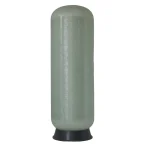
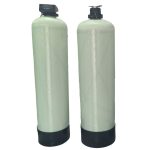
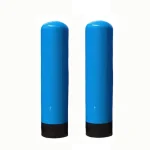
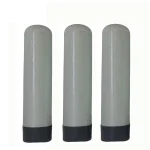
PRODUCT PARAMETERS
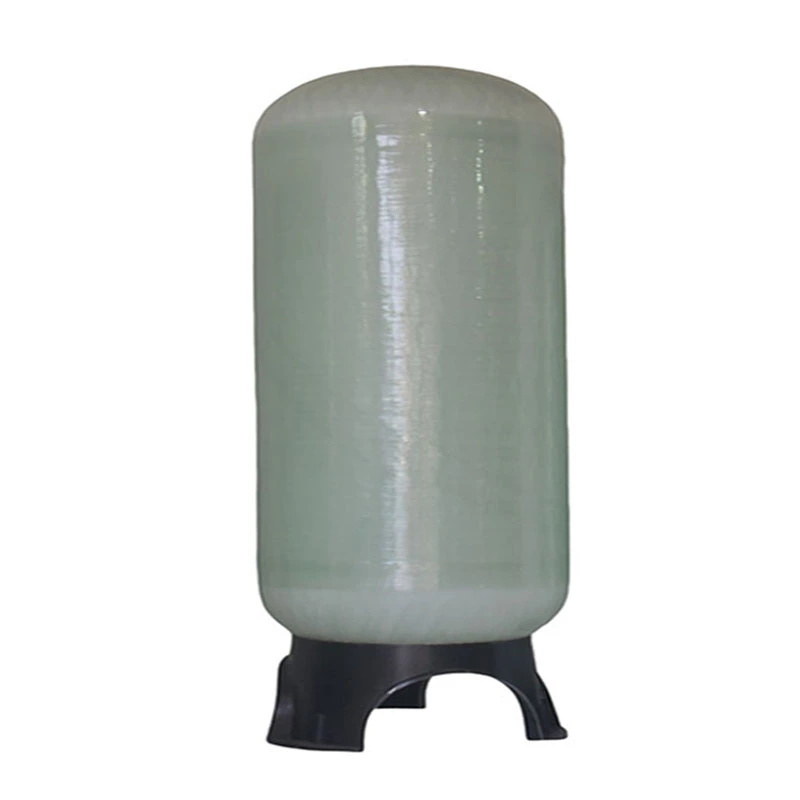
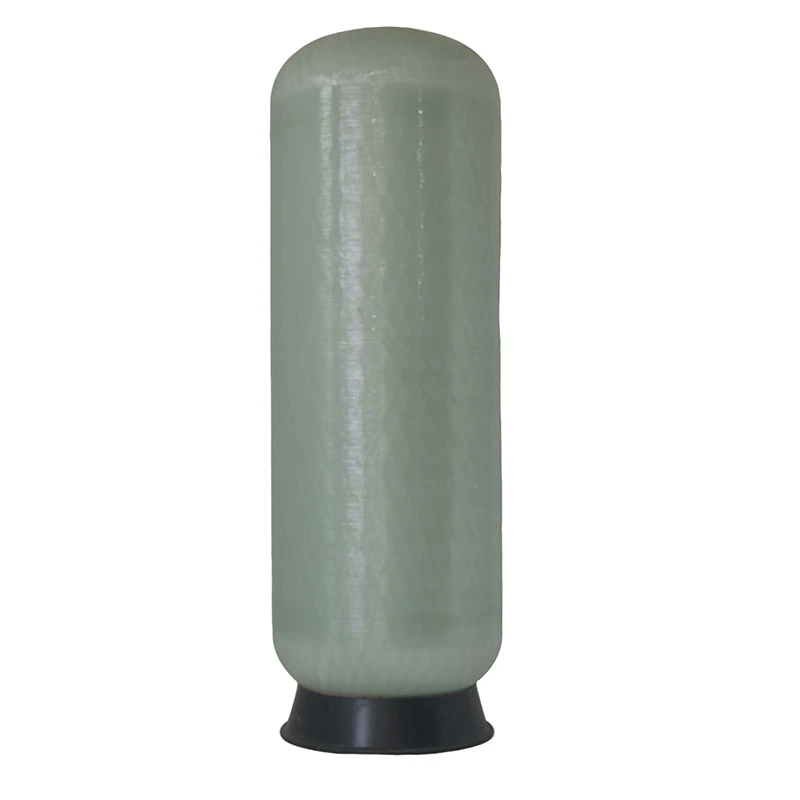
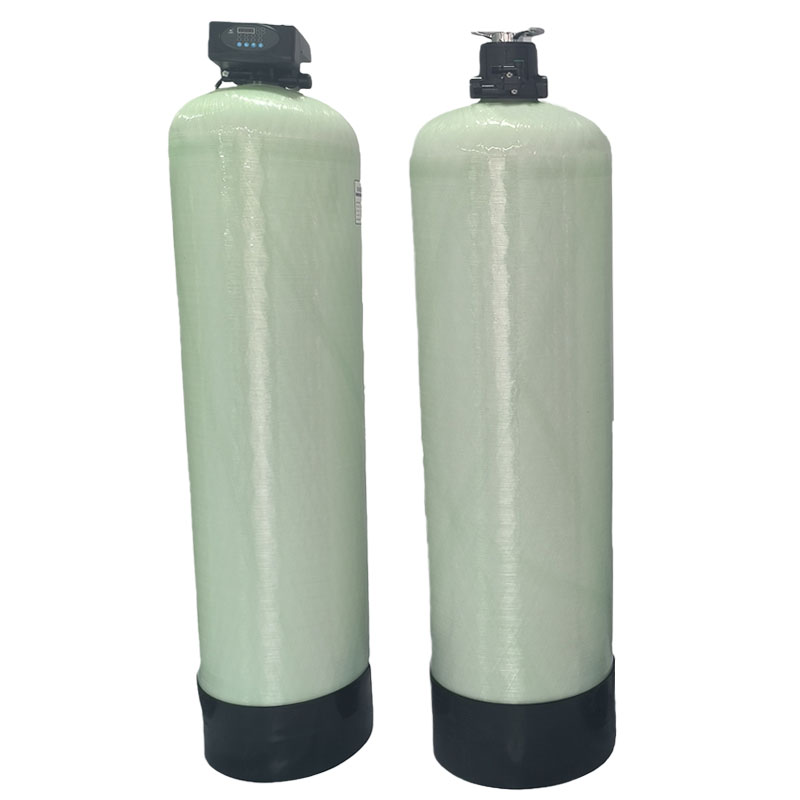
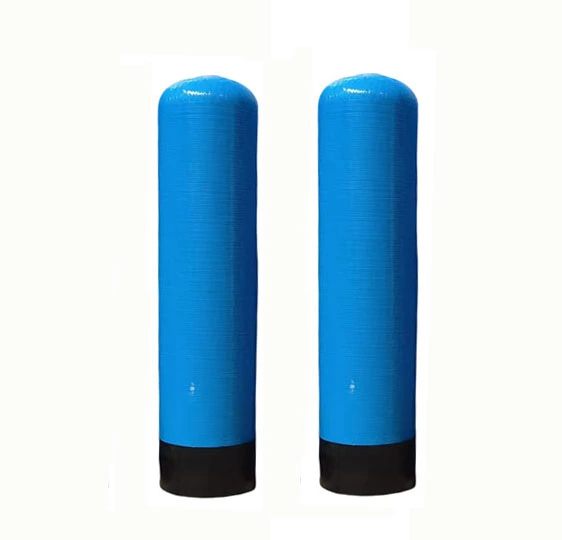
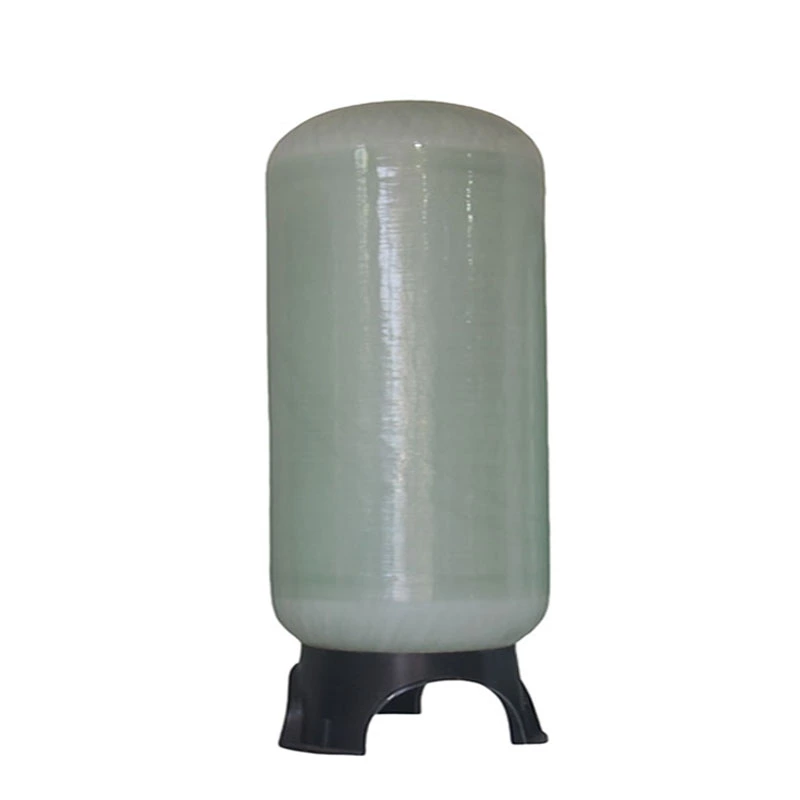
We supply custom-designed Fiberglass Reinforced Plastic (FRP) tanks engineered to your exact specifications. Our FRP Water Storage Tanks provide a lightweight construction and ease of handling, delivering a key advantage across various water treatment applications using water filter housing solutions—from potable water storage and industrial process water to effluent management. Since different stages of treatment involve contact with diverse chemicals, pressures, and environmental conditions, we place utmost importance on selecting the optimal tank solution for each specific phase of the process.
The inherent properties of FRP material provide distinct advantages over alternative tank materials in the market. Its superior corrosion resistance, structural strength, and design flexibility ensure reliable, long-term performance at every critical stage. This safeguards against costly failures, operational downtime, and potential compliance issues. By choosing FRP Water Storage Tanks, you gain the assurance of a durable, low-maintenance, and chemically resistant containment solution, ultimately supporting the integrity, safety, and efficiency of your entire water treatment system.
FRP Water Tank for Reliable Water Storage
FRP water tank solutions are widely used for safe and efficient storage across various industries. A frp water storage tank offers excellent durability, corrosion resistance, and long service life compared to traditional materials. These frp water tanks are ideal for water treatment, chemical handling, and industrial applications where performance and reliability are critical.
FRP Material & Construction
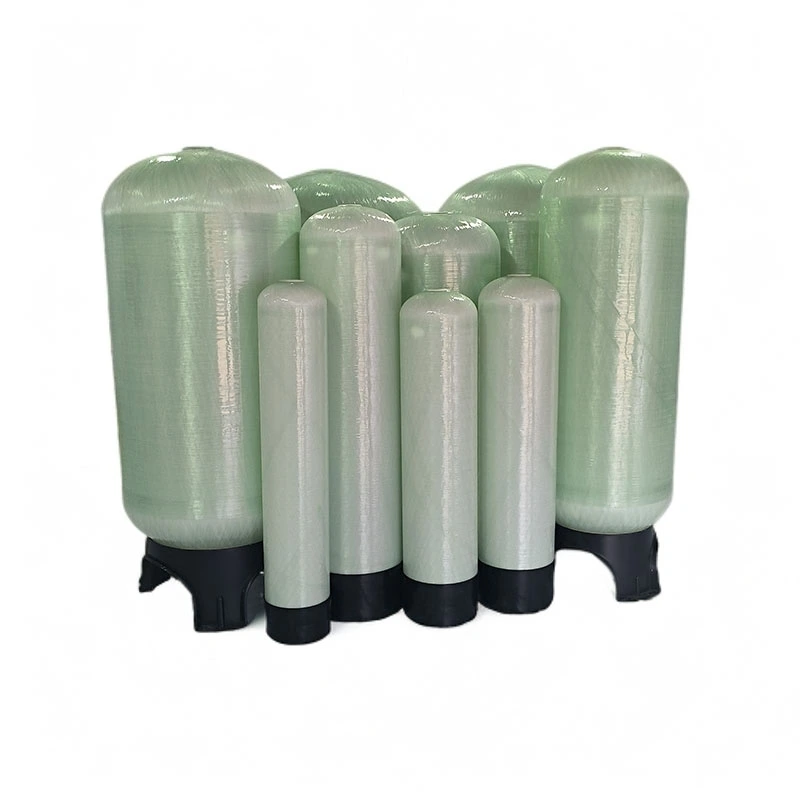
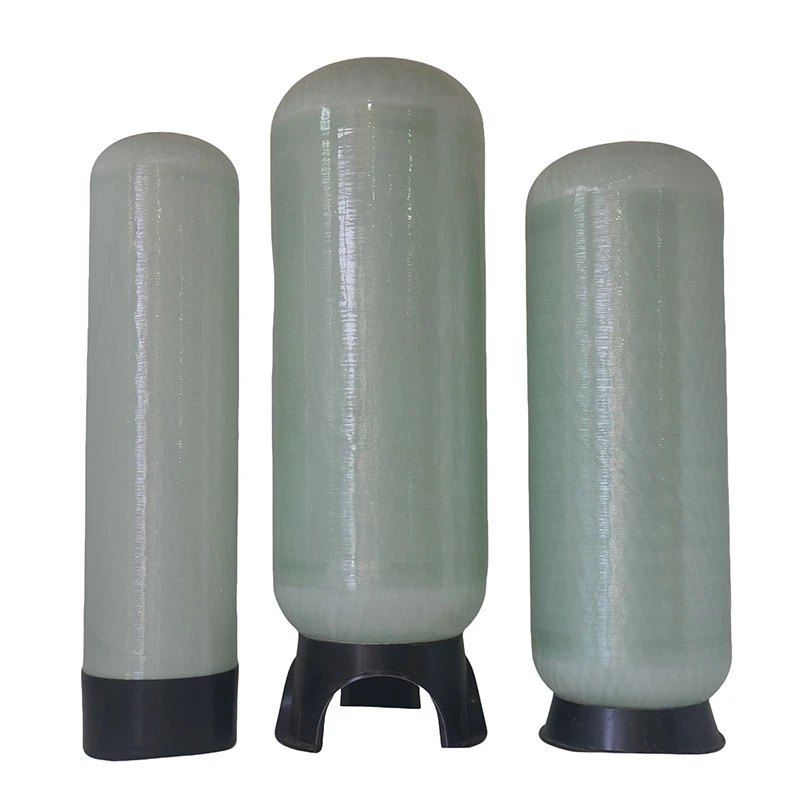
FRP stands for Fiber-Reinforced Plastic, a composite material formed by embedding high-strength glass fibers within a cured polymer resin matrix. We meticulously manufacture our tanks with a dual-layer protective system: we seamlessly bond an inner, one-piece polyethylene (PE) or ABS liner to an outer structural shell reinforced with high-performance epoxy resin. This robust construction provides exceptional corrosion resistance, ensuring the tank is completely rustproof.
FRP Water Storage Tanks Classification
FRP water storage tanks are available in various types to suit different applications, including but not limited to atmospheric storage tanks, pressure vessels, and custom-designed process tanks.
Available Sizes
We construct our FRP tanks from continuous wound fiberglass strands and high-strength epoxy resin. This process delivers remarkable design flexibility and enables production in a wide range of dimensions and capacities to meet diverse project requirements.
Operating Temperature Range
The standard operational temperature range for these FRP tanks is between 1°C and 49°C (34°F to 120°F). Specifications for extended or elevated temperature service are available upon request.
Color Options
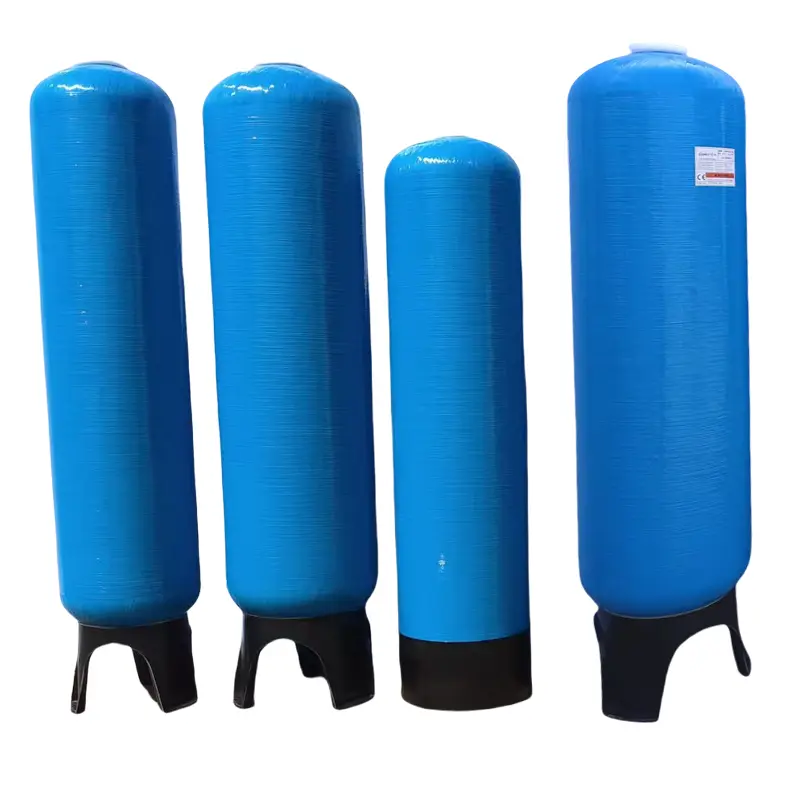
Standard FRP Water Storage Tanks are typically offered in three classic colors:
- Blue
- Grey
- Natural (Off-White)
To accommodate specific project or aesthetic needs, we also provide custom color matching and bespoke design services upon request.
FRP Tanks: Core Advantages
Superior Corrosion Resistance
Highly resistant to acids, alkalis, salts, and solvents, with no rust or electrochemical corrosion. Ideal for chemical and water industries. Inner liner (e.g., vinyl ester) can be customized for specific media.
Lightweight & High-Strength
Weighs only 1/3–1/4 of a steel tank, enabling easier handling. The fiberglass-resin composite ensures high strength, load capacity, and impact resistance
Design Flexibility & Long Life
Custom shapes, sizes, and layouts (vertical/horizontal) available. With strong anti-aging and optional UV protection, service life typically exceeds 20 years.
Smooth Interior & Easy Maintenance
The smooth inner surface reduces scaling, eases cleaning, and preserves liquid purity. No regular anti-corrosion treatments are needed, lowering lifetime costs.
Thermal & Electrical Insulation
Provides good electrical safety and low thermal conductivity, helping maintain contents’ temperature and save energy.
Hygienic & Eco-Friendly
Made from non-toxic, NSF/FDA-compliant materials for water and food applications. Low-VOC production supports environmental goals.
Why Choose an FRP Water Storage Tank Manufacturer in China
As a professional FRP Water Storage Tank Manufacturer in China, BasideWT supplies custom-engineered storage solutions for industrial, commercial, and water treatment applications. Manufactured in Aibang Technology Industrial Park, No. 559 Yun Qi Lu, Yuelu District, Changsha, Hunan, China, our FRP tanks combine lightweight construction, excellent corrosion resistance, and long service life. These industrial FRP water storage tanks are designed to perform reliably in demanding environments where durability, chemical compatibility, and low maintenance are essential.
Why FRP Water Storage Tanks Are Ideal for Modern Water Treatment
FRP water tanks are widely used in industrial and commercial projects because they offer corrosion resistance, lightweight handling, and long-term durability. Unlike traditional metal tanks, FRP water storage tanks require less maintenance and perform well in demanding environments where water quality and storage reliability are critical. They are commonly used with RO systems for purified water storage, filtration media applications, and large-scale treatment systems where efficiency matters.
Custom FRP Water Storage Tank Supplier in China
BasideWT is a trusted FRP Water Storage Tank Supplier in China, providing customized tank solutions for water treatment plants, industrial process water systems, chemical storage, and commercial facilities. Our custom FRP water storage tanks are available in various sizes and configurations to meet specific project requirements. With advanced manufacturing capabilities and strict quality control standards, we help customers worldwide achieve safe, efficient, and long-lasting water storage performance.
Key Specification Parameters
We engineer our FRP Water Storage Tanks using precise design calculations to guarantee long-term durability and performance. Standard design specifications include
- Working Pressure: 100 psi
- Test Pressure: ≤ 1.0 MPa (150 psi / 10.5 bar)
- Burst Pressure: 300 psi
- Maximum Vacuum: 127 mmHg (5″ Hg)
- Standard Openings: 2.5″ NPSM, 4″ to 8″ UN threaded, or flanged connections
Frp Tanks Size
| Model | Vessel Size | Vol | Opening | Dimension/mm | Notes | |||||
| inch | mm | L | Top | Bot | LA | LB | LC | D | ||
| 0713/2.5T | 7×13 | 181×335 | 6.3 | 2.5″NPSM | / | 335 | 330 | / | 181 | |
| 1717/2.5T | 7×13 | 181×440 | 8.5 | 2.5″NPSM | / | 440 | 435 | / | 181 | |
| 0735/2.5T | 7×35 | 181×895 | 19.1 | 2.5″NPSM | / | 895 | 890 | / | 181 | |
| 0744/2.5T | 7×44 | 181×1125 | 24.3 | 2.5″NPSM | / | 1125 | 1120 | / | 181 | |
| 0813/2.5T | 8×13 | 205×335 | 7.4 | 2.5″NPSM | / | 335 | 330 | / | 205 | |
| 0817/2.5T | 8×17 | 205×440 | 10.5 | 2.5″NPSM | / | 440 | 433 | / | 205 | |
| 0835/2.5T | 8×35 | 205×895 | 23.6 | 2.5″NPSM | / | 895 | 888 | / | 205 | |
| 0844/2.5T | 8×44 | 205×1125 | 31.3 | 2.5″NPSM | / | 1125 | 1118 | / | 205 | |
| 0917/2.5T | 9×17 | 232×440 | 13.2 | 2.5″NPSM | / | 440 | 435 | / | 232 | |
| 0935/2.5T | 9×35 | 232×898 | 31.6 | 2.5″NPSM | / | 898 | 890 | / | 232 | |
| 0942/2.5T | 9×42 | 232×1074 | 38.5 | 2.5″NPSM | / | 1074 | 1067 | / | 232 | |
| 0948/2.5T | 9×48 | 232×1228 | 44.6 | 2.5″NPSM | / | 1228 | 1221 | / | 232 | |
| 1017/2.5T | 10×17 | 257×450 | 16.5 | 2.5″NPSM | / | 450 | 430 | / | 257 | |
| 1035/2.5T | 10×35 | 257×910 | 38.3 | 2.5″NPSM | / | 910 | 890 | / | 257 | |
| 1044/2.5T | 10X44 | 257×1130 | 49.5 | 2.5″NPSM | / | 1130 | 1114 | / | 257 | |
| 1054/2.5T | 10×54 | 257×1388 | 61.9 | 2.5″NPSM | / | 1388 | 1370 | / | 257 | |
| 1248/2.5T | 12×48 | 307×1220 | 77.3 | 2.5″NPSM | / | 1220 | 1214 | / | 307 | |
| 1252/2.5T | 12×52 | 307×1335 | 84.8 | 2.5″NPSM | / | 1335 | 1328 | / | 307 | |
| 1265/2.5T | 12×65 | 307×1650 | 106.3 | 2.5″NPSM | / | 1400 | 1392 | / | 334 | |
| 1344/2.5T | 13×44 | 334×1135 | 82.9 | 2.5″NPSM | / | 1662 | 1654 | / | 360 | |
| 1354/2.5T | 13×54 | 334×1400 | 103.6 | 2.5″NPSM | / | 1400 | 1392 | / | 334 | |
| 1665/2.5T | 16×65 | 410×1670 | 187.7 | 2.5″NPSM | / | 1670 | 1662 | / | 410 | |
| 1665/4T | 16×65 | 410×1670 | 187.7 | 4″-8UN | / | 1670 | 1662 | / | 410 | |
| 1665/4T 4B | 16×65 | 410×1830 | 187.7 | 4″-8UN | 4″-8UN | 1830 | 1650 | 180 | 410 | |
| 1685/4T | 18×65 | 465×1675 | 249 | 4″-8UN | / | 1670 | 1660 | / | 465 | |
| 1865/4T 4B | 16×65 | 465×1825 | 249 | 4″-8UN | 4″-8UN | 1830 | 1650 | 180 | 465 | |
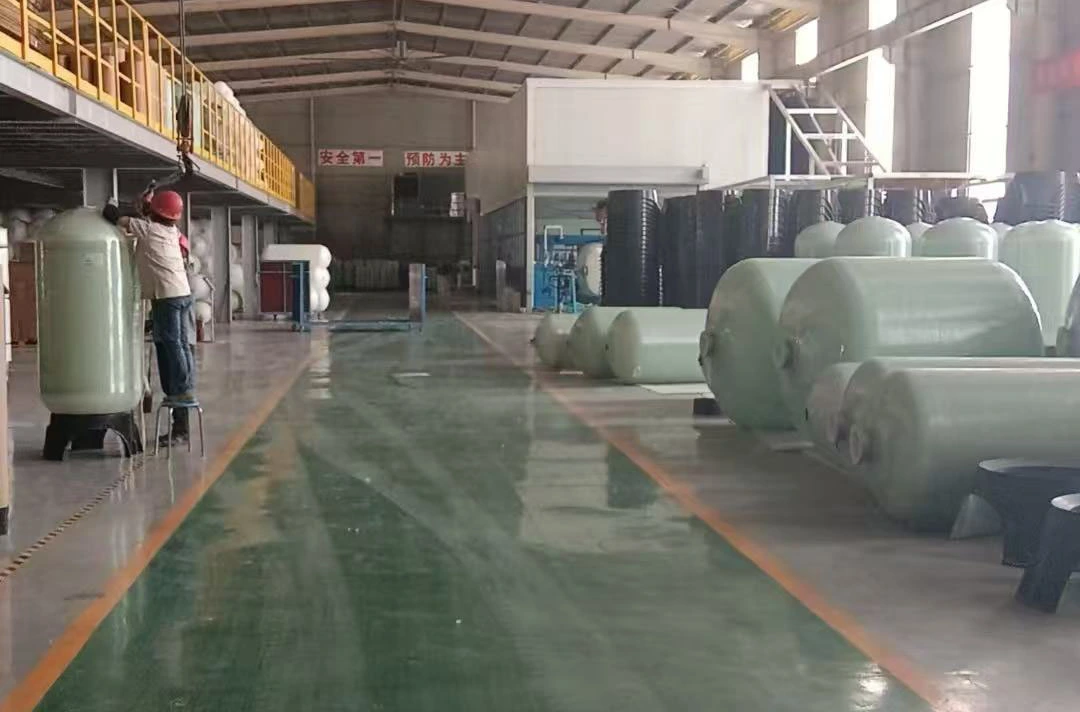
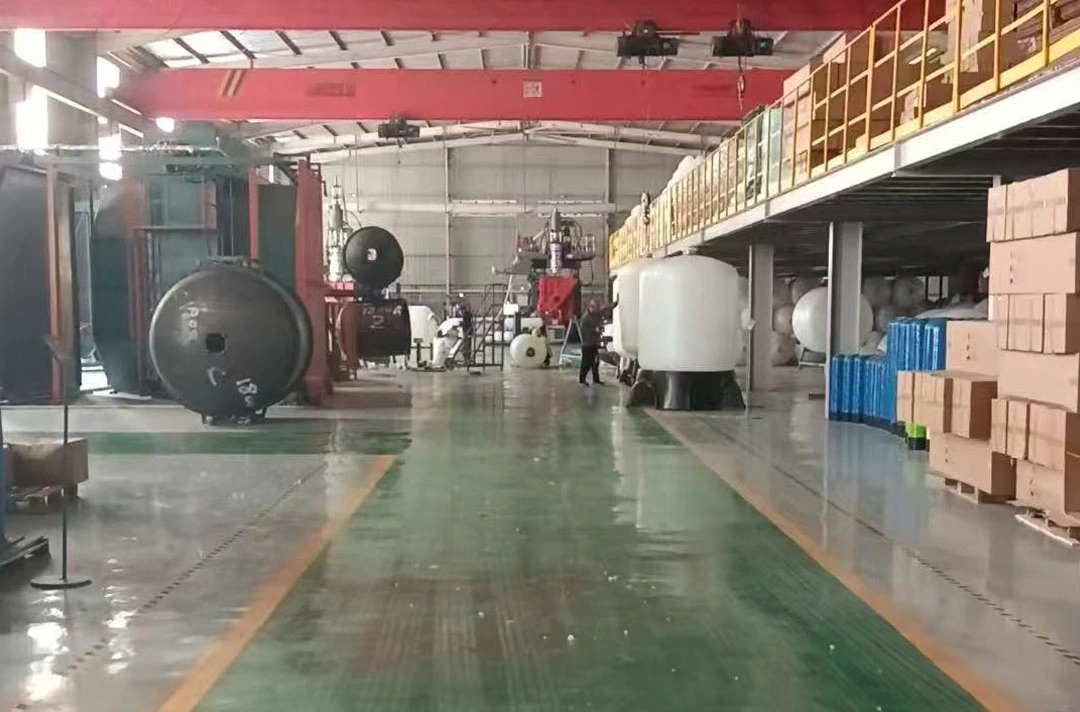
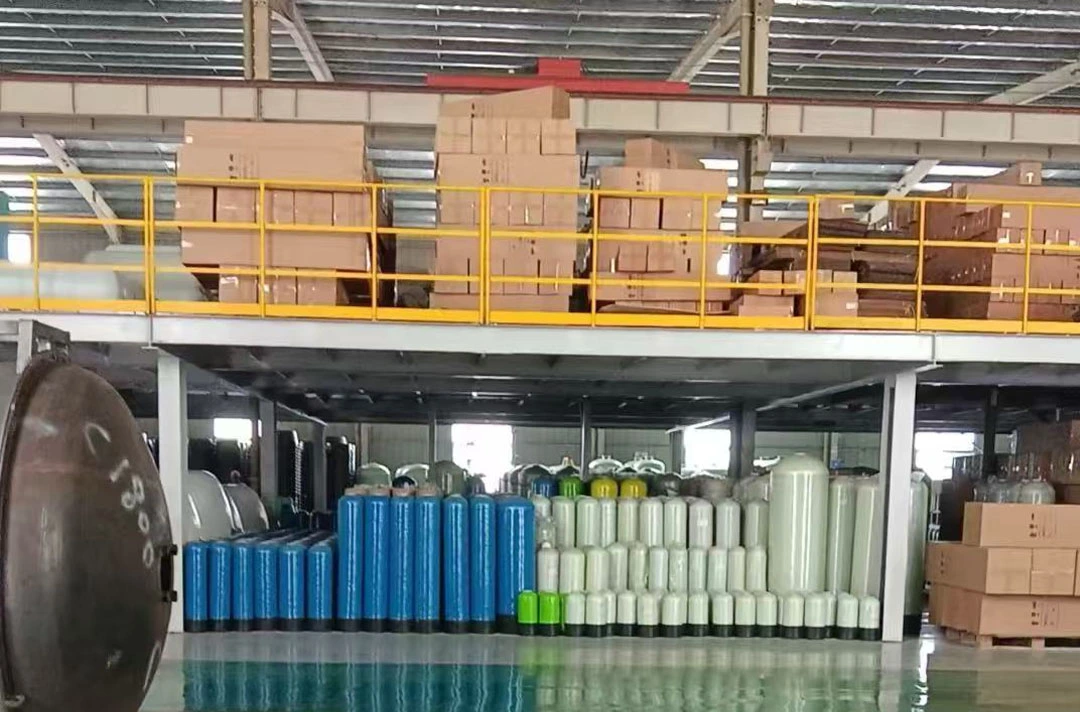
Frp Tank Manufacturer
Application
FRP Water Storage Tanks excel in water filtration systems by housing filtration media that effectively removes suspended solids and eliminates pungent odors.Furthermore, they are ideal vessels for water softening processes, facilitating the reduction of calcium, magnesium, and other metal cation concentrations in hard water.
Owing to their significant advantages—including superior corrosion resistance, lightweight construction, and long service life—FRP tanks are increasingly replacing traditional metal tanks across various sectors. They play a critical role in both treatment and storage, serving not only residential needs but also extensive commercial and industrial water management systems. These tanks are widely adopted in diverse fields, such as:
- Chemical Industry
- Light Industry
- Textile Industry
- Pharmaceutical & Biotechnology
- Food & Beverage Processing
- Electroplating & Metal Finishing
- Wastewater Treatment
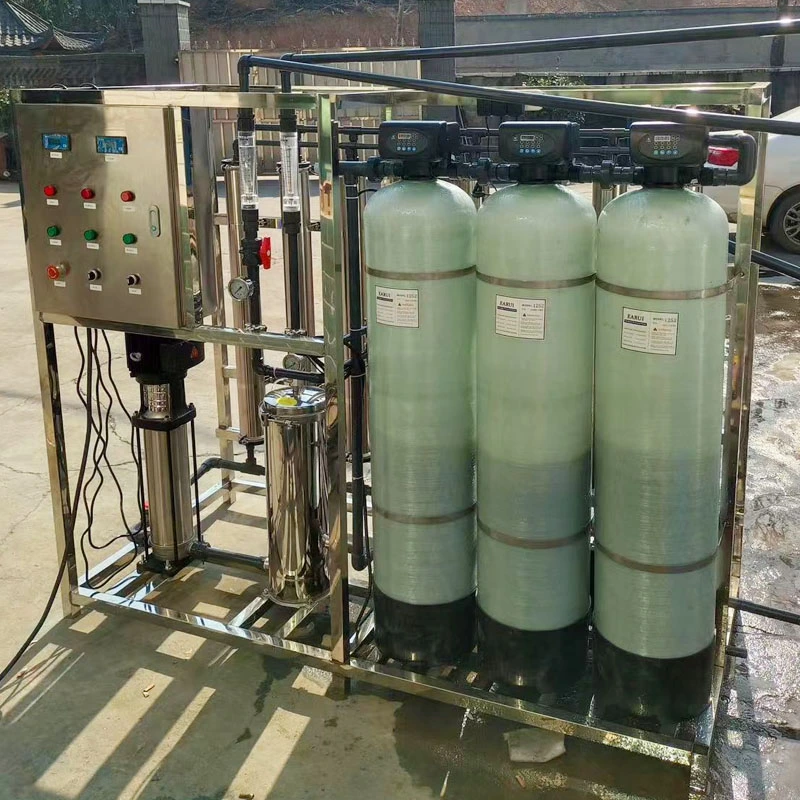
Water treatment
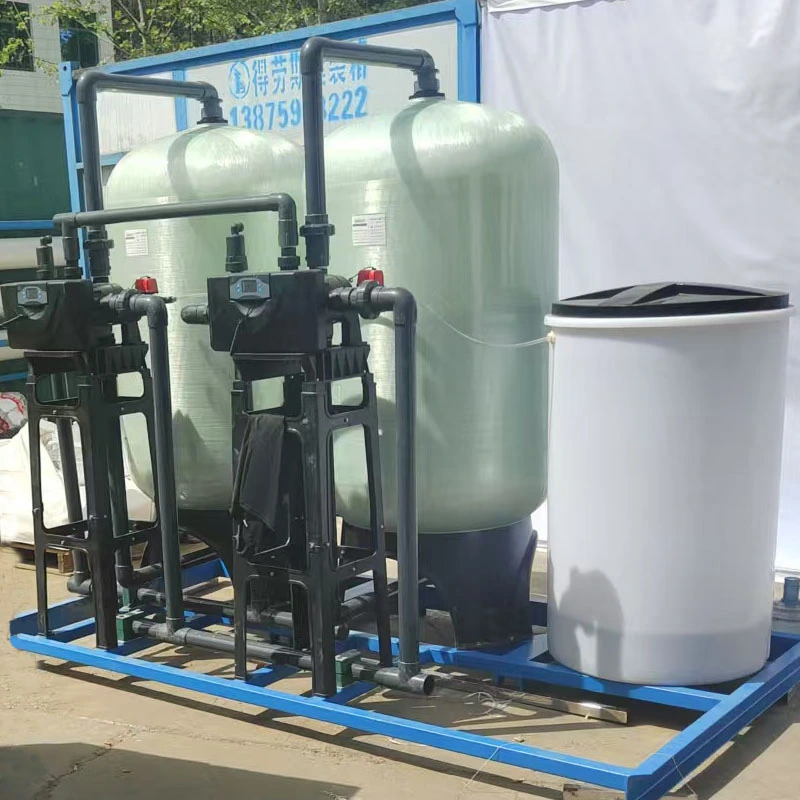
Used for soft water systems
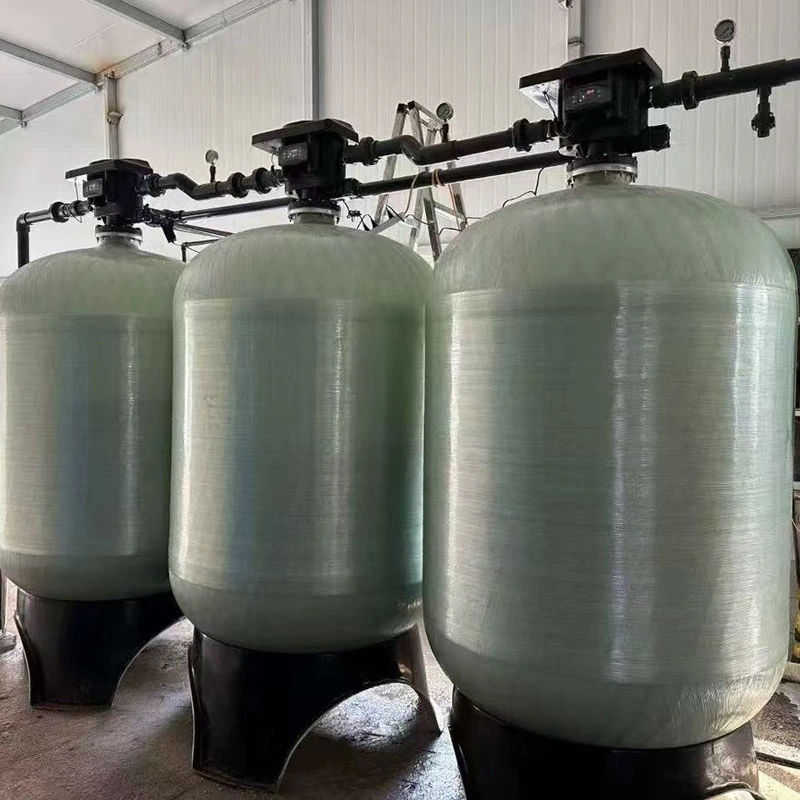
Used for industrial
How to Make frp Tank?
1. Mold Preparation
A precise mold, typically also made of FRP or coated wood, is prepared. This defines the tank’s final shape and surface finish.
To ensure easy demolding, prepare the mold by thoroughly cleaning and polishing its surface, followed by coating it with a release agent.
2. Lay-up Process
Core Fabrication: Building the Tank Wall Layer
Apply Gel Coat: Apply a thick, pigmented resin to the mold. This forms a smooth, chemical-resistant interior surface.
Add Liner Layer: Next, apply a resin-saturated barrier fabric to enhance corrosion resistance.
Structural Lay-up: Apply alternating layers of resin and glass fiber reinforcement to build the structural wall.
3. Curing
We cure the laminated structure by letting it harden under controlled temperature and humidity
Curing can be accelerated with heat if needed. This process cross-links the resin polymers, turning the laminate into a rigid, strong composite.
4. Demolding & Post-Curing
Once fully cured, operators carefully separate the tank from the mold.
It may then undergo post-curing, an additional controlled heating cycle, to achieve optimal mechanical and chemical properties.
5. Finishing & Fabrication
Sanding & Coating: Sand the exterior thoroughly, then apply a UV-resistant gel coat or paint as specified.
Cutting & Reinforcing: Precisely cut all openings for nozzles, manholes, and vents, then reinforce each cut edge.
Fitting Installation: Bond and laminate all metal or FRP fittings securely into their designated positions.
6. Quality Control & Testing
Every tank undergoes rigorous checks before leaving the factory:
Visual Inspection: For bubbles, cracks, or dry spots.
Thickness Verification: Using ultrasonic gauges.
Leak Testing: Filling with water or air pressure testing.
Dimensional Checks.
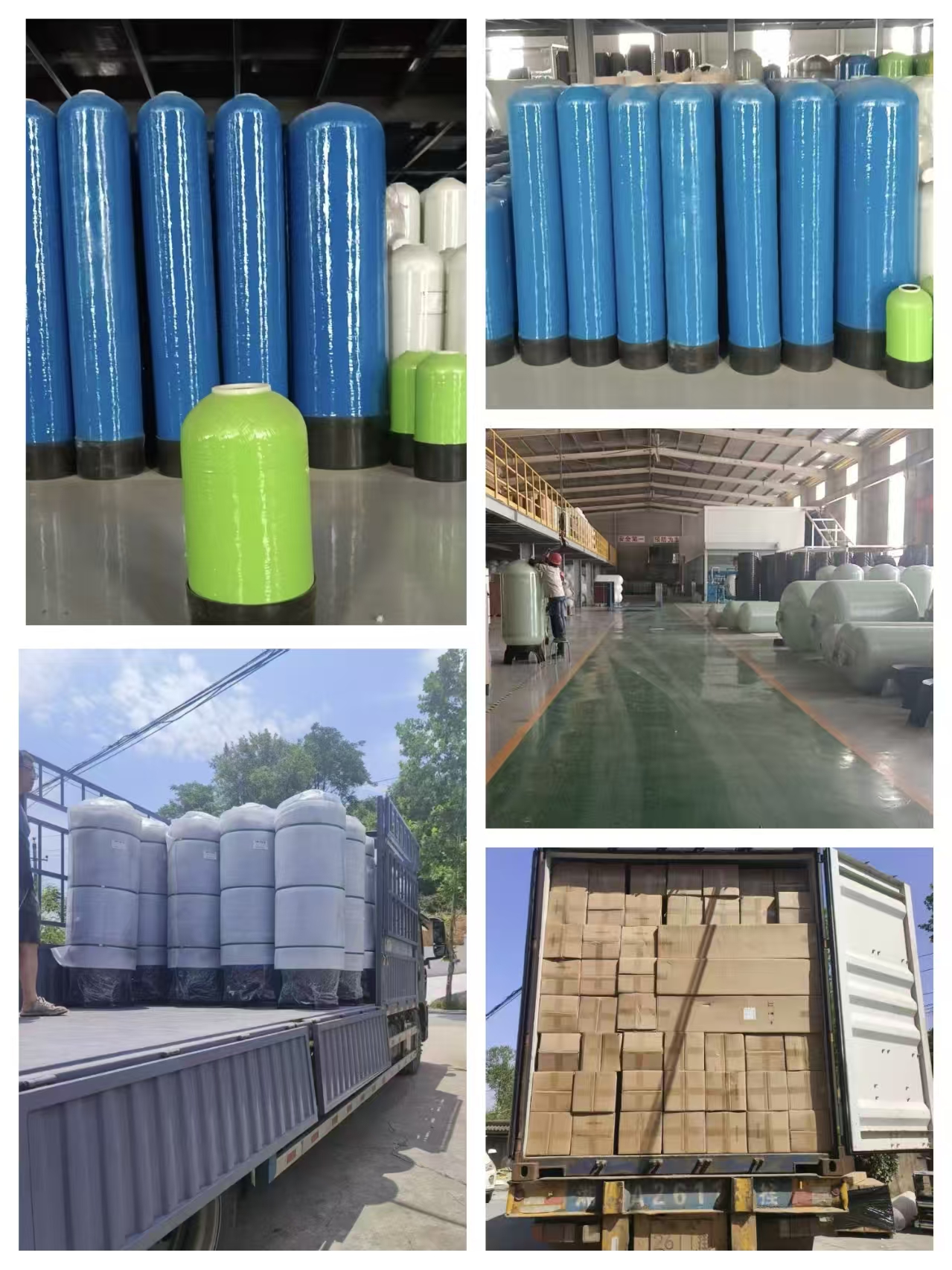
Who We Are
Why Choose BasideWT FRP Water Storage Tank
When it comes to reliable water storage solutions, the BasideWT FRP Water Storage Tank stands out for its exceptional quality, advanced materials, and engineering precision. Each tank is built using fiberglass-reinforced plastic (FRP) and a seamless polyethylene inner liner, ensuring superior strength, chemical resistance, and long-term durability.
Choosing BasideWT means investing in a product backed by over 10 years of experience in water treatment engineering. Our manufacturing process follows strict ISO , ensuring every tank meets global performance and safety requirements.
SEND US AN EMAIL
Our BasideWT water specialists are ready to assist.
SEND US AN EMAIL
Our BasideWT water specialists are ready to assist.
FAQs
How do I know which system is right for my home?
How to Measure Your Home’s Water Flow Rate?
How do I troubleshoot low water pressure from my system?

What contaminants does your water treatment system remove?
What’s the difference between UV, RO, and activated carbon filtration?
REQUEST A QUOTE
RELATED PRODUCTS
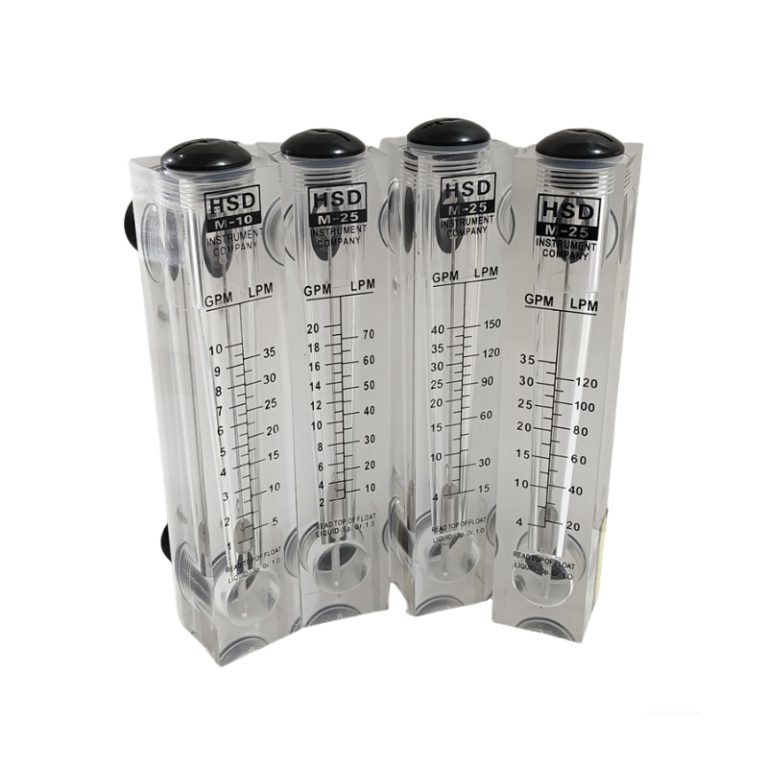
High Precision Solenoid Valve Liquid Flow Meter Water Flow Meter Panel Type Flowmeter

TDS Meter For Water Testing | Digital Purity Tester by BasideWT

TDS Meter Test – Quick & Accurate Water Quality Meter | BasideWT
304 Stainless Steel Bag Filter Housing | Size 1 & 2 PP Sock Filter for Liquid Filtration
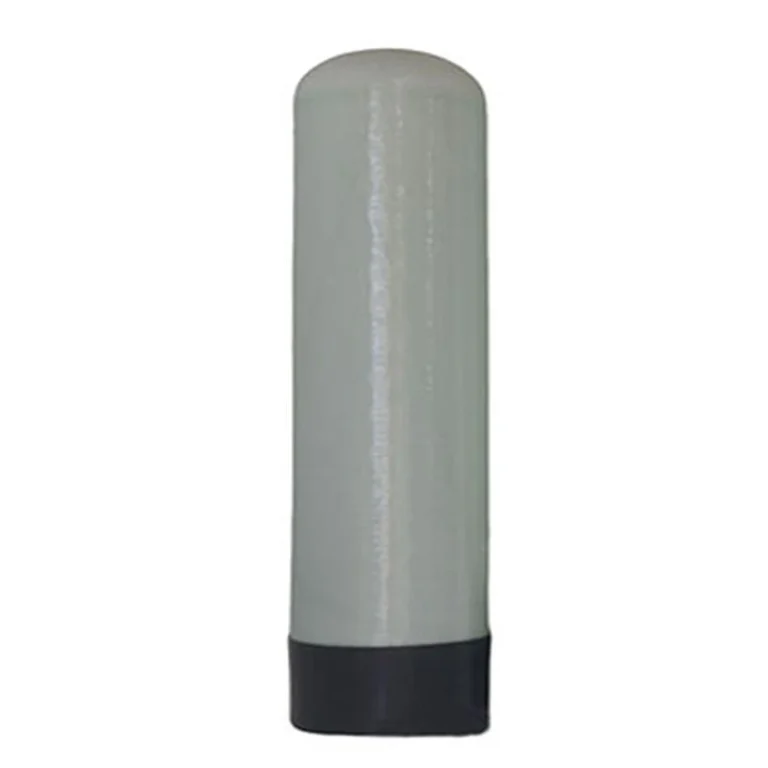
FRP Vessel 1665 Fiber Reinforced Plastic Tanks | BasideWT