BasideWT- Whole Home Water Filtration System & Replacement


How Does a UV Water Sterilizer Work? Step-by-Step Guide
A UV water sterilizer works by passing water through a sealed chamber where UV-C light exposes microorganisms to ultraviolet energy. This energy damages the DNA and RNA inside bacteria, viruses, and other pathogens. The microorganisms lose their ability to reproduce, which stops them from causing infection, even though they remain physically present in the water.
This process happens in seconds, without adding chemicals and without changing the taste or smell of the water. Below, we walk through exactly what happens from the moment water enters the system to the moment treated water leaves the chamber.
Step-by-Step: How a UV Water Sterilizer Works
A UV water sterilizer follows a consistent operating sequence. Each stage plays a specific role in delivering effective disinfection.
- Water enters the sterilizer. Untreated water flows into the inlet port and moves toward the UV chamber.
- Water travels through the UV chamber. The chamber surrounds a UV lamp housed inside a protective quartz sleeve.
- The UV lamp generates UV-C radiation. This is a specific segment of the ultraviolet spectrum known for its germicidal effect.
- UV-C energy passes through the quartz sleeve. The sleeve protects the lamp from direct water contact while still allowing UV light to reach the surrounding water.
- Microorganisms in the water absorb UV-C energy. As water flows past the lamp, bacteria, viruses, and protozoa pass directly through the irradiated zone.
- UV-C energy damages the genetic material of the microorganisms. This disrupts the DNA or RNA structures they need to function and multiply.
- The microorganisms lose their ability to reproduce. Without this ability, they can no longer cause infection, even though UV does not physically remove them from the water.
- Treated water exits the chamber. It flows out through the outlet toward the point of use, whether that is a kitchen faucet, a commercial fixture, or an industrial process line.
This sequence repeats continuously as water flows through the unit. There is no holding tank and no waiting period. Disinfection happens in real time, as long as the water stays within the chamber long enough to receive an adequate UV dose.
Homeowners exploring this technology for the first time often start with a broader overview before looking at the mechanism in detail. Our guide to what a UV water sterilizer is covers the basics if you want that context first.
What Happens Inside the UV Chamber
The UV chamber is a sealed, light-tight enclosure. Its design keeps water in close contact with UV-C light while preventing any UV radiation from escaping.
Inside the chamber, the UV lamp sits at the center, protected by a quartz sleeve. Quartz is used because it transmits UV-C light efficiently, unlike ordinary glass, which blocks most of it. Water flows through the annular space between the sleeve and the chamber wall, surrounding the lamp on all sides.
This layout matters because every part of the water stream needs exposure to UV-C light. Manufacturers design the chamber geometry, and often add turbulence-inducing features, so water does not simply flow in a straight line past the lamp without adequate contact. Even distribution across the flow path is what makes consistent disinfection possible.
How UV-C Light Inactivates Microorganisms
UV-C light sits in the 200–280 nanometer wavelength range, with output frequently concentrated around 254 nanometers in common water treatment lamps. This range is effective at damaging nucleic acids.
When UV-C photons strike a microorganism, they are absorbed by the DNA or RNA inside the cell. This absorption creates abnormal bonds between adjacent bases in the genetic strand. The organism can no longer copy its genetic material correctly.
The result is inactivation, not removal. The microorganism remains in the water, but it can no longer replicate or infect a host. This distinction matters for understanding what UV treatment actually accomplishes. According to the International Ultraviolet Association’s overview of UV disinfection science, this inactivation mechanism is why UV-C is classified as a physical disinfection method rather than a chemical one.
Because UV does not filter particles or remove dissolved substances, it works differently from technologies like sediment filtration or reverse osmosis. It targets living organisms specifically, through direct energy exposure rather than physical separation.
Why UV Dose Determines Treatment Performance
UV dose is the single most important factor in disinfection performance. It is defined as UV intensity multiplied by exposure time, and it determines how much energy a microorganism actually receives as it passes through the chamber.
A system can only deliver an adequate dose when both intensity and exposure time fall within its designed operating range. If either factor drops too low, some organisms may pass through without receiving enough energy to be inactivated.
Several variables influence the delivered dose in practice:
- Lamp output and age
- Distance between the lamp and the water
- Quartz sleeve cleanliness
- Water flow rate through the chamber
- Water clarity and UV transmittance
Because these factors interact, actual UV dose depends entirely on system design and manufacturer specifications rather than a single universal number. Anyone comparing systems should look at rated dose under stated operating conditions, not general marketing claims.
How Flow Rate Affects UV Exposure Time
Flow rate and exposure time are directly connected. As water moves faster through the chamber, it spends less time near the UV lamp.
A system rated for a specific flow range is engineered to deliver adequate dose at that rate. Running water through the unit faster than its rated flow can reduce contact time below the level the system was designed to handle. This is why matching a UV sterilizer’s rated flow capacity to actual household or facility demand is a core part of correct system selection.
This does not mean slower is automatically better in every situation. Systems are calibrated to a specific design range, and operating far below that range does not necessarily improve results. Performance should always be evaluated against the manufacturer’s stated operating conditions rather than assumptions about flow speed alone.
How Water Clarity and UV Transmittance Affect Performance
Water clarity plays a direct role in how effectively UV-C energy reaches microorganisms. Cloudy or turbid water scatters and absorbs UV light before it can reach organisms suspended deeper in the flow path.
Suspended particles create a shielding effect. Microorganisms can become embedded in or shadowed by sediment, organic matter, or other particulate material, reducing their exposure even inside an otherwise properly functioning chamber.
UV transmittance (UVT) describes how efficiently water allows UV-C light to pass through it, usually expressed as a percentage over a set path length. Water with low UVT absorbs more UV energy before it reaches the target organisms, which lowers the effective dose delivered across the chamber. This is one reason two systems with identical lamps can perform differently in different water conditions.
Key Components That Make the Process Work
Each component inside a UV sterilizer plays a specific functional role in the treatment process.
| Component | Function in the working process |
|---|---|
| UV chamber | Houses the lamp and directs water flow around it |
| UV lamp | Produces UV-C radiation at germicidal wavelengths |
| Quartz sleeve | Protects the lamp while transmitting UV-C to the water |
| Ballast | Regulates electrical power delivered to the lamp |
| Controller | Manages lamp operation and system status |
| UV sensor | Monitors UV intensity output from the lamp |
| Flow sensor | Detects flow rate to help confirm exposure conditions |
| Alarm | Alerts users to low UV output or system faults |
The controller and sensors work together as the system’s feedback loop. If lamp intensity drops below the designed threshold, or if flow exceeds the rated range, the alarm can notify the user that treatment conditions may no longer meet the system’s design specification. This monitoring layer is what turns a UV chamber into a complete, verifiable treatment system rather than just a lamp in a pipe.
Buyers comparing specific configurations, including compact point-of-use options like a 1 GPM UV water sterilizer, will find that these core components remain consistent across residential and light commercial models, even as chamber size and lamp output scale up or down.
Why Pretreatment Supports Consistent UV Performance
Because UV performance depends on water clarity, pretreatment often plays a supporting role ahead of the UV chamber. Reducing turbidity and particulate load before water reaches the lamp helps maintain consistent UV transmittance.
Common pretreatment steps include:
- Sediment filtration to remove suspended particles
- Carbon filtration to address organic compounds and certain odors
- Prefilters sized appropriately for the source water
Not every water source needs the same pretreatment. A municipal supply with low turbidity may need minimal preparation, while well water with higher sediment content often benefits from filtration before UV treatment. Reviewing source water quality against a specific water filtration system is a practical way to determine what pretreatment level fits a given application.
What UV Treatment Does Not Do
Understanding UV disinfection also means understanding its boundaries. UV-C energy inactivates microorganisms, but it does not physically remove them from the water. Dead or inactivated organisms remain present unless a separate filtration stage removes them.
UV treatment also does not address:
- Dissolved salts or minerals
- Water hardness
- Heavy metals
- Total dissolved solids (TDS)
- Chemical contaminants
These issues require different treatment technologies, such as reverse osmosis for dissolved solids or ion exchange for hardness. In many real-world systems, UV serves as a final disinfection stage that works alongside filtration and other treatment methods rather than replacing them.
UV Sterilizer Performance Under Different Operating Conditions
The table below illustrates how common operating conditions can influence UV treatment performance in a general sense. Actual results always depend on specific system design and manufacturer ratings.
| Operating Condition | Effect on UV Exposure | Possible Impact on Treatment |
|---|---|---|
| Flow within rated range | Normal contact time | Consistent with design performance |
| Flow above rated capacity | Reduced contact time | Delivered UV dose may fall below target |
| Low turbidity, high UVT | Efficient UV penetration | Supports intended dose delivery |
| High turbidity, low UVT | Reduced UV penetration | Delivered dose may decrease |
| Clean quartz sleeve | Full UV transmission | Supports intended lamp output |
| Fouled or scaled sleeve | Reduced UV transmission | Effective intensity may decrease |
| New lamp within rated life | Stable UV output | Supports intended dose delivery |
| Aging lamp near end of life | Declining UV output | Delivered dose may decrease |
This kind of table helps illustrate why routine monitoring, appropriate pretreatment, and correct system sizing all connect back to the same underlying principle: consistent dose delivery.
Residential, Commercial, and Industrial Working Examples
The following scenarios are illustrative only. They describe general working principles rather than documented customer results.
Residential drinking water example. A household relies on well water with moderate turbidity. A sediment prefilter reduces particulate content before the water reaches a point-of-use UV sterilizer, supporting consistent UV transmittance at the tap.
Whole-house treatment example. A property owner installs UV disinfection as part of a broader whole-house water filter system, positioning UV as the final barrier after sediment and carbon stages rather than the first point of contact with untreated water.
Commercial facility example. A restaurant or office building integrates a UV chamber sized to its peak flow demand, with a controller and alarm system that alert staff if lamp output drops below the rated threshold.
Industrial process water example. A manufacturing facility applies UV disinfection to process water after primary filtration, using it as a chemical-free step before water enters production equipment where residual disinfectants would be undesirable.
UV after reverse osmosis example. Some facilities position UV disinfection downstream of an RO system, since RO addresses dissolved solids and salts while UV handles microbial inactivation, with each technology covering a different treatment gap.
How the Full System Fits Together
Every stage of UV sterilization connects to the next. Water clarity affects UV transmittance. Flow rate affects exposure time. Exposure time and lamp intensity together determine dose. Dose determines whether microorganisms are reliably inactivated.
Because these variables interact, effective UV treatment is a design problem as much as an installation task. Reviewing complete specifications, including chamber dimensions, rated flow, and lamp output, matters more than looking at any single number in isolation. Our full UV water sterilizer guide covers system types, sizing, and selection criteria if you are evaluating a complete setup rather than the working mechanism alone.
Conclusion
A UV water sterilizer works by exposing water to UV-C radiation as it flows through a sealed chamber, damaging the genetic material of bacteria, viruses, and other microorganisms so they can no longer reproduce. The lamp, quartz sleeve, ballast, and controller each play a defined role in delivering that energy consistently, while sensors and alarms help confirm the system is operating within its designed conditions.
Flow rate, water clarity, and UV transmittance all influence how much dose actually reaches the water, which is why matching a system to real operating conditions matters more than any single spec sheet number. UV treatment inactivates microorganisms rather than filtering them out, and it does not address dissolved salts, hardness, or chemical contaminants, so it typically works best as part of a broader treatment approach rather than a standalone solution.
For water sources with higher turbidity, pairing UV with appropriate pretreatment, such as a whole-house sediment filter, supports more consistent UV transmittance and more reliable dose delivery. If you are exploring UV sterilizer systems for a home, facility, or industrial application, reviewing your water quality and flow requirements first will help you select a system built to perform under your actual operating conditions. The BasideWT team can help you match the right configuration, including options like the UV light water sterilizer line, to your specific water treatment needs.
RELATED POSTS
How To Choose Ro Membrane
What is a Watermaker on a Boat?

The Ultimate Guide to Reverse Osmosis Water: Pros, Cons, and Is It Right for You?
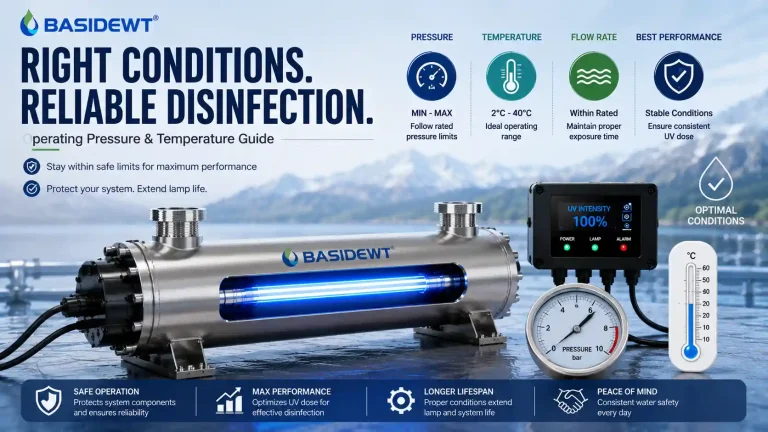
UV Water Sterilizer Operating Pressure and Temperature Guide
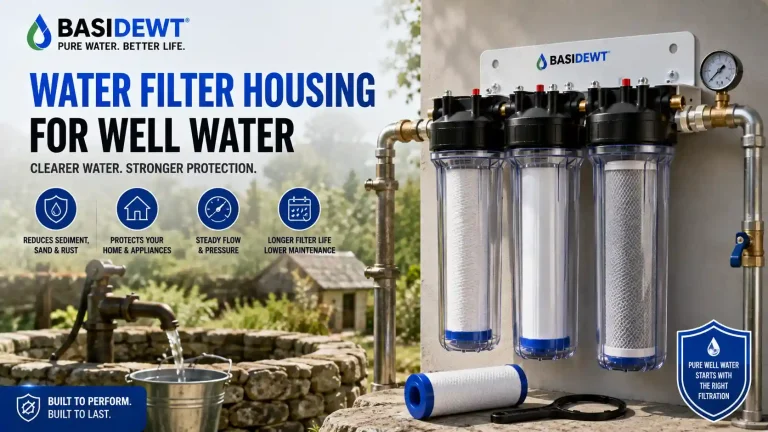
Water Filter Housing for Well Water: How to Choose the Right Setup