BasideWT- Whole Home Water Filtration System & Replacement


Best Water Filter Housing: How to Choose the Right One for Your System
Choosing the best water filter housing is harder than it looks. Search results are full of housings labeled “best,” yet very few of them explain what “best” actually depends on. The truth is simple: the right housing is the one that matches your application, flow rate, cartridge, pressure, and space — not the one with the most reviews.
This guide brings together everything you need to check before buying, so you can compare options with confidence instead of guessing. By the end, you’ll know exactly which factors decide whether a housing is right for your system.
What Is the Best Water Filter Housing?
There is no single housing that works best for every system. A housing that performs well in a small apartment could be completely wrong for a whole-house setup or a commercial line.
The best water filter housing is the one that matches the requirements of your filtration system. That means it fits your application, accepts the correct cartridge, handles your flow rate, and is rated for your operating pressure.
A genuinely good housing choice checks these boxes:
- Matches the intended application (residential, commercial, well water, RO)
- Accepts a cartridge that’s readily available for replacement
- Is sized correctly for the space and flow demand
- Carries a suitable pressure rating
- Has ports that match your existing plumbing
- Uses a material suited to the installation environment
- Is easy to service and maintain
If you keep these seven points in mind, you’ll avoid most of the mistakes people make when buying a housing based on price or appearance alone. For a full breakdown of housing types, sizes, and features, our complete water filter housing buying guide is a useful starting point before you narrow down your options.
How to Choose the Best Water Filter Housing
Selecting a housing is easier when you break it into a step-by-step process. Work through each factor below in order, and you’ll end up with a shortlist that actually fits your system.
1. Identify Your Application
Your application sets the baseline for every other decision. A drinking-water filter under a kitchen sink has very different needs than a whole-house unit on the main line.
Common applications include:
- Residential point-of-use filtration
- Whole-house filtration
- Drinking water systems
- Well water treatment
- Reverse osmosis (RO) pre-filtration
- Commercial filtration
- Industrial filtration
- High-flow applications
Each of these changes the required flow capacity, housing size, and durability. For a closer look at how housing types differ across applications, see our guide to types of water filter housings.
2. Determine the Required Flow Rate
Flow rate is how much water passes through the housing per minute. It matters because an undersized housing restricts flow and causes pressure drop, while an oversized one adds unnecessary cost and space use.
To estimate what you need, think about your peak water demand — the moment when the most fixtures are running at once. A housing that handles average use but chokes during peak demand will leave you with weak water pressure exactly when you need it most.
3. Choose the Correct Housing Size
Housings typically come in standard and Big Blue formats, with common cartridge lengths of 10 inches and 20 inches.
- Standard housings suit single fixtures or light residential use.
- Big Blue housings suit whole-house or higher-demand systems.
- 10-inch housings work well where space is limited and flow demand is moderate.
- 20-inch housings hold more media, which extends time between cartridge changes.
This is a buying decision, not a technical deep dive — for the full comparison, read our 10-inch vs 20-inch water filter housing guide.
4. Check Cartridge Compatibility
A housing is only as useful as the cartridges you can buy for it. Before purchasing, confirm:
- Cartridge length and diameter match the housing
- Cartridge type (sediment, carbon, specialty) suits your water quality
- Cartridge configuration fits the housing’s cap and seal design
- Replacement cartridges are easy to source long-term
Buying a housing without checking cartridge compatibility often leads to disappointment later, when the exact replacement filter is hard to find. Our detailed guide on water filter housing cartridge compatibility walks through this in more depth.
5. Check Pressure Rating
Every housing has a maximum pressure rating, and your system’s operating pressure must stay comfortably below it. Pressure spikes — common in older plumbing or well systems — can stress a housing beyond its limit over time.
Check your home or facility’s actual operating pressure before buying, and choose a housing with a rating that leaves a safety margin. This protects both the housing and the surrounding plumbing from stress-related failure.
6. Check Port and Connection Size
Port size determines how the housing connects to your existing pipework. Housings commonly use NPT or BSP threads, and the wrong choice restricts flow or requires extra fittings.
Before ordering, confirm the port size and thread type match your plumbing, and check that the connection won’t create an unnecessary flow bottleneck. Our water filter housing size guide covers NPT and BSP differences in detail.
7. Choose the Right Housing Material
Housing material affects durability, cost, and how well the unit holds up in its installation environment.
- Plastic housings are affordable and suit indoor residential use.
- Reinforced plastic offers better strength for moderate-pressure systems.
- Stainless steel resists corrosion and suits commercial, industrial, or harsh environments.
Think about where the housing will live — indoors, outdoors, or in a high-humidity utility room — before deciding.
Best Water Filter Housing by Application
Use this table as a quick reference before diving into the details of your specific use case.
| Application | Suitable Housing Type | Important Factors |
|---|---|---|
| Residential filtration | Standard housing | Size, cartridge, and available space |
| Whole-house filtration | Larger/high-capacity housing | Flow rate and pressure drop |
| Well water | Sediment-focused housing | Water quality and flow |
| RO system | RO-compatible housing | Cartridge compatibility |
| Commercial filtration | Commercial/high-capacity housing | Flow rate and durability |
| High-flow systems | High-flow housing | Flow rate and pressure loss |
Standard vs Big Blue Water Filter Housing
Standard housings are compact and designed for single-point filtration, such as a kitchen sink or a small apartment supply line. They’re easy to install and cost less upfront.
Big Blue housings are physically larger, hold higher-capacity cartridges, and support greater flow rates. They’re the more practical choice for whole-house systems or properties with higher water demand, since they need less frequent cartridge changes relative to the volume they treat.
The trade-off is space and cost — Big Blue units need more installation room and cost more initially. If your system serves multiple fixtures or a full household, that extra investment usually pays off in fewer maintenance visits. Our dedicated Big Blue water filter housing guide breaks down sizes and applications further.
10-Inch vs 20-Inch Water Filter Housing
The choice between 10-inch and 20-inch housings comes down to space, flow demand, and how often you want to replace cartridges.
- Choose 10-inch if space is limited or your flow demand is modest.
- Choose 20-inch if you want longer intervals between cartridge changes or need higher media capacity.
- Residential single-point systems usually lean toward 10-inch.
- Whole-house and commercial systems often benefit from 20-inch.
This isn’t a universal rule — always weigh it against your actual flow rate and installation space.
Plastic vs Stainless Steel Water Filter Housing
| Factor | Plastic | Stainless Steel |
|---|---|---|
| Durability | Good for standard indoor use | Excellent, handles demanding conditions |
| Corrosion resistance | Adequate indoors | Strong, suits humid or outdoor settings |
| Cost | Lower upfront cost | Higher upfront cost |
| Weight | Lightweight | Heavier, more robust |
| Maintenance | Simple, low upkeep | Simple, built to last longer |
Plastic housings suit most residential indoor installations where budget matters and conditions are controlled. Stainless steel is worth the extra cost for commercial settings, outdoor installs, or anywhere corrosion resistance is a priority. For a deeper comparison, see our guide on water filter housing material options.
What Size Water Filter Housing Do You Need?
Sizing correctly means balancing several factors rather than simply picking the largest option available.
Consider:
- Your household’s or facility’s flow rate
- Number of fixtures drawing water at once
- Cartridge size needed to support that flow
- Available installation space
- Future demand, such as planned renovations or added fixtures
Oversizing wastes money and space, while undersizing leads to poor flow and frequent cartridge changes. The goal is a housing sized for your actual — and reasonably anticipated — demand, not the largest unit on the shelf.
How Pressure and Flow Affect Your Housing Choice
Flow rate and pressure are closely linked. As water passes through a cartridge, it experiences pressure drop — a natural reduction in pressure caused by the filtration media.
A housing that’s too small for your flow rate increases this pressure drop, which can leave you with weak water pressure at the tap. For example, a household running two showers and a dishwasher simultaneously needs a housing and cartridge combination that won’t choke under that combined demand. Matching housing size to both flow and pressure prevents this problem before it starts.
Best Water Filter Housing for Whole-House Filtration
Whole-house housings sit on the main water line, so they need to handle your home’s full peak flow, not just a single fixture.
Evaluate:
- Household size and number of bathrooms
- Peak simultaneous water use
- Cartridge capacity needed to avoid frequent changes
- Pressure at the main line
- Installation space near the water entry point
A Big Blue or 20-inch housing is often the right fit here, but the correct choice still depends on your specific flow numbers. For a complete breakdown of whole-house options, see our whole house water filter housing guide.
Best Water Filter Housing for Commercial Applications
Commercial systems typically run longer hours and handle higher, more consistent flow than residential setups. That changes the priority list:
- Higher sustained flow rate
- Continuous operation without performance loss
- Durable materials that withstand daily use
- Adequate pressure rating for commercial supply lines
- Easy maintenance access for staff
- Reliable cartridge replacement supply
A housing built for occasional residential use will wear out quickly under commercial conditions, so durability and flow capacity should take priority over upfront cost.
Best Water Filter Housing for Well Water
Well water often carries more sediment and variable water quality than municipal supply, which changes housing requirements.
Consider:
- Sediment load and how often cartridges will need changing
- Flow rate from the well pump
- Pressure fluctuations common in well systems
- Cartridge type suited to sediment-heavy water
- Housing size that supports reasonable maintenance intervals
The goal isn’t to treat every well-water issue here — it’s to choose a housing that can keep up with sediment volume without constant cartridge swaps.
Best Water Filter Housing for RO Systems
Reverse osmosis systems typically rely on a housing for sediment or carbon pre-filtration before water reaches the RO membrane.
Key considerations:
- Sediment filtration to protect the membrane from particulates
- Carbon filtration to remove chlorine before it reaches the membrane
- Cartridge compatibility with your specific RO setup
- Housing dimensions that fit within your RO system’s footprint
- Pressure requirements matched to your RO configuration
Getting the pre-filtration housing right extends membrane life significantly. Our guide on water filter housing for RO systems covers this selection process in more detail.
Common Mistakes When Choosing a Water Filter Housing
Avoiding these mistakes will save you time, money, and frustration:
- Choosing based only on price — leads to poor durability or wrong sizing.
- Ignoring flow rate — causes weak pressure and undersized performance.
- Ignoring pressure rating — risks premature housing failure.
- Buying the wrong size — either wastes space or restricts flow.
- Ignoring cartridge compatibility — makes replacements hard to find.
- Choosing the wrong port size — creates plumbing mismatches.
- Ignoring installation space — leads to cramped, hard-to-service setups.
- Choosing the wrong material — shortens lifespan in the wrong environment.
- Not checking replacement cartridge availability — creates long-term supply issues.
- Oversizing unnecessarily — adds cost without real benefit.
- Undersizing the system — forces frequent maintenance and poor flow.
Best Water Filter Housing Buying Checklist
Before you buy, confirm each of the following:
- Application confirmed (residential, commercial, well, RO, etc.)
- Flow rate confirmed against peak demand
- Housing size confirmed (10-inch, 20-inch, standard, or Big Blue)
- Cartridge compatibility confirmed
- Pressure rating confirmed against your system’s operating pressure
- Port size confirmed
- Connection type confirmed (NPT or BSP)
- Material selected for the installation environment
- Installation space measured
- Replacement cartridges confirmed as available
- Maintenance requirements understood
- Future water demand considered
How to Compare Water Filter Housing Options
When you’re weighing two or more housings side by side, run each one through the same ten factors:
- Application fit
- Flow rate capacity
- Physical size
- Pressure rating
- Material
- Port and connection type
- Cartridge compatibility
- Maintenance requirements
- Replacement cartridge availability
- Total cost, including long-term cartridge spend
Scoring each option against this list makes it easy to see which housing genuinely fits your system, rather than relying on marketing claims alone.
Expert Tips for Choosing the Right Water Filter Housing
- Measure your actual peak flow rate before shopping, rather than estimating.
- Check cartridge availability locally or online before committing to a housing.
- Leave extra clearance around the housing for cartridge changes.
- Choose a pressure rating with margin above your system’s normal operating pressure, according to the EPA’s drinking water guidance.
- For well water, plan for more frequent sediment cartridge changes than municipal supply typically needs.
- If demand may grow, size slightly ahead rather than replacing the housing later.
Frequently Asked Questions
What is the best water filter housing?
The best water filter housing is the one that matches your application, flow rate, pressure, cartridge type, and available space — not a single universal product.
What size water filter housing should I buy?
Base your size choice on your flow rate, number of fixtures, and installation space, rather than choosing the largest option available.
Is a 10-inch or 20-inch housing better?
Neither is universally better. 10-inch suits limited space and moderate flow, while 20-inch suits higher capacity needs and longer intervals between cartridge changes.
Is Big Blue better than a standard housing?
Big Blue housings handle higher flow and larger cartridges, making them better for whole-house use. Standard housings suit single-point residential filtration.
What material is best for a water filter housing?
Plastic works well for standard indoor residential use, while stainless steel suits commercial, outdoor, or corrosion-prone environments.
How do I know if a filter cartridge will fit my housing?
Check the cartridge’s length, diameter, and configuration against the housing’s specifications before purchasing.
What pressure rating should a water filter housing have?
Choose a housing rated comfortably above your system’s actual operating pressure, allowing a safety margin for spikes.
What is the best housing for whole-house filtration?
A Big Blue or 20-inch housing is often suitable, but the right choice depends on your home’s peak flow and available installation space.
What is the best water filter housing for an RO system?
Look for a housing that supports proper sediment and carbon pre-filtration with cartridges compatible with your specific RO configuration.
What should I check before buying a water filter housing?
Confirm application, flow rate, size, cartridge compatibility, pressure rating, port size, material, and installation space before purchasing.
Conclusion
There’s no single best water filter housing that works for every system — the right choice depends on your application, flow rate, housing size, cartridge compatibility, pressure rating, port size, and material. Working through each of these factors, rather than picking based on price alone, is what leads to a housing that performs well for years.
If you’re weighing your options, start with your application and flow rate, then narrow down size, material, and cartridge compatibility from there. Once those pieces line up, you’ll have a housing that actually fits your system instead of one that just looked good online.
Ready to find the right fit? Explore BasideWT’s range of water filter housings to match the exact specifications your system needs
RELATED POSTS
How to Choose the Right Water Softener System: A Complete Buying Guide
How Does a Water Softener System Work? Step-by-Step Guide
Deionized Water System: The Complete Guide for Car Wash, Window Cleaning & Industrial Use
What Is an RO Membrane? Complete Guide for Beginners
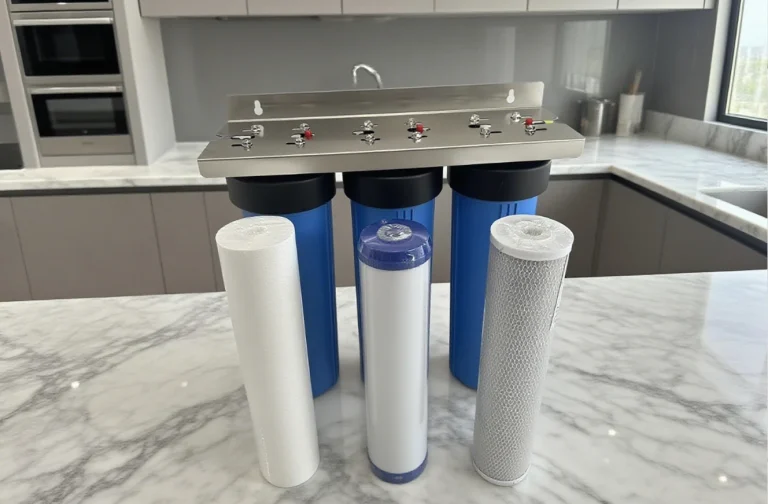
What Is a Whole Home Water Filtration System?