BasideWT- Whole Home Water Filtration System & Replacement



Clear vs Blue Water Filter Housing: Which One Should You Choose?
Choosing between a clear and a blue water filter housing feels simple until you actually stand in front of the options. Both look sturdy. Both hold a cartridge. Both promise clean water. Yet the color you pick affects visibility, durability, and even how long your system lasts.
This guide breaks down the real differences between clear and blue water filter housings. You will learn how each one performs in daily use, where each one fits best, and how to avoid the mistakes that trip up first-time buyers.
If you are still building your foundational knowledge, our complete guide to water filter housings covers types, sizes, and materials in depth. This article goes further and focuses specifically on the clear-versus-blue decision.
Clear vs Blue Water Filter Housing: What’s the Difference?
The core difference comes down to one thing: transparency.
A clear water filter housing lets you see straight through the housing wall. You can watch sediment build up on the cartridge in real time. A blue housing hides that view behind an opaque, tinted shell.
That single design choice creates a ripple effect across performance. Visibility changes maintenance habits. Material composition changes UV resistance. UV resistance changes lifespan. Every factor connects to the next.
Homeowners often assume the difference is purely cosmetic. It isn’t. Distributors and installers who understand this connection make better recommendations, and buyers who understand it avoid costly replacements.
What Is a Clear Water Filter Housing?
A clear water filter housing is manufactured from transparent plastic, typically polycarbonate or clear PVC. The transparency allows direct visual inspection of the filter cartridge without opening the unit.
This matters more than it sounds. Picture a small café that installs a point-of-use filter under the sink. The kitchen staff glance at the housing each morning. If the cartridge looks dark or clogged, they know it needs changing before it affects water flow to the espresso machine.
That kind of quick visual check saves time. Nobody needs a wrench or a maintenance log to see the cartridge condition; they just look.
Clear housings work particularly well for households and businesses that filter water with heavy sediment loads, since sediment buildup is immediately visible against the cartridge surface. They are also common in laboratories, aquariums, and reverse osmosis pre-filtration stages, where operators want constant visual confirmation of filter status.
However, transparency comes with a tradeoff. Most clear plastics degrade faster under ultraviolet light. Constant sun exposure can make the housing brittle over several years, which is why clear housings usually perform best indoors or in shaded installations.
What Is a Blue Water Filter Housing?
A blue water filter housing is molded from opaque, UV-stabilized polypropylene. Manufacturers add pigment and stabilizers during production, which blocks light from penetrating the housing wall.
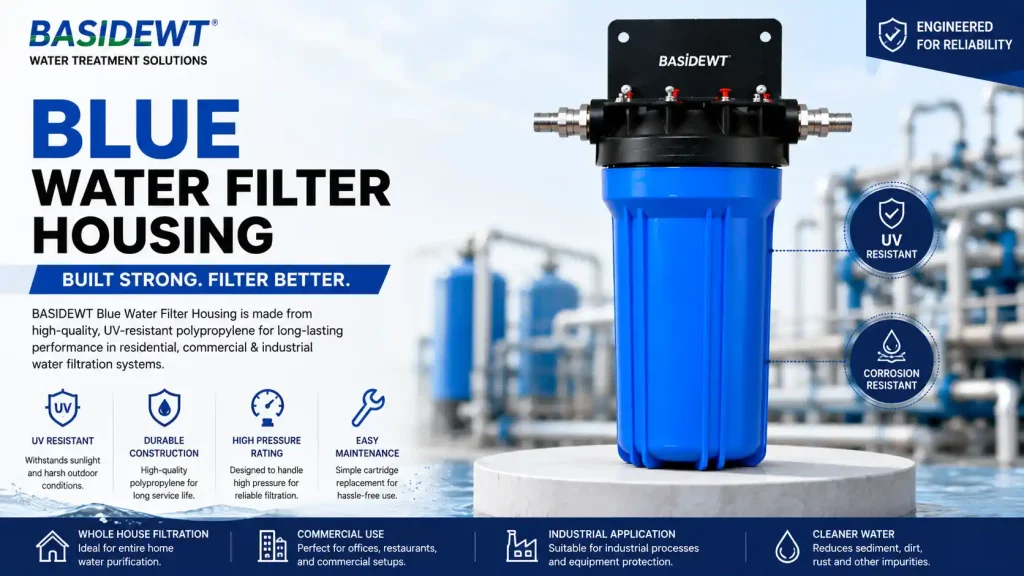
This opacity does two things. First, it blocks UV rays from reaching the water inside, which reduces the risk of algae growth in installations that see any natural light. Second, it protects the plastic itself from UV degradation, extending the housing’s structural life.
Consider a rural home with a well-water system. The housing sits in a utility shed with a window nearby. Sunlight filters in throughout the day. A blue housing tolerates that exposure far better than a clear one would, since the pigmented shell resists the breakdown that sunlight causes in transparent plastics.
Blue housings are the standard choice for whole-house filtration systems, outdoor installations, and industrial pretreatment lines. Their opaque design also suits environments where light-sensitive water quality matters, such as systems feeding ice machines or beverage equipment.
The obvious limitation is visibility. You cannot see the cartridge without removing the sump. Maintenance relies on a schedule rather than a glance.
Side-by-Side Comparison
Here is how the two housing types compare across the factors that matter most to buyers.
| Factor | Clear Water Filter Housing | Blue Water Filter Housing |
|---|---|---|
| Visibility | Full view of cartridge and sediment | No direct view; sump must be removed |
| Material | Polycarbonate or clear PVC | UV-stabilized polypropylene |
| UV Resistance | Low to moderate; degrades in sunlight | High; designed for outdoor exposure |
| Durability | Good indoors; brittle over time outdoors | Strong in both indoor and outdoor settings |
| Maintenance | Visual inspection reduces guesswork | Requires scheduled checks |
| Cost | Generally similar or slightly higher | Generally similar or slightly lower |
| Best Applications | Indoor residential, labs, RO pre-filters | Whole-house systems, outdoor, industrial |
| Lifespan | Shorter under UV exposure | Longer under UV exposure |
This table simplifies the decision, but the details behind each row deserve a closer look.
Advantages of Clear Water Filter Housing
Clear housings offer a few benefits that blue housings simply cannot match.
Instant sediment monitoring. You do not need tools or a maintenance calendar. A quick glance tells you whether the cartridge needs replacement.
Easier troubleshooting. If water pressure drops, you can immediately check whether cartridge clogging is the cause, rather than guessing and disassembling the unit.
Better for training and demonstrations. Water treatment companies often use clear housings to show customers exactly how filtration works. This builds trust and helps explain the value of regular cartridge changes.
Ideal for controlled indoor environments. Kitchens, labs, and equipment rooms rarely expose housings to direct sunlight, which sidesteps the main weakness of clear plastic.
For a closer look at housings built specifically around this transparency advantage, see our clear water filter housing product line.
Advantages of Blue Water Filter Housing
Blue housings solve the problems that clear housings struggle with.
Superior UV resistance. The pigmented shell blocks sunlight from degrading the plastic, which means fewer cracks and less brittleness over years of use.
Reduced algae risk. Because light cannot reach the water inside, algae and bacterial growth have less opportunity to develop, particularly in installations with intermittent light exposure.
Built for outdoor and industrial duty. Whole-house systems, agricultural setups, and industrial pretreatment lines often sit in locations with variable sunlight. Blue housings hold up under those conditions.
Longer service life in demanding settings. Since the material resists breakdown, blue housings often last longer in outdoor or high-exposure installations than clear alternatives would in the same spot.
When Should You Choose a Clear Housing?
Clear housings make the most sense in specific, controlled scenarios.
Choose clear if your installation sits indoors, away from windows or direct sunlight. A basement utility room or an under-sink cabinet fits this description well.
Choose clear if visual cartridge monitoring adds real value. Facilities that filter water with unpredictable sediment levels, such as buildings on older municipal lines, benefit from being able to check the cartridge without disassembly.
Choose clear if you run a small business that wants transparency, literally, for customer trust. A restaurant or café might display a clear housing near the point of use so customers can see the filtration in action.
Avoid clear housings for outdoor wells, greenhouse irrigation lines, or any installation with regular sun exposure. The material simply will not hold up as well over time in those conditions.
When Is a Blue Housing the Better Choice?
Blue housings fit a broader range of demanding environments.
Choose blue for whole-house filtration systems, especially if the housing sits in a garage, shed, or utility area with any natural light. For a deeper explanation of how these systems function, our article on how a water filter housing works explains the mechanics behind whole-house setups.
Choose blue for industrial or commercial applications where reliability matters more than visual inspection. Factories, irrigation systems, and pretreatment lines for larger water treatment operations rely on housings that can handle years of continuous exposure without degrading.
Choose blue if your budget favors long-term value. Because blue housings typically last longer under UV exposure, they often reduce replacement frequency, which lowers total cost of ownership over time.
Choose blue for OEM and distributor stock. Many commercial water treatment companies default to blue housings for outdoor-rated product lines, since the material performs consistently across varied climates and installation conditions.
Common Mistakes When Selecting a Water Filter Housing
Even experienced buyers make avoidable errors when choosing between clear and blue.
Ignoring installation location. Buyers sometimes choose a clear housing for its visibility, then install it somewhere with regular sun exposure. The housing degrades faster than expected, and the buyer ends up replacing it sooner than planned.
Assuming color only affects appearance. Color reflects material composition and UV stabilization, not just cosmetics. Overlooking this leads to poor material matches for the environment.
Overlooking pressure ratings. Some buyers focus entirely on color and skip checking whether the housing’s pressure rating matches their system’s operating pressure. Both clear and blue housings come in different pressure classes, and mismatching them can cause leaks or cracks.
Choosing based on price alone. A slightly cheaper housing that fails within a year costs more than a slightly pricier one that lasts five years. Total lifespan matters more than upfront cost.
Forgetting cartridge compatibility. Housing color has nothing to do with cartridge size or micron rating. Buyers occasionally focus so much on clear versus blue that they overlook whether the housing accepts their preferred cartridge dimensions.
According to an educational overview from JX Filtration, a China-based filtration equipment manufacturer, <cite index=”8-1″>a cartridge filter housing is a modular filtration device with replaceable filter elements, built from either stainless steel or engineering plastic</cite>. This modular design, common across both clear and blue housings, is part of why matching the housing correctly to your cartridge and environment matters so much for long-term performance.
Expert Recommendations
Water treatment professionals generally follow a simple rule: match the housing to the installation environment first, then consider visibility preferences second.
For indoor point-of-use systems with stable conditions, a clear housing offers convenience without much downside. For anything outdoors, industrial, or exposed to variable light, a blue housing provides better long-term reliability.
Installers also recommend checking the housing’s pressure rating and cartridge size before finalizing a purchase, regardless of color. A UV-resistant blue housing rated for the wrong pressure range will fail just as easily as a mismatched clear one.
For distributors and OEM buyers stocking multiple housing types, it helps to review the full water filter housing product range to compare specifications side by side before placing bulk orders.
Final Thoughts
Clear and blue water filter housings each solve different problems. Clear housings give you visibility and quick maintenance checks, but they work best indoors, away from sunlight. Blue housings sacrifice that visibility in exchange for UV resistance and long-term durability in outdoor or industrial settings.
Neither option is universally better. The right choice depends on where the housing will sit, how often you want to inspect the cartridge, and how much sunlight the installation will face.
If you are still unsure which housing fits your project, our earlier article on what a water filter housing is can help you revisit the basics before making a final decision. A separate buying guide will walk through purchasing considerations like sizing, threading, and flow rate in more detail.
RELATED POSTS
Big Blue Water Filter Housing: Sizes, Benefits & Applications
DI Water Filter Tanks for Window Cleaning: The Hidden Cost of Pure Water and How to Choose Wisely
UV Dose for Water Disinfection: How It Works and Why It Matters
Water Fed Pole Equipment: What You Need for Professional Window Cleaning
Plastic vs Stainless Steel Water Filter Housing: Which Is Better?