BasideWT- Whole Home Water Filtration System & Replacement


Plastic vs Stainless Steel Water Filter Housing: Which Is Better?
Choosing the right housing material affects everything downstream. It shapes how long your filtration system lasts, how much pressure it can handle, and how much you’ll spend on maintenance over time.
Plastic and stainless steel are the two most common choices for water filter housings. Each one performs differently depending on where and how you install it.
This guide compares both materials across strength, corrosion resistance, cost, and real-world performance. By the end, you’ll know which option fits your specific application.
Plastic vs Stainless Steel Water Filter Housing: Quick Comparison
Before diving into details, here’s a side-by-side look at how these two materials stack up.
| Feature | Plastic Housing | Stainless Steel Housing |
|---|---|---|
| Material | PP, ABS, Nylon, or reinforced polymer | SS304 or SS316 stainless steel |
| Strength | Moderate; can crack under stress | High; resists impact and deformation |
| Corrosion Resistance | Naturally resistant to rust | Resistant, but depends on grade |
| Pressure Rating | Typically up to 125-150 PSI | Often exceeds 150-300 PSI |
| Temperature Resistance | Lower; softens under heat | High; handles hot water and steam |
| Lifespan | 5-10 years average | 15-25 years or longer |
| Maintenance | Low; simple cleaning | Low, but requires periodic inspection |
| Cost | Lower upfront cost | Higher upfront cost |
| Best Applications | Residential, light commercial | Industrial, high-pressure, high-temp systems |
This table gives a general overview. However, actual performance depends on the specific grade of plastic or steel used, plus how the housing is manufactured.
What Is a Plastic Water Filter Housing?
A plastic water filter housing is a filtration vessel made from polymer materials like polypropylene, ABS, or reinforced nylon. Manufacturers mold these housings to hold filter cartridges in place while water flows through under pressure.
Because plastic is lightweight and inexpensive to produce, it’s the go-to choice for residential filtration setups. You’ll find it in under-sink filters, whole-house systems, and small commercial units.
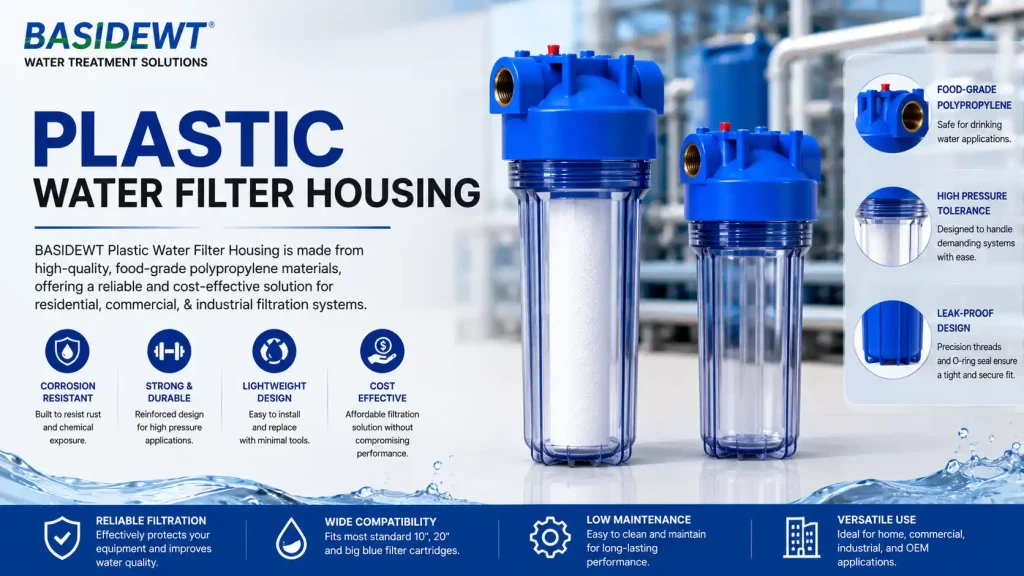
Most plastic housings are transparent or semi-transparent, which lets you visually monitor cartridge condition. This ties into a broader decision covered in our article on clear vs blue housings, where color also plays a role in UV resistance and sediment visibility.
Plastic housings work well for cold water applications with moderate pressure. They’re not designed for extreme heat or continuous high-pressure industrial use.
What Is a Stainless Steel Water Filter Housing?
A stainless steel water filter housing uses SS304 or SS316 steel to form the outer shell. This material offers superior mechanical strength and handles harsher operating conditions than plastic.
Stainless steel housings dominate industrial and commercial filtration. You’ll see them in food and beverage processing, pharmaceutical manufacturing, and municipal water treatment plants.
SS316 grade, in particular, resists corrosion from chlorides and acidic fluids better than SS304. This makes it the preferred choice for chemical-heavy or coastal environments.
Unlike plastic, stainless steel housings can be welded, machined, and customized for specific flow rates and pressure requirements. This flexibility explains why engineers often specify steel for demanding filtration projects.
If you’re comparing shell materials for cartridge-based systems, JX Filtration’s guide on what a cartridge filter housing is offers useful technical context on how stainless steel grades affect performance across different industries.
Advantages of Plastic Water Filter Housing
Plastic housings offer several practical benefits, especially for residential and light commercial use.
Lower upfront cost. Plastic is cheaper to manufacture, which keeps purchase prices down. This matters for homeowners and distributors working with tighter budgets.
Corrosion-free by nature. Since plastic doesn’t rust, it eliminates one common failure point seen in metal housings exposed to moisture.
Lightweight design. Plastic housings are easier to install, transport, and replace. This reduces labor costs during installation, especially for DIY projects.
Chemical inertness. Many plastics resist mild acids and bases without degrading, making them suitable for standard drinking water filtration.
Transparent options available. Clear plastic housings let users inspect cartridge condition without opening the unit, which simplifies maintenance scheduling.
These advantages make plastic housings a practical fit for homes, small offices, and light-duty commercial spaces where pressure and temperature stay within moderate ranges.
Advantages of Stainless Steel Water Filter Housing
Stainless steel housings bring a different set of strengths, particularly for demanding environments.
Higher pressure tolerance. Steel housings handle higher PSI ratings, making them suitable for industrial filtration lines and high-pressure commercial systems.
Superior temperature resistance. Unlike plastic, stainless steel doesn’t soften or warp under hot water or steam exposure. This opens up applications plastic simply can’t handle.
Long-term durability. Steel resists physical damage from impacts, vibration, and mechanical stress far better than plastic.
Better UV and outdoor resistance. Stainless steel doesn’t degrade under prolonged sunlight exposure, unlike some plastics that become brittle over time.
Longer service life. With proper maintenance, stainless steel housings often outlast plastic units by a decade or more.
For industries handling corrosive fluids, extreme temperatures, or continuous high-volume filtration, stainless steel remains the safer long-term investment. Our pillar guide on water filter housing types explains more about how housing material choice connects to overall system design.
Plastic vs Stainless Steel: Performance Comparison
Different applications demand different housing characteristics. Here’s how each material performs across common scenarios.
High-Pressure Systems
Stainless steel clearly wins for high-pressure applications. Industrial filtration lines often operate above 150 PSI, a threshold many plastic housings can’t safely handle.
Plastic housings, even reinforced ones, risk cracking or bursting when pressure exceeds their rated limits. This makes steel the safer choice for high pressure water filter housing needs.
Chemical Resistance
Both materials handle standard drinking water well. However, once you introduce aggressive chemicals, acids, or industrial solvents, results diverge.
SS316 stainless steel resists a broader range of chemicals than most plastics. That said, certain specialty plastics like PVDF can outperform standard steel in specific chemical environments. Always match the material to the exact fluid being filtered.
Outdoor Installation
Outdoor installations expose housings to UV rays, temperature swings, and weather extremes. Stainless steel generally performs better here since it won’t become brittle or discolored over time.
If plastic housings are used outdoors, opt for UV-stabilized or opaque versions to extend their service life.
Indoor Installation
Indoor environments are more forgiving. Since temperature and UV exposure stay controlled, plastic housings perform reliably for residential and light commercial indoor setups.
Drinking Water Applications
Both materials are safe for potable water when certified to relevant standards like NSF/ANSI 42 or 61. Plastic remains the most common choice here due to its affordability and adequate performance under typical household water pressure.
Industrial Filtration
Industrial settings almost always favor stainless steel. This includes chemical processing, pharmaceutical manufacturing, and food and beverage production, where hygiene, pressure, and temperature demands exceed what plastic can reliably deliver.
Whole-House Filtration
For whole house water filter housing systems, plastic is common in residential setups. However, larger homes or those with well water requiring higher pressure often benefit from stainless steel for added durability.
Which Material Lasts Longer?
Stainless steel generally outlasts plastic by a significant margin. Under normal operating conditions, plastic housings last 5 to 10 years before showing signs of wear, cracking, or UV damage.
Stainless steel housings, when properly maintained, often last 15 to 25 years or more. This longevity comes from steel’s resistance to physical stress, temperature fluctuation, and environmental exposure.
That said, lifespan depends heavily on water quality, operating pressure, and installation environment. A plastic housing used indoors with clean water can outlast a poorly maintained steel unit exposed to corrosive conditions.
Since neither housing lasts forever, understanding the mechanics behind filtration helps set realistic maintenance expectations. Our article on how a water filter housing works breaks down the internal components that affect overall system lifespan.
Which One Is More Cost-Effective?
Cost-effectiveness depends on how you measure value, upfront price or long-term investment.
Plastic housings win on initial purchase price. They’re typically 30 to 50 percent cheaper than comparable stainless steel units, which makes them attractive for budget-conscious homeowners and smaller installations.
Stainless steel housings cost more initially but often deliver better value over their extended lifespan. Fewer replacements, reduced downtime, and lower long-term maintenance costs can offset the higher upfront investment, especially in commercial and industrial settings.
For OEM buyers and distributors, the calculation shifts further. Bulk purchasing plastic housings reduces per-unit costs substantially, while steel housings justify their price through durability claims that matter more to end users in demanding applications.
Ultimately, the most cost-effective choice depends on your usage pattern, water conditions, and how long you plan to operate the system without replacement.
Common Mistakes When Choosing Water Filter Housing Materials
Many buyers make avoidable errors when selecting between plastic and stainless steel. Here are the most frequent ones.
Ignoring pressure ratings. Installing a plastic housing rated for 125 PSI on a system that regularly spikes above that limit leads to premature failure.
Overlooking water chemistry. Chlorinated or acidic water can degrade certain plastics faster than expected. Always check compatibility before installation.
Choosing steel grade without research. Not all stainless steel is equal. SS304 works fine for general use, but SS316 is necessary for chloride-heavy or coastal water sources.
Underestimating temperature exposure. Hot water applications require materials rated for higher temperatures. Standard plastic housings often aren’t built for this.
Focusing only on upfront cost. Choosing the cheapest option without considering lifespan and maintenance can lead to higher total costs over time.
Skipping certification checks. For drinking water applications, always confirm the housing meets relevant safety and material certifications before purchase.
Avoiding these mistakes helps ensure the housing you choose matches your actual operating conditions, not just your budget.
Expert Recommendations
Based on typical use cases, here’s how experienced installers and engineers generally approach this decision.
For residential drinking water systems with standard municipal pressure, plastic housings offer sufficient performance at a reasonable cost. They’re easy to install and maintain for most homeowners.
For commercial kitchens, light industrial use, or systems requiring occasional pressure spikes, reinforced plastic or entry-level stainless steel housings strike a good balance.
For heavy industrial filtration, pharmaceutical production, or high-temperature processes, stainless steel is the clear recommendation. The added upfront cost pays off through reliability and reduced downtime.
If you’re unsure which fits your specific project, reviewing options like the high-flow cartridge filter housing can help clarify which material configuration suits higher-volume filtration needs.
Engineers also recommend consulting water quality reports before finalizing material choice. Aggressive water chemistry can shorten the lifespan of either material if mismatched improperly.
Final Thoughts
Plastic and stainless steel water filter housings each serve distinct purposes. Plastic offers affordability, ease of installation, and solid performance for residential and light commercial use.
Stainless steel delivers superior strength, pressure tolerance, and longevity, making it the preferred choice for industrial and demanding commercial applications.
Your final decision should weigh water pressure, temperature, chemical exposure, and long-term budget rather than upfront cost alone. Matching the housing material to your actual operating conditions ensures better performance and fewer replacements down the line.
Whether you’re outfitting a single home or specifying equipment for a large-scale facility, understanding these material differences puts you in a stronger position to choose correctly the first time.
RELATED POSTS
UF Membrane Cleaning & Backwashing: Complete Maintenance Guide
Spot Free Rinse vs Hand Drying: Which One Actually Protects Your Finish?
Whole House UV Water Sterilizer: How It Works and When You Need One
RO Membrane: Types, Sizes, GPD, Working, Replacement & Buying Guide

Install a Security Filter: Protecting Your System