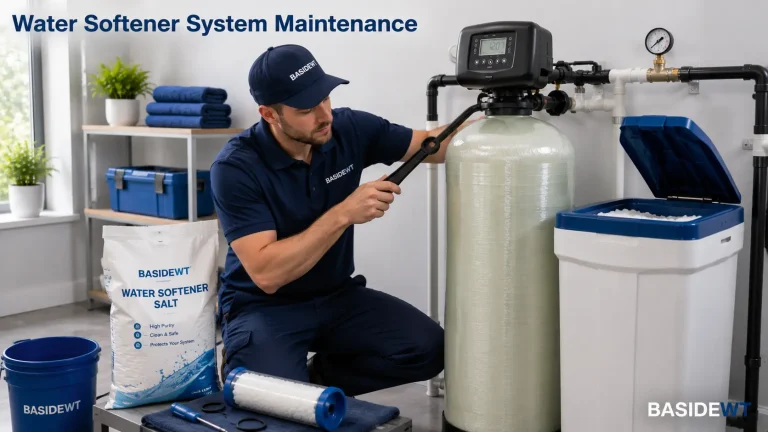
BasideWT- Whole Home Water Filtration System & Replacement


How Does Water Treatment Work? A Complete Guide
If you turn on a tap and clean water comes out, a lot happened before that moment. So how does water treatment work, exactly? At its core, water treatment is a series of physical, chemical, and biological steps that remove contaminants, adjust mineral content, and make water safe for drinking, washing, or industrial use.
Raw water rarely meets the standard people expect. It may carry sediment, dissolved minerals, bacteria, or chemical residue. Treatment systems address these issues one stage at a time, using filtration, softening, disinfection, and sometimes reverse osmosis to produce water that is consistent and reliable.
This matters just as much for a factory in Guangdong running cooling towers as it does for a family in a Beijing apartment filling a kettle. Water quality challenges differ by region, but the underlying treatment principles stay the same everywhere.
In this guide, we walk through how water treatment works step by step. We cover the technology behind each stage, how systems are chosen for homes versus industrial facilities, and what factors matter most when selecting equipment. Whether you manage procurement for a manufacturing plant or you are simply trying to improve water quality at home, this article gives you a clear, practical understanding of the entire process.
What Water Treatment Actually Means
Defining the Process
Water treatment is the practice of improving water quality by removing or reducing unwanted substances. These substances include sediment, dissolved minerals, microorganisms, and chemical contaminants. The goal is always the same: deliver water that is safe, clear, and suited to its intended use.
Treatment is not a single step. It is a sequence of processes, each targeting a different category of impurity. A municipal treatment plant might combine coagulation, sedimentation, filtration, and disinfection. A factory floor system might rely on reverse osmosis and ion exchange instead. The combination depends on the source water and the end use.
Why Treatment Requirements Vary
Not all water needs the same level of treatment. Drinking water must meet strict microbiological and chemical safety standards. Process water used in semiconductor manufacturing needs to be nearly free of dissolved solids. Boiler feedwater needs hardness removed to prevent scale. Each application sets its own benchmark.
This is why understanding how does water treatment work cannot stop at a single definition. The right treatment train depends on the source, the contaminants present, and what the water will be used for once it leaves the system.
Source Water Quality Sets the Starting Point
Before any treatment decision, the source water has to be tested. Groundwater, surface water, and municipal supply each carry different baseline characteristics. Groundwater often has higher hardness and dissolved mineral content. Surface water tends to carry more organic matter and sediment.
In northern China, groundwater hardness is a well-documented regional challenge. According to the United States Geological Survey, groundwater hardness develops as water passes through mineral-rich rock layers, and this pattern shows up wherever geology favors limestone or chalk deposits. Facilities sourcing water in these regions typically need softening as a core part of their treatment plan.
Treatment as a System, Not a Single Device
It helps to think of water treatment as a system rather than one piece of equipment. A single filter cartridge solves one problem. A complete treatment train solves several problems in sequence, with each stage protecting the next from damage or premature wear.
This systems approach is why manufacturers design modular treatment lines. A pre-filter protects a softener resin bed. The softener protects a reverse osmosis membrane from scaling. The membrane protects downstream equipment from dissolved solids. Each stage has a job, and skipping one often shortens the life of the stages that follow.
The Core Stages of Water Treatment
Stage One: Pre-Filtration and Sediment Removal
Pre-filtration is almost always the first step. Raw water frequently carries sand, rust particles, and organic debris. These particles can damage pumps, clog membranes, and reduce the lifespan of downstream equipment if they are not removed early.
Sediment filters typically use pleated cartridges or sand media to trap particles down to a specific micron rating. A 5-micron filter, for example, removes much finer particles than a 20-micron filter. Facilities choose their rating based on water source quality and the sensitivity of equipment further down the line.
Industrial operations often need higher-capacity filtration than residential setups. A factory pulling water from a river or shallow well may install industrial bag filter housings to handle larger debris loads before water reaches more delicate treatment stages.
This stage is foundational. Without effective pre-filtration, every later stage works harder and wears out faster. It is the equivalent of clearing debris off a road before heavier traffic moves through.
Stage Two: Softening and Mineral Reduction
Once sediment is removed, hardness minerals often need attention. Hard water contains dissolved calcium and magnesium, which form scale deposits inside pipes, boilers, and heat exchangers over time. Softening addresses this directly through ion exchange.
In a typical softener, resin beads exchange sodium ions for calcium and magnesium ions as water passes through. The water leaving the tank carries far less hardness. This single step protects equipment, improves soap and detergent performance, and extends the service life of water heaters.
Many homeowners ask whether they can use water while a softener regenerates, since regeneration cycles temporarily affect supply. Understanding this cycle helps both residential and commercial users plan around maintenance windows without disruption.
For larger operations, a water softening system built for industrial flow rates handles continuous demand without losing softening capacity. Hotels, commercial laundries, and factories in hard water regions typically rely on these higher-capacity units rather than residential-grade softeners.
Stage Three: Reverse Osmosis and Membrane Filtration
Reverse osmosis pushes water through a semi-permeable membrane under pressure. The membrane blocks dissolved solids, salts, and many contaminants that pass straight through conventional filters. This stage produces some of the purest water available outside of distillation.
RO is essential wherever dissolved solids need to drop significantly. Drinking water purification, beverage production, pharmaceutical manufacturing, and electronics cleaning all depend on RO to hit strict purity targets. A commercial RO system can scale up to match facility-wide demand, while smaller under-sink units serve individual households.
Membrane selection matters as much as the system itself. Different membrane types handle different feed water conditions, and choosing the wrong one shortens membrane life considerably. Readers exploring a full RO setup can review this complete guide to whole house reverse osmosis systems for a deeper look at sizing and installation.
Stage Four: Disinfection
Disinfection eliminates bacteria, viruses, and other microorganisms that filtration alone cannot fully remove. Without this step, water can carry pathogens even after sediment and dissolved solids have been addressed.
Ultraviolet disinfection is one of the most widely used methods in both residential and commercial settings. UV light disrupts the DNA of microorganisms, preventing them from reproducing, without adding chemicals to the water. This makes it a popular choice for facilities that want microbiological safety without altering water taste or composition.
The <a href=”https://www.who.int/teams/environment-climate-change-and-health/water-sanitation-and-health/water-safety-and-quality/drinking-water-quality-guidelines” rel=”nofollow”>World Health Organization</a> recognizes UV treatment, alongside chlorination, as an effective method for inactivating waterborne pathogens. A UV water sterilizer installed as a final stage gives both residential and commercial users an added layer of protection before water reaches the tap.
How Industrial Water Treatment Differs From Residential
Scale and Flow Rate Demands
Industrial facilities process far larger water volumes than households. A factory running continuous production may need thousands of liters per hour, while a home typically needs only a fraction of that. This difference drives nearly every equipment decision, from tank size to membrane surface area.
Industrial systems are built around continuous operation. Downtime for maintenance translates directly into production losses, so reliability and redundancy matter more than they do in a residential setting. Many factories install parallel treatment lines so one unit can be serviced while the other keeps running.
Water Quality Specifications by Industry
Different industries set different purity targets. Textile dyeing facilities need consistent water hardness to maintain color uptake. Food and beverage producers need water free of taste-altering minerals and microbial contamination. Electronics manufacturers, particularly in semiconductor production, require ultra-pure water with extremely low dissolved solids.
These specifications shape the treatment train. A semiconductor plant might combine multi-stage RO with deionization to reach near-zero conductivity. A food processing facility might prioritize UV disinfection and carbon filtration to manage taste and safety without altering mineral content unnecessarily.
China’s Industrial Water Treatment Landscape
China’s manufacturing sector covers a wide range of water quality needs. Coastal facilities sometimes deal with higher salinity in source water, while inland and northern facilities more often contend with hardness from groundwater sources. Import-export businesses sourcing treatment equipment from Chinese manufacturers also need systems that meet both domestic operating conditions and the standards required by international buyers.
This is one reason many factories invest in modular treatment systems that combine softening, filtration, and RO in a single line. It allows a facility to adjust components as water quality or production requirements change, rather than replacing an entire system from scratch.
Maintenance Considerations at Industrial Scale
Industrial systems need structured maintenance schedules. Resin beds require periodic regeneration and occasional deep cleaning to remove iron fouling. Membranes need regular cleaning cycles to prevent scaling and biological growth. Pressure gauges and flow meters help operators catch performance drops before they become costly failures.
A water flow meter installed at key points in the system gives facility managers real-time visibility into performance. Combined with scheduled resin and membrane maintenance, this kind of monitoring keeps industrial treatment systems running efficiently for years.
Residential Water Treatment Applications
Common Household Water Quality Issues
Homeowners typically deal with a narrower set of problems than industrial facilities, but the issues are still significant. Hardness causes scale buildup in kettles and water heaters. Sediment leaves cloudy water or grit at the bottom of glasses. Chlorine taste and odor from municipal treatment bothers many households even when the water is technically safe.
Each of these issues has a corresponding solution. Softeners address hardness. Sediment filters address particulate matter. Carbon filtration and RO address taste and chemical residue. Most residential systems combine two or three of these stages rather than relying on just one.
Whole House Versus Point-of-Use Systems
Homeowners generally choose between whole house systems and point-of-use systems. A whole house setup treats all water entering the property, covering every tap, shower, and appliance. A point-of-use system, like an under-sink RO unit, treats water only at a specific tap, usually the kitchen sink used for drinking and cooking.
Whole house systems make sense when hardness or sediment affects the entire plumbing system, including appliances and water heaters. Point-of-use systems make sense when the primary concern is drinking water quality and a household wants to avoid the cost of treating water used for things like toilet flushing or outdoor irrigation.
A home water softener system is one of the most common whole house investments, particularly in regions with consistently hard water. It protects every appliance in the house rather than just the water used for drinking.
Sizing a System for Your Household
Correct sizing prevents two common mistakes: undersized systems that cannot keep up with demand, and oversized systems that waste resources. Sizing starts with a water hardness test and an estimate of daily household water usage, including peak demand during mornings or evenings when several fixtures run at once.
Family size, the number of bathrooms, and appliance usage all factor into the calculation. A household running multiple loads of laundry daily needs a different capacity than a smaller household with lighter water use. Many manufacturers provide sizing guidance based on these inputs to help homeowners avoid guesswork.
Practical Daily Benefits
The day-to-day improvements from residential water treatment are easy to notice. Soft water reduces soap scum and makes cleaning easier. Filtered water improves the taste of drinking water and coffee. Reduced scale buildup means water heaters and dishwashers last longer and run more efficiently.
These benefits compound over time. A household that invests in proper treatment typically sees lower appliance replacement costs and reduced energy use for water heating, since scale-free systems do not need to work as hard to reach target temperatures.
Comparing Common Water Treatment Methods
The table below summarizes how the main treatment methods differ in function, typical application, and what they remove.
| Treatment Method | Primary Function | Typical Application | Contaminants Removed |
|---|---|---|---|
| Sediment Filtration | Removes solid particles | Pre-treatment for all systems | Sand, rust, silt, debris |
| Water Softening | Removes hardness minerals | Homes, hotels, boilers | Calcium, magnesium |
| Reverse Osmosis | Removes dissolved solids | Drinking water, industrial process water | Salts, heavy metals, most dissolved solids |
| UV Disinfection | Eliminates microorganisms | Final-stage safety treatment | Bacteria, viruses, protozoa |
| Carbon Filtration | Improves taste and odor | Residential drinking water | Chlorine, some organic compounds |
This comparison shows why most effective treatment systems use more than one method. Each stage targets a different category of contaminant, and combining them produces water quality that no single method achieves alone.
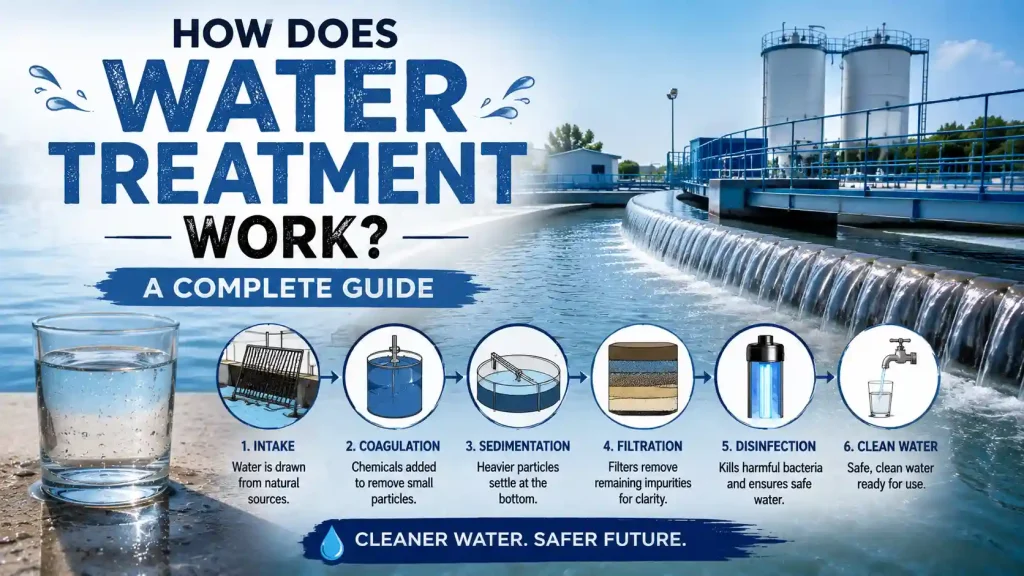
The Step-by-Step Water Treatment Process
A Typical Treatment Sequence
Understanding how does water treatment work in practice means following water through an actual system, from intake to final use. The table below outlines a common sequence for a combined residential or light commercial system.
| Step | Stage | What Happens |
|---|---|---|
| 1 | Intake and Testing | Source water is tested for hardness, sediment, pH, and contaminants |
| 2 | Pre-Filtration | Sediment and large particles are filtered out |
| 3 | Softening | Calcium and magnesium are exchanged for sodium through resin |
| 4 | Reverse Osmosis (if needed) | Dissolved solids and remaining contaminants are filtered through a membrane |
| 5 | Disinfection | UV light or another method neutralizes microorganisms |
| 6 | Storage and Distribution | Treated water moves to storage tanks or directly to the point of use |
Why Order Matters
Each stage in this sequence protects the ones that follow. Skipping pre-filtration sends sediment straight into a softener resin bed, fouling it faster than expected. Skipping softening before reverse osmosis allows hardness minerals to scale the membrane, reducing its lifespan and efficiency.
This is why treatment system design is not arbitrary. Engineers sequence stages specifically to extend equipment life and maintain consistent output quality. A well-designed system performs better over years of operation than a poorly sequenced one, even if both use similar components.
Monitoring and Quality Control
Ongoing monitoring closes the loop on any treatment process. Pressure gauges track filter and membrane performance. TDS meters measure dissolved solids before and after RO treatment, confirming the system is working as intended. Flow meters track usage and help schedule maintenance proactively rather than reactively.
A TDS meter is a simple but effective tool for ongoing quality checks. Facilities and homeowners alike use these to confirm treated water consistently meets target purity levels over time.
Adjusting the Process Over Time
Water treatment is not a set-it-and-forget-it process. Source water quality can shift with seasons, especially for facilities drawing from surface water or shallow wells. Equipment wears down and needs periodic replacement of filters, membranes, and resin. Reviewing system performance regularly ensures the treatment train keeps pace with both source water changes and growing demand.
Choosing the Right Water Treatment System
Start With a Water Test
Every sound treatment decision starts with knowing what is actually in the water. A professional water test reveals hardness levels, sediment content, pH, and any contaminants of concern. Without this information, it is difficult to choose equipment that solves the right problem.
Skipping this step is one of the most common mistakes both homeowners and facility managers make. A system chosen without testing often treats the wrong issue, leaving the actual problem unresolved while adding unnecessary cost.
Match the System to the Application
Once water quality is known, the application determines equipment choice. A factory needing scale-free boiler feedwater has very different requirements than a household wanting better-tasting drinking water. Matching system capacity, contaminant targets, and flow rate to the actual use case avoids both under-treatment and unnecessary overspending.
For facilities considering a full treatment line, a water filtration system that combines pre-filtration, softening, and RO in a coordinated design typically performs better than assembling individual components without an overall plan.
Consider Long-Term Operating Costs
Equipment cost is only part of the picture. Ongoing costs include filter replacement, membrane cleaning or replacement, resin regeneration salt, and energy use. A system with a lower upfront price but high consumable costs can end up more expensive over a few years than a higher-quality system designed for efficiency.
This is particularly relevant for industrial buyers evaluating equipment from multiple suppliers. Comparing total cost of ownership, not just the initial quote, gives a clearer picture of long-term value.
Working With a Manufacturer or Supplier
For facilities sourcing equipment internationally, working directly with a manufacturer offers advantages in customization, technical support, and consistent component quality. BasideWT designs and manufactures a wide range of water treatment equipment, including water softening systems, RO systems, and control valves, serving both residential and industrial applications.
Buyers importing equipment for resale or facility use benefit from working with manufacturers who understand both Chinese water quality conditions and the standards expected in international markets. This combination of local manufacturing knowledge and export-ready quality control matters for long-term equipment reliability.
Conclusion
So, how does water treatment work, from start to finish? It works as a coordinated sequence: pre-filtration removes sediment, softening addresses hardness, reverse osmosis strips dissolved solids, and disinfection neutralizes microorganisms. Each stage protects the next, and together they turn variable source water into something consistent, safe, and suited to its purpose.
Whether the goal is protecting industrial equipment from scale, meeting strict purity standards for manufacturing, or simply improving the water coming out of a kitchen tap, the same core principles apply. Testing comes first, system design follows the application, and ongoing maintenance keeps performance consistent over time.
For factories, commercial facilities, and homeowners working through these decisions, BasideWT offers a full range of water treatment systems built for both residential and industrial demands. Exploring their water filtration systems is a practical next step for anyone ready to move from understanding water treatment to implementing a solution.
Frequently Asked Questions
How does water treatment work in simple terms?
Water treatment works by passing water through a series of stages that remove sediment, reduce hardness, filter out dissolved solids, and disinfect against microorganisms. Each stage targets a specific type of contaminant, and together they produce water suited to drinking, washing, or industrial use.
What is the first step in water treatment?
The first step is almost always pre-filtration, which removes sediment, sand, and larger particles from the water. This protects downstream equipment like softeners and membranes from premature wear or clogging.
Does water treatment remove all contaminants?
No single method removes every contaminant. This is why treatment systems combine multiple stages, such as filtration, softening, reverse osmosis, and disinfection, to address different categories of impurities together.
How is industrial water treatment different from residential treatment?
Industrial water treatment handles much larger flow volumes and often requires stricter purity targets, depending on the industry. Residential systems are smaller in scale and typically focus on hardness, sediment, and taste rather than the highly specific purity standards found in manufacturing.
How often does a water treatment system need maintenance?
Maintenance frequency depends on the system and water quality. Sediment filters and cartridges often need replacement every few months. Softener resin needs periodic regeneration and occasional deep cleaning. RO membranes typically need cleaning or replacement every one to three years, depending on usage and feed water quality.
Can reverse osmosis replace a water softener?
Reverse osmosis can reduce some hardness minerals, but it is not designed as a primary softening method. Hard water sent directly into an RO system tends to scale the membrane faster, which is why softening is typically placed before RO in a treatment sequence.
RELATED POSTS
Water Filter System Problems: 10 Common Issues & Solutions
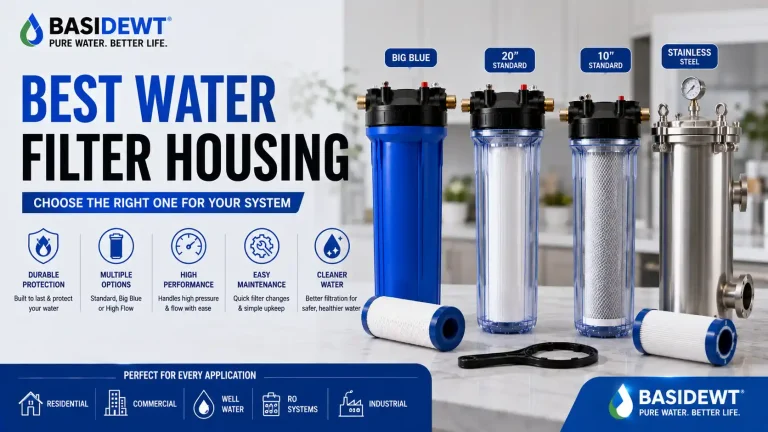
Best Water Filter Housing: How to Choose the Right One for Your System
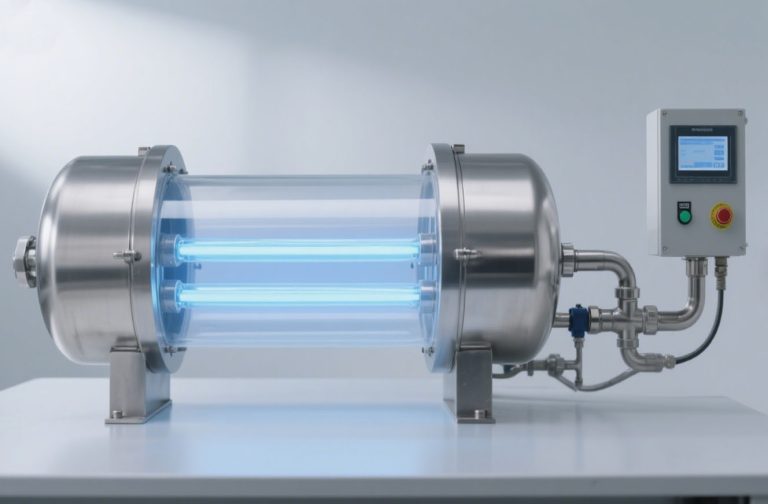
How Much Does a UV Water Treatment System Cost?
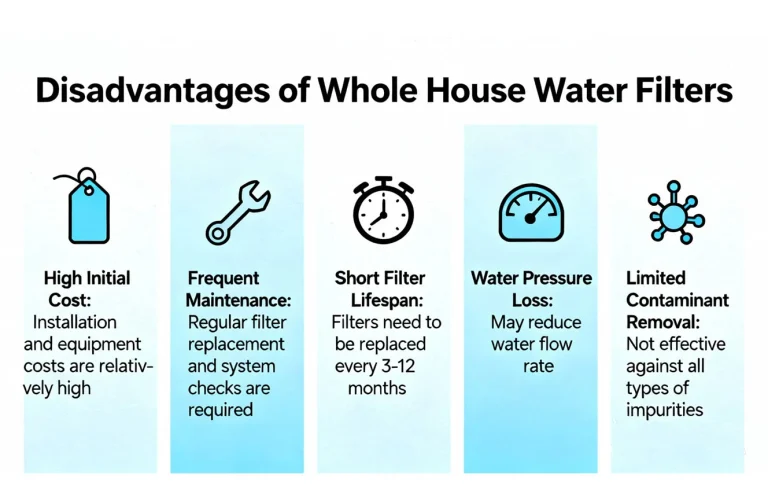
What Are The Disadvantages Af A Whole House Water Filter
Deionized Water System Maintenance: How to Keep Your DI System Performing at Its Best