BasideWT- Whole Home Water Filtration System & Replacement


How Long Does a Water Filter System Last?
A water filter system typically lasts anywhere from 3 to 20 years, depending on the type. The filter cartridges inside it, however, need much more frequent replacement, often every 3 to 12 months. This gap between the outer system and its inner filters is the main reason so many homeowners feel confused about lifespan.
If you are asking how long does a water filter system last, the honest answer depends on what “the system” actually means to you. The tanks, housings, valves and tubing can often serve a household for a decade or longer. The filter media inside them wears out much sooner and needs regular swaps to keep working properly.
This guide breaks down both sides of that equation. You will learn realistic lifespan ranges for different system types, the factors that shorten or extend them, and the signs that tell you when replacement, not repair, is the right call.
Quick Answer: Typical Water Filter System Lifespan
Most complete water filter systems fall into one of two lifespan categories.
- The main system structure (tanks, housings, valves, membranes housing, faucets): usually 8 to 20 years with proper care.
- The filter cartridges or media inside it: usually 3 months to 5 years, depending on the filter type and your water conditions.
Three factors drive most of the variation you will see between homes:
- Water quality. Sediment, chlorine, hardness and iron all shorten filter life.
- Household water usage. More people and more daily gallons mean faster media exhaustion.
- System quality and maintenance. Better materials and consistent upkeep both extend service life.
Understanding these two lifespans separately, rather than treating “the filter” as one single object, is the key to setting realistic replacement expectations.
Filter Cartridge Lifespan vs. Complete System Lifespan
People often use “water filter” and “water filter system” interchangeably, but they are not the same thing. A complete water filter system is made up of a permanent structure plus replaceable filtration components that sit inside it.
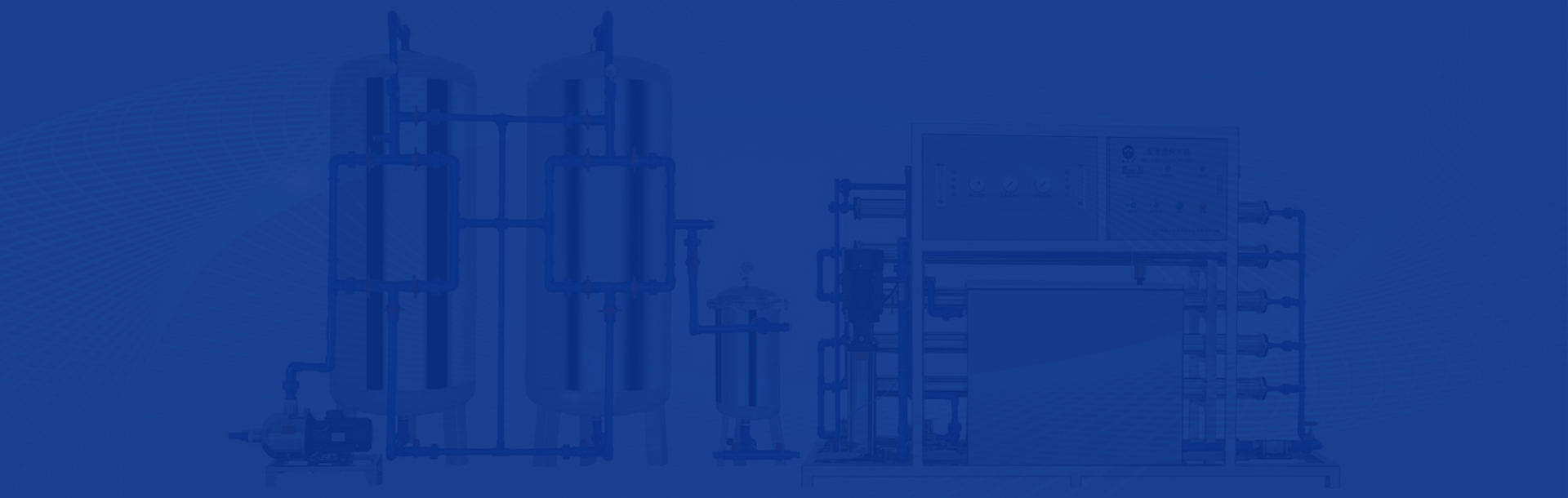
The structure includes the tank or housing, the control valve, tubing, fittings and, in reverse osmosis units, the storage tank and faucet. These parts are built to withstand years of continuous water pressure. Manufacturers generally design them for a decade or more of service.
The cartridges, membranes and filter media are consumable by design. They are engineered to trap a fixed volume of contaminants or process a set number of gallons before they lose effectiveness. Once that capacity is reached, filtration performance drops even though the surrounding system is still fully functional.
Treating cartridge replacement as routine maintenance, rather than a sign of system failure, helps set the right expectations. A system that needs its third filter change in two years is not failing. It is doing exactly what it was designed to do.
Average Lifespan of Different Water Filter Systems
Lifespan varies widely by system type because each one uses different filtration media and construction. The table below summarizes typical ranges for the structural components and the internal filters separately.
| System Type | Main Structure Lifespan | Filter/Media Lifespan |
|---|---|---|
| Pitcher filter | 2–5 years | 1–2 months |
| Faucet-mounted filter | 3–5 years | 2–3 months |
| Under-sink carbon filter | 5–10 years | 3–12 months |
| Reverse osmosis (RO) system | 10–15 years | Membrane: 2–5 years; pre/post filters: 6–12 months |
| Whole-house cartridge system | 10–15 years | 3–9 months per cartridge |
| Whole-house media/backwashing tank system | 10–20 years | Media: 5–10+ years |
| Ultrafiltration (UF) system | 8–12 years | Membrane: 5–10 years |
These ranges assume average residential use and reasonably manageable source water. Homes with poor water quality, heavy usage or minimal maintenance often see shorter lifespans at the lower end of each range.
What Affects How Long a Water Filter System Lasts
No two households get identical results from the same system. Several variables interact to determine actual lifespan.
Water Quality and Contaminant Load
Source water quality is the single biggest factor in filter longevity. Water carrying high sediment, iron, chlorine or hardness minerals forces the filter media to work harder, which shortens its useful life considerably.
Well water tends to be tougher on filters than treated municipal water because it often contains more sediment and dissolved minerals. Understanding what a water filter actually removes helps explain why heavier contaminant loads wear out media faster.
Household Water Usage
A household of five uses far more water daily than a single occupant. Since most filter media has a rated gallon capacity, higher daily flow reaches that capacity sooner, shortening the practical replacement interval even if the calendar-based estimate suggests otherwise.
Filter Type, Material and System Quality
Not all filtration media is built the same. Coconut-shell carbon block media generally outperforms low-density carbon in both contaminant capacity and structural durability. Similarly, thicker-walled RO membranes and reinforced housings tend to resist pressure fatigue longer than budget alternatives.
System quality also affects the structural lifespan, not just the media inside it. Higher-grade valves, seals and tank materials resist corrosion, cracking and mineral scaling for longer, which is one reason two systems with identical filter types can have very different real-world lifespans.
Maintenance and Operating Conditions
Consistent maintenance is one of the few lifespan factors homeowners fully control. Replacing filters on schedule, checking for leaks and keeping backwashing cycles running as intended all protect both the media and the surrounding hardware.
Operating conditions matter too. Water pressure outside the manufacturer’s recommended range, extreme temperatures, and prolonged periods of disuse can all place unnecessary stress on seals, membranes and valves, accelerating wear beyond normal expectations.
According to the National Sanitation Foundation, filters should be replaced at or before the manufacturer’s rated capacity to keep reducing contaminants effectively, since performance can decline well before a filter looks visibly dirty.
Signs a Water Filter System Needs Replacement
Certain signs point to the filter media simply being spent. Others suggest the structural system itself is reaching the end of its service life.
Signs the filter media needs changing:
- Water tastes, smells or looks different than usual
- Noticeably reduced water pressure or flow
- The filter has reached its rated gallon capacity or time limit
- A filter change indicator light or timer has triggered
Signs the system structure is aging out:
- Recurring leaks at fittings or seals, even after tightening
- Visible cracking, rust or corrosion on the tank or housing
- The control valve fails to cycle or regenerate properly
- Repeated performance issues even with fresh filters installed
If you are unsure which category applies, reviewing the common signs a filter needs replacing can help you pinpoint whether the fix is a simple cartridge swap or something more.
How to Extend the Lifespan of Your Water Filter System
Small habits make a measurable difference in how long a system lasts before major components need attention.
- Replace filters on schedule, not just when problems appear. Waiting until performance visibly drops often means the media has already been overworked.
- Install a pre-filter for sediment-heavy water. Protecting downstream filters and membranes reduces the load they carry.
- Monitor water pressure and keep it within the manufacturer’s recommended range.
- Address plumbing leaks quickly to prevent pressure spikes that stress valves and seals.
- Test your water periodically, especially with well water, since contaminant levels can shift seasonally.
- Follow a consistent maintenance routine, covering everything from filter changes to valve checks.
A full water filter system maintenance guide covers these routines in more depth if you want a complete care schedule to follow.
When Repair Makes Sense vs. When to Replace the System
Not every performance issue means buying a new system. The right decision usually comes down to which part is affected and how old the unit already is.
Repair is usually the better option when:
- The issue is isolated to a single part, such as a valve, O-ring or fitting
- The system is less than half way through its expected structural lifespan
- Replacement parts are still readily available for the model
- The rest of the system shows no other signs of aging
Replacement is usually the smarter choice when:
- The system is near or past its expected structural lifespan
- Multiple components are failing at the same time
- Repair costs approach a significant portion of a new system’s price
- Corrosion or cracking affects the tank or housing itself, not just a seal
For homes weighing this decision on a whole-house unit specifically, comparing costs against a whole-house water filter system can clarify whether replacement pays off faster than ongoing repairs.
Expected Lifespan for Whole-House and Other Common Systems
Whole-house systems deserve their own explanation because “lifespan” means something different depending on the design.
Cartridge-based whole-house systems rely on replaceable filter housings, similar to under-sink units but sized for full household flow. Their cartridges typically need changing every 3 to 9 months, while the housings and valves can last 10 to 15 years.
Media tank or backwashing whole-house systems use loose filtration media, such as catalytic carbon or greensand, inside a sealed tank. This media can last 5 to 10 years or more before replacement, while the tank, control valve and connections often reach 15 to 20 years with proper maintenance.
Since water conditions vary so much by household, choosing the right category from the start matters more than most people expect. A guide to selecting a system based on your water quality can help you match the design to your specific source water before lifespan even becomes a concern.
Practical Lifespan and Replacement Checklist
Use this quick checklist to track where your system stands.
- Confirm your system type and its typical structural lifespan range
- Note the manufacturer’s rated capacity for each filter or membrane
- Set calendar reminders for filter and membrane replacement dates
- Inspect housings, valves and fittings for leaks or corrosion twice a year
- Test water quality annually, or more often with well water
- Track any recurring taste, odor, pressure or flow changes
- Compare repair costs to replacement costs once the system passes its midpoint age
- Review your original buying criteria if you are shopping for a replacement system
Conclusion
So, how long does a water filter system last? The structural components, tanks, housings, valves and membranes, generally last 8 to 20 years depending on type and quality. The filters and media inside them need replacement far more often, ranging from a couple of months to several years.
Water quality, household usage, filter material and maintenance habits all shape where your system falls within these ranges. Staying consistent with filter changes and routine inspections is the most reliable way to get the full expected lifespan out of any system you own.
If your current setup is approaching the end of its service life, or you are simply comparing options for the first time, browsing BasideWT’s water filtration systems is a practical next step toward finding a system built to last.
RELATED POSTS
What Size Whole House Water Softener and Filtration System Do I Need for My Home?
What Does a Water Filter Remove? Contaminants, Sediment & More
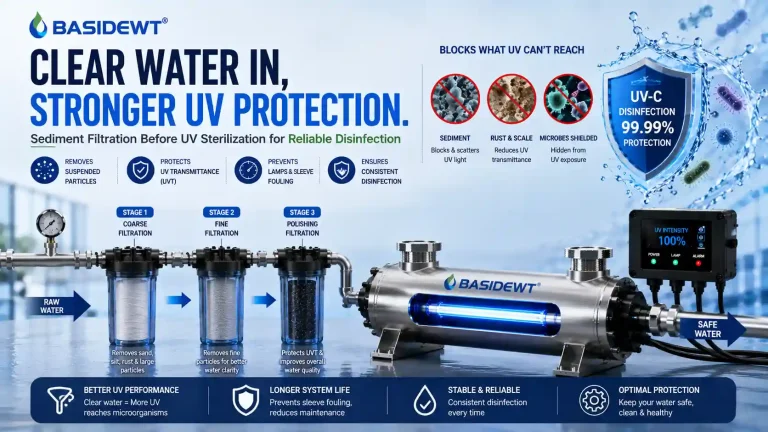
Sediment Filter Before UV Sterilizer: Why Is It Needed?
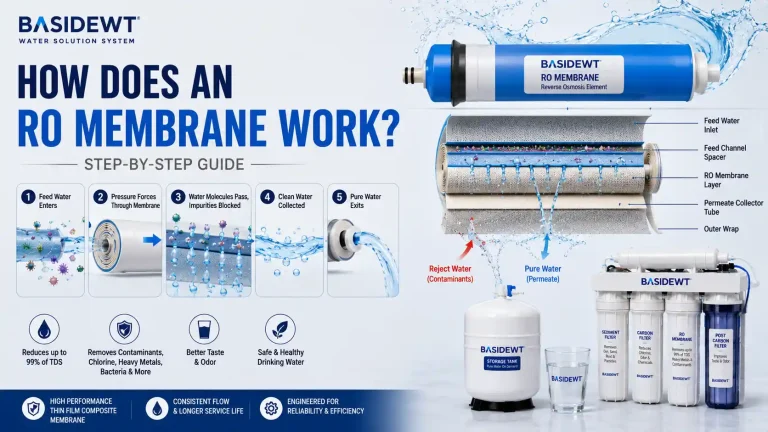
How Does an RO Membrane Work? Step-by-Step Guide
UV Water Sterilizer: Types, Working, Benefits, Applications, Maintenance & Buying Guide