BasideWT- Whole Home Water Filtration System & Replacement


What Is a Water Softener and Why Your Home or Factory Needs One
Have you ever seen white chalky deposits on your faucets? Or noticed that your laundry looks dull and your skin feels dry after showering? These are classic signs of hard water. Millions of homes and factories deal with this problem every day.
So, what is a water softener? It is a device that removes excess calcium and magnesium from your water. These minerals travel through underground rock and enter your water supply. By the time water reaches your tap, it can carry enough minerals to damage pipes, appliances, and equipment.
In China, this issue is especially common. Regions in the north — including Beijing, Tianjin, and Hebei — have notably high water hardness levels. This affects factories, hotels, homes, and commercial facilities alike. A water softener is often the most practical solution.
This guide covers what a water softener does, how it works, the problems it solves, and how to pick the right one. Whether you manage a factory or own a home, you will find clear and useful answers here.
A water softener is a water treatment system that removes calcium and magnesium minerals from hard water through an ion exchange process. By converting hard water into soft water, it helps protect plumbing systems, household appliances, industrial equipment, and water-using processes from scale buildup and efficiency loss.
What Causes Hard Water and Why It Matters
How Hard Water Forms
Hard water forms when rainwater passes through soil and rock. It picks up calcium carbonate and magnesium sulfate along the way. The more minerals it collects, the harder the water becomes.
Hardness is measured in milligrams per liter (mg/L) or grains per gallon (GPG). Water above 120 mg/L is classified as hard. Water above 180 mg/L is considered very hard.
According to the Usqs, hard water affects a large share of groundwater supplies worldwide. In China, northern provinces face some of the hardest water in the country.
The Impact on Pipes and Equipment
Hard water does not directly harm your health. But it causes serious damage to your infrastructure over time. Calcium and magnesium react with heat to form scale. This scale builds up inside pipes, boilers, heat exchangers, and water heaters.
Scale acts like insulation. It forces heating systems to work harder to reach the same temperature. This wastes energy and raises costs. Over time, the buildup shortens equipment lifespan and increases repair bills.
For factory owners and industrial buyers, this is a real financial concern. A thin layer of scale inside a boiler tube reduces output efficiency. In large facilities, that lost efficiency adds up to significant operating losses every year.
Why China’s Industrial Sector Pays Attention
Chinese manufacturers face unique water quality challenges. Many industrial zones draw from groundwater sources with high mineral content. Without treatment, that water damages boilers, cooling towers, and process equipment fast.
Hard water also causes inconsistency in production. Mineral contamination affects dye uptake in textiles, ingredient ratios in food processing, and surface finishes in manufacturing. Soft water helps producers maintain stable, repeatable results across every batch.
What Does a Water Softener Do
The Core Function
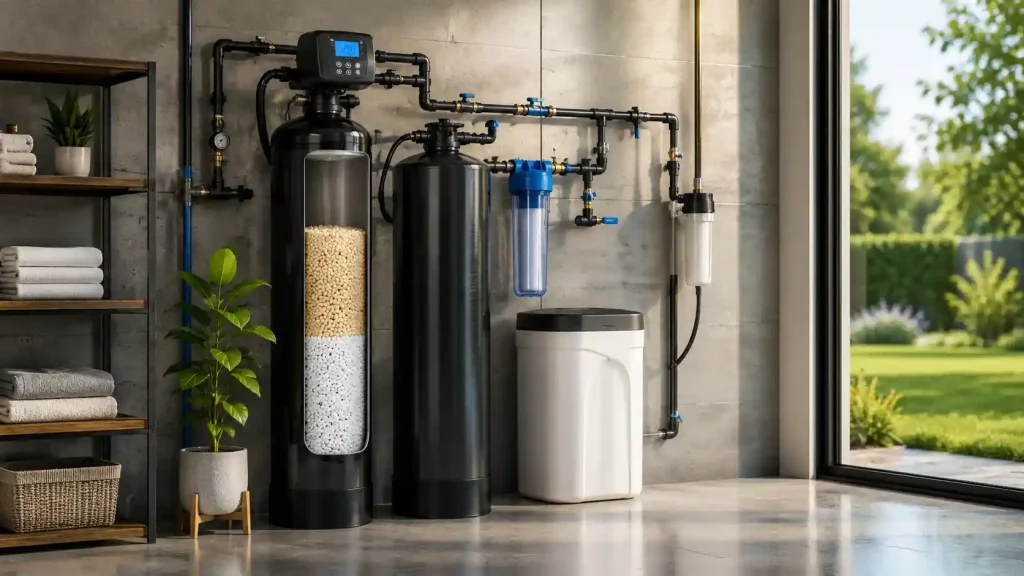
A water softener has one main job. It swaps calcium and magnesium ions in your water for sodium or potassium ions. This process is called ion exchange. The result is soft water — water that does not form scale or react badly with soap.
When soft water flows through your plumbing, it stops depositing minerals on pipe walls and heating elements. In fact, existing scale begins to dissolve gradually. This restores flow and improves heating performance in older systems.
These are among the most immediate water softener benefits for both residential and commercial users. The difference shows up quickly in energy bills and equipment performance.
What Changes in Your Home
In a household, the change is easy to notice. Laundry comes out softer and brighter. Soft water rinses soap from fabric more completely, so clothes look cleaner. Skin and hair feel smoother after washing. Dishes and glassware dry spot-free.
Water heaters and dishwashers also run more efficiently. They no longer fight through scale on their heating elements. This means lower energy use and a longer useful life for your appliances.
These everyday improvements add up. Over a few years, most homeowners recover the cost of their system through energy savings and fewer appliance replacements.
Integration With Filtration Systems
Modern water softeners work well alongside broader water filtration systems. Some units include sediment pre-filters, carbon blocks, or UV stages. These treat other water quality issues at the same time.
This combination gives you soft water and cleaner water in one system. For industrial users, it means fewer separate treatment steps and a more efficient overall setup.
Many homeowners assume that a water softener and a water filter perform the same task. In reality, they solve different water quality problems. A water softener removes hardness minerals such as calcium and magnesium, while a filtration system targets contaminants like chlorine, sediment, odors, and certain chemicals. When combined, these systems create a more complete water treatment solution for both residential and commercial applications.
How Does a Water Softener Work
The Ion Exchange Process
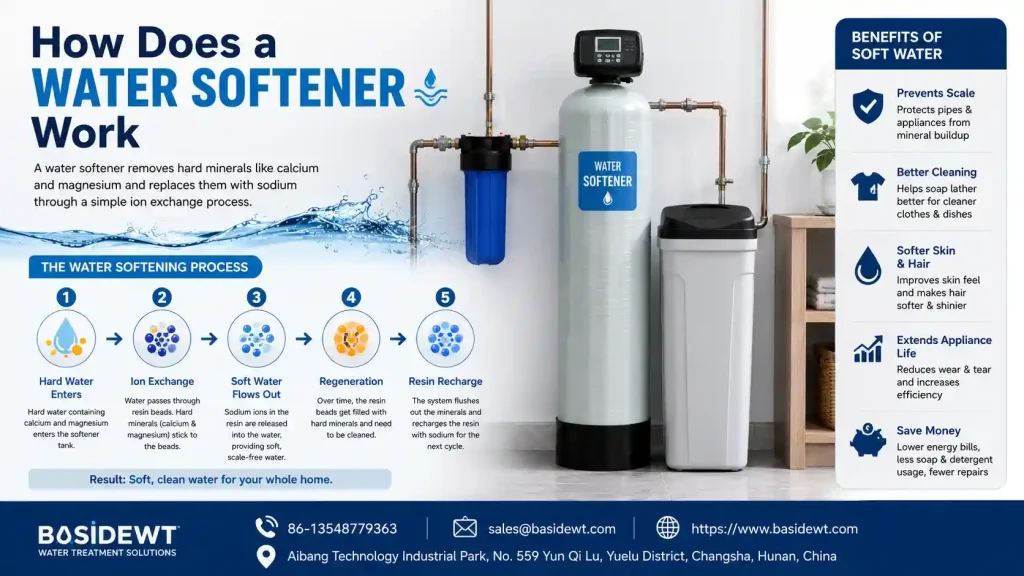
Most softeners use ion exchange resin. Inside the main tank, thousands of tiny resin beads carry a negative charge. These beads hold sodium ions on their surface.
When hard water flows through the tank, it carries positively charged calcium and magnesium ions. These ions have a stronger charge than sodium. So they bond to the resin beads and push the sodium ions off into the water. The water leaving the tank is now soft.
This is the core of how water softeners work. The calcium and magnesium stay trapped in the resin. The water moves on without them.
The Regeneration Cycle
Over time, the resin beads fill up with calcium and magnesium. When that happens, they can no longer soften water. The system then runs a regeneration cycle to recharge them.
During regeneration, a concentrated brine solution flushes through the resin bed. This brine contains a high concentration of sodium ions. Those sodium ions force the calcium and magnesium off the beads and flush them down the drain. The beads are then ready to work again.
This cycle is fully automatic in modern systems. A control valve — like those available from BasideWT’s water softener control valve range — monitors water usage and triggers regeneration at the right time. Demand-based systems regenerate only when needed. This saves salt and water compared to fixed-schedule systems.
Industrial Resin Requirements
Industrial softeners handle higher flow rates and harder water than residential units. The resin inside must be built for that workload. High-capacity water softener resin is designed for exactly this purpose.
It can process large volumes of water continuously without losing performance. This makes it the right choice for factories, processing plants, hotels, and other high-demand facilities.
Common Hard Water Problems in Homes and Industry
Visible Signs at Home
Hard water problems show up gradually. At home, the first signs are often visual. White or yellowish deposits appear around faucets, on showerheads, and inside kettles. These are calcium carbonate deposits that form when water is heated or exposed to air.
Inside water heaters, scale coats the heating elements. According to the Department of Energy, scale can cut a water heater’s efficiency by up to 25 percent. That means higher electricity or gas bills every month.
Scale also forms inside washing machines and dishwashers. It clogs spray arms, blocks valves, and wears down seals. These machines break down faster than they should.
Industrial Consequences
In factories and commercial facilities, the damage is more serious. Boilers with scale buildup are prone to overheating in localized areas. This can cause tube failures and dangerous pressure issues.
Cooling towers that use hard water develop deposits on heat exchange surfaces. This reduces their cooling capacity. It also raises the risk of bacterial growth, including Legionella, in stagnant mineral deposits.
Food and beverage producers face a different problem. Minerals in process water affect the taste and texture of their products. That creates consistency problems and may lead to failed quality audits.
The Soap and Chemical Cost Problem
Hard water makes soap less effective. Calcium and magnesium ions react with soap to form an insoluble scum. This scum sticks to surfaces instead of rinsing away. You need more soap to get the same result.
In commercial laundries, kitchens, and cleaning operations, this drives up chemical costs. Soft water dissolves soap fully and rinses it away completely. The savings on detergent and cleaning products can be substantial for high-volume operations.
Water Softener Benefits for Residential and Commercial Users
Benefits for Homeowners
The benefits of a water softener are noticeable from the first use. Soft water lathers easily and rinses completely. Skin feels hydrated after showering rather than dry and tight. Hair looks shinier and is easier to manage.
Appliances last longer. Dishwashers, washing machines, and water heaters all benefit from scale-free water. Heating elements stay efficient. Valves move freely. Internal parts are not worn down by mineral abrasion.
Most appliance manufacturers recommend soft water. Some even require it to maintain warranty coverage. Installing a softener protects that investment.
Benefits for Factories and Commercial Facilities
For industrial users, the return on a water softener investment is easy to measure. Energy bills drop when boilers and heaters run without scale. Chemical costs fall when soap and detergents work at full strength. Maintenance calls become less frequent.
A well-sized whole house water softener or industrial unit typically pays for itself within a few years. The savings come from multiple directions at once.
Chinese manufacturers who supply international markets also benefit from improved product quality. In textile dyeing, semiconductor production, pharmaceutical manufacturing, and food processing, water quality affects the finished product. Soft water helps producers meet international quality standards consistently.
Environmental and Operational Advantages
Soft water also supports sustainability goals. Less energy to heat water means a lower carbon footprint. Less detergent use means fewer chemicals released into wastewater. Longer equipment life means less manufacturing waste from premature replacement.
For facilities working toward ISO 14001 environmental certification or other sustainability standards, switching to soft water is a meaningful step. It reduces environmental impact while improving operational efficiency at the same time.
Water Softener vs Water Filtration System
Many people struggle to understand the difference between a water softener and a water filtration system. Although both improve water quality, they work in different ways and address different issues.
A water softener focuses on removing hardness minerals. Through ion exchange, it prevents scale buildup inside pipes, water heaters, boilers, and industrial equipment. This helps improve efficiency and extend equipment lifespan.
A water filtration system targets impurities such as sediment, chlorine, organic compounds, and certain contaminants that affect water taste, odor, and appearance. Depending on the technology used, filtration systems may also reduce bacteria, heavy metals, and other unwanted substances.
For the best results, many facilities combine both technologies. A water softener protects equipment from mineral deposits, while a filtration system improves overall water quality. This combination is commonly used in homes, hotels, restaurants, manufacturing plants, and commercial buildings throughout China and other regions with challenging water conditions.
Whole House Water Softener Systems Explained
What a Whole House System Does
A whole house water softener system treats all incoming water at the main supply line. Every tap, appliance, shower, and pipe in the building receives softened water. This is the most complete way to eliminate hard water problems throughout a home or facility.
This approach protects every part of your plumbing at once. You do not need separate units for the kitchen, bathroom, or laundry room. One system handles the entire property.
How the System Is Set Up
A typical whole house soft water system has three main parts. The first is the mineral tank, which holds the ion exchange resin. The second is the brine tank, which stores salt and produces the brine for regeneration. The third is the control valve, which manages the regeneration cycle automatically.
The system installs on the incoming water line, usually near the water meter. Once it is in place, it works on its own. You only need to add salt every few weeks and check on it occasionally.
Sizing Your System Correctly
Correct sizing is critical. A system that is too small cannot keep up during peak usage. It may let hard water pass through at busy times. A system that is too large regenerates more than necessary, wasting salt and water.
To size a system correctly, you need three pieces of information. First, test your water hardness level. Second, calculate your average daily water usage. Third, determine the peak flow rate your facility requires. These numbers together define the grain capacity and flow rating your softener must meet.
Options for Large-Scale Applications
Large properties and commercial facilities often need twin-tank or duplex softener systems. In a twin-tank setup, one tank softens water while the other regenerates. This means soft water is always available, with no interruptions.
This design suits operations that cannot tolerate even brief periods of hard water. Hotels, food plants, laundries, and apartment buildings all benefit from continuous soft water supply.
BasideWT offers a wide range of home water softener systems and commercial water softener systems. Their lineup covers everything from compact residential units to high-capacity industrial configurations.
Choosing the Right Water Softener and Maintaining It
Start With a Water Test
The first step is always a water test. A professional hardness test tells you exactly how much calcium and magnesium your water contains. This number — expressed in grains per gallon or mg/L — is the foundation for sizing your system.
Combine your hardness level with your daily water usage. This calculation tells you how much softening capacity you need between regeneration cycles. It prevents you from buying a unit that is too weak or unnecessarily oversized.
Check for Other Water Quality Issues
Hard water is often not the only problem. If your water contains iron, you may need an iron-capable softener or a dedicated iron filter upstream. Iron in the resin tank can foul the resin and reduce its performance quickly.
Acidic water is another concern. Low pH water can damage resin beads over time. A neutralizing filter installed before the softener protects the resin and extends its service life. High sediment or turbidity? Add a sediment pre-filter to protect both the resin and the control valve.
What to Look for When Comparing Models
When you compare softener models, focus on four things. Check the salt efficiency rating — better-rated systems use less salt per regeneration. Review the regeneration frequency and how it is triggered. Confirm the flow rate capacity matches your peak demand. And pay close attention to the quality of the control valve.
A high-quality water softening system with a reliable control valve delivers consistent results for years. Cheaper systems with low-quality valves often develop leaks and fail to regenerate correctly. The repair costs quickly exceed what you would have spent on a better unit.
How to Maintain Your Softener
Maintenance is straightforward. The most regular task is refilling the salt in the brine tank. Most households do this every four to eight weeks. Industrial systems may need more frequent attention depending on water hardness and usage volume.
Periodically inspect the brine tank for salt bridges. These are hard crusts that form above the waterline and block brine from forming properly. Break them up with a broom handle when you find them. Regeneration will return to normal right away.
Every few years, treat the resin bed with a resin cleaner. This removes iron and organic material that accumulates and reduces resin performance. For industrial systems handling very hard water, schedule an annual inspection with a qualified technician. Catching wear early prevents costly breakdowns later.
Industries That Benefit Most From Water Softeners
Water softeners are used in a wide range of industries where water quality directly affects productivity and equipment performance. Manufacturing facilities often install softening systems to protect boilers, cooling towers, and processing equipment from scale buildup.
The hospitality industry also relies heavily on soft water. Hotels, resorts, and apartment complexes use water softeners to improve guest comfort while reducing maintenance costs associated with plumbing systems and water heaters.
Food and beverage companies frequently use soft water to maintain product consistency and protect production equipment. Textile manufacturers, pharmaceutical facilities, and commercial laundries also benefit from soft water because it improves process efficiency and reduces operating expenses.
As industrial development continues across China, the demand for reliable water softening solutions continues to grow. Businesses increasingly view water softeners as an investment in efficiency, equipment protection, and long-term cost savings.
Conclusion
Understanding what is a water softener helps you protect your home, your factory, and your investment. Hard water is a slow and steady source of damage. It corrodes pipes, degrades appliances, reduces industrial efficiency, and drives up operating costs.
A properly sized water softener stops that damage at the source. It delivers soft water to every tap and process line in your building. The results show up in lower energy bills, longer equipment life, cleaner products, and reduced chemical costs.
Whether you are a homeowner, a factory manager, or a commercial facility operator, the right water softener makes a measurable difference. BasideWT supplies water softeners, control valves, ion exchange resin, and complete water treatment systems for residential, commercial, and industrial use. Explore their range to find a solution that fits your water quality needs and your operation’s scale.
RELATED POSTS
Big Blue Water Filter Housing: Sizes, Benefits & Applications
Water Filter System vs Bottled Water: Which Is Better?
Deionized Water System Maintenance: How to Keep Your DI System Performing at Its Best
Industrial UV Water Sterilizer: Applications and Selection Guide
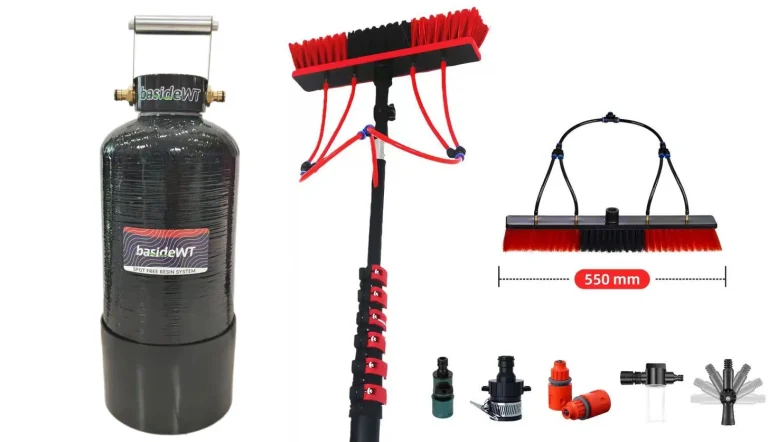
How to clean a window with a DI tank and waterfed pole!