BasideWT- Whole Home Water Filtration System & Replacement


Which Water Filter System Is Best for Your Home?
There is no single water filter system that works best for every home. The right choice depends on your water source, the specific contaminants in your supply, how much water your household uses, and what you’re trying to fix — whether that’s chlorine taste, sediment, hardness, or something more serious. Finding the best water filter system for home use starts with understanding your own water, not with picking the most popular product on a shelf.
This guide walks through how to match a filtration system to your actual water problem, compares the main system types by use case, and gives you a practical checklist to use before you buy.
Quick Answer
The best water filter system for your home depends on your water quality and what you need to treat. Whole-house filtration works well for treating all water entering the home, including sediment, chlorine, and general taste issues. Point-of-use systems, like under-sink units, target drinking water specifically. Carbon filtration handles chlorine, taste, and odor. Reverse osmosis (RO) systems remove a broader range of dissolved contaminants for drinking water. Sediment filters protect plumbing and appliances from particles. The right system — or combination of systems — depends on your water test results, household size, and filtration goals.
What Makes a Water Filter System the Best Choice for a Home?
A water filter system is a good fit for your home when it matches three things: your water problem, your household’s water usage, and your practical constraints like space, plumbing, and budget.
Many homeowners choose a system based on price or brand recognition alone. That approach often leads to disappointment because the filter doesn’t address the actual contaminants present in the water supply. A system built for chlorine taste won’t help much with hard water. A sediment filter alone won’t reduce dissolved lead or nitrates.
The better approach is to work backward from your water quality report or a water test, then choose a filtration method — or combination of methods — designed to address those specific issues.
Best Water Filter System Options for Different Home Needs
Rather than naming one universal “best” system, it helps to look at which option tends to suit different situations. Each of these fits certain households better than others, depending on the underlying water issue.
Best for Whole-House Filtration
Homes that want every tap treated — kitchen, bathroom, laundry, and outdoor spigots — typically look at a whole-house water filtration system installed at the main water line. This approach suits households dealing with chlorine odor throughout the home, sediment affecting multiple fixtures, or general water quality concerns that go beyond drinking water alone.
Best for Drinking Water at the Kitchen Sink
If your main concern is the water you drink and cook with, a point-of-use system installed under the kitchen sink is usually more practical than treating the entire home’s supply. These systems are compact, less expensive to install, and focused directly on the water you consume.
Best for Sediment and Particle Removal
Homes on well water, or those in areas with older pipes, often deal with visible sediment, cloudiness, or particles in their water. A sediment filter, often used as a pre-filter stage, is generally the right starting point before adding other filtration technology.
Best for Chlorine and Taste Improvement
Municipal water is commonly treated with chlorine or chloramine for disinfection, which can leave a noticeable taste or smell. Activated carbon filtration is the standard solution for this issue and is often paired with other filter stages rather than used alone.
Best for Homes That Need Reverse Osmosis
Households concerned with a wider range of dissolved contaminants — including certain heavy metals, nitrates, or total dissolved solids — often look at reverse osmosis systems for drinking water. RO systems use a semi-permeable membrane and are typically installed as a point-of-use system rather than treating the whole house, since they operate more slowly and produce some wastewater.
Best for Specific Water Quality Problems
Some water issues call for more targeted treatment. Iron or manganese staining, for example, often needs specialized media rather than a standard carbon filter. Bacterial or microbial concerns may call for UV treatment. Matching the technology to the specific problem matters more than choosing a system based on general reputation.
Whole-House vs Point-of-Use Water Filtration
This is one of the first decisions to make, and it shapes everything else about your system choice.
Whole-house filtration treats water at the point where it enters your home, so every fixture receives filtered water. This suits households concerned about chlorine exposure during showers, sediment affecting washing machines and water heaters, or general water quality across the whole property. Whole-house systems typically require professional installation and more space, often in a basement, garage, or utility area.
Point-of-use filtration treats water at a single tap or appliance, most commonly the kitchen sink. This suits households mainly concerned with drinking and cooking water. Point-of-use systems are usually less expensive to install, take up less space, and are easier for many homeowners to manage on their own.
Many households use both — a whole-house system for general water quality, paired with a point-of-use system like reverse osmosis for drinking water specifically. Our water filter system guide covering how these systems work and the benefits of each type goes into more depth on this distinction if you want the fuller picture before deciding.
Water Filter Types for Home Use
Understanding the core filtration technologies helps you compare products more confidently, whether you’re shopping online or reading a spec sheet in a store.
Sediment Filters
Sediment filters remove physical particles like sand, rust, and dirt using a mesh or spun material rated by micron size. They’re often used as a first-stage filter to protect downstream components like carbon filters or RO membranes from clogging prematurely. On their own, sediment filters don’t address taste, odor, or dissolved contaminants.
Activated Carbon Filters
Carbon filters work through adsorption, where contaminants bind to the surface of the carbon material. This process is well documented as an effective method for reducing chlorine, certain organic compounds, and unpleasant tastes and odors in drinking water. Carbon filtration is common in both whole-house and point-of-use systems because it’s effective, relatively low-cost, and doesn’t require electricity.
Reverse Osmosis Systems
RO systems push water through a semi-permeable membrane that blocks a wide range of dissolved solids and contaminants. They typically include multiple filter stages, with carbon pre-filters and post-filters supporting the membrane. RO systems produce some wastewater during filtration and generally have a slower flow rate, which is why they’re almost always installed as point-of-use systems rather than whole-house units.
Ultrafiltration Systems
Ultrafiltration uses a membrane with a larger pore size than RO, removing bacteria, sediment, and some larger particles while allowing beneficial minerals to remain in the water. It doesn’t waste water the way RO does and works well for households wanting solid filtration without the slower output of an RO system.
UV Water Treatment
UV systems use ultraviolet light to neutralize bacteria and other microorganisms rather than filtering them out physically. In many home systems, UV treatment works as a supplemental stage, particularly for well water, instead of serving as a standalone filtration method.
How to Match a Water Filter to Your Water Quality
Choosing between these technologies starts with knowing what’s actually in your water. Municipal water customers can typically request a water quality report from their local utility. Well water owners should have their water tested directly, since well water quality varies significantly by location and isn’t monitored the same way municipal supplies are.
Once you know your water quality, match the treatment to the problem:
- Chlorine taste or smell — activated carbon
- Sediment, cloudiness, or particles — sediment filtration
- Broad reduction of dissolved contaminants — reverse osmosis
- Bacteria or microbial concerns — UV treatment, often combined with filtration
- Hardness (scale buildup) — typically requires water softening rather than filtration alone
- Multiple issues at once — a multi-stage system combining several technologies
If you’re unsure which contaminants your home water system should address, our step-by-step explanation of how a water filter system processes water through each stage can help clarify what each filtration stage is actually removing.
What to Check Before Buying a Home Water Filter
Beyond filtration technology, several practical specifications affect whether a system will actually work well in your home.
| Buying Factor | Why It Matters |
|---|---|
| Water source | Municipal and well water have different common contaminants and testing needs |
| Contaminants present | Determines which filtration technology is actually necessary |
| Flow rate | Affects water pressure at fixtures, especially with multiple people using water at once |
| Filter capacity | Determines how often filters need replacing and ongoing cost |
| Micron rating | Indicates how small a particle the filter can physically remove |
| Household size | Higher usage requires higher-capacity systems to avoid frequent replacements |
| Water pressure | Some systems need minimum incoming pressure to function properly |
| Installation requirements | Whole-house systems need more space and plumbing access than under-sink units |
| Replacement filters | Availability and cost of replacement cartridges affects long-term ownership |
| Maintenance | Some systems need more frequent attention than others |
| Available space | Under-sink and countertop units need to physically fit the location |
| Operating cost | Includes electricity (if any), filter replacements, and water waste for RO systems |
| Upfront cost | Equipment and installation costs vary significantly by system type |
What Size Water Filter System Does a Home Need?
System sizing depends on household water demand, not just the number of people in the home. A larger household using multiple fixtures at once — showers, laundry, and kitchen taps running simultaneously — needs a system with a flow rate that can keep up without a noticeable pressure drop.
There’s no universal sizing number that applies to every home, since flow rate needs vary by household habits, fixture count, and incoming water pressure. Instead of relying on a fixed formula, compare your home’s typical peak water usage against the flow rate listed for a given system, and check with the manufacturer’s sizing guidance for your specific household size and plumbing setup.
How Much Does a Home Water Filter System Cost?
Costs vary widely depending on the system type, so it’s more useful to understand the cost categories than to expect one fixed number.
- Initial equipment cost — varies by technology, with whole-house and RO systems typically costing more upfront than simple carbon filters
- Installation — whole-house systems often require professional plumbing work, while many under-sink systems are designed for simpler installation
- Replacement filters — an ongoing cost that depends on filter capacity and how often they need changing
- Maintenance — some systems require periodic sanitizing, membrane checks, or component servicing
- Operating costs — RO systems use some water during the filtration process, and any system with electrical components adds a small amount to utility bills
When comparing systems, it helps to think in terms of total cost of ownership over several years rather than just the sticker price of the unit itself.
Common Mistakes When Choosing a Home Water Filter
- Skipping a water test. Choosing a system before knowing what’s actually in your water often leads to buying the wrong technology for the problem.
- Assuming one filter handles everything. Most home water issues need a specific filtration method, or a combination of methods, rather than a single universal filter.
- Ignoring flow rate. A system with too low a flow rate for the household’s usage can cause noticeable pressure drops.
- Overlooking replacement filter costs. A cheaper unit with expensive or hard-to-find replacement filters can cost more over time than a pricier system with affordable filters.
- Choosing based on marketing alone. Specifications and independent water testing matter more than packaging claims or brand popularity.
- Underestimating installation requirements. Whole-house systems need adequate space, plumbing access, and sometimes drainage, which should be confirmed before purchase.
Best Water Filter System: Practical Decision Checklist
Use this checklist before making a final decision:
- Identify your water source — municipal supply or private well.
- Get a water quality report or independent water test.
- List the specific contaminants or issues you need to address.
- Decide whether you need whole-house treatment, point-of-use treatment, or both.
- Choose the filtration technology that matches your water problem.
- Confirm the system’s flow rate matches your household’s peak water usage.
- Check installation requirements, including space and plumbing access.
- Compare replacement filter cost and availability.
- Estimate total ownership cost, not just the upfront price.
- Confirm the system is actually rated to treat the contaminants you identified.
Comparing System Types at a Glance
| System Type | Best For | Main Strength | Important Consideration |
|---|---|---|---|
| Sediment Filter | Wells and homes with visible particles | Protects plumbing and downstream filters | Doesn’t address taste, odor, or dissolved contaminants |
| Activated Carbon | Chlorine taste and odor | Simple, effective, no electricity needed | Limited against dissolved minerals and heavy metals |
| Reverse Osmosis | Drinking water with broader contaminant concerns | Removes a wide range of dissolved contaminants | Slower flow rate and some water use during filtration |
| Ultrafiltration | Households wanting filtration without water waste | Removes bacteria and sediment while retaining minerals | Less effective against dissolved solids than RO |
| UV Treatment | Microbial concerns, especially with well water | Neutralizes bacteria and microorganisms | Doesn’t remove sediment or dissolved contaminants on its own |
| Whole-House System | Treating all water entering the home | Consistent water quality at every fixture | Higher upfront cost and installation requirements |
If you want to see how these filtration types are packaged into complete residential systems, our water filtration system product range outlines the available configurations for different home setups.
Conclusion
Choosing the best water filter system for your home comes down to matching the right technology to your actual water quality, household usage, and practical constraints. Whole-house systems suit homes wanting consistent treatment at every tap, while point-of-use systems work well for households mainly focused on drinking water. Flow rate, installation requirements, filter replacement costs, and ongoing maintenance all affect which system will work well for your household long-term, not just on day one.
Start with a water test, identify what you actually need to filter, and compare systems against your household’s real usage rather than marketing claims. If you’re ready to explore residential filtration options that match different home needs, our water filtration system category is a good place to compare configurations suited to your situation.
FAQs
What is the best water filter system for a home?
There isn’t one system that works best for every home. The right choice depends on your water source, the specific contaminants present, your household size, and whether you need whole-house treatment or drinking-water-focused filtration.
Is a whole-house water filter better than an under-sink filter?
Neither is universally better — they serve different purposes. Whole-house filters treat water at every fixture, which suits homes with chlorine or sediment issues throughout the property. Under-sink filters focus specifically on drinking and cooking water, which suits households mainly concerned with what they consume.
How do I know which water filter my home needs?
The most reliable way is to get a water quality report from your municipal utility or have your well water independently tested. This tells you which contaminants are actually present, so you can choose a filtration technology designed to address them.
Is reverse osmosis a good choice for home water filtration?
Reverse osmosis works well for households wanting broad reduction of dissolved contaminants in their drinking water. It’s typically installed as a point-of-use system rather than whole-house, since it has a slower flow rate and uses some water during the filtration process.
Do I need more than one type of water filter for my home?
Many households do. A common setup pairs a sediment pre-filter with carbon filtration for general water quality, sometimes alongside a separate reverse osmosis or ultrafiltration system dedicated to drinking water. The right combination depends on your specific water test results.
RELATED POSTS
How Does a Deionized Water System Work? A Complete Step-by-Step Guide
How Does a Water Fed Pole Work?
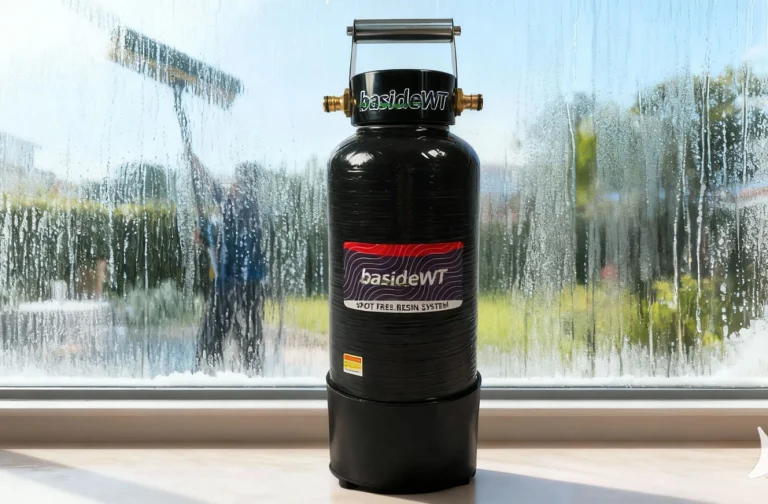
DI Water System For Window Cleaning
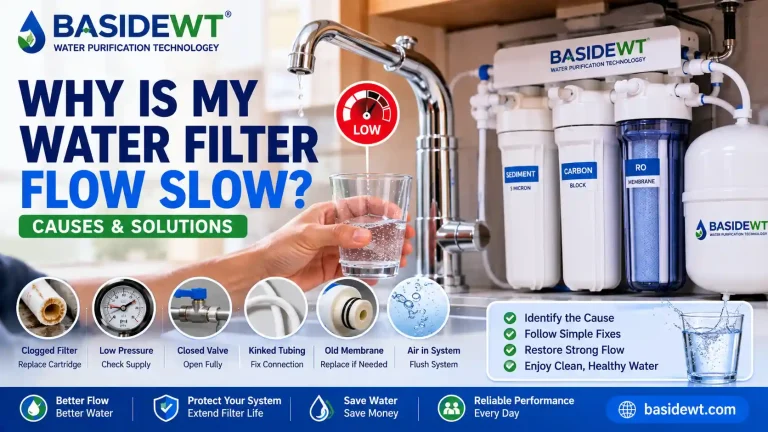
Why Is My Water Filter Flow Slow? Causes & Solutions
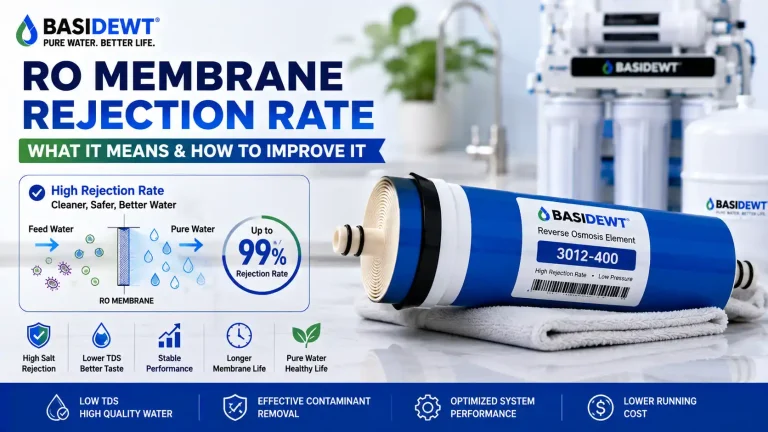
RO Membrane Rejection Rate: What It Means & How to Improve It