BasideWT- Whole Home Water Filtration System & Replacement


Can UV Sterilization Work With Cloudy or Dirty Water?
A UV sterilizer for cloudy water cannot reliably disinfect water on its own. UV light needs a clear path to reach microorganisms, and cloudy or dirty water blocks that path. Some very light haze may still allow partial disinfection, but true turbidity almost always calls for pretreatment before the water reaches the UV chamber.
This is the most important fact anyone shopping for a UV sterilizer needs to understand. UV systems are excellent disinfection tools, but they depend entirely on water clarity to work as intended. If particles, sediment, or dissolved metals block the light, bacteria and viruses can survive the treatment untouched.
Below, we explain exactly why this happens, how to tell if your water is suitable for direct UV treatment, and what to do when it isn’t.
Why Water Clarity Matters for UV Disinfection
UV disinfection works by damaging the DNA and RNA of microorganisms. A UV lamp emits light at a specific wavelength, and as water passes through the chamber, that light strikes bacteria, viruses, and cysts as they flow past.
This process only works if the light actually reaches the microorganism. Clear water lets UV rays travel in a straight, unobstructed path. Cloudy water scatters and absorbs that light before it can do its job.
In other words, UV intensity and UV dose only matter if the light gets where it needs to go. A powerful lamp aimed at murky water still fails if particles stand in the way.
What Turbidity Means in Water Treatment
Turbidity is the technical term for water cloudiness. It measures how much light scatters when it passes through a water sample, expressed in Nephelometric Turbidity Units (NTU).
Turbidity comes from suspended particles such as:
- Silt and clay from wells or surface water
- Rust and sediment from aging pipes
- Organic debris like algae or plant matter
- Precipitated iron or manganese
- Fine sand from unfiltered groundwater
Water can look clear to the eye and still carry enough suspended solids to interfere with UV disinfection. This is why visual inspection alone should never be the deciding factor. Our guide on how water turbidity affects UV water sterilization breaks down NTU thresholds in more detail.
How Suspended Particles Block or Scatter UV Light
Every particle floating in water acts like a tiny obstacle. When UV light hits a particle, one of two things happens: the light scatters in a random direction, or the particle absorbs the light completely.
Either way, that portion of UV energy never reaches a microorganism. The more particles present, the more UV energy gets lost before it completes a full pass through the chamber.
This is a physical limitation, not a design flaw. No lamp wattage can fully compensate for water that scatters too much light before it travels the necessary distance.
The Particle Shadowing Effect
Shadowing is one of the most overlooked issues in UV water treatment. When a particle sits directly between the UV lamp and a microorganism, it casts a literal shadow.
Any microorganism inside that shadow receives little or no UV exposure. It passes through the chamber essentially untreated, even though the water technically ran through a “UV sterilizer.”
This explains why lab tests sometimes still detect live bacteria after UV treatment in cloudy source water. The lamp worked correctly. The water simply blocked its own disinfection.
Why Microorganisms Can Hide Behind Particles
Bacteria are small, but many suspended particles are much larger. A single grain of silt or a floc of organic matter can be many times the size of a bacterial cell.
When bacteria attach to or trail behind these particles, they gain partial protection from UV exposure. Viruses can behave the same way when clinging to organic debris or dissolved organic matter.
This is why turbidity is not just about optical clarity. It directly determines how much of the microbial population actually receives a lethal UV dose.
UV Transmittance: The Real Measure of Water Suitability
UV Transmittance (UVT) measures the percentage of UV light that successfully passes through a water sample over a set distance. This is different from turbidity, even though the two are related.
Turbidity measures scattering from particles. UVT measures the actual amount of usable UV energy left after light travels through the water. Low UVT means the lamp has to work much harder, or the water needs a longer exposure time, to deliver an effective dose.
Most residential and light commercial UV sterilizers are designed around a UVT range of roughly 75% to 90%. Water below that range often needs pretreatment regardless of how clean it looks. Our detailed explanation of UV transmittance in water treatment covers how installers calculate this value.
Why UV Intensity Alone Cannot Solve Poor Water Clarity
It’s tempting to assume a stronger lamp fixes cloudy water problems. Unfortunately, UV intensity and water clarity are two separate variables, and one cannot substitute for the other.
Increasing intensity raises the UV output at the lamp’s surface. It does nothing to stop particles from scattering or absorbing that light downstream. A powerful lamp shining into murky water still loses most of its energy before reaching the far side of the chamber.
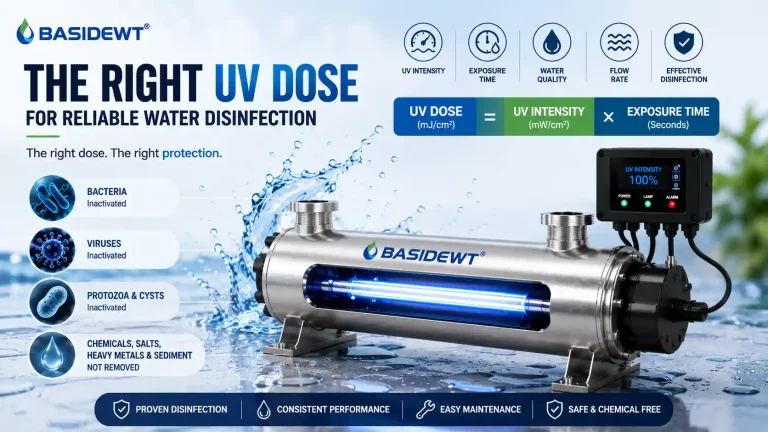
Effective disinfection depends on the combination of UV intensity, exposure time, flow rate, and water clarity working together. Our article on UV intensity in water sterilization explains how these factors interact in real systems.
When a UV Sterilizer May Still Work With Slightly Cloudy Water
Not all cloudiness disqualifies a UV system. Very light haze, sometimes below 1 NTU to 5 NTU depending on the manufacturer’s specification, may still allow acceptable disinfection performance.
Some situations where light turbidity is often tolerable include:
- Municipal water with minor aesthetic haze and no active sediment
- Well water that has already passed through basic sediment filtration
- Systems with generous UV dose margins built in for safety
Even in these cases, performance should be verified rather than assumed. A quick turbidity test before installation avoids costly surprises later.
When Pretreatment Becomes Necessary
Pretreatment becomes necessary whenever turbidity, iron, manganese, or organic content rises high enough to compromise UV transmittance. As a general guideline, most manufacturers recommend keeping turbidity below 1 to 5 NTU before water enters a UV chamber.
Signs that pretreatment is required include:
- Visible sediment or discoloration in a glass of water
- A turbidity reading above the sterilizer manufacturer’s stated limit
- Frequent lamp sleeve fouling or rapid buildup
- Persistent bacterial detection after UV treatment
- Water sourced from a well, river, or untreated surface supply
Skipping pretreatment on water like this doesn’t just reduce performance. It can make the entire UV investment ineffective while giving a false sense of security.
Sediment Filtration Before UV Sterilization
Sediment filtration is the most common and cost-effective pretreatment step for cloudy water. A sediment filter physically removes suspended solids before they ever reach the UV chamber.
Typical setups use a 5-micron to 20-micron cartridge filter, depending on the raw water’s particle load. Coarser filtration handles heavier sediment first, while finer filtration protects the UV chamber from smaller particles that still scatter light.
This single step often resolves shadowing and UVT problems without needing complex additional equipment. For installation guidance, see our breakdown of a sediment filter before a UV sterilizer.
Other Pretreatment Options for Difficult Water
Sediment filtration solves particle-based turbidity, but some water sources need additional treatment. Dissolved iron and manganese, for example, cause staining and haze that sediment filters alone can’t fully remove.
Common additional pretreatment methods include:
- Oxidation and filtration for dissolved iron and manganese
- Water softening for hardness-related fouling
- Activated carbon for organic matter and color
- Multi-stage filtration for wells with variable water quality
Our guide on iron, manganese, and hard water effects on UV sterilizers explains why these minerals interfere with UV performance even at low concentrations.
Visible Clarity vs. Actual UV Suitability
Many buyers assume that if water looks clear, it must be suitable for UV treatment. This assumption causes more disinfection failures than any other single factor.
The human eye cannot detect turbidity below roughly 5 NTU with reliable accuracy. Dissolved iron, for instance, can remain invisible in a glass yet still reduce UV transmittance once oxidized inside the chamber. A proper turbidity test, not a visual check, should always guide the decision.
| Water Condition | Appears Clear to the Eye? | Suitable for Direct UV Treatment? |
|---|---|---|
| Municipal water, low turbidity | Yes | Usually yes |
| Well water with fine sediment | Often yes | Often no, needs filtration |
| Water with dissolved iron | Yes | Often no, needs oxidation/filtration |
| Visibly cloudy surface water | No | No, requires pretreatment |
| Water with organic tannins | Sometimes | Depends on UVT reading |
Practical Examples
Seeing how turbidity plays out in real conditions makes the concept easier to apply.
Residential Example
A homeowner on municipal water installs a UV sterilizer as a final barrier against contamination. Because city water is filtered and treated before reaching the home, turbidity is typically very low, and the UV system performs as expected without extra steps.
Well Water Example
A rural homeowner draws water from a private well with visible sediment after heavy rain. Without filtration, the UV lamp cannot fully disinfect the water, since suspended particles shadow bacteria inside the chamber. Adding a sediment filter ahead of the UV system resolves the issue and protects lamp performance long-term.
Commercial and Industrial Example
A food processing facility uses UV disinfection on a shared water line that fluctuates in quality throughout the day. Because flow rate and turbidity both affect UV dose, the facility installs continuous UVT monitoring and multi-stage pretreatment to keep disinfection consistent regardless of source variation. Our article on UV dose for water disinfection explains why consistent dosing matters more than peak lamp output.
Common Mistakes When Using UV Sterilizers With Dirty Water
Even experienced installers sometimes overlook water clarity requirements. Watch for these frequent mistakes:
- Installing UV systems without testing turbidity or UVT beforehand
- Assuming clear-looking water is automatically UV-suitable
- Skipping sediment filtration on well or surface water sources
- Ignoring iron and manganese levels until lamp fouling appears
- Oversizing lamp wattage instead of addressing water quality directly
- Failing to account for seasonal turbidity spikes in surface water sources
Each of these mistakes leads to the same outcome: water that passes through the system without receiving a reliable dose of disinfection.
How to Improve UV Disinfection Performance
Improving performance starts with accurate information, not guesswork. Follow these steps for reliable results:
- Test turbidity and, where possible, UV transmittance before installation.
- Install sediment filtration sized to your water’s particle load.
- Address iron, manganese, or organic contamination with suitable pretreatment.
- Match UV dose and lamp sizing to your actual flow rate, not just pipe size.
- Monitor water quality periodically, especially for wells and seasonal sources.
- Clean or replace the quartz sleeve regularly to prevent fouling buildup.
Consistent water clarity, not lamp strength alone, is what keeps a UV system performing at its rated disinfection level over time.
A Note on Global Water Quality Standards
Turbidity limits for treated water are taken seriously worldwide, and China is no exception. The national GB 5749-2022 Standards for Drinking Water Quality set strict turbidity limits for treated drinking water, reflecting how closely clarity and safe disinfection are linked. These benchmarks are a useful reference point for anyone deciding whether their water needs pretreatment before UV disinfection, regardless of which country they operate in.
Conclusion
A UV sterilizer for cloudy water cannot deliver dependable disinfection on its own once turbidity rises past a manageable level. Suspended particles scatter and block UV light, create shadowing effects, and let microorganisms escape exposure even when the lamp is working perfectly.
Water clarity, UV transmittance, and proper flow conditions all determine whether a UV system can do its job. When turbidity, iron, manganese, or organic matter push water quality outside a safe range, pretreatment through sediment filtration or additional filtration stages becomes essential rather than optional.
Testing water quality before installation, rather than relying on appearance, is the single best way to avoid disappointing results. At BasideWT, we help homeowners, well water users, and commercial buyers match the right pretreatment and UV system to their actual water conditions, so disinfection performance matches expectations from day one. If you’re unsure whether your water needs pretreatment before UV, getting it tested is the right next step.
RELATED POSTS
Anion Ion Exchange Resin | BasideWT Ion Exchange Resin Suppliers
UV Dose for Water Disinfection: How It Works and Why It Matters
Commercial RO Water System: Applications, Benefits & How to Choose the Right One
Is Reverse Osmosis Water the Same as Distilled Water?
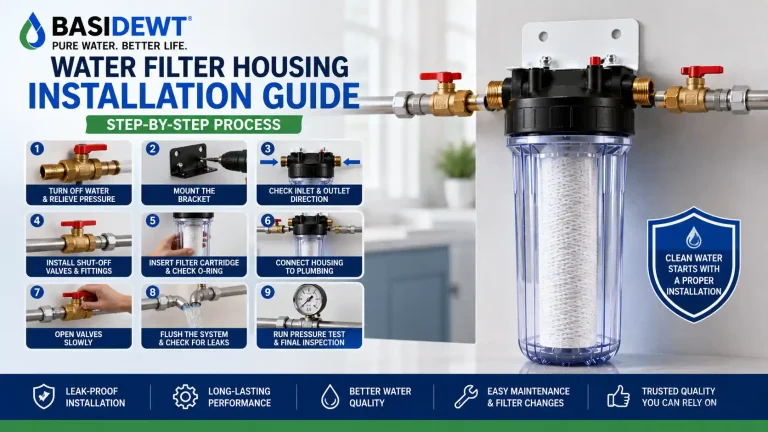
Water Filter Housing Installation Guide: Step-by-Step Process