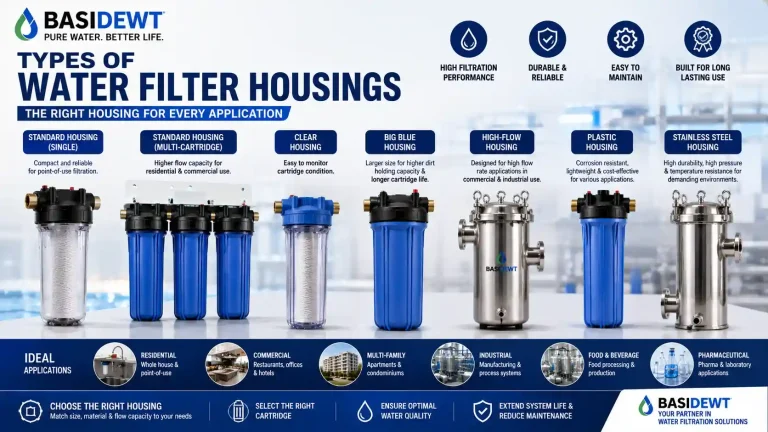
BasideWT- Whole Home Water Filtration System & Replacement


Sediment Filter Before UV Sterilizer: Why Is It Needed?
A sediment filter before a UV sterilizer removes suspended particles and reduces turbidity that can block or scatter UV light before it reaches microorganisms. Without this step, particles in the water can absorb, reflect, or scatter UV-C rays. In some cases, they can even shield bacteria or viruses from direct exposure. The result is a UV system that runs, but doesn’t disinfect as reliably as it should.
This matters because UV disinfection depends on line-of-sight contact between light and pathogens. Anything that interrupts that contact reduces performance, even if the UV lamp itself works correctly. Most residential, commercial, and industrial systems treat sediment filtration before UV sterilization as a standard pretreatment step, not an optional add-on.
This article focuses specifically on the relationship between sediment filtration and UV performance. It skips UV sizing, flow rate calculations, and general filtration buying advice — those topics belong elsewhere.
Why a Sediment Filter Comes Before a UV Sterilizer
UV sterilizers disinfect by exposing water to UV-C light as it passes through a chamber. This process only works if the light can actually reach the organisms in the water.
Sediment filtration sits upstream of the UV chamber for one main reason: it clears the water so light can travel through it unobstructed. A sediment filter itself does not disinfect water. It has no ability to kill bacteria, viruses, or cysts. Its job stays purely mechanical — it traps particles so the UV system can do the disinfection work it was built for.
This distinction matters. Some buyers assume that filtration alone makes water safe. In a UV system, filtration and disinfection perform two separate functions that work together. One prepares the water. The other treats it.
For a broader look at how a UV water sterilizer works from start to finish, it helps to see where sediment filtration fits into the overall process.
How Suspended Particles Affect UV Disinfection Performance
Suspended particles interfere with UV disinfection in three main ways: absorption, scattering, and shielding.
- Absorption happens when particles soak up UV-C energy before it reaches the target organisms, reducing the dose delivered.
- Scattering happens when particles deflect UV light in random directions instead of letting it travel in a straight path through the water.
- Shielding happens when a particle physically blocks a microorganism from direct UV exposure.
Any one of these effects can lower the disinfection dose that reaches pathogens. Combined, they can significantly cut how effective a UV system is, even when the lamp output and flow rate match the system correctly.
Particle Shielding and Microorganism Protection
Particle shielding is one of the more overlooked issues in UV disinfection. Bacteria and viruses are extremely small, and certain particles — organic debris, biofilm fragments, or clay-sized sediment — grow large enough to physically surround or attach to them.
When this happens, the microorganism sits inside or behind the particle relative to the UV light source. The UV-C rays never make contact with it. A fully functioning lamp can still let the water leave the system carrying live, unaffected pathogens.
This differs from turbidity in general. A particle doesn’t need to make water look cloudy to cause shielding. Even water that appears visually clear can carry enough fine sediment to protect individual organisms from UV exposure.
Turbidity and UV Transmittance: What’s the Connection?
Turbidity and UV transmittance measure related but different things. Turbidity describes how cloudy water looks due to suspended particles. UV transmittance (UVT) describes how much UV-C light actually passes through a water sample over a set distance.
Higher turbidity generally lowers UV transmittance, because more particles are available to absorb or scatter light. Dissolved organic matter, color, and iron can also affect UVT, independent of visible turbidity. This is why two water sources with similar turbidity readings can still show different UV transmittance values.
Sediment filtration primarily targets the particulate side of this equation. It removes the suspended solids that reduce UVT through scattering and absorption. For a deeper explanation of how UV transmittance affects overall UV system performance, it’s worth treating UVT as its own separate variable in system design.
Because turbidity and UVT influence each other, water with consistently high turbidity makes a strong candidate for sediment pretreatment before UV. Water treatment research documents the relationship between turbidity levels and UV sterilization effectiveness well, and sediment filtration remains one of the most direct ways to manage it.
What a Sediment Filter Actually Removes
A sediment filter’s job is to capture particulate matter suspended in water. Depending on the water source, this can include:
| Particle Type | Common Source |
|---|---|
| Sand and silt | Well water, groundwater |
| Rust and pipe scale | Aging plumbing, municipal distribution lines |
| Clay particles | Surface water, runoff-influenced sources |
| Organic debris | Well water, surface-influenced sources |
| Biofilm fragments | Stagnant plumbing, storage tanks |
A sediment filter does not remove dissolved minerals, dissolved iron and manganese, or microorganisms on its own. Its role covers only particulate matter large enough for the filter media to catch. That’s why water treatment professionals describe sediment filtration as a pretreatment step rather than a treatment step.
Sediment Filter Micron Ratings for UV Pretreatment
Micron rating describes the smallest particle size a filter can capture. Common ratings used ahead of UV sterilizers range from 1 micron to 20 microns, though the correct choice depends entirely on the water being treated.
Water with heavier sediment loads, such as untreated well water, often needs a coarser stage first (10–20 microns) and a finer stage after it (1–5 microns) to avoid overwhelming a single cartridge. Municipal water with lighter sediment content may only need a single 5-micron filter to reach acceptable clarity before UV.
Why Finer Isn’t Always Better
It’s a common assumption that a smaller micron rating always means better protection. In practice, this isn’t accurate.
Very fine filtration captures more particles, but it also increases pressure drop across the filter and shortens the time between replacements. A heavy sediment load in the incoming water can clog an overly fine filter quickly, which reduces flow rate and raises maintenance frequency without meaningfully improving UV performance.
The right micron rating depends on:
- Source water sediment load
- Turbidity levels
- Flow rate requirements
- Filter loading capacity
- How often replacement is practical for the application
Choosing sediment filtration based on actual water conditions, rather than assuming finer is always safer, leads to more reliable long-term performance.
Single-Stage vs Multi-Stage Sediment Pretreatment
Some systems only need one sediment filtration stage before UV. Others require two or more stages working together.
A single sediment stage is often sufficient when:
- The water source has low to moderate turbidity
- Sediment load stays consistent, not variable
- The application is residential or light commercial
Multi-stage pretreatment is typically needed when:
- Source water has variable or high turbidity, such as untreated well water
- Iron, manganese, or organic content adds to particulate load
- The system serves a commercial or industrial application with higher flow demands
- UV transmittance testing shows values below the level the UV system requires
Multi-stage setups usually pair a coarser pre-filter with a finer polishing filter, which reduces the load on each stage and extends overall filter life. This approach is common in systems that also need broader pretreatment before UV disinfection, where sediment removal forms one part of a larger preparation sequence.
Sediment Filtration Differences by Water Source
Municipal Water Applications
Municipal treatment plants typically pre-treat and filter water before it reaches a property, so sediment levels stay lower and more consistent. However, aging distribution pipes can introduce rust, scale, and sediment after treatment, particularly in older buildings or areas with frequent water main work. A single sediment filter is often adequate here, though periodic testing helps confirm this remains true over time.
Well Water Applications
Well water sources tend to carry higher and less predictable sediment levels. Sand, silt, and organic material can vary seasonally, especially after heavy rainfall. Well water systems more frequently need multi-stage sediment pretreatment to protect the UV sterilizer consistently, and periodic water testing proves especially useful for these sources.
Commercial and Industrial Applications
Commercial and industrial systems generally handle higher flow rates and larger water volumes, which raises the total particulate load moving through the system over time. These applications often use larger or multiple sediment filter housings, arranged in sequence and sized to match both flow rate and expected sediment concentration. Industrial processes with fluctuating source water quality may also add monitoring equipment to track turbidity in real time.
What Happens When UV Operates Without Adequate Sediment Filtration
When a UV sterilizer runs without proper sediment pretreatment, several problems can develop over time.
- Reduced disinfection reliability. Shielded or scattered UV exposure means some organisms may pass through without receiving an effective dose.
- Fouling on the quartz sleeve. Sediment can build up on the UV lamp’s protective sleeve, gradually cutting UV output even if the lamp itself still functions.
- Inconsistent water clarity. Downstream water may still appear cloudy or discolored, even after passing through the UV chamber.
- Higher long-term maintenance. Without sediment removal upstream, quartz sleeves and UV chambers need more frequent cleaning to maintain performance.
These issues don’t always show up immediately. Reduced disinfection performance in particular can go unnoticed without water testing, which is one reason engineers treat sediment pretreatment as a standard design step rather than an optional upgrade.
Where to Position the Sediment Filter in the Treatment Sequence
Correct sequencing matters as much as filter selection. A typical treatment order starts with sediment filtration, adds any further pretreatment stages next, and finishes with the UV sterilizer as the final disinfection step before water reaches its point of use.
A general sequence looks like this:
- Sediment filtration (coarse, then fine if needed)
- Additional pretreatment where required, such as iron or manganese reduction
- Carbon filtration, if used for taste, odor, or chemical reduction
- UV sterilization as the final disinfection barrier
Placing UV disinfection last gives the lamp the clearest water the pretreatment system can produce. That gives the UV lamp the best possible conditions to deliver a full, unobstructed dose. Knowing how a UV system calculates and delivers dose makes clear why this final position in the sequence matters so much.
Common Mistakes When Selecting a Sediment Filter Before UV
Several recurring mistakes show up when installers choose sediment filtration without matching it to actual water conditions.
- Assuming one micron rating fits every system. Water conditions vary too much for a universal recommendation to work reliably.
- Skipping water testing. Without knowing turbidity, particle size, or UVT, filter selection becomes guesswork.
- Ignoring flow rate impact. An undersized filter housing can create excessive pressure drop, even with the correct micron rating.
- Treating sediment filtration as optional for “clear-looking” water. Water can look clear and still carry enough fine particulate to interfere with UV performance.
- Overlooking filter maintenance schedules. A clogged sediment filter can restrict flow and, in some cases, allow bypass conditions that let unfiltered water reach the UV chamber.
Avoiding these mistakes generally comes down to one principle: match the pretreatment to the water, not to assumptions about the water.
Practical Recommendations for Choosing Suitable Pretreatment
A few practical steps help guide sediment filter selection for UV pretreatment:
- Test the source water for turbidity, sediment load, and where possible, UV transmittance.
- Match micron rating to actual particle size data, rather than defaulting to the finest available option.
- Consider flow rate requirements so the filter housing doesn’t become a bottleneck.
- Evaluate whether single-stage or multi-stage filtration fits the water source, particularly for well water or variable industrial supplies.
- Plan for a realistic maintenance schedule based on expected sediment loading, not just filter capacity on paper.
These steps apply whether the system is a small residential setup or a larger commercial installation. The core goal stays the same: give the UV sterilizer clear, consistent water so it can deliver its full designed dose.
For readers building out a full understanding of UV systems, the complete guide to UV water sterilizer types and applications offers useful context on how pretreatment fits into overall system design. Sediment-related turbidity also connects directly to UV intensity at the lamp, since scattered or absorbed light effectively lowers the intensity reaching the water.
China’s national standards, such as GB 5749, define drinking water quality parameters including turbidity limits. These benchmarks help determine whether source water needs additional treatment before disinfection. Reviewing published data on Chinese drinking water quality standards and turbidity limits can help put local water testing results into context.
Conclusion
Sediment filtration before a UV sterilizer isn’t a formality — it directly affects whether the UV system can deliver a full, unobstructed disinfection dose. Suspended particles absorb and scatter UV-C light, and in some cases shield microorganisms from exposure entirely. This lowers disinfection reliability even when the UV lamp works exactly as intended.
The right sediment filter before UV sterilization depends on the water itself: its turbidity, particle size, flow rate, and how much that quality varies over time. No single micron rating or filtration setup works for every source, and water testing remains the most reliable way to match pretreatment to actual conditions rather than assumptions.
For homeowners, installers, and engineers evaluating a UV system, treating sediment filtration as an integrated part of the design — not an afterthought — leads to more consistent water quality and fewer maintenance surprises down the line. BasideWT works with residential, commercial, and industrial water treatment systems and can help match sediment pretreatment to the specific demands of a UV disinfection setup, based on the water conditions actually present at the source.
RELATED POSTS
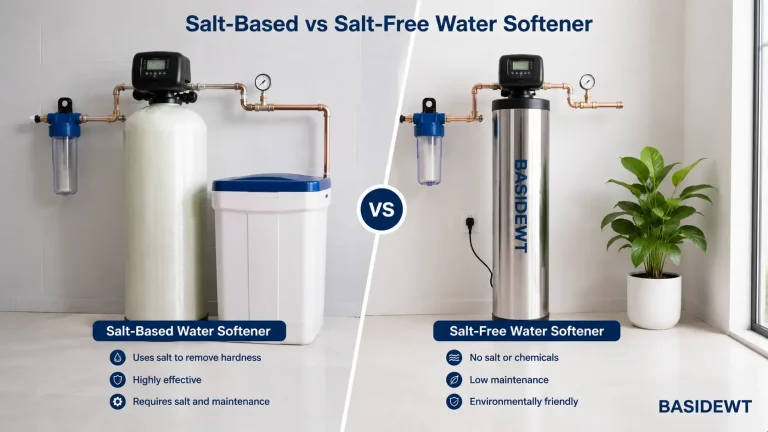
Salt-Based vs Salt-Free Water Softener: Which Is Better?
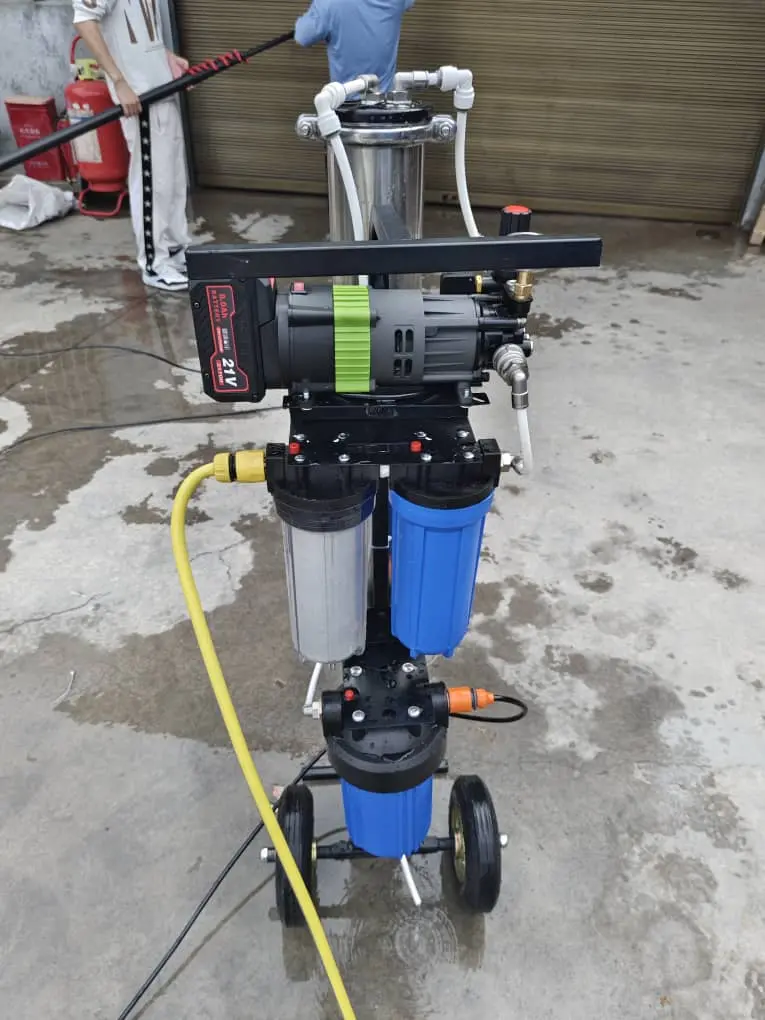
Water Fed Pole System Setup: A Complete Equipment and Connection Guide
UV Sterilizer for Rainwater: How to Safely Treat Collected Water
DI Water System For Car Washing
Water Filter System Buying Guide: What Should You Look For?