BasideWT- Whole Home Water Filtration System & Replacement

How to Choose the Right RO Water System: Complete Buying Guide
Knowing how to choose the right RO water system is essential if you want clean, safe, and great-tasting drinking water. With so many residential, commercial, and industrial RO systems available, selecting the best option can be confusing. This guide explains how to choose the right RO water system based on your water quality, daily usage, budget, installation space, and filtration needs so you can make the right buying decision.
This guide walks you through every factor that matters. You will learn how to test your water, calculate your needs, compare system types, and avoid the mistakes first-time buyers make most often. If you are still new to the basics, our overview on what an RO water system is and how it works is a helpful starting point.
By the end of this guide, you will know exactly how to choose the right RO water system for your home, apartment, or business.
Why Choosing the Right RO Water System Matters Before You Buy
An RO water system is a long-term investment in your health and daily comfort. A poorly matched unit can under-perform, waste water, or need constant repairs.
On the other hand, a well-chosen RO water system delivers clean, great-tasting water for years with minimal fuss. It also protects appliances like kettles and coffee machines from scale buildup.
Getting this decision right the first time saves money. It also saves the frustration of returning or upgrading a system that never matched your household’s real needs.
How to Choose the Right RO Water System for Your Water Quality
Before comparing brands or prices, step back and look at the bigger picture. Several factors work together to determine which system fits you best.
Here is a quick checklist to guide your thinking:
- Your current water quality and contaminant levels
- Daily water consumption for your household or business
- Available installation space
- Incoming water pressure
- Budget for both purchase and ongoing maintenance
- Whether the system is for residential, commercial, or industrial use
Each of these factors shapes the final decision. We will break down every one of them in detail below.
Test Your Water Quality First
Water testing is the starting point for any smart purchase. Without it, you are guessing at what contaminants your system actually needs to remove.
A basic test reveals total dissolved solids (TDS), hardness, chlorine levels, and common contaminants like iron or nitrates. Many hardware stores sell simple TDS meters for home use, while certified labs offer a full contaminant breakdown.
Why Testing Changes Your Buying Decision
If your water has high TDS or heavy metals, you need a system with more filtration stages. If chlorine taste is your main complaint, a simpler setup may work well.
Skipping this step is one of the most common buying mistakes. It often leads to purchasing an under-powered system that cannot handle the actual water conditions in your area.
Understand Your Daily Water Consumption
Your daily water usage directly affects which RO water system size you need. A single-person apartment has very different demands than a family of six or a small office.
Start by estimating how much drinking and cooking water your household uses each day. Then add extra capacity for guests, pets, or future growth.
Simple Ways to Estimate Usage
Here is a general reference to help you estimate:
| Household Type | Approx. Daily Usage | Suggested Capacity |
|---|---|---|
| 1–2 people | 8–10 gallons | 50–75 GPD |
| 3–5 people | 15–20 gallons | 75–100 GPD |
| 6+ people | 25+ gallons | 100+ GPD |
| Small office | 20–40 gallons | 100–150 GPD |
GPD stands for gallons per day, a standard measure of system output. Use this table as a starting point, then adjust based on your actual habits.
Selecting the Right System Capacity
Capacity is one of the most misunderstood specs in reverse osmosis shopping. Manufacturers list GPD ratings under ideal lab conditions, not real-world conditions.
Real output depends on water pressure, temperature, and membrane condition. Because of this, experts recommend buying a system rated slightly above your calculated daily need.
Avoiding Undersized or Oversized Systems
An undersized system struggles to keep up during peak usage, leaving you short on water. An oversized system wastes money on unnecessary capacity and larger equipment.
Aim for a buffer of about 20 to 30 percent above your calculated daily consumption. This buffer accounts for pressure drops and seasonal temperature changes that reduce output.
Choosing Between Residential, Commercial, and Industrial RO Systems
Not every RO system is built the same way. Residential, commercial RO system units, and industrial systems differ in scale, materials, and automation.
Understanding these categories helps you avoid buying equipment that is either too small or too complex for your actual use case.
Comparison Table: Residential vs Commercial vs Industrial
| Feature | Residential | Commercial | Industrial |
|---|---|---|---|
| Typical Capacity | 50–150 GPD | 500–5,000 GPD | 5,000+ GPD |
| Common Use | Homes, apartments | Restaurants, clinics, offices | Factories, plants |
| Automation | Basic | Moderate | Advanced |
| Footprint | Compact, under-sink | Medium, floor-standing | Large, dedicated room |
| Maintenance Frequency | Every 6–12 months | Every 3–6 months | Continuous monitoring |
If you are unsure which category fits your needs, our guide on types of RO water systems and which one is right for you breaks each option down further.
Choosing the Right Number of Filtration Stages
Filtration stages determine how thoroughly your water gets purified. Most residential systems use 4 to 5 stages, while commercial units may use 6 or more.
Each stage targets a different type of contaminant, from sediment to chlorine to dissolved solids. More stages generally mean cleaner output water, but they also mean higher upfront cost.
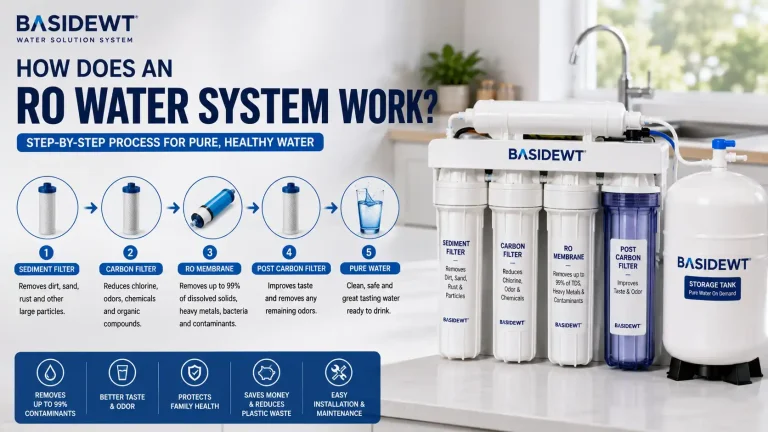
What Each Stage Typically Does
- Sediment filter: removes dirt, rust, and sand particles
- Carbon filter: removes chlorine and improves taste
- RO membrane: removes dissolved solids and most contaminants
- Post-carbon filter: polishes water before it reaches the tap
- Remineralization filter (optional): adds back beneficial minerals
If your water testing revealed specific contaminants, match your stage count to those results rather than choosing based on price alone.
RO Membrane Selection
The RO membrane is the heart of any reverse osmosis system. It determines rejection rate, or how effectively the system filters out dissolved solids.
Membranes are rated by their rejection percentage and flow rate. A membrane rated at 99 percent rejection removes far more contaminants than a lower-rated alternative.
Key Membrane Specifications to Compare
Look closely at these three numbers when comparing membranes:
- Rejection rate (aim for 95 percent or higher for most needs)
- Flow rate, measured in gallons per day
- Expected lifespan, typically two to three years under normal use
Cheaper membranes often cut corners on rejection rate. Paying slightly more upfront usually means better water quality and fewer replacements over time.
Water Pressure Requirements
Reverse osmosis relies on water pressure to push water through the membrane. Most residential systems need between 40 and 60 psi to function properly.
Low pressure reduces output and can shorten membrane life. If your home has weak water pressure, you may need a booster pump alongside your system.
How to Check Your Water Pressure
A simple pressure gauge, available at most hardware stores, attaches to an outdoor spigot or a washing machine hookup. Run the test when no other water fixtures are in use for an accurate reading.
If your reading falls below 40 psi, ask your installer about booster pump compatibility before finalizing your purchase.
Storage Tank Considerations
Most residential RO systems include a pressurized storage tank that holds purified water between uses. Tank size affects how much water is available instantly, especially during high-demand moments.
Standard tanks range from 2 to 4 gallons, though larger households may need bigger tanks or tankless designs.
Tank vs Tankless Systems
Tankless systems save under-sink space and often deliver water faster on demand. However, they typically cost more and require stronger incoming water pressure to perform well.
Traditional tank systems remain the more budget-friendly and widely available option for most homes.
Installation Space Requirements
Space constraints often narrow down your options before anything else. Under-sink cabinets, utility closets, and dedicated equipment rooms all have different space profiles.
Measure your available space carefully, including height clearance for tanks and filter housings. Also consider access for future filter changes.
Space Planning Checklist
- Measure width, depth, and height of the installation area
- Confirm there is room for the storage tank, if applicable
- Check for nearby drain access for wastewater
- Ensure electrical outlet access if the system requires power
- Leave clearance for filter housing removal during maintenance
A compact under-sink purifier works well for tight kitchen spaces, while larger commercial units need a dedicated utility area.
Maintenance and Filter Replacement Costs
Ongoing maintenance costs matter just as much as the upfront purchase price. Filters need periodic replacement to keep your system performing at its best.
Most residential systems require filter changes every 6 to 12 months, while the membrane itself lasts 2 to 3 years. Commercial systems need more frequent attention due to higher water throughput.
Typical Annual Maintenance Costs
| System Type | Filter Change Frequency | Estimated Annual Cost |
|---|---|---|
| Residential | Every 6–12 months | Low to moderate |
| Commercial | Every 3–6 months | Moderate to high |
| Industrial | Continuous schedule | High, often contracted |
Ask suppliers for exact replacement filter pricing before buying. Some systems use proprietary filters that cost more than universal-fit alternatives.
Common Buying Mistakes
Many first-time buyers make avoidable errors that lead to disappointment later. Recognizing these mistakes ahead of time helps you make a smarter purchase.
Mistakes to Avoid
- Skipping a water quality test before buying
- Choosing capacity based on price instead of actual usage
- Ignoring incoming water pressure requirements
- Overlooking long-term filter and membrane costs
- Confusing a basic water filtration system with a full reverse osmosis system
- Buying industrial-grade equipment for light residential use, or vice versa
Avoiding these pitfalls alone can save significant money and frustration over the life of your system.
Questions to Ask Before Purchasing
Before finalizing your purchase, ask your supplier these essential questions. Clear answers signal a trustworthy, knowledgeable seller.
Essential Questions Checklist
- What is the system’s actual rejection rate, not just the advertised rate?
- How often do filters and membranes need replacement?
- What is the total cost of ownership over five years?
- Does the system include a warranty, and what does it cover?
- Is professional installation included or recommended?
- What certifications does the system hold?
A supplier who answers these clearly is more likely to stand behind their product long after the sale.
Expert Buying Tips
Industry professionals recommend a few extra steps beyond the basics covered above. These tips come from years of field experience across residential and commercial installations.
Practical Tips From the Field
- Always request a spec sheet, not just marketing brochures
- Compare warranty length across at least three brands
- Ask whether replacement parts are widely available locally
- Prioritize systems with independent quality certifications
- Consider future needs, not just your current household size
For deeper technical background, the Water Quality Association’s guide to reverse osmosis systems offers helpful, independent context on how these systems work and what to look for.
If you also want to understand the mechanics behind filtration, our article on how an RO water system works step by step explains the process in plain language.
Conclusion
Learning how to choose the right RO water system comes down to matching real data, your water quality, daily usage, space, and budget, with the right equipment. Skipping any one of these steps increases the chance of buyer’s remorse.
Start with a water test, calculate your actual consumption, and compare capacity, filtration stages, and membrane quality carefully. From there, weigh installation space and long-term maintenance costs before making a final decision.
If you are ready to explore reliable, well-built options, browse the full BasideWT RO Water System range to find a solution matched to your exact needs. Our team is ready to help you choose a system that delivers clean, great-tasting water for years to come.
RELATED POSTS
Water Softener System Installation Guide: Step-by-Step Process
DI Water System Explained: How It Really Works
Water Filter System Buying Guide: What Should You Look For?
How Does an RO Water System Work? Step-by-Step Process

Is Reverse Osmosis Water Good for You? A Complete Guide to RO Water Benefits and Safety