BasideWT- Whole Home Water Filtration System & Replacement

RO vs DI Water for Car Wash: Which System Is Better in 2026?
Water spots are the enemy of every professional car wash operator and serious detailer. You spend time washing, rinsing, and finishing a vehicle — and then the sun comes out. Suddenly, white mineral rings appear across every panel. The culprit is almost never how you wash. It is what you wash with.
That is where the debate between RO and DI water for car wash applications becomes genuinely important. Both technologies produce water that dries without leaving spots. But they do this in completely different ways, at different costs, and with different trade-offs.
This guide explains both systems in full technical detail. It covers the real-world differences, the cost math, the maintenance requirements, and which solution makes sense depending on your specific situation — whether you run a commercial tunnel wash, operate a mobile detailing business, or manage a professional window cleaning operation.
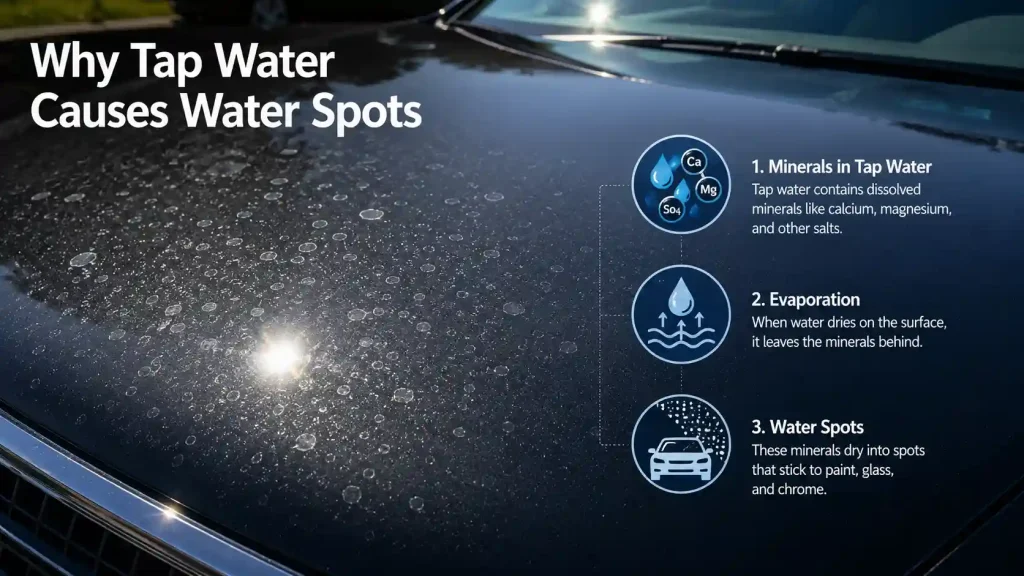
Why Tap Water Causes Water Spots
Before comparing systems, it helps to understand the actual problem.
Tap water contains dissolved minerals — primarily calcium, magnesium, sodium, chlorides, and sulfates. These are measured as Total Dissolved Solids (TDS), expressed in parts per million (ppm).
When water dries on a vehicle surface, the water molecules evaporate. The minerals stay behind. They bond to the paint, glass, or trim and form visible white deposits. These are water spots.
The threshold most detailers and car wash operators use is 20 ppm TDS or below. Water below this level dries without leaving detectable residue on most surfaces. Dark-colored vehicles require even lower TDS — often below 10 ppm — to achieve completely spot-free results.
Municipal tap water TDS in the United States typically ranges from 150 to 500 ppm. In many parts of China and the Middle East, TDS regularly exceeds 500 to 800 ppm. Both RO and DI water systems address this problem — but through fundamentally different mechanisms.
What Is RO Water?
Reverse osmosis (RO) is a pressure-driven membrane filtration process. Water is forced through a semi-permeable membrane at high pressure. The membrane’s pore structure rejects dissolved ions, organics, bacteria, and particulates while allowing clean water molecules to pass through.
A quality RO membrane rejects 90 to 99 percent of dissolved solids in a single pass. Feed water with TDS of 500 ppm typically produces RO permeate with TDS between 5 and 50 ppm — well below the spot-free threshold for most applications.
RO systems produce water continuously, but at a relatively low flow rate. Most residential-grade RO units produce 50 to 100 gallons per day. Commercial RO systems for car wash applications are engineered for much higher throughput — typically 500 to 5,000 liters per hour — and incorporate storage tanks, booster pumps, and pressure regulation to deliver water on demand.
What RO Removes and What It Doesn’t
RO membranes are effective against:
- Dissolved minerals (calcium, magnesium, sodium, chloride, sulfate)
- Heavy metals (lead, arsenic, chromium)
- Bacteria and some viruses
- Nitrates, fluoride, and other ionic contaminants
RO membranes are less effective against:
- Volatile organic compounds (VOCs) with molecular weight close to water
- Some pesticides and dissolved gases
For car washing and window cleaning purposes, RO water is more than sufficient. The ions responsible for spotting — calcium and magnesium hardness ions — are large relative to the membrane pore size and are rejected with very high efficiency.
What Is DI Water?
Deionized (DI) water is produced through ion exchange — a chemical process rather than a mechanical filtration process. Water passes through resin beads. Cation resin beads exchange positive ions (calcium, magnesium, sodium) for hydrogen ions. Anion resin beads exchange negative ions (chloride, sulfate, bicarbonate) for hydroxyl ions. The hydrogen and hydroxyl ions combine to form water molecules (H₂O).
The result is water with virtually all ionic content removed. High-quality DI systems using mixed-bed resin — where cation and anion resins are blended in a single vessel — routinely produce water with TDS of 0 to 1 ppm and electrical resistivity of 10 to 18 MΩ·cm.
This makes DI water ionically purer than RO water in almost every scenario. However, DI resin does not remove bacteria, viruses, or non-ionic organic compounds.
Mixed-Bed vs Two-Stage DI Systems
Two-stage DI uses separate cation and anion resin vessels in sequence. It is less expensive to set up but typically achieves TDS of 1 to 5 ppm at best.
Mixed-bed DI combines both resin types in a single vessel for intimate contact and more complete ion exchange. It produces TDS below 1 ppm consistently. For professional car wash and window cleaning applications, mixed-bed DI is the preferred configuration.
RO vs DI Water for Car Wash: The Core Differences
Understanding what each technology does differently is the foundation of making the right choice.
| Factor | RO System | DI System |
|---|---|---|
| Purification method | Membrane filtration (pressure-driven) | Ion exchange resin |
| Typical output TDS | 5–50 ppm | 0–2 ppm |
| Ion removal | 90–99% rejection | Near-complete removal |
| Bacteria removal | Yes | No |
| Flow rate | Lower (requires storage tank) | Moderate to high |
| Ongoing consumable cost | Low (membrane replacement every 2–5 years) | High (resin replacement or regeneration) |
| Initial equipment cost | Higher | Lower to moderate |
| Maintenance complexity | Moderate | Low to moderate |
| Performance at high source TDS | Excellent | Expensive (resin exhausted faster) |
| Best application | High-volume operations, hard water areas | Final spot-free rinse, polishing stage |
Flow Rate: The Practical Difference Nobody Talks About Enough
Flow rate is one of the most underappreciated differences between RO and DI systems in car wash applications.
A standard garden hose delivers water at roughly 15 to 20 liters per minute. A DI-only system connected inline typically flows at 3 to 8 liters per minute — enough for a controlled final rinse, but not enough to efficiently flush a full vehicle at normal washing speed.
This matters for two reasons. First, inadequate flow means rinse water doesn’t fully displace the wash water from body panel seams, mirrors, door handles, and trim pieces. These areas continue to drip regular water after the DI rinse, leaving spots exactly where you don’t want them.
Second, detailers who try to use DI water at pressure washer flow rates push water through the resin bed faster than the ion exchange reaction can complete. This causes channeling — water finds paths of least resistance through the resin and bypasses significant portions of the bed, dramatically reducing water quality.
RO systems address this completely. They produce water into a storage tank at a slow, consistent rate. The pump delivers water from the tank at whatever flow rate the application requires — standard hose pressure, pressure washer pressure, or automated wash gantry pressure. Flow rate is decoupled from purification rate.
The TDS Equation: Why Source Water Matters More Than Most People Realize
Your source water TDS is the single most important factor in deciding between RO and DI — or whether you need both.
Low Source Water TDS (Below 150 ppm)
If your municipal water supply has TDS below 150 ppm, a well-maintained DI system with quality mixed-bed resin can handle the full purification load cost-effectively. Resin life will be reasonable, and replacement costs will be manageable.
Moderate Source Water TDS (150–400 ppm)
At this range, DI-only systems become noticeably more expensive to operate. Resin exhausts faster. An RO system as pre-treatment for DI is the smarter choice. RO reduces TDS to 10–30 ppm before water enters the DI vessel. This extends resin life by 10 to 12 times compared to running high-TDS water directly through DI resin.
High Source Water TDS (Above 400 ppm)
Running high-TDS water directly through DI resin makes the operating cost prohibitive in most commercial settings. RO pre-treatment is essentially mandatory at this TDS level. The RO does the heavy lifting; DI acts as a polishing stage. Together they produce 0 to 1 ppm output consistently and cost-effectively.
RO + DI Combined System: The Professional Standard
The most capable and cost-efficient setup for high-volume professional car washing combines both technologies in sequence.
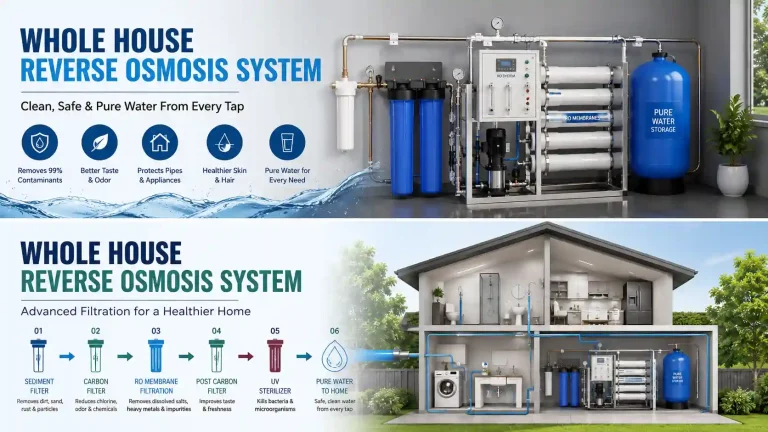
Stage 1 — Sediment pre-filtration: Removes suspended particles, sand, rust, and turbidity that would foul the RO membrane. A 5-micron cartridge filter is standard.
Stage 2 — Carbon pre-filtration: Removes chlorine and chloramines from municipal water. Chlorine rapidly degrades RO membranes and DI resin. This stage protects both downstream components.
Stage 3 — RO membrane: Reduces TDS by 90 to 99%. Removes hardness ions, heavy metals, and dissolved organics. Produces water in the 5 to 30 ppm range depending on membrane quality and source water.
Stage 4 — Mixed-bed DI resin vessel: Polishes the RO permeate to 0 to 1 ppm. Removes the residual ionic content that the RO membrane allows through.
Stage 5 — Storage tank and distribution pump: Stores purified water and delivers it at the required flow rate and pressure for washing, rinsing, or window cleaning.
This combined approach maximizes both output quality and operating economy. The BASIDE spotless water system follows this multi-stage approach and is designed specifically for professional car wash and window cleaning applications.
Cost Analysis: What It Actually Costs to Run Each System
Cost comparisons require looking at both initial investment and ongoing operating costs — because the system that looks cheaper upfront is often more expensive over a 12-month period.
DI-Only System: Operating Cost Reality
DI resin has a finite capacity measured in grain capacity (how many grains of hardness it can remove before exhaustion). Once exhausted, resin either needs regeneration (only feasible with dedicated equipment) or replacement.
At a source TDS of 300 ppm, a standard 20-liter mixed-bed resin vessel might produce 4,000 to 6,000 liters before exhaustion. At a commercial car wash washing 50 vehicles per day using 80 liters per vehicle for final rinse, that’s roughly 4,000 liters per day — meaning resin needs replacement every 1 to 1.5 days at this volume.
Resin replacement costs vary by grade and region. For a commercial operation, DI-only at this volume becomes economically unsustainable.
RO + DI Combined System: Operating Cost Reality
With RO pre-treatment reducing source water TDS from 300 ppm to 20 ppm before the DI vessel, the same 20-liter resin bed can now produce 60,000 to 90,000 liters before exhaustion — a 10 to 15 times improvement in resin life.
RO membrane replacement is required every 2 to 5 years under normal operating conditions. Pre-filters (sediment and carbon) need replacement every 3 to 6 months depending on source water quality. These are predictable, relatively low-cost maintenance items.
The combined RO + DI system has higher initial capital cost but dramatically lower ongoing operating cost at any meaningful scale. For commercial and professional applications, the economics clearly favor the combined approach.
To understand exactly how commercial spotless water systems are engineered for this efficiency, the BASIDE technical guide on how spotless water systems work walks through the engineering rationale behind each stage.
Window Cleaning Applications: Why DI Water Dominates
Window cleaning is a specific application where the choice becomes clearer.
Window cleaners using the water-fed pole (WFP) method depend entirely on water quality at the point of application. The pole’s brush agitates dirt and cleaning residue. The pure water rinse flushes everything away — and when the glass dries, there must be no residue to leave marks.
For window cleaning, the target TDS is typically below 5 ppm. At 0 to 2 ppm output from a mixed-bed DI or RO + DI system, glass dries completely clear even in direct sunlight.
Flow rate for window cleaning WFP systems is relatively low — 1 to 4 liters per minute — making DI systems practical in this application even without RO pre-treatment, provided source water TDS is moderate. For window cleaning companies servicing large commercial buildings with hundreds of square meters of glass daily, RO + DI is the standard professional setup. The BASIDE car and window cleaning system addresses both applications with appropriate flow rates and purification stages for each.
Monitoring Water Quality: TDS Meters and When to Change Resin
Monitoring output TDS is essential for any DI or RO + DI system. Using exhausted DI resin without realizing it is one of the most common and expensive mistakes in professional car washing.
Most operators use a hand-held TDS meter to check output quality before each work session. Inline TDS monitoring is even better — it gives continuous feedback and can trigger automatic alerts or shutdowns when quality drops below the target threshold.
When to replace DI resin:
- Output TDS rises above 10 to 15 ppm for applications requiring spot-free results on dark vehicles
- Output TDS rises above 20 to 30 ppm for light-colored vehicles or window cleaning
When to replace RO membrane:
- RO rejection rate drops below 90% (measured by comparing feed TDS to permeate TDS)
- Permeate flow rate drops significantly below original specification
- Scheduled replacement at 2 to 5 year intervals in light commercial use
When to replace pre-filters:
- Sediment filter: every 3 to 6 months, or when inlet pressure drop exceeds 0.5 bar across the filter
- Carbon filter: every 3 to 6 months, or based on chlorine breakthrough
Common Mistakes in RO and DI Car Wash Systems
Using DI without pre-filtration: Feeding unfiltered tap water directly into DI resin introduces sediment, chlorine, and organic fouling that degrades resin capacity and contaminates output water.
Skipping carbon pre-filtration before the RO membrane: Chlorine and chloramines in municipal water permanently damage polyamide RO membranes within weeks. This is not a recoverable failure. Carbon pre-filtration is mandatory for any system on municipal water.
Running DI at pressure washer flow rates: As described earlier, excessive flow causes channeling and dramatically reduces actual purification performance. Always match flow rate to your resin vessel’s rated capacity.
Checking TDS only occasionally: DI resin doesn’t fail gradually in a linear way — it can exhaust quickly when source water TDS is high. Checking output quality before each use session prevents undetected failures.
Storing purified water in contaminated containers: DI and RO water is chemically aggressive. It readily absorbs CO₂ from air (forming carbonic acid) and leaches contaminants from some plastics. Store purified water in clean food-grade polyethylene or stainless steel tanks, sealed from the atmosphere.
Neglecting to flush the system after periods of non-use: Water sitting in RO membranes and DI vessels for extended periods can promote bacterial growth. Flush the system with fresh water before use after any shutdown period exceeding a few days.
Which System Is Right for Your Operation?
The right answer depends on three variables: your source water TDS, your daily volume, and your budget. Here is a practical guide:
Mobile detailer, 3 to 10 vehicles per week, source TDS below 200 ppm: A compact DI-only system with mixed-bed resin is the most practical and cost-effective solution. Resin replacement costs will be manageable at this volume. An RO pre-filter can be added later if resin costs become significant.
Fixed-location car wash, 20 to 80 vehicles per day, any source TDS: RO + DI combined system is the correct choice. The volume makes DI-only operating costs prohibitive at anything above low TDS. A properly sized system with a storage tank and distribution pump gives you spot-free rinse water on demand at full wash-line flow rates. Explore the BASIDE spot-free car wash system for commercial-grade configurations.
High-volume commercial tunnel wash, 200+ vehicles per day: A multi-stage RO system with large-capacity membranes, high-volume storage, and recirculation infrastructure is required. DI polishing can be added for final rinse stages. System design should be based on a professional water analysis and flow rate calculation.
Window cleaning company, water-fed pole operation: DI-only or RO + DI depending on source TDS. Flow rates are lower than car washing, making DI more viable. For high-volume commercial window cleaning contracts, RO + DI is the professional standard.
For a full guide to selecting the right setup for your specific application, the BASIDE spotless water system guide covers system selection, sizing, and integration in detail.
Maintenance Schedule Summary
| Task | RO System | DI System |
|---|---|---|
| Check output TDS | Before each use | Before each use |
| Replace sediment pre-filter | Every 3–6 months | Every 3–6 months |
| Replace carbon pre-filter | Every 3–6 months | N/A (if RO present) |
| Replace/regenerate DI resin | N/A | Based on TDS rise |
| Replace RO membrane | Every 2–5 years | N/A |
| Flush system after non-use | After multi-day shutdown | After multi-day shutdown |
| Clean storage tank | Annually | Annually |
Frequently Asked Questions
What TDS level produces spot-free results on a car?
Water with TDS below 20 ppm produces spot-free results on most vehicles. For dark-colored and black vehicles, targeting below 10 ppm or even below 5 ppm delivers the best results, particularly in hot and dry climates where evaporation is rapid.
Can I use RO water alone for a final car wash rinse without DI?
Yes. A high-quality RO system producing water at 10 to 20 ppm will deliver spot-free results for most vehicles. However, DI polishing brings output closer to 0 ppm and provides an additional margin of safety, particularly on high-gloss finishes and dark paint where any residue is visible.
How often does DI resin need to be replaced?
This depends entirely on your source water TDS and the volume of water you process. At 300 ppm source TDS, a standard resin vessel exhausts far faster than at 30 ppm source TDS. Monitoring output TDS before each use session is the only reliable way to know when replacement is needed.
Is RO + DI better than DI alone?
For most professional and commercial applications — yes. RO + DI delivers equivalent or superior output quality while reducing DI resin operating costs by 10 to 15 times at moderate to high source TDS. For very low source TDS and low volume applications, DI alone may be sufficient and more economical.
What is the difference between a spotless water system and a standard RO filter?
A standard under-sink RO filter is designed for drinking water at low flow rates (1 to 3 liters per minute). A spotless water system is engineered for car washing and window cleaning — with higher flow rates, storage tanks, distribution pumps, and often a DI polishing stage. They use similar membrane technology but differ significantly in capacity, construction, and application design. The BASIDE water filtration system lineup covers both residential and professional-grade options.
Can I use water softener instead of RO or DI for spot-free washing?
No. A water softener replaces calcium and magnesium ions with sodium ions through ion exchange. Sodium ions still leave residue when water evaporates. Softened water significantly reduces but does not eliminate water spots. Only RO or DI water — or a combination — reliably delivers spot-free results.
What happens if DI resin is exhausted and I don’t notice?
Output TDS rises above the spot-free threshold. You will see spots returning on vehicles even though you believe you are using purified water. This is why monitoring output TDS before each session is essential. There is no visual difference between fresh resin output and exhausted resin output.
Conclusion
The RO vs DI water for car wash question does not have a single answer. It has a context-dependent answer.
DI-only systems work well for mobile detailers, low-volume operators, and professionals working with low-TDS source water. They are simple to set up, require no electricity for the purification stage, and deliver excellent output quality when the resin is fresh.
RO systems, and especially RO + DI combined systems, are the professional standard for commercial car washing and window cleaning at meaningful volume. They deliver consistent, reliable output quality regardless of source water TDS. They protect DI resin from premature exhaustion. And they make spot-free water available at the flow rates that commercial operations actually require.
The key insight that many comparisons miss: these technologies are most powerful when used together, not chosen between. RO handles the volume work. DI handles the precision polishing. Together they produce water clean enough to leave any paint or glass surface completely spot-free, regardless of source water conditions.
If you are evaluating systems for a commercial or professional application, choosing a manufacturer with engineering support — not just a box of components — makes a significant difference in long-term performance and operating cost.
For ion exchange and membrane filtration technical specifications, the Journal of Membrane Science (ScienceDirect) publishes peer-reviewed research on RO membrane performance, ion rejection rates, and system optimization that supports the technical parameters discussed in this article.
RELATED POSTS
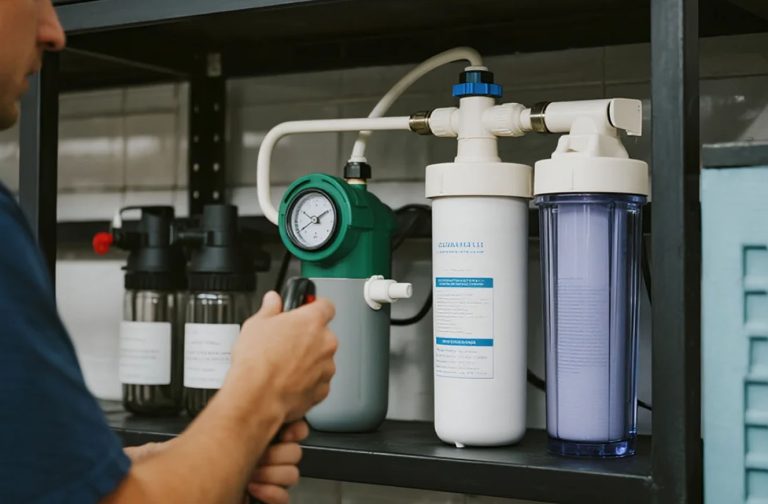
How Much is Whole House Water Filtration? A Comprehensive Guide to Understanding Costs and Benefits
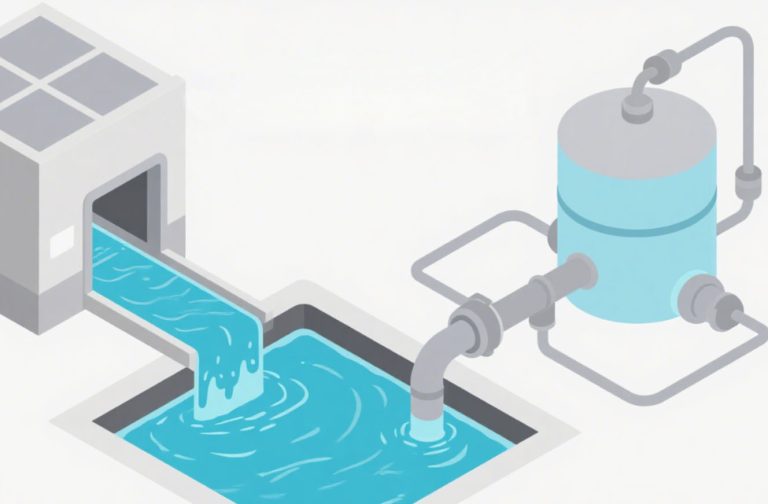
How Do Water Treatment Systems Work?
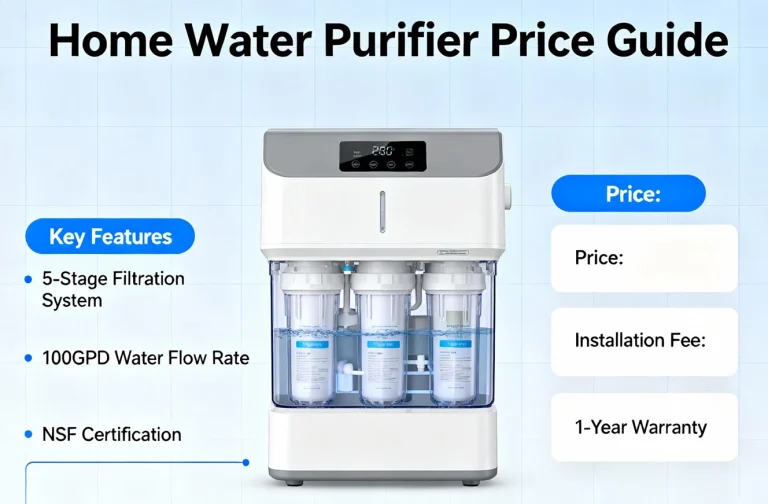
Water Purifier for Home Price – BasideWT
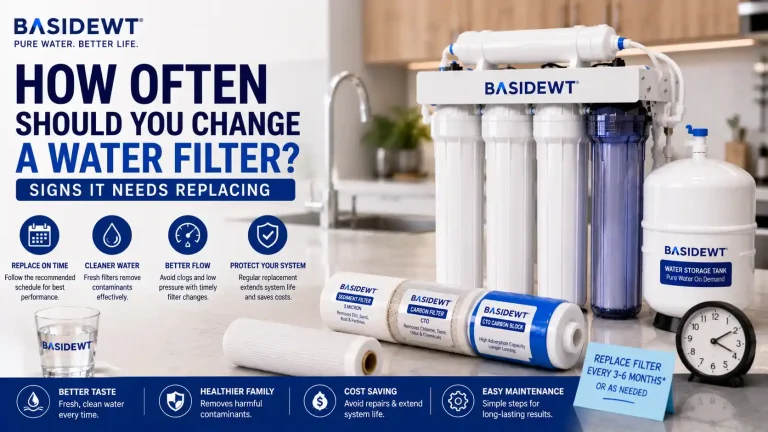
How Often Should You Change a Water Filter? Signs It Needs Replacing
Whole House Reverse Osmosis System: A Complete Guide to Cleaner Water for Every Tap