BasideWT- Whole Home Water Filtration System & Replacement


Water Fed Pole Equipment: What You Need for Professional Window Cleaning
Choosing the right water fed pole equipment makes the difference between a smooth, efficient cleaning job and a frustrating one. A complete water fed pole setup is not just a long pole with a brush on the end. It is a system of connected parts that work together to deliver pure water from a tank or purification unit, through a hose, up a pole, and onto the glass.
If any single component is mismatched or low quality, the whole system suffers. A pole that flexes too much, a brush that leaves streaks, or water that is not properly purified can all undo the benefits of the method. This guide breaks down every piece of water fed pole equipment you need, explains what each part does, and shows how to match components to your cleaning situation.
What Counts as Water Fed Pole Equipment
Water fed pole equipment generally falls into three groups:
- Delivery equipment – the pole, hose, brush head, and connectors that physically apply water to the glass.
- Water purification equipment – the RO or DI units, resin vessels, and filters that produce pure water.
- Water handling equipment – tanks, pumps, and TDS meters that store, move, and monitor the water.
A cleaner does not always need every category at full commercial scale. A homeowner cleaning a single-story house needs far less than a contractor servicing a commercial building. Understanding these categories helps you decide what is essential and what can wait.
The Water Fed Pole Itself
The pole is the most visible piece of equipment, and it is usually the first purchase a cleaner makes. Poles are telescopic, meaning they extend in sections, and the number of sections determines the maximum reach.
Pole Materials
Most poles are made from one of three materials:
| Material | Weight | Rigidity | Typical Use |
|---|---|---|---|
| Fiberglass | Heavier | Very rigid | Lower to mid-height sections |
| Carbon fiber | Lightest | Rigid but flexes less under fatigue | Full-length poles, extended reach |
| Aluminum | Moderate | Least rigid at length | Entry-level or short poles |
Carbon fiber has become the standard for professional use because it stays light even at longer lengths. This matters more than it seems. A cleaner holding a pole overhead for hours needs a tool that will not cause arm fatigue by mid-morning.
Pole Length Considerations
Pole length should match the height you clean most often, not the tallest job you might occasionally take on. A 20-meter pole is impressive on paper, but it is heavier, harder to control, and slower to set up than a 12 or 15-meter pole. Many professional cleaners keep two poles of different lengths rather than one oversized pole for every job. For readers who want a deeper explanation of how the water travels from the base to the brush, our guide on how a water fed pole works covers the mechanics in more detail.
Brushes and Brush Heads
The brush head is where the actual cleaning happens, and it is often underrated compared to the pole. A brush head typically includes bristles, a water distribution channel, and a mounting connector that attaches to the top pole section.
Brush bristle types vary by manufacturer, but the main choice is between softer bristles for delicate or older glass and firmer bristles for heavily soiled surfaces. Some brush heads also include a squeegee edge, which helps clear excess water on the final pass and reduces drying time.
Common mistakes with brush heads include:
- Using a worn brush that no longer distributes water evenly
- Choosing bristles that are too stiff for the glass type
- Ignoring brush head compatibility with pole connectors from a different brand
Because brush heads wear out faster than the pole itself, they should be treated as a consumable and checked before every job, not just replaced when they visibly fail.
Pole Hose and Connectors
The hose runs from the water source, along the length of the pole, to the brush head. It needs to be lightweight enough not to add unnecessary drag, yet durable enough to resist kinking at full extension.
Connectors join hose sections and attach the hose to the pole and brush head. Poor-quality connectors are one of the most common sources of leaks and pressure loss. A connector that does not seal properly can waste pure water and reduce flow at the brush, which shows up as streaking on the glass.
When buying a new pole or replacing a hose, check that the connector fittings match across brands. Mixing components from different manufacturers is possible, but only if the fitting sizes and threads align.
Pure Water Supply and Purification Equipment
Delivery equipment only works well if the water reaching the brush is genuinely pure. This is where purification equipment comes in, and it is arguably the most technical part of the entire system.
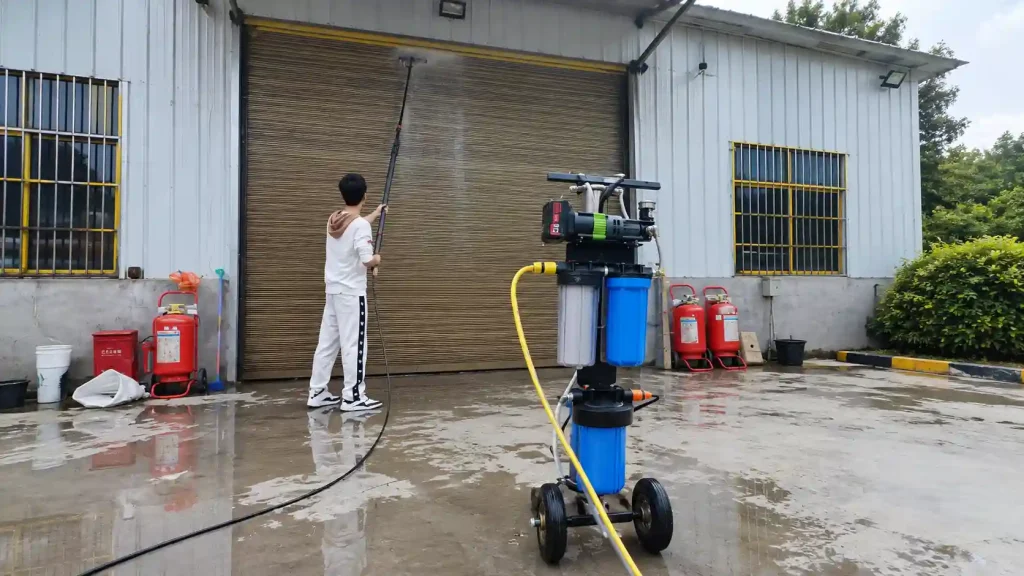
DI and RO/DI Systems
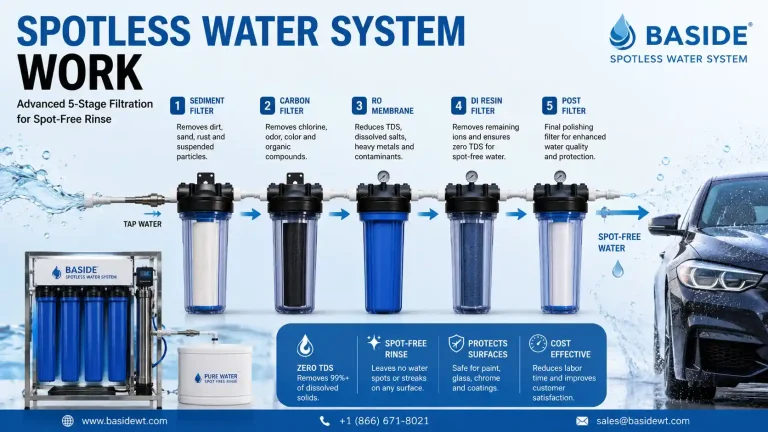
Deionization (DI) removes dissolved minerals using resin, while reverse osmosis (RO) forces water through a membrane to filter out impurities before the DI stage. Many professional setups use a combined RO/DI system, which extends resin life by removing the bulk of dissolved solids with RO first.
- DI-only systems are simpler and often more portable, making them a reasonable choice for smaller jobs or mobile cleaning.
- RO/DI systems cost more upfront but reduce ongoing resin consumption, which matters for cleaners doing frequent, high-volume work.
For a closer look at how these purification stages fit into the broader cleaning process, see our article on pure water cleaning equipment. If you are evaluating a dedicated purification unit, our DI cleaning system page outlines the equipment options available for this stage.
Resin Vessels and Filters
Resin vessels hold the deionizing resin that the water passes through. Pre-filters, usually sediment and carbon filters, protect the resin bed by removing larger particles and chlorine before the water reaches it. Skipping pre-filtration shortens resin life significantly, which increases running costs over time.
TDS Monitoring
Total Dissolved Solids, or TDS, measures how many minerals remain in the water. A TDS meter is a small but essential piece of equipment because it tells you, in real time, whether your purification stage is still working correctly.
Most professional cleaners check TDS before starting a job and periodically throughout the day, especially when working through a large volume of water. A rising TDS reading usually signals that resin needs replacing. A dedicated TDS meter is inexpensive compared to the cost of redoing a job that dried with mineral spots.
Pumps, Tanks, and Water Delivery
Not every setup needs a pump. Gravity-fed systems work for short poles and light use, but taller poles and larger jobs usually need a pump to maintain consistent pressure and flow at height.
Tanks store purified water for mobile use, particularly when a cleaner is working away from a direct water hookup. Tank size should match the scope of typical jobs. A small tank forces frequent refills, while an oversized tank adds unnecessary weight to a vehicle or trolley setup.
Water Storage and Transport
For cleaners who move between multiple sites in a day, transport-friendly tanks with secure lids and stable mounting points reduce spillage and setup time. Vehicle-mounted systems are common for teams handling several properties, while smaller container setups suit residential or single-location work.
Matching Equipment to Building Height and Job Type
Equipment needs change with the type of work.
- Ground floor to two stories: A shorter pole, basic DI unit, and a simple gravity or low-pressure pump usually cover this range.
- Three to five stories: A mid-length carbon fiber pole, RO/DI system, and a proper pump become worthwhile investments.
- High-rise or commercial buildings: Full-length poles, larger purification capacity, higher-output pumps, and backup resin vessels are typically necessary to keep pace with demand.
Cleaners taking on taller jobs regularly should read our guide on pure water window cleaning methods to understand how technique and equipment choices interact at height.
Professional Versus Basic Equipment Setups
A basic setup, suitable for occasional or residential use, might include a short-to-mid pole, a compact DI unit, a small tank, and a simple TDS meter. This covers the essentials without a large investment.
A professional setup adds redundancy and capacity: longer and shorter poles for different jobs, an RO/DI system to reduce resin costs, a reliable pump, larger storage, and spare brush heads and hoses on hand. Professional cleaners also tend to standardize on one brand’s connector system to avoid compatibility issues between poles, hoses, and brush heads.
Equipment Selection Factors
When comparing water fed pole equipment, weigh these factors against your actual workload rather than the most advanced option available:
- Reach needed for your typical jobs, not your rare exceptions
- Weight and balance of the pole for extended daily use
- Water purification capacity relative to how much water you use per day
- Resin and filter replacement costs over time, not just the purchase price
- Compatibility between pole, hose, and brush connectors
- Portability if you move between multiple sites
Common Equipment Mistakes
Several avoidable mistakes show up repeatedly among cleaners new to the method:
- Buying the longest pole available instead of the one matching typical job height
- Neglecting pre-filters, which shortens resin life
- Ignoring TDS readings until spotting appears on finished windows
- Mixing incompatible connectors between brands
- Underestimating tank size for a full day of mobile work
Avoiding these issues from the start saves money and reduces callbacks for streaked or spotted glass.
Equipment Checklist for Getting Started
Before starting or upgrading a water fed pole setup, confirm you have:
- A pole matched to your typical working height
- A brush head suited to the glass condition you clean most often
- A hose and connectors rated for your pole length
- A DI or RO/DI purification unit sized to your water usage
- A TDS meter for regular checks
- A tank sized for your daily volume, plus a pump if height or distance requires one
Cleaners setting up a system for the first time may also find it useful to review our full water fed pole system guide, which walks through how these components come together during setup and use.
Conclusion
Reliable water fed pole equipment comes down to matching each component to the job in front of you. The pole, hose, and brush head handle delivery, while purification equipment and a TDS meter make sure the water itself is doing its job. Tanks and pumps then tie the system together for mobile or larger-scale work.
None of these parts perform well in isolation. A high-end pole cannot compensate for poorly purified water, and the best purification system will not help if the hose leaks or the connectors do not match. Building a setup with compatible, appropriately sized components at every stage is what separates a professional result from a frustrating one. Readers interested in the chemistry behind why purified water leaves glass spot-free can find a clear explanation in this overview of deionized water.
Whether you are assembling your first setup or upgrading an existing one, browsing a dedicated range of professional cleaning systems is a practical next step for comparing components side by side before you buy.
RELATED POSTS
Deionized Water System Cost: Complete Guide to Pricing, Installation, Maintenance & ROI
RO vs DI Water for Car Wash: Which System is Better?
Does A Water Softener Filter Water
Water Filter Housing Maintenance Guide: Tips to Extend Filter Life
How Water Turbidity Affects UV Water Sterilization