BasideWT- Whole Home Water Filtration System & Replacement



Water Fed Pole Window Cleaning: How the Pure Water Method Works
Water fed pole window cleaning has changed the way professionals and property owners keep glass spotless. Instead of climbing ladders or scrubbing with soap and a squeegee, this method uses purified water pushed through a long pole to a brush head. The water does most of the work. It loosens dirt, rinses the glass, and dries without leaving marks behind.
This guide explains how the process actually works. It covers the role of pure water, the cleaning steps, and what affects the final result. If you want a broader look at the equipment involved, this complete water fed pole system guide covers the full setup from start to finish.
What Water Fed Pole Window Cleaning Actually Means
Water fed pole window cleaning is a technique that combines a telescopic pole, a soft brush, and a supply of purified water. The pole extends upward so the operator can reach windows without a ladder. Water flows continuously through the pole and out through the brush bristles.
This is different from traditional window cleaning, which relies on soap, a squeegee, and manual drying. With the water fed method, the water itself carries away dirt and residue. There is no soap film to wipe off and no towel needed afterward.
For readers who want to understand the pole mechanics in more detail, this article on how a water fed pole works explains the internal water flow and pole structure.
Why Purified Water Is Central to the Method
Ordinary tap water contains dissolved minerals such as calcium and magnesium. When tap water dries on glass, these minerals stay behind. That leaves faint spots and streaks, especially in sunlight.
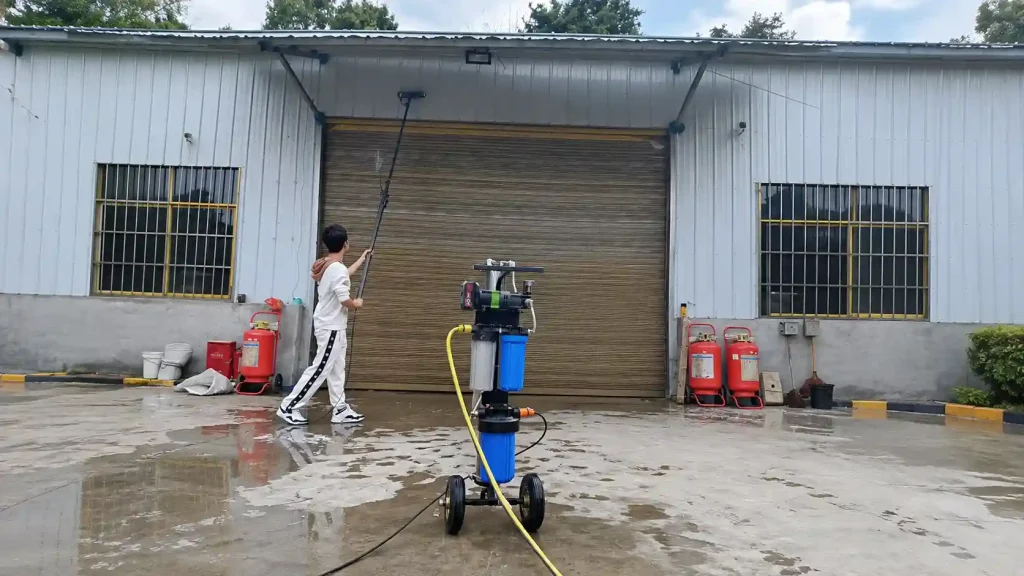
Purified water solves this problem. Systems typically use reverse osmosis, deionization, or a combination of both to strip out dissolved minerals before the water reaches the pole. The result is water with very low total dissolved solids, often measured with a TDS meter in parts per million.
Because the water carries almost nothing behind it, it can be left to air dry on the glass. There is no film, no residue, and no need for a final wipe. This single detail is what makes the water fed method different from simply hosing down a window.
How the Cleaning Process Works Step by Step
The actual cleaning process follows a consistent pattern, whether the job is a single-story home or a multi-story commercial building.
Water travels from the source to the brush. A pump or gravity-fed system pushes purified water through the pole. Internal tubing carries it all the way to the brush head at the top.
The brush loosens dirt on contact. Soft nylon or natural bristles agitate the glass surface. This action lifts dust, grime, and airborne residue without scratching the window.
Continuous rinsing carries the dirt away. As the brush scrubs, water keeps flowing through the bristles. This constant rinse flushes loosened dirt off the glass before it can resettle.
The window air dries spot-free. Because the water is purified, it evaporates cleanly. No mineral deposits remain, so the glass looks streak-free without any manual drying step.
This sequence works well for both flat glass and window frames, though frames should be cleaned first if dirt is heavy, so runoff does not fall onto glass that has already been rinsed.
Residential and Commercial Applications
Water fed pole window cleaning suits a wide range of properties. For residential use, it works well on standard homes, especially where ground-floor access makes ladder use inconvenient or risky. Homeowners can reach second-story windows safely from the ground.
Commercial buildings benefit even more. Storefronts, offices, and low- to mid-rise structures often have large glass areas that would take far longer to clean with a squeegee. Because the pole extends the reach of a single operator, one person can clean many windows in a single pass.
For businesses looking to equip a crew, exploring a dedicated car and window cleaning system can help match the right pump and pole combination to daily workloads.
High-Reach Considerations
Taller buildings introduce extra variables. As pole length increases, water flow and pressure need to stay consistent to keep the brush effective at full extension. Wind can also affect control, so operators typically work in calmer conditions when reaching upper floors.
Pole material matters here too. Lightweight, rigid poles are easier to control at height and reduce operator fatigue during long sessions. This becomes more important as buildings grow taller, though a full breakdown of equipment choices belongs to a dedicated equipment guide rather than this article.
Water Quality and TDS Basics
Water purity is usually checked using total dissolved solids, or TDS, measured in parts per million. Lower TDS readings mean fewer minerals are left in the water. Most professionals aim for a reading close to zero before starting a job.
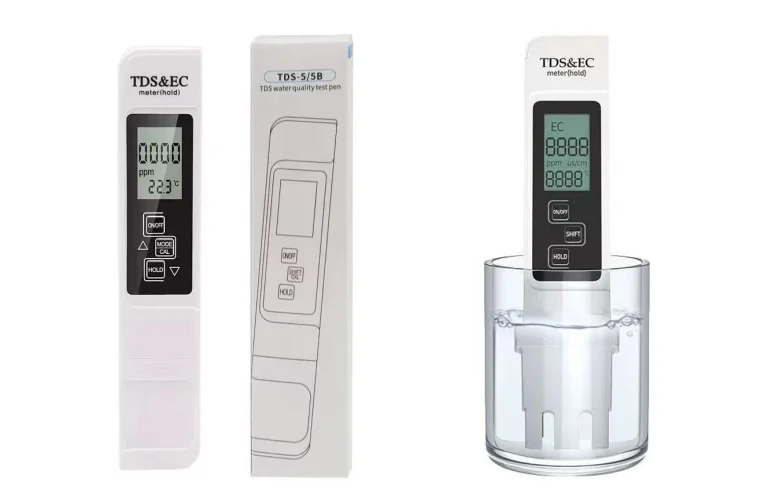
Checking TDS regularly helps confirm the purification system is working correctly. A rising reading usually signals that a filter or resin stage needs attention. A simple TDS meter for water testing makes this check quick and reliable before each job.
This topic connects closely to resin and filtration performance, which is covered in more depth elsewhere. For this article, the key point is simple: water purity directly determines whether windows dry spot-free.
Common Mistakes That Affect Results
A few habits tend to cause disappointing results, even with the right equipment.
- Starting the rinse before the brush has fully loosened dirt, which leaves streaks.
- Cleaning window frames after the glass, which sends dirty runoff back onto clean windows.
- Ignoring rising TDS readings, which allows minerals back into the rinse water.
- Rushing the final rinse, which can leave uneven drying patterns on hot or windy days.
Avoiding these mistakes usually comes down to patience and a consistent routine. The method rewards a steady pace rather than speed.
Basic Equipment and Safety Notes
A complete water fed pole setup includes the pole itself, a brush head, a water supply or purification unit, and connecting hose. Choosing between hybrid, carbon fiber, or higher-grade pole materials depends on how often the pole is used and how high it needs to reach. Many operators start with a ready-made window cleaning system that already bundles the pole, brush, and hose into one working kit.
Safety still matters, even without a ladder. Operators should keep a stable stance, avoid overreaching, and be aware of nearby power lines when working at height. A properly balanced pole reduces strain during longer cleaning sessions.
For anyone assembling a full setup, a spotless water system pairs naturally with a water fed pole to keep purity consistent from tank to brush. Some setups also use deionized water cleaning equipment to maintain low TDS levels across longer jobs.
Getting Consistent Results Every Time
Consistency comes from three things: clean equipment, reliable water purity, and a steady cleaning routine. Rinsing the brush between jobs prevents old debris from scratching new windows. Testing water purity before each session avoids surprises. Following the same scrub-then-rinse pattern every time builds muscle memory and speeds up the work over time.
Weather also plays a role. Direct sun can dry water too quickly, sometimes leaving faint marks even with purified water. Working in shaded conditions, or timing jobs for cooler parts of the day, often produces the cleanest finish.
Conclusion
Water fed pole window cleaning relies on a simple idea: let purified water do the work that soap and towels used to do. A telescopic pole delivers low-mineral water to a soft brush, which loosens dirt while the flow rinses it away. Because the water carries almost no dissolved minerals, the glass dries clear without streaks or spotting.
The method works for homes, offices, and taller buildings alike, as long as water purity is checked regularly and the cleaning steps are followed in order. Even with pure water, though, results can still vary slightly with heat and drying speed. One useful explanation of why spots can occasionally appear even after a deionized rinse shows how fast evaporation on a hot surface can leave faint marks despite low mineral content, which is a helpful reminder to work at a steady pace and avoid direct sun where possible.
RELATED POSTS
Industrial Water Treatment Equipment Manufacturer in China: What Buyers, Engineers, and Distributors Need to Know

How to Choose a UF Membrane for Your Water System

Best Spotless Water System for Car Wash: Complete 2026 Guide
UV Water Sterilizer vs UV Water Purifier: What Is the Difference?
How To Use TDS Tester