BasideWT- Whole Home Water Filtration System & Replacement



Water Filter Housing Maintenance Guide: Tips to Extend Filter Life
Water Filter Housing Maintenance is the one habit that separates a system delivering clean water for a decade from one that fails within two years. Most homeowners and technicians focus on choosing the right cartridge, yet they forget that the housing itself needs regular care too. Neglecting this simple routine leads to leaks, cracked seals, and reduced filtration performance long before the housing reaches the end of its natural lifespan.
This guide walks through practical, field-tested maintenance steps for residential, whole house, and industrial filter housings. You will learn cleaning frequency, O-ring care, cartridge replacement timing, and the mistakes that quietly shorten housing life.
Why Water Filter Housing Maintenance Matters
A filter housing is more than a plastic or steel shell. It holds pressure, seals against leaks, and protects the cartridge inside from contamination. When maintenance gets skipped, sediment builds up along the walls, O-rings dry out, and threads corrode.
Consequently, water pressure drops, flow rates suffer, and the whole system works harder than it should. Over time, this extra strain shortens both housing lifespan and filter efficiency. Furthermore, a poorly maintained housing often masks early warning signs of a failing cartridge, so contaminants can pass through unnoticed.
Regular care, on the other hand, keeps seals supple, prevents microbial growth, and lets you catch small issues before they become costly repairs. If you want a deeper look at why housings fail in the first place, our guide on common water filter housing problems, causes, and solutions covers the warning signs worth watching for.
Recommended Water Filter Housing Maintenance Schedule
Maintenance intervals vary depending on water quality, usage volume, and housing type. However, most systems follow a predictable pattern. Use the table below as a practical starting point, then adjust based on your local water conditions.
| Task | Residential Housing | Whole House Housing | Industrial Housing |
|---|---|---|---|
| Visual leak inspection | Monthly | Monthly | Weekly |
| Housing exterior cleaning | Every 2-3 months | Every 2-3 months | Monthly |
| O-ring inspection and lubrication | Every cartridge change | Every cartridge change | Every cartridge change |
| Cartridge replacement | Every 2-6 months | Every 3-6 months | Per pressure differential |
| Full housing disassembly and deep clean | Every 6 months | Every 6-12 months | Every 3-6 months |
| Pressure gauge and valve check | Every 6 months | Every 6 months | Monthly |
Homeowners with municipal water typically fall toward the longer intervals, while well water users or households with high sediment levels should lean toward the shorter end. Industrial operations should always follow the pressure differential readings rather than a fixed calendar, since flow demand fluctuates daily.
Step-by-Step Water Filter Housing Maintenance
Proper technique matters just as much as timing. Skipping a single step, such as pressure relief, can cause injury or damage the housing threads. Follow this sequence every time you service a unit.
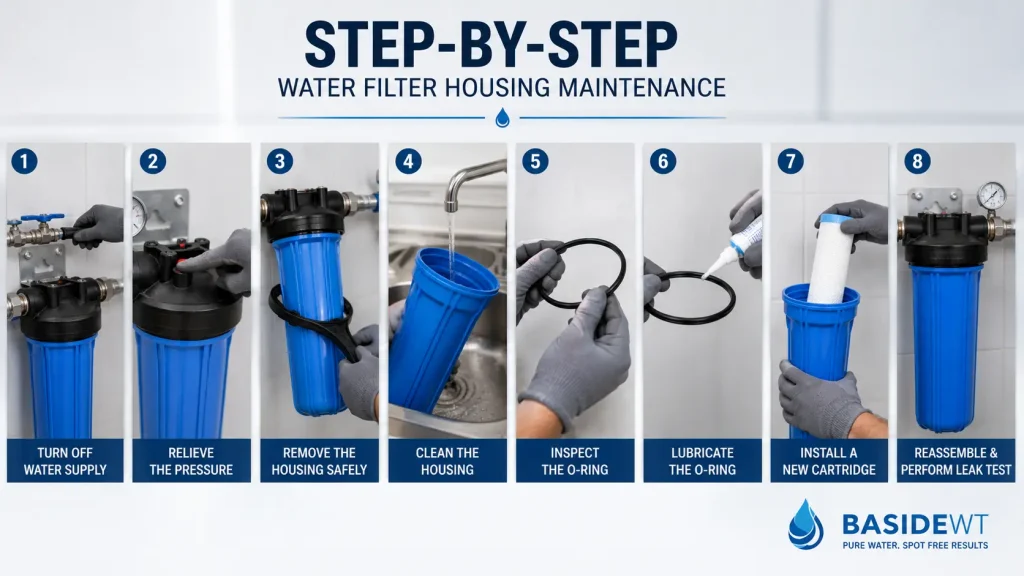
Turn Off the Water Supply
Start by shutting off the main water supply valve feeding the housing. This prevents water from flowing while you work and avoids unnecessary spillage. Locate the valve before beginning any other step, since some systems have more than one shutoff point.
Relieve the Pressure
Next, press the pressure relief button located on top of most modern housings. This small step is often skipped, yet it is one of the most important. Without releasing trapped pressure first, the housing can spray water forcefully when opened, and in rare cases the sump can crack under stress.
Remove the Housing Safely
Once pressure is released, use a proper housing wrench to loosen the sump. Turning it by hand often fails because the O-ring creates strong friction against the housing threads. A dedicated water filter wrench gives you the leverage needed without stripping the housing or cracking the plastic body.
Clean the Housing
After removal, rinse the sump thoroughly with warm water to remove sediment, biofilm, and mineral scale. For stubborn buildup, a soft brush and mild dish soap work well. Avoid harsh solvents, since they can degrade plastic housings over time. If you are unsure which housing material handles cleaning agents best, our comparison of plastic versus stainless steel water filter housings explains the differences in detail.
Inspect the O-Ring
Examine the O-ring closely for cracks, flat spots, or a dried-out texture. A damaged O-ring is the single most common cause of housing leaks, so this step deserves extra attention. If it looks brittle or stretched, replace it rather than reinstalling it.
Lubricate the O-Ring
Apply a thin layer of food-grade silicone lubricant around the entire O-ring surface. This keeps the seal pliable, prevents it from sticking to the threads, and makes future disassembly much easier. Avoid petroleum-based grease, since it can degrade rubber compounds over time.
Install a New Cartridge
Insert the replacement cartridge, making sure it seats correctly on the base of the housing. A misaligned cartridge is a frequent cause of bypass flow, where unfiltered water slips around the edges instead of passing through the media. Choosing the correct cartridge size matters here too, and our water filter housing size guide can help confirm compatibility before purchase.
Reassemble Correctly
Thread the sump back onto the housing head by hand first, then tighten firmly with the wrench. Overtightening can crack the housing or damage the threads, so apply firm, even pressure rather than excessive force.
Perform a Leak Test
Finally, turn the water supply back on slowly and check every seam for drips. Let the system run for a few minutes under normal pressure before walking away. A slow, steady leak often points to O-ring misalignment rather than a cracked housing, so recheck the seal before assuming the worst.
Common Maintenance Mistakes to Avoid
Even experienced installers fall into a few recurring traps. Recognizing these mistakes early can save both time and money.
- Skipping pressure relief. This is the most dangerous shortcut, and it risks both injury and housing damage.
- Reusing a worn O-ring. A cracked seal will leak eventually, even if it looks fine at first glance.
- Overtightening the sump. Excess force stresses the threads and can lead to hairline cracks.
- Ignoring pressure drop. A steady decline in flow usually signals a clogged cartridge, not a faulty housing.
- Using the wrong lubricant. Petroleum-based products break down rubber O-rings faster than silicone alternatives.
- Delaying cartridge changes. Waiting too long allows sediment to compact, which strains the housing threads during removal.
For a broader technical reference on preventive filter servicing, the Commercial Filtration Supply maintenance guide offers useful field guidance that applies across many housing types.
How Maintenance Extends Filter Housing Life
Consistent care directly affects how long a housing lasts before it needs replacement. Clean threads reduce friction damage during cartridge changes. Well-lubricated O-rings prevent the micro-tears that eventually cause leaks. Meanwhile, timely cartridge swaps stop sediment from compacting against the housing walls, which reduces long-term wear.
In practice, a housing that receives proper maintenance every few months can often outlast one that gets neglected by several years. Additionally, consistent water quality monitoring helps you catch changes in source water before they overwhelm the cartridge and stress the housing unnecessarily.
Maintenance Tips for Whole House Systems
Whole house filter housings handle significantly more volume than point-of-use units, so their maintenance needs differ slightly. Because these systems filter every drop entering the home, sediment buildup happens faster, especially with well water sources.
Check the pressure gauge before and after the housing regularly. A pressure differential above 15 psi usually signals it is time for a cartridge change, even if the calendar interval has not been reached yet. Also, inspect the mounting bracket periodically, since the added weight of a full housing can loosen wall anchors over time. For a complete overview of how these systems function, see our guide on whole house water filter housings.
Maintenance Tips for Industrial Filter Housings
Industrial applications demand a more disciplined maintenance approach, since downtime directly affects production. Multi-cartridge housings, in particular, require careful attention because a single failed O-ring can compromise the entire bank.
Track differential pressure continuously rather than relying solely on a fixed schedule. Most industrial operators replace cartridges once the differential reaches the manufacturer’s specified threshold, typically between 15 and 25 psi depending on the application. Additionally, keep a spare O-ring kit and gasket set on hand at all times, since unplanned downtime is far more costly than a small parts inventory. Our detailed breakdown of industrial water filter housing applications explains how different industries structure their maintenance programs.
Professional Maintenance Checklist
Use this checklist during every scheduled service visit to ensure nothing gets overlooked.
| Checklist Item | Confirmed |
|---|---|
| Water supply shut off before starting | ☐ |
| Pressure relief button pressed | ☐ |
| Housing wrench used for removal | ☐ |
| Sump cleaned and rinsed thoroughly | ☐ |
| O-ring inspected for cracks or wear | ☐ |
| Silicone lubricant applied to O-ring | ☐ |
| Correct cartridge size and micron rating installed | ☐ |
| Housing reassembled to proper torque | ☐ |
| Leak test performed under normal pressure | ☐ |
| Service date logged for next maintenance cycle | ☐ |
Keeping a written log for each housing helps track patterns, such as unusually fast cartridge clogging, which may indicate a source water issue worth investigating further.
Expert Recommendations
Experienced technicians generally agree on a few core principles. First, never force a stuck housing sump. If it will not budge, apply more lubricant and try again rather than risking a cracked housing. Second, always match cartridge micron rating to actual water conditions instead of guessing.
Moreover, seasoned installers recommend labeling each housing with its install date and last service date directly on the unit. This small habit removes guesswork during future maintenance visits. Finally, always verify the housing’s pressure rating against your system’s operating pressure before servicing, since exceeding rated limits accelerates wear regardless of how well you maintain the seals.
Final Thoughts
Water Filter Housing Maintenance does not require advanced tools or technical training, only consistency. A regular schedule of cleaning, O-ring care, and timely cartridge replacement keeps both flow rate and water quality where they should be. Whether you manage a single residential unit or a bank of industrial housings, the same core principles apply: relieve pressure safely, inspect seals carefully, and never skip the leak test.
By following the steps and checklist outlined above, you can extend housing lifespan significantly while avoiding the costly repairs that come from deferred maintenance.
RELATED POSTS
Water Filter System Maintenance: Complete Care Guide
Water Filter Housing Maintenance: Cleaning, Inspection & Care Guide
RO Membrane: Types, Sizes, GPD, Working, Replacement & Buying Guide
Big Blue 20 inch Water Filter-BasideWT
What is an FRP Tank?