BasideWT- Whole Home Water Filtration System & Replacement


Water Filter Housing: Types, Sizes, Benefits, Installation, Maintenance & Buying Guide
A water filter housing is the protective shell that holds a filter cartridge in place while water flows through it. Every whole house system, under-sink unit, and industrial filtration line depends on this one component to contain pressure, direct flow, and keep the cartridge sealed. If you are researching filtration for your home, your building, or your OEM product line, understanding how housings work will help you avoid costly mistakes. This guide covers types, sizes, materials, installation, maintenance, and buying advice, so you can choose the right water filter housing with confidence.
What Is a Water Filter Housing?
A water filter housing is a sealed container that holds a replaceable filter cartridge inside a water line. It is not the filter itself. Instead, it is the shell that positions the cartridge correctly and manages water flow around it.
Water enters the housing through an inlet port. It then passes through the filter cartridge, where sediment, chlorine, or other contaminants get trapped. Finally, filtered water exits through a separate outlet port and continues into your plumbing.
Housing quality matters because it determines how well the system holds pressure and resists leaks. A poorly built housing can crack, warp, or fail at the seal. A well-engineered one lasts for years and only needs a cartridge swap during routine maintenance.
How Does a Water Filter Housing Work?
The basic filtration flow inside a housing follows a simple, repeatable path. Understanding each step helps you troubleshoot problems and choose the right components later.
- Water inlet. Untreated water enters through a threaded port, usually marked “IN.”
- Filter cartridge. Water flows through the cartridge media, which physically or chemically removes contaminants.
- Filtration stage. Depending on the cartridge type, this stage removes sediment, chlorine taste and odor, or other specific impurities.
- Filtered water outlet. Clean water exits through the “OUT” port and continues to your fixtures or downstream equipment.
- Housing bowl (sump). This lower chamber holds the cartridge and contains the full water pressure of the system.
- O-ring seal. A rubber gasket seals the cap to the sump, preventing leaks at the connection point.
- Pressure containment. The housing must safely hold the full operating pressure of your water supply without deforming.
If any one of these parts fails, the entire system underperforms. That is why housing selection deserves as much attention as cartridge selection.
Main Types of Water Filter Housing
Not every housing works for every application. The type you need depends on flow rate, space, and how many fixtures the system must serve.
Standard Water Filter Housing
Standard housings typically accept 2.5-inch diameter cartridges in 10-inch or 20-inch lengths. They work well for point-of-use filtration, such as a single kitchen tap or a small RO pre-filter stage. Because they are compact, they fit under sinks and in tight utility spaces.
Big Blue Water Filter Housing
A Big Blue water filter housing uses a larger 4.5-inch diameter cartridge. The bigger surface area allows higher flow rates and longer cartridge life compared to standard housings. Homeowners and small commercial buyers often choose Big Blue units for whole house sediment or carbon filtration. Our complete guide to water filter housing types and sizes breaks down Big Blue specifications in more depth if you need exact dimensions.
Whole House Water Filter Housing
A whole house water filter housing sits at the main water line, so it treats every fixture in the building at once. This differs from point-of-use filtration, which only treats water at a single tap. Whole house housings usually need higher flow capacity because several fixtures may draw water simultaneously.
Under-Sink Water Filter Housing
Under-sink housings are compact units installed directly beneath a kitchen or bathroom sink. They typically serve a single faucet and are common in residential drinking water setups. Because flow demand is low, smaller housing sizes work fine here.
Commercial Water Filter Housing
Restaurants, hotels, offices, and retail buildings rely on commercial-grade housings to protect equipment such as ice machines, coffee brewers, and dishwashers. These applications need higher flow capacity than residential setups and often use multiple housings arranged in parallel.
Industrial Water Filter Housing
Industrial water filter housing units handle process water, cooling systems, and pre-treatment ahead of reverse osmosis or other advanced filtration. These housings often work as one stage in a larger treatment train rather than as a standalone unit. Manufacturing facilities frequently specify stainless steel construction for durability under demanding conditions.
Plastic vs Stainless Steel Water Filter Housing
Material choice affects durability, chemical resistance, and cost. The table below compares the two most common construction materials.
| Factor | Plastic Housing | Stainless Steel Housing |
|---|---|---|
| Typical material | Polypropylene, PVC | 304 or 316L stainless steel |
| Pressure rating | Moderate | Higher |
| Chemical resistance | Good for most residential use | Excellent, suited to harsh chemicals |
| Cost | Lower | Higher |
| Common use | Residential, light commercial | Industrial, food and beverage, pharmaceutical |
| Weight | Lightweight | Heavier |
Both materials have valid uses. The right choice depends on your water pressure, temperature, and the chemicals involved in your application.
Water Filter Housing Materials
Beyond the plastic-versus-steel decision, housing material affects long-term performance in specific ways.
Polypropylene is the most common plastic used in residential and light commercial housings. It resists most household chemicals and handles moderate pressure well. However, it is not suited to high-temperature applications.
Other engineering plastics, such as clear polycarbonate or SAN, offer visual inspection of the cartridge. These materials work well for lower-pressure systems but generally carry lower maximum pressure ratings than opaque polypropylene.
Stainless steel handles higher pressure, higher temperature, and harsher chemical exposure. It is the standard choice for industrial water filtration, food processing, and pharmaceutical applications where durability and hygiene matter most.
When selecting a material, always match it to your actual operating conditions rather than assuming one material fits every job.
Water Filter Housing Sizes
Housing size determines both flow capacity and which cartridges will fit correctly. Getting this wrong is one of the most common buying mistakes.
A 10-inch water filter housing holds a 10-inch cartridge and suits lower-flow applications such as single-fixture filtration or smaller households. A 20-inch water filter housing holds a longer cartridge, offering more filtration surface area and a longer service life between changes.
Diameter matters just as much as length. Standard housings typically use 2.5-inch diameter cartridges, while Big Blue housings use 4.5-inch diameter cartridges. The two are not interchangeable.
| Housing Type | Cartridge Diameter | Common Lengths | Typical Flow Rate | Best For |
|---|---|---|---|---|
| Standard | 2.5 inches | 10″, 20″ | 1–5 GPM | Point-of-use, under-sink, RO pre-filtration |
| Big Blue | 4.5 inches | 10″, 20″ | 5–20 GPM | Whole house, light commercial |
| Commercial/Industrial | 4.5″–6″+ | 20″–40″ | 20 GPM and above | High-volume commercial and industrial systems |
Because housing and cartridge dimensions must match exactly, always confirm both diameter and length before ordering replacement filters.
Filter Cartridge Compatibility and Micron Rating
A housing cannot be chosen in isolation from the cartridge that goes inside it. The two work as a matched system, and mismatched components lead to poor sealing or reduced filtration performance.
Cartridge type determines what gets removed from your water. Sediment cartridges trap particles like sand and rust. Carbon cartridges reduce chlorine taste and odor. Specialty cartridges target specific contaminants such as iron or certain chemicals.
Micron rating describes how small a particle the cartridge can capture. A lower micron number means finer filtration. For general sediment control, a 5-micron or 20-micron cartridge is common, while finer pre-filtration ahead of an RO membrane often calls for 1-micron or lower.
Before buying a housing, confirm that compatible cartridges are widely available in the diameter, length, and micron rating you need. A hard-to-source cartridge creates ongoing maintenance headaches, even if the housing itself performs well.
Water Filter Housing Applications
Requirements shift significantly depending on where the housing gets installed. Matching the application to the right housing avoids both underperformance and unnecessary overspending.
- Residential drinking water. Under-sink or countertop housings serve a single tap with low flow demand.
- Whole house filtration. Big Blue or similar housings treat all water entering the home.
- Commercial buildings. Restaurants and hotels need higher flow capacity to protect kitchen and beverage equipment.
- Industrial water treatment. Manufacturing plants use housings for process water and equipment protection.
- OEM filtration. Equipment manufacturers integrate housings directly into appliances or larger systems.
- RO pre-filtration. Housings protect reverse osmosis membranes from sediment and chlorine damage.
- Well water treatment. Homes on private wells often need dedicated sediment and iron filtration before other treatment stages. Our guide to water filtration systems for well water covers this application in more detail.
Because raw water quality varies significantly by region and source, many buyers in China also reference national guidance on drinking water quality when planning a filtration setup. The Standards for Drinking Water Quality of China, published by China CDC Weekly, outlines the technical basis for national water quality limits and offers useful background for anyone evaluating source water before selecting filtration equipment.
Benefits of Using the Right Water Filter Housing
Choosing an appropriately sized and specified housing delivers practical, measurable benefits.
- Reliable cartridge containment. A properly matched housing holds the cartridge securely, without bypass or leakage.
- Easier cartridge replacement. Standardized sizing means replacement filters are easy to find and install.
- Better water flow. Correctly sized housings avoid unnecessary pressure drop across the system.
- Reduced leak risk. Quality seals and compatible fittings minimize the chance of water damage.
- Flexible cartridge options. A single housing can often accept several cartridge types, letting you adjust filtration as your water quality changes.
- Scalable design. Housings can be added in series or parallel as filtration needs grow.
These benefits compound over time. A housing chosen carefully at the start saves money and hassle across years of operation.
How to Choose the Right Water Filter Housing
Selecting the right housing involves working through a consistent set of factors, rather than picking based on price alone.
- Identify your water source. Municipal, well, or rainwater sources each bring different contaminant profiles.
- Define the application. Residential, commercial, industrial, and OEM projects all have different demands.
- Calculate required flow rate. Add up peak simultaneous demand from all fixtures the housing will serve.
- Check water pressure. Confirm your housing’s pressure rating exceeds your system’s operating pressure with a safety margin.
- Consider temperature. Hot water applications need housings and seals rated for higher temperatures.
- Match cartridge type and dimensions. Confirm diameter, length, and micron rating align with your filtration goal.
- Choose a suitable material. Balance cost against chemical resistance and durability needs.
- Verify connection size. Inlet and outlet port sizes must match your existing plumbing.
- Confirm replacement cartridge availability. Avoid housings that use hard-to-find or proprietary cartridges.
- Factor in OEM or customization needs. Bulk buyers may need private labeling or specific port configurations.
- Set a realistic budget. Weigh upfront cost against long-term replacement and maintenance costs.
Working through this list systematically helps you avoid the most common sizing and compatibility mistakes.
Water Filter Housing Installation Basics
Installation follows a fairly consistent process across most residential and light commercial housings. Always check the manufacturer’s specific instructions first, since details can vary.
- Shut off the water supply before starting any work.
- Select a suitable location with easy access for future maintenance.
- Confirm inlet and outlet direction before connecting any fittings.
- Install fittings correctly, using thread tape or sealant where needed.
- Insert the cartridge into the housing sump.
- Secure the housing cap, hand-tightening or using a wrench as specified.
- Connect the water lines to the inlet and outlet ports.
- Open the water supply slowly to avoid pressure shock.
- Check every connection for leaks.
- Flush the system according to the cartridge manufacturer’s instructions before use.
Rushing through installation is one of the most common causes of early leaks. Taking a few extra minutes at each step pays off later.
Water Filter Housing Maintenance Basics
Routine maintenance keeps a housing performing reliably for years. A few consistent habits make the biggest difference.
Replace the filter cartridge on the schedule recommended for your specific cartridge type and water quality. Inspect the O-ring for cracks or wear each time you open the housing. Clean the housing bowl during cartridge changes to remove any accumulated sediment.
Check for leaks periodically, especially after any pressure changes in your plumbing system. Confirm the cap is tightened correctly, since overtightening can damage threads and undertightening can cause leaks. If storing a housing long-term, keep it clean and dry to prevent mold growth.
A dedicated wrench designed for your housing size makes cartridge changes safer and easier, particularly on larger Big Blue units where hand-tightening alone may not be enough.
Common Water Filter Housing Problems
Most housing issues fall into a short list of recurring problems. Knowing what to look for speeds up troubleshooting.
- Leaks at the seal. Usually caused by a damaged, dirty, or missing O-ring.
- Cracked housing. Often results from over-pressurization, freezing, or age-related material fatigue.
- Damaged O-ring. A worn seal is one of the most common and easiest fixes.
- Incorrect cartridge fit. Using a cartridge with the wrong diameter or length prevents a proper seal.
- Low flow. A clogged cartridge or undersized housing restricts water flow.
- Pressure problems. Excessive inlet pressure can stress seals and shorten housing life.
- Difficult housing removal. Mineral buildup or over-tightening can make the cap hard to open without a proper wrench.
Addressing these issues early prevents small problems from turning into system failures.
Water Filter Housing vs Water Filter Cartridge
These two terms get confused often, but they describe different parts of the same system.
| Component | What It Is | What It Does |
|---|---|---|
| Water filter housing | The outer shell or container | Holds the cartridge, manages flow direction, contains pressure |
| Water filter cartridge | The replaceable filtration element | Physically or chemically removes contaminants from water |
A water filter housing is the reusable container. A water filter cartridge is the consumable component you replace on a schedule. Both must be compatible in size and specification, or the system will not seal or filter correctly.
Residential vs Commercial Water Filter Housing
Residential and commercial applications share the same basic mechanism but differ significantly in scale and specification.
| Factor | Residential | Commercial |
|---|---|---|
| Flow rate | Lower, typically under 10 GPM | Higher, often 20+ GPM |
| Capacity | Single household demand | Multiple fixtures or high-volume equipment |
| Materials | Often plastic | Often stainless steel or heavy-duty plastic |
| Connections | 3/4 inch typical | 1 inch or larger typical |
| Durability needs | Moderate | High, due to continuous operation |
| Installation | Often DIY-friendly | Usually professionally installed |
| Maintenance | Homeowner-managed | Facility or contractor-managed |
Understanding these differences helps buyers avoid under-specifying a system for commercial use, which is one of the most expensive mistakes to correct after installation.
Water Filter Housing Cost Factors
Several variables influence what a water filter housing costs, beyond the base unit price.
- Material. Stainless steel typically costs more than plastic.
- Size. Larger housings and higher flow capacity increase price.
- Pressure rating. Higher-rated housings often use thicker materials.
- Connection size. Larger ports may require different fittings and adapters.
- Cartridge capacity. Housings compatible with higher-capacity cartridges may cost more upfront but save on replacement frequency.
- Brand and manufacturer. Established suppliers often price based on quality control and warranty support.
- Application. Industrial and OEM specifications can add engineering and customization costs.
- Order quantity. Bulk and wholesale orders typically reduce per-unit pricing.
- Long-term replacement costs. Factor in ongoing cartridge purchases, not just the initial housing price.
Because pricing varies by supplier, region, and specification, request a current quote rather than relying on general estimates when budgeting a project.
Water Filter Housing Buying Checklist
Use this checklist to confirm you have covered every important factor before placing an order.
- Application (residential, commercial, industrial, or OEM)
- Water source and known contaminants
- Required flow rate
- System water pressure
- Housing size (diameter and length)
- Cartridge compatibility and micron rating
- Housing material
- Connection size and thread type
- Replacement cartridge availability
- Expected durability for your operating conditions
- Supplier support, including OEM or customization options
Reviewing this list against your specific project reduces the risk of ordering the wrong housing size or an incompatible cartridge system.
Conclusion
A water filter housing is a simple-looking component that plays a critical role in every filtration system. Choosing the right one depends on your application, water source, flow rate, pressure, and cartridge compatibility. Material selection and correct sizing matter just as much as the housing’s build quality.
Whether you need a compact under-sink unit, a Big Blue housing for whole house filtration, or an industrial-grade stainless steel system, matching the housing to your actual operating conditions is the foundation of reliable filtration. Explore our water filter housing product range to compare options, or review our whole house water filter housing line if you need point-of-entry protection for your entire building. At BasideWT, we manufacture housings and compatible sediment filter cartridges designed to work together, along with maintenance tools like our water filter wrench to keep your system running smoothly for years to come.
RELATED POSTS
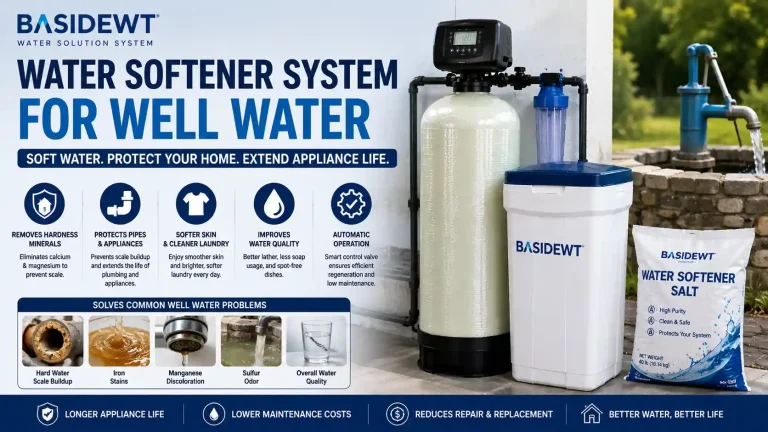
Water Softener System for Well Water: Benefits, Problems & How to Choose the Right One
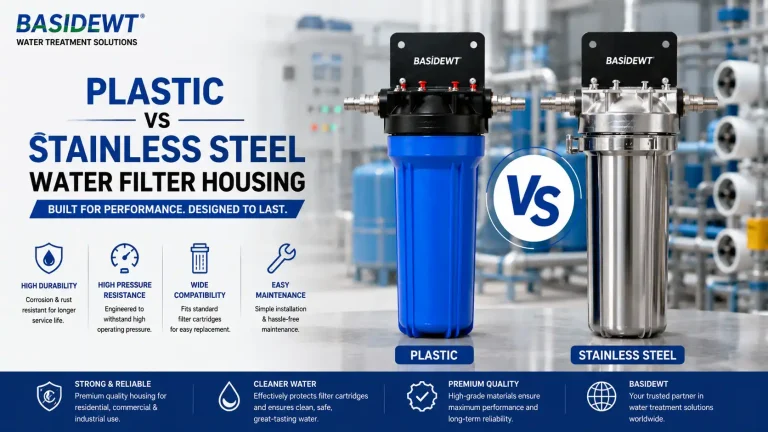
Plastic vs Stainless Steel Water Filter Housing: Which Is Better?
How To Filter Arsenic From Water?
What Is a Water Softener System? Everything You Need to Know
RO Membrane Replacement: When, Why & How to Replace It