BasideWT- Whole Home Water Filtration System & Replacement

Deionized Water System Maintenance: How to Keep Your DI System Performing at Its Best
A deionized water system only performs as well as its maintenance schedule allows. Even the best-engineered setup will lose efficiency if resin, filters, and monitoring equipment go unchecked.
Good Deionized Water System Maintenance protects water quality, extends equipment life, and keeps operating costs under control. Skip it, and you risk inconsistent purity, unplanned downtime, and expensive emergency repairs.
This guide walks through the components that need regular attention, how often to replace resin, and the warning signs that tell you something needs fixing. If you’re new to how these systems work, our earlier post on What Is a Deionized Water System is a useful starting point before diving into maintenance details.
Why Deionized Water System Maintenance Is Important
Ion-exchange resin has a limited capacity. Once it becomes saturated with unwanted ions, water quality drops fast, sometimes without any obvious visual warning.
Poor maintenance doesn’t just affect water purity. It also increases wear on downstream equipment, contaminates sensitive processes, and shortens the lifespan of pumps, valves, and tanks.
For industries like electronics manufacturing or pharmaceutical production, a maintenance lapse can mean rejected batches or damaged components. Even lower-purity applications, such as commercial cleaning, suffer from spotting and streaking when resin performance declines.
Routine maintenance also saves money over time. Replacing resin on schedule costs far less than repairing equipment damaged by scale, corrosion, or contaminated feed water. Our Complete Deionized Water System Buying Guide touches on this relationship between system design and long-term costs, and it’s worth revisiting alongside this article.
Key Components That Require Regular Maintenance
A DI system includes several parts that work together. Each one needs its own maintenance approach.
Ion Exchange Resin
Resin is the heart of the system. It attracts and holds unwanted ions as water passes through the tank. Over time, the resin’s exchange sites fill up, and it can no longer remove ions effectively.
Mixed bed resin, which combines cation and anion resins in one tank, typically produces the highest water purity. However, it also requires careful monitoring since exhaustion can happen gradually and go unnoticed without proper testing.
Resin Tanks
Tanks themselves rarely fail, but they do need periodic inspection. Look for cracks, corrosion, or fittings that have loosened due to vibration or pressure changes.
Sediment buildup inside the tank can also reduce flow efficiency. Regular backwashing, where applicable, helps clear debris before it compacts the resin bed.
Pretreatment Filters
Sediment and carbon filters protect the resin from chlorine, particulates, and organic matter. When these filters clog, they reduce flow rate and place extra strain on the resin.
Most facilities replace sediment filters every one to three months, depending on feed water quality. Carbon filters typically last a bit longer but should still be checked regularly for reduced flow or unusual odor in the water.
RO System (if installed)
Many industrial setups pair deionization with reverse osmosis for better efficiency. If your system includes an RO stage, membrane maintenance becomes part of the routine.
RO membranes need periodic cleaning to remove fouling caused by minerals, biological growth, or organic material. Neglecting this step increases the ion load reaching the DI stage, which shortens resin life significantly. Our comparison article on Deionized Water vs Reverse Osmosis Water explains how the two technologies work together in more detail.
TDS Meter & Conductivity Monitoring
A TDS meter or conductivity sensor gives you real-time insight into water purity. Without this data, resin exhaustion becomes a guessing game.
Calibrate meters regularly, since sensor drift can produce misleading readings over time. Many facilities install inline conductivity monitors before and after the DI tank to track performance trends and catch problems early.
How Often Should You Replace DI Resin?
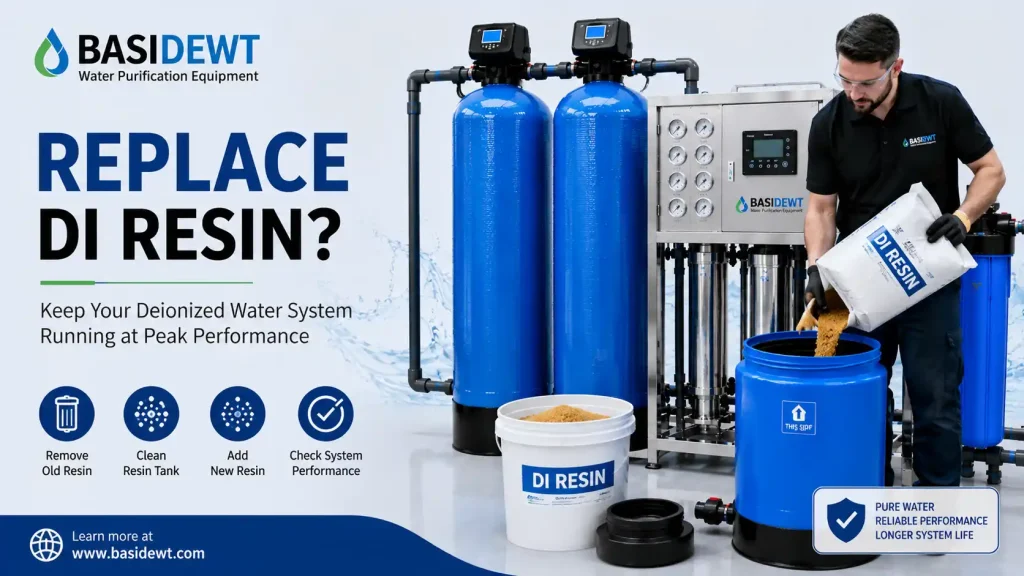
Resin replacement frequency depends on several factors, including feed water hardness, daily water usage, and required purity level.
As a general guideline, lightly used systems with good feed water might need resin replacement once a year. High-volume industrial systems, especially those treating hard water, may require replacement every few months.
Laboratories and electronics manufacturers often replace resin more frequently since their purity tolerances are tighter. A slight drop in resistivity that would go unnoticed in a car wash setting could disrupt a semiconductor rinse process entirely.
Tracking total gallons processed, alongside conductivity readings, gives a more accurate replacement schedule than relying on a fixed calendar date alone. If you’re ready to replace resin yourself, our step-by-step guide on How to Change Resin in a DI Tank walks through the process safely.
Signs Your Deionized Water System Needs Maintenance
Several warning signs indicate that a system needs attention before problems escalate.
- Rising conductivity or falling resistivity readings
- Reduced flow rate through the resin tank
- Visible discoloration or resin fragments in output water
- Unusual odors, which may indicate bacterial growth or filter saturation
- Frequent pressure drops across pretreatment filters
- Spotting or streaking on rinsed surfaces, especially in cleaning applications
Catching these signs early prevents minor issues from becoming costly failures. Many of these applications, from window cleaning to car washing, depend heavily on consistent purity. Our article on Deionized Water System Applications explains why different industries have different tolerance levels for these warning signs.
Common Maintenance Mistakes to Avoid
Even experienced operators make avoidable errors that shorten system life.
One common mistake involves ignoring pretreatment. Skipping sediment or carbon filtration puts excess strain on resin, causing it to exhaust far faster than expected.
Another mistake is relying solely on visual inspection instead of conductivity testing. Water can look perfectly clear while still carrying dissolved ions well above acceptable limits.
Some operators also delay resin replacement to save money in the short term. This often backfires, since degraded resin can release trapped contaminants back into the water stream, creating quality issues that are harder to trace.
Finally, inconsistent record-keeping makes it difficult to spot trends. Without logged data on flow rates, conductivity, and filter changes, small problems tend to go unnoticed until they become expensive.
Best Practices to Extend Resin Life
A few consistent habits go a long way toward maximizing resin performance and lifespan.
Start with strong pretreatment. Removing chlorine, sediment, and organic material before water reaches the resin bed significantly reduces fouling and premature exhaustion.
Avoid exposing resin to extreme temperatures or aggressive chemicals unless the resin is specifically rated for those conditions. Manufacturer specifications exist for a reason, and exceeding them shortens usable life.
Maintain steady flow rates where possible. Sudden pressure surges can damage resin beads physically, reducing their exchange capacity over time.
Keep a maintenance log that tracks resin age, replacement dates, and conductivity trends. According to a China-based science education resource on ion exchange technology, regenerating resin correctly and monitoring its condition helps extend usable service life and reduces unnecessary chemical consumption.
Lastly, train staff on proper handling procedures. Human error, such as incorrect valve sequencing during backwashing, accounts for a surprising number of premature resin failures.
Preventive Maintenance Checklist
Building a routine schedule keeps maintenance manageable and predictable.
Daily checks:
- Monitor conductivity or TDS output
- Check for unusual noise, leaks, or pressure changes
- Confirm flow rate matches expected output
Weekly checks:
- Inspect pretreatment filters for clogging
- Review conductivity trend data for gradual drift
- Check tank fittings and connections for wear
Monthly checks:
- Test resin capacity against expected performance
- Inspect RO membranes, if installed, for fouling
- Calibrate TDS meters and conductivity sensors
Periodic tasks:
- Replace sediment and carbon filters as needed
- Replace or regenerate resin based on usage data
- Review maintenance logs to identify recurring issues
Businesses that rely on consistent spot-free results, such as those using a Deionized Water Cleaning System, benefit especially from this kind of structured schedule, since even small purity fluctuations show up immediately on finished surfaces.
Final Thoughts
Consistent Deionized Water System Maintenance protects both water quality and equipment investment. Resin, filters, and monitoring tools all play a role in keeping output purity stable.
Skipping routine checks might save time in the short term, but it usually leads to higher costs down the road, whether through resin waste, equipment damage, or production disruptions.
A structured maintenance schedule, paired with accurate conductivity monitoring, gives businesses confidence that their water quality stays within specification. For a broader look at system selection and long-term planning, our Complete Deionized Water System Buying Guide remains a helpful reference point.
RELATED POSTS
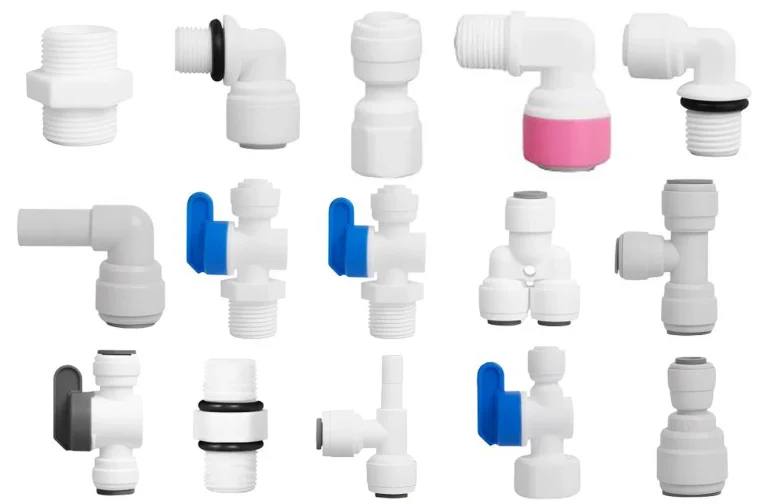
Quick Connect Fitting | Universal 1/4″ and 3/8″ RO Water Filter Parts
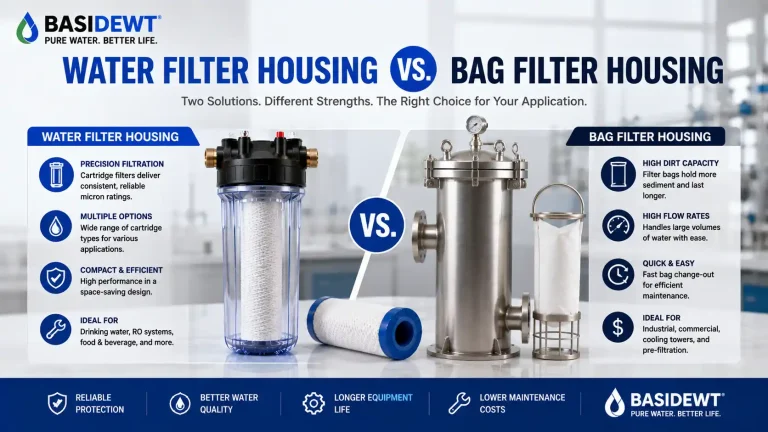
Water Filter Housing vs Bag Filter Housing: What’s the Difference?
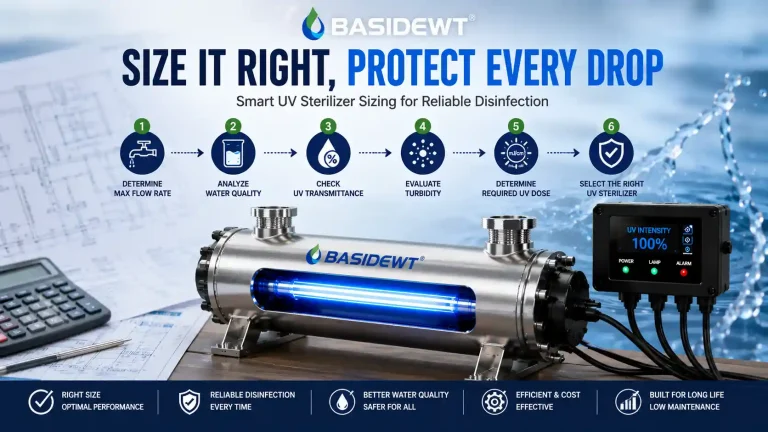
How to Size a UV Water Sterilizer for Your Water System
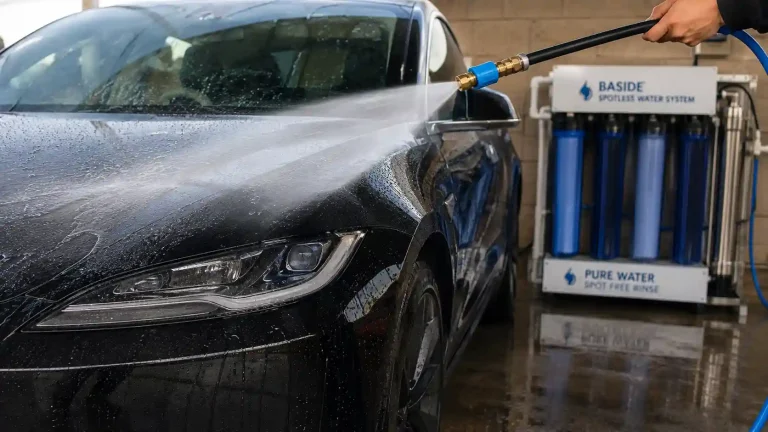
Spotless Water System Guide: End Water Spots for Good
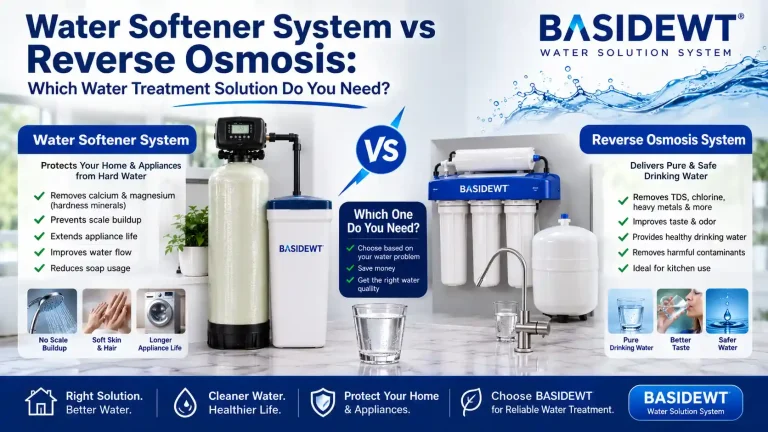
Water Softener System vs Reverse Osmosis: Which Water Treatment Solution Do You Need?