BasideWT- Whole Home Water Filtration System & Replacement


RO Membrane Troubleshooting: Low Flow, High TDS & Common Problems
RO membrane troubleshooting starts with one question: is the drop in performance coming from the membrane itself, or from something upstream? Most RO systems that produce slow water, high permeate TDS, or poor rejection are not actually failing because of a defective membrane. In many cases, the real cause is a blocked prefilter, low feed pressure, cold water, or scale building up on the membrane surface.
This guide walks through the most common RO membrane problems in a practical, step-by-step way. You will learn how to read the symptoms, what to check first, and how to decide whether the membrane needs cleaning, adjustment, or replacement.
What RO Membrane Troubleshooting Involves
RO membrane troubleshooting is the process of identifying why a reverse osmosis membrane is producing less water, letting through more dissolved solids, or performing inconsistently. It relies on comparing feed-water conditions with permeate results.
Three measurements matter most:
- Permeate flow rate – how much water the membrane produces in a given time.
- Permeate TDS – the dissolved solids remaining in the treated water.
- Rejection percentage – how effectively the membrane blocks dissolved salts.
A healthy membrane keeps these three values within a predictable range. When one of them shifts, it points toward a specific category of problem: pressure, fouling, scaling, temperature, or membrane age.
Quick Troubleshooting Checklist
Before diving into a full diagnosis, run through this shortlist. It resolves a large share of everyday complaints.
- Confirm feed-water pressure meets the membrane’s minimum requirement.
- Check that the feed-water temperature is not unusually cold.
- Inspect and replace clogged sediment or carbon prefilters.
- Compare current permeate TDS with the reading taken when the membrane was new.
- Look for leaks around the membrane housing and fittings.
- Verify the membrane model and size match the system it is installed in.
- Note how long the membrane has been in service.
If pressure, temperature, and prefilters all check out, the issue is more likely tied to fouling, scaling, or membrane age rather than a simple adjustment.
RO Membrane Low-Flow Problems
Why is my RO membrane producing water slowly?
Low RO membrane flow is usually caused by insufficient feed pressure, cold feed water, a clogged prefilter, or fouling on the membrane surface that restricts water movement through it.
Common Causes of Low Flow
Slow permeate production rarely has a single cause. It typically develops from one or more of the following:
- Reduced feed pressure. RO membranes need adequate applied pressure to overcome osmotic pressure and push water through. If supply pressure drops, output drops with it.
- Cold feed water. Lower temperatures increase water viscosity, which reduces permeate flow even when pressure is normal.
- Prefilter blockage. A saturated sediment or carbon prefilter starves the membrane of feed water, lowering pressure at the membrane inlet.
- Membrane fouling. Particles, colloids, or organic matter coating the membrane surface reduce the effective filtration area.
- Scaling. Mineral deposits, especially calcium carbonate, physically block the membrane’s active layer.
- Membrane age. Membranes naturally lose some flow capacity over years of normal use, even with good maintenance.
How to Check Low Flow
Measure permeate output over a fixed time period, such as one minute, and compare it against the membrane’s rated capacity under similar pressure and temperature conditions. Feed pressure directly affects how much water crosses the membrane, and when pressure is too low relative to feed TDS, the driving force pushing water through the membrane simply is not strong enough to maintain normal output.
If the pressure and temperature are within the expected range and flow is still low, the restriction is likely physical. Check the prefilters first, since they are the easiest and cheapest item to rule out. For a closer look at how pressure and feed temperature influence membrane output, this guide on RO membrane pressure and temperature requirements breaks down the ideal operating ranges.
Corrective Actions for Low Flow
| Cause | Corrective Action |
|---|---|
| Low feed pressure | Check booster pump function, supply line restrictions, and valve settings |
| Cold feed water | Allow for reduced output in winter; avoid assuming membrane failure |
| Clogged prefilter | Replace sediment and carbon prefilters on schedule |
| Fouling | Clean the membrane following manufacturer-recommended procedure |
| Scaling | Clean with an appropriate scale-removal solution, then reassess |
| Membrane age | Compare flow against baseline; plan replacement if decline continues |
RO Membrane High-TDS Problems
Why is RO permeate TDS high?
High permeate TDS usually means the membrane’s rejection layer has been damaged, fouled, or bypassed, allowing more dissolved salts to pass through than the membrane’s design specification allows.
How to Interpret TDS Readings
Total dissolved solids readings only mean something when compared correctly. Always measure two values at the same time:
- Feed-water TDS – the TDS of the water entering the membrane.
- Permeate TDS – the TDS of the water coming out of the membrane.
A rising permeate TDS number by itself is not proof of a problem if the feed-water TDS has also risen, for example after a seasonal change in the water source. Readings should also be taken under consistent conditions, since the concentration of dissolved solids directly at the membrane surface is naturally higher than in the bulk feed water, an effect explained in more depth in this overview of concentration polarization in membrane filtration. Understanding this effect helps explain why two TDS readings taken under different conditions are not always directly comparable.
How to Compare Feed TDS and Permeate TDS
Use this simple formula to calculate rejection percentage:
Rejection (%) = [(Feed TDS − Permeate TDS) / Feed TDS] × 100
For example, if feed water measures 300 ppm and permeate measures 15 ppm, rejection is roughly 95%. A meaningful drop from the membrane’s rated rejection, even if permeate TDS still seems “acceptable,” is worth investigating.
Common Causes of High Permeate TDS
- O-ring or seal damage in the membrane housing, allowing feed water to bypass the membrane and mix directly into permeate.
- Membrane surface damage, from chemical exposure, chlorine attack, or physical wear.
- Fouling or scaling, which increases concentration polarization at the membrane surface.
- Incorrect membrane installation, such as reversed flow direction or a poor seal fit.
- Membrane age, since rejection performance gradually declines even under normal conditions.
How to Check for High TDS Causes
Start by inspecting the membrane housing for visible leaks or water bypassing the seals. A small stream of water around the cap, rather than flowing only through the permeate tube, points to a seal problem rather than a membrane problem.
If the housing and seals look intact, remove the membrane and inspect the O-rings for cracking, flattening, or debris. Reinstall carefully, making sure the membrane is seated fully and facing the correct direction.
Poor Rejection Problems
Why has my RO membrane rejection dropped?
Rejection typically drops due to membrane fouling, scaling, chemical damage, physical wear, or normal aging. It can also appear to drop when feed-water TDS increases without a corresponding system adjustment.
Poor rejection is closely tied to permeate TDS, but it is worth treating as its own diagnostic step because rejection percentage accounts for changes in feed water that a raw TDS number does not. A membrane can show a stable permeate TDS reading while its actual rejection efficiency is quietly declining, simply because feed-water TDS happens to be lower that season.
For a full breakdown of what rejection rate means and realistic ways to improve it, see this guide on RO membrane rejection rate. It explains typical rejection ranges by membrane type, which is useful context before assuming a specific reading is abnormal.
Sudden vs Gradual Performance Decline
Distinguishing between sudden and gradual decline narrows down the likely cause considerably.
- Sudden performance decline often points to a physical event: a seal failure, a pressure spike, chemical exposure, or a membrane installed incorrectly during a recent service visit.
- Gradual performance decline typically reflects fouling, scaling, or normal membrane aging building up over weeks or months.
If performance dropped overnight or right after maintenance work, start by rechecking the installation and seals. If performance has been slipping slowly over several months, fouling, scaling, or age are more likely explanations.
Pressure and Temperature Problems
Feed pressure and water temperature affect flow rate, rejection, and how quickly a membrane fouls. Both are easy to overlook because they change gradually or seasonally.
Feed-Pressure Problems
Insufficient feed pressure reduces flow and can also reduce rejection, since the pressure differential across the membrane is part of what drives clean water through while leaving salts behind. Common pressure-related issues include:
- A failing or undersized booster pump
- Partially closed shut-off valves
- Restricted or kinked supply tubing
- Excessive pressure drop across upstream prefilters
Temperature Effects on Flow
Cold water is more viscous, which slows how quickly it moves through the membrane. This is a normal, expected effect and not a sign of membrane failure. Manufacturers typically rate membrane output at a reference temperature, often around 25°C (77°F), and actual output below that temperature will be lower even on a fully healthy membrane.
If a system consistently produces less water in winter and recovers in warmer months, temperature is very likely the explanation rather than a developing membrane problem.
Fouling and Scaling Problems
Fouling and scaling are two of the most common reasons for gradual RO membrane performance decline, and they are frequently confused with each other.
Sediment and Particulate Fouling
Sediment fouling happens when fine particles bypass the prefilters and accumulate on the membrane surface. It typically causes a steady decline in flow rather than a sudden change, and it usually develops alongside a worn or oversaturated sediment prefilter.
Organic and Biological Fouling
Organic matter or biological growth can coat the membrane surface, particularly in systems that sit idle for long periods or use feed water with elevated organic content. This type of fouling tends to reduce both flow and rejection together, since the fouling layer changes the water’s path across the membrane surface.
Scaling
Scaling occurs when dissolved minerals, most commonly calcium carbonate, precipitate onto the membrane surface as water is concentrated during the filtration process. Scaling is more likely in systems with:
- High feed-water hardness
- High recovery ratios that concentrate rejected salts more aggressively
- Insufficient or absent pretreatment for hardness
Scaling reduces flow first, then gradually affects rejection as the deposit thickens and interferes with the membrane’s separation layer.
Prefilter and Pretreatment Issues
Many symptoms that look like membrane failure are actually pretreatment failures. Because prefilters protect the membrane, a blocked or exhausted prefilter can starve the membrane of pressure and expose it to particles or chlorine it was never meant to handle directly.
How Poor Pretreatment Affects the Membrane
- Sediment prefilters that are not replaced on schedule allow particulate matter through, accelerating fouling.
- Exhausted carbon prefilters can allow chlorine to reach the membrane, which damages thin-film composite membranes over time.
- Undersized or poorly matched prefilters restrict flow before water ever reaches the membrane, lowering effective feed pressure.
How to Know Whether the Membrane or the Prefilter Is the Problem
How do I know whether the membrane or prefilter is the problem?
Check the prefilters first. If they are visibly dirty, discolored, or past their replacement interval, replace them and retest performance before assuming the membrane itself is at fault.
If flow and rejection recover after replacing prefilters, the membrane was likely healthy but starved of proper feed conditions. If performance stays low after fresh prefilters are installed and pressure is confirmed adequate, the problem is more likely with the membrane itself.
Membrane Installation and Compatibility Issues
Not every performance problem traces back to wear or fouling. Sometimes the membrane was never a correct match for the system, or it was installed incorrectly.
Incorrect Membrane Size or Model
Installing a membrane with the wrong GPD rating or physical dimensions for the housing can cause chronic low flow or inconsistent output, even when the membrane itself is undamaged. If a replacement was recently performed and problems appeared immediately afterward, double-check the membrane specification against the system’s original design. This RO membrane size guide is useful for confirming that a replacement membrane’s dimensions actually match the housing it was installed in.
Membrane Compatibility Problems
Compatibility issues can also involve flow restrictor mismatches, incorrect recovery ratios for the membrane’s design, or housings rated for a different membrane type. A mismatch here often shows up as a permanent limitation on flow or rejection rather than a decline over time.
Incorrect Operating Conditions
Operating a membrane outside its rated pressure, temperature, or pH range can shorten its working life and reduce rejection performance, even without visible fouling or scaling.
Membrane Housing and Seal Issues
Loose end caps, worn O-rings, or a cracked housing can allow feed water to bypass the membrane entirely. This produces a TDS reading that looks like a rejection failure but is actually a mechanical sealing problem.
Recovery and Concentration Polarization
Recovery ratio, the proportion of feed water converted into permeate, affects both scaling risk and rejection performance. Running a system at a higher recovery than it was designed for concentrates rejected salts more heavily at the membrane surface.
This concentrated layer near the membrane surface is known as concentration polarization. It matters because it widens the salt concentration difference across the membrane, raises the osmotic pressure the system has to overcome, and encourages scale and buildup to form on the membrane surface. In practical terms, this means systems pushed to unusually high recovery ratios are more prone to both scaling and reduced rejection over time.
How to Troubleshoot an RO Membrane Step by Step
A logical sequence prevents guesswork and avoids replacing a membrane that did not actually need it.
- Confirm the symptom. Is it low flow, high TDS, poor rejection, or a combination?
- Measure feed-water conditions. Record feed pressure, temperature, and feed TDS.
- Check pressure. Compare it against the membrane’s minimum operating requirement.
- Check temperature. Note whether readings were taken in unusually cold conditions.
- Check feed-water TDS. Confirm it has not shifted significantly since the last reading.
- Check permeate TDS. Calculate rejection percentage using the feed and permeate values.
- Check permeate flow. Compare current output against the membrane’s rated flow.
- Check prefilters and pretreatment. Replace any filters past their service interval.
- Check membrane installation and compatibility. Confirm correct model, orientation, and seal condition.
- Assess fouling or scaling. Look for a gradual decline pattern consistent with buildup.
- Consider cleaning. If fouling or scaling is suspected and the membrane is not near end of life.
- Determine whether replacement is necessary. Based on age, cleaning results, and physical condition.
This order works well for most residential and light commercial systems, but larger or custom-configured systems may need a different sequence depending on how pretreatment and pressure staging are designed.
Problem, Cause, Check, and Solution Table
| Problem | Possible Cause | How to Check | Corrective Action |
|---|---|---|---|
| Low flow | Low feed pressure | Measure feed pressure at membrane inlet | Address pump, valves, or supply restriction |
| Low flow | Clogged prefilter | Inspect prefilter condition and age | Replace prefilter, then retest |
| High permeate TDS | Seal or O-ring bypass | Inspect housing for leaks around seals | Replace O-rings, reseat membrane correctly |
| High permeate TDS | Membrane damage | Compare rejection percentage to rated spec | Clean if fouling is present; replace if damage confirmed |
| Poor rejection | Fouling or scaling | Review flow and TDS trend over time | Clean membrane using appropriate procedure |
| Sudden performance drop | Installation error or seal failure | Recheck recent maintenance work | Reinstall membrane correctly, replace damaged seals |
| Gradual performance drop | Aging membrane | Compare against historical baseline readings | Plan replacement if decline continues after cleaning |
| No permeate production | Severe blockage or pressure loss | Check supply, valves, and prefilters | Resolve blockage; inspect membrane once flow is restored |
| Reduced production despite normal pressure | Fouling, scaling, or cold feed water | Check temperature and inspect membrane surface indicators | Clean membrane or allow for temperature-related output drop |
When Cleaning Can Solve the Problem
Can an RO membrane be cleaned instead of replaced?
Yes, in many cases. Cleaning can restore flow and rejection when the underlying cause is fouling or scaling rather than physical damage or advanced age.
Cleaning tends to help when:
- Performance decline has been gradual, not sudden.
- The membrane is still within its expected service life.
- Feed water is known to have elevated hardness or sediment content.
- Flow has dropped noticeably, but rejection is only moderately affected.
Proper cleaning procedure, chemical selection, and safe handling matter for effective results. This RO membrane maintenance and cleaning guide covers the correct steps and precautions in detail.
When Cleaning Will Not Solve the Problem
Cleaning cannot repair a membrane that has suffered physical or chemical damage. It also will not correct a mismatch between the membrane and the system it is installed in.
Cleaning is unlikely to help when:
- The membrane has been exposed to chlorine or oxidizing chemicals beyond its tolerance.
- The membrane’s rejection layer has been physically compromised.
- Performance dropped suddenly right after installation, pointing to a mechanical or compatibility issue rather than buildup.
- The membrane is already well past its typical service life and has been cleaned previously without lasting improvement.
When to Replace the RO Membrane
When should an RO membrane be replaced?
Replacement is appropriate when cleaning fails to restore acceptable flow and rejection, when the membrane has reached the end of its typical service life, or when there is confirmed physical or chemical damage.
What Should Be Checked Before Replacing an RO Membrane
Before ordering a replacement, confirm the problem truly sits with the membrane rather than an upstream component:
- Prefilters are fresh and correctly sized.
- Feed pressure meets the manufacturer’s minimum requirement.
- Housing seals and O-rings show no visible damage.
- Feed-water TDS has been accounted for in any rejection calculation.
- Cleaning has already been attempted, where appropriate, without lasting improvement.
If all of these check out and performance remains poor, replacement is the reasonable next step. For guidance on typical service life expectations, this article on how long an RO membrane lasts outlines realistic lifespan ranges under different water conditions. When it is time to move forward, this RO membrane replacement guide walks through the correct replacement procedure.
For readers who want a broader refresher on membrane types, sizing, and how these components work together, the RO membrane buying and working guide provides useful background context.
Common Troubleshooting Mistakes
Avoiding these mistakes saves time and prevents unnecessary membrane replacements.
- Replacing the membrane before checking prefilters. Many low-flow complaints trace back to a simple prefilter issue.
- Ignoring feed-water TDS when judging permeate TDS. A permeate reading means little without a matching feed-water measurement.
- Assuming winter slowdowns mean membrane failure. Cold water naturally reduces flow.
- Skipping pressure checks. Pressure problems are common and easy to overlook.
- Cleaning a membrane that is already physically damaged. Cleaning cannot repair torn or chemically damaged membrane material.
- Not tracking baseline performance. Without an initial flow and TDS reading, later comparisons become guesswork.
Practical Troubleshooting Checklist
Use this checklist as a final review before deciding on next steps.
- Feed pressure has been measured and meets minimum requirements.
- Feed-water temperature has been noted and considered.
- Prefilters are within their service interval and visually clean.
- Feed-water TDS and permeate TDS have both been measured together.
- Rejection percentage has been calculated, not just estimated.
- Housing seals and O-rings have been inspected for leaks or bypass.
- Membrane model and orientation have been confirmed correct.
- Performance decline pattern (sudden vs gradual) has been identified.
- Cleaning has been considered where fouling or scaling is suspected.
- Membrane age has been checked against typical service life.
Conclusion
RO membrane troubleshooting is largely a process of elimination. Low flow, high permeate TDS, and poor rejection can all stem from the membrane itself, but just as often the real cause is pressure, temperature, a tired prefilter, or a loose seal.
Working through the checks in order, starting with pressure and pretreatment before assuming membrane failure, keeps the diagnosis accurate and avoids unnecessary replacement costs. Cleaning can restore performance when fouling or scaling is the cause, while physical damage, chemical exposure, or advanced age point toward replacement instead.
When in doubt, compare current readings against the membrane’s original baseline performance, and don’t hesitate to seek a professional technical assessment for persistent or unclear problems. A methodical approach to RO membrane troubleshooting protects both water quality and the lifespan of the system as a whole.
RELATED POSTS
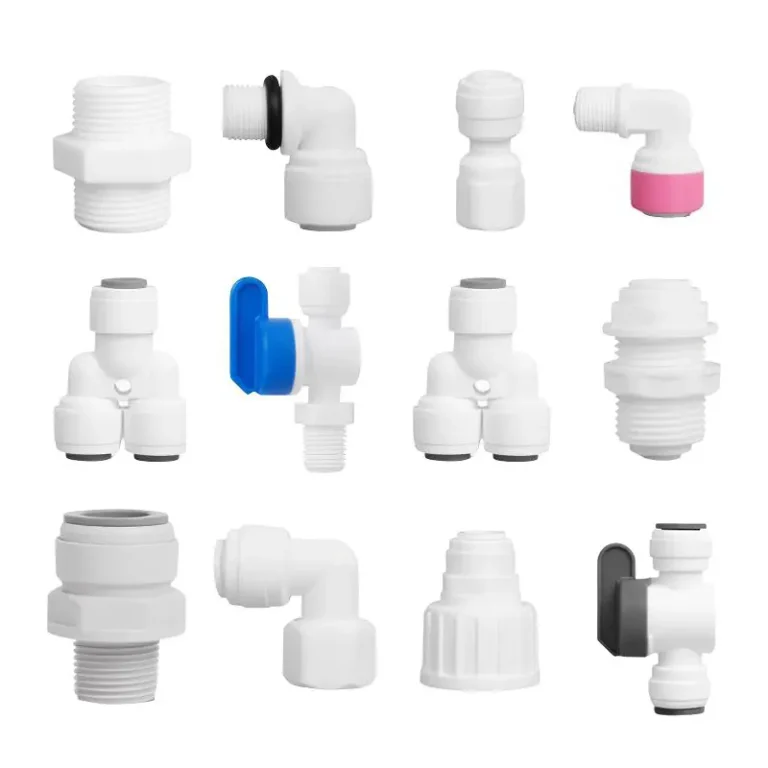
Water Purifier Quick Connector RO Purifier System Water Filter Joint Accessory
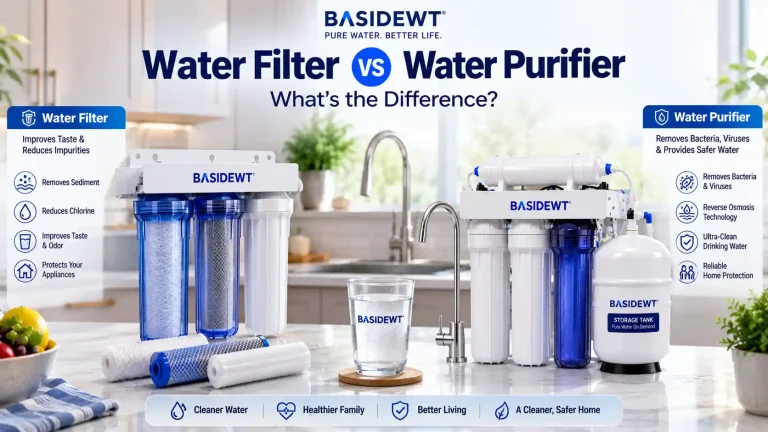
Water Filter vs Water Purifier: What’s the Difference?
How Flow Rate Affects UV Dose and Disinfection Performance
DI Water System For Window Cleaning
How Long Does Pur Water Filter Last?