BasideWT- Whole Home Water Filtration System & Replacement


RO Membrane for Well Water: Selection, Performance & Maintenance Guide
Yes, an RO membrane can treat well water. But well water is not the same as municipal water, and it will not always behave the same way inside a reverse osmosis system.
Before you choose an RO membrane for well water, you need to check a few things first: your feed water’s TDS, hardness, iron and manganese levels, sediment load, and available pressure. These factors decide whether a standard membrane will work, or whether your well needs pretreatment first.
This guide explains what actually matters when selecting and maintaining an RO membrane for well water. It covers water quality factors, pretreatment needs, sizing, expected performance, and long-term care. The goal is simple: help you choose a membrane that will actually perform well with your specific well water, not just any membrane that fits the housing.
Why Well Water Needs Different RO Membrane Considerations
Municipal water is treated and monitored before it reaches your tap. Well water is not.
Groundwater picks up minerals, gases, and particles as it moves through soil and rock. That means well water can carry higher hardness, more dissolved iron, more sediment, and less predictable water chemistry than a city supply.
An RO membrane itself works the same way regardless of the water source. It uses pressure to push water through a semi-permeable barrier, rejecting dissolved solids and letting purified water pass through as permeate. What changes with well water is the condition of the water hitting that membrane.
A membrane fed with untreated, high-fouling well water will lose performance faster than the same membrane fed with clean, pretreated water. This is why well-water systems usually need more attention to pretreatment, sizing, and monitoring than a typical city-water RO setup.
Well-Water Quality Factors That Affect Membrane Performance
Several water quality factors directly influence how an RO membrane performs on well water. Testing your water before buying a membrane is the single most useful step you can take.
The table below summarizes the main factors and how each one affects membrane performance.
| Well-Water Factor | Effect on RO Membrane |
|---|---|
| High TDS | Increases pressure needed; reduces permeate flow and rejection efficiency |
| Hardness (calcium, magnesium) | Causes scaling on membrane surface, reducing flow over time |
| Iron and manganese | Oxidize and foul the membrane surface, often within weeks if untreated |
| Sediment and turbidity | Clogs pre-filters quickly; can damage membrane surface if it bypasses filtration |
| Silica | Forms hard, difficult-to-clean scale at high concentrations |
| Organic matter (tannins) | Contributes to organic fouling and can stain membrane elements |
| Microbial contamination | Can cause biofouling and biofilm growth inside the membrane |
| Low feed pressure | Reduces permeate output and can lower overall rejection rate |
| Water temperature | Colder water reduces permeate flow; warmer water increases flow but may affect membrane life |
TDS and Rejection Rate
Total dissolved solids (TDS) is usually the first number people check. Well water can range from under 200 ppm to well above 1,000 ppm, depending on geology and depth.
Higher TDS means the membrane has to work harder to reject dissolved salts. Most residential RO membranes are rated for feed water up to around 2,000 ppm TDS, though this varies by model. If your well water tests significantly higher, you may need a membrane specifically rated for high-TDS or brackish water applications, along with a booster pump to maintain adequate pressure.
Membrane rejection rate describes the percentage of dissolved solids the membrane blocks from passing through. A membrane rated at 99% rejection under standard test conditions will typically perform close to that with clean, properly pretreated feed water. Actual rejection in the field depends on feed TDS, pressure, temperature, and membrane condition, so treat published rejection numbers as reference points, not guarantees. For more detail on how rejection is measured and what affects it, this guide on RO membrane rejection rate and how to improve it explains the topic further.
Hardness and Scaling Risk
Hardness minerals, mainly calcium and magnesium, concentrate on the reject side of the membrane as water passes through. Over time, this concentration can exceed the solubility limit and form scale on the membrane surface.
Scaling reduces permeate flow and can permanently damage membrane performance if left unaddressed. Well water with hardness above roughly 7 grains per gallon (about 120 mg/L) often benefits from water softening before the RO stage, especially in areas with naturally hard groundwater.
Iron, Manganese, and Fouling
Iron and manganese are common in well water, particularly from deeper wells. When dissolved iron contacts oxygen, it oxidizes into a solid form that can coat and clog membrane surfaces.
Even relatively low iron levels can cause fouling problems if left untreated, because iron deposits build up gradually and are not always easy to reverse with standard cleaning. Manufacturer feed-water guidelines typically recommend keeping iron below a low threshold, often under 0.1 mg/L at the membrane inlet, though exact limits vary by membrane model. This is one of the clearest cases where pretreatment is not optional for well-water RO systems.
Sediment, Turbidity, and Silica
Sediment and turbidity are usually the easiest issues to manage, but they still need attention. Fine sand, silt, and clay particles can clog pre-filters rapidly and, if they bypass filtration, scratch or foul the membrane surface directly.
Silica is a less common but more stubborn issue. At higher concentrations, silica can form a hard scale that resists standard cleaning chemicals. Wells in certain geological areas naturally run higher in silica, so it is worth testing for if your membrane shows declining performance despite otherwise clean water.
Does Well Water Damage RO Membranes?
Well water does not damage RO membranes by default. Damage happens when untreated contaminants, such as iron, sediment, or excessive hardness, are allowed to reach the membrane without proper pretreatment.
A properly pretreated well-water system, matched to a suitable membrane, can perform reliably for years. The risk comes from skipping water testing or pretreatment, not from using well water itself.
Do You Need Pretreatment Before RO for Well Water?
In most cases, yes. Well water almost always benefits from some level of pretreatment before it reaches the RO membrane.
Pretreatment protects the membrane from the contaminants most likely to cause fouling or scaling. The right combination depends on your specific water test results, not a one-size-fits-all setup.
Common Pretreatment Steps for Well-Water RO Systems
- Sediment filtration to remove sand, silt, and rust particles before they reach finer filters or the membrane.
- Carbon filtration to reduce chlorine (if used for well disinfection), some organics, and improve taste.
- Water softening to reduce hardness and lower scaling risk on the membrane.
- Iron and manganese treatment using oxidation-filtration or specialized media when levels exceed safe thresholds.
- Antiscalant dosing in some commercial setups, to help control scale formation at higher recovery rates.
The table below matches common well-water issues to their typical pretreatment solution.
| Well-Water Issue | Recommended Pretreatment |
|---|---|
| Sediment or turbidity | Sediment filter cartridge or whole-house sediment filter |
| Chlorine or basic organics | Carbon filtration stage |
| Hardness above 7 GPG | Water softener before the RO unit |
| Iron or manganese present | Oxidation-filtration or dedicated iron/manganese filter |
| High silica or complex scaling risk | Antiscalant dosing, professional system design |
A properly sized sediment water filter cartridge is often the first line of defense in a well-water setup, since it protects downstream stages from particulate buildup. For wells with heavier sediment loads, a whole house sediment water filter can handle higher flow rates before water reaches the RO stage.
If hardness testing shows elevated calcium and magnesium, pairing your membrane with a water softener system reduces scaling risk significantly. Larger properties or commercial wells sometimes need the higher capacity of an industrial water softening system to keep up with demand.
For a broader explanation of how pretreatment stages fit together with the membrane itself, this guide on types of RO membranes and how to choose the right type is a useful next step.
Feed-Water Pressure and Temperature: Why They Matter
RO systems rely on pressure to push water through the membrane against natural osmotic pressure. Well-water systems often use pressure tanks and pumps, so available pressure can vary more than a municipal supply.
Low feed pressure reduces permeate output and can also lower the effective rejection rate, since the membrane needs adequate pressure differential to reject dissolved solids efficiently. Most residential RO membranes are designed to operate within a specific pressure range, often between 40 and 80 psi, though this varies by model and application.
Temperature also plays a role. Colder well water, common with deep wells or winter conditions, reduces permeate flow because water viscosity increases at lower temperatures. This is a normal characteristic of RO membranes, not a sign of malfunction. For a deeper look at how pressure and temperature interact with membrane output, this guide on RO membrane pressure requirements, PSI, and temperature covers the relationship in more detail.
Checking incoming pressure with a pressure gauge before and after installation helps confirm the system is receiving adequate feed pressure for the membrane to perform as expected.
What RO Membrane Is Best for Well Water?
There is no single “best” membrane for every well. The right choice depends on your water test results, household or facility demand, and available pressure.
That said, a few general principles apply:
- Match rejection rate to your TDS. Higher TDS wells generally need membranes with strong rejection performance and, in some cases, higher operating pressure capability.
- Choose adequate GPD capacity. Sizing too small leads to slow output; oversizing without matching storage or demand wastes water and adds unnecessary cost.
- Confirm pretreatment compatibility. A membrane is only as good as the water reaching it. Pair your membrane choice with pretreatment suited to your specific well-water issues.
- Consider residential vs. commercial needs. Higher-demand applications may require larger membrane formats and different housing configurations.
Choosing Membrane Capacity (GPD) for Well Water
GPD, or gallons per day, describes a membrane’s rated production capacity under standard test conditions. Well-water systems often produce somewhat less than the rated GPD in practice, because feed pressure, temperature, and TDS levels differ from lab test conditions.
When sizing a membrane for well water, it helps to size slightly above your calculated daily demand rather than exactly matching it. This gives the system margin for the lower pressure and cooler temperatures common with well supplies. For a full breakdown of what GPD ratings actually mean, this article on what 50, 75, 100, and 200 GPD mean for an RO membrane is a helpful reference, along with this comparison of 50 GPD vs. 75 GPD vs. 100 GPD membranes.
Membrane Size and Model Considerations
Residential systems commonly use compact membrane sizes, while whole-house and commercial well-water applications typically require larger elements. Matching membrane size to housing and system design is essential; an incorrectly sized membrane will not seat or seal properly, regardless of its specifications.
For homeowners exploring a dedicated system built for well water, a well water reverse osmosis system is designed with these feed-water variables already factored into the configuration. Businesses and larger properties with higher daily demand may find a commercial RO water filter system better suited to consistent, higher-volume production.
If you are still comparing membrane physical sizes and models, this size guide covering 1812, 2012, 2812, 3012, and 3013 formats explains how format affects both capacity and housing compatibility.
Residential vs. Commercial Well-Water RO Applications
Residential and commercial well-water systems share the same core technology, but their demands differ significantly.
| Consideration | Residential Well-Water RO | Commercial Well-Water RO |
|---|---|---|
| Typical daily demand | Lower, household-scale usage | Higher, continuous or high-volume usage |
| Membrane size | Smaller, compact elements | Larger elements, sometimes multiple in series |
| Pretreatment complexity | Simpler, often single or dual stage | Often multi-stage, sometimes with dosing systems |
| Monitoring needs | Periodic checks | Regular monitoring, sometimes with flow and pressure logging |
| Downtime tolerance | More flexible | Often requires redundancy or backup capacity |
If your application sits closer to the commercial side, this comparison of residential vs. commercial RO membranes explains the practical differences in more depth. Larger commercial installations often also benefit from a 8040 reverse osmosis membrane, which provides higher throughput than standard residential elements.
For general-purpose well-water setups closer to household scale, options like a 4040 RO membrane or a 3013 RO membrane are common starting points, depending on housing configuration and required output.
When a Standard RO Membrane May Not Be Suitable
Not every well is a good candidate for a standard residential RO membrane without modification. Consider a specialized approach if any of the following apply:
- Feed-water TDS consistently exceeds the membrane manufacturer’s rated maximum.
- Iron or manganese levels remain high even after basic filtration.
- Available feed pressure is consistently below the membrane’s minimum operating requirement.
- Water contains high silica levels alongside other scaling minerals.
- The well shows inconsistent water quality across seasons, requiring more robust pretreatment design.
In these situations, a system evaluation, sometimes including a booster pump, additional pretreatment stages, or a higher-capacity membrane, is usually more effective than swapping to a different standard membrane and hoping for better results.
Monitoring Performance: What Healthy Output Looks Like
Once installed, a few key indicators help confirm your RO membrane is performing as expected on well water.
- Permeate flow rate should remain relatively stable under consistent feed pressure and temperature. Gradual decline often signals fouling or scaling.
- TDS of the permeate should stay meaningfully lower than feed TDS. A rising permeate TDS over time can indicate declining rejection performance.
- Feed pressure vs. output should follow expected ratios based on the membrane’s specification sheet. Needing progressively higher pressure to maintain the same output is a common early sign of fouling.
A basic TDS meter for water testing is one of the simplest tools for tracking rejection performance over time, and a water flow meter helps track output trends that might otherwise go unnoticed.
Understanding the underlying mechanisms behind fouling and scaling can also help you interpret these changes correctly; this technical review of membrane fouling categories and cleaning approaches breaks down how different foulant types affect membrane behavior differently.
RO Membrane Maintenance for Well-Water Systems
Well-water RO systems generally need more consistent maintenance attention than municipal-water systems, simply because feed-water variability is higher.
Routine Maintenance Practices
- Replace sediment and carbon pre-filters on schedule, since well water often loads these filters faster than treated municipal supplies.
- Monitor permeate flow and TDS periodically to catch early signs of fouling or scaling.
- Flush the membrane according to manufacturer guidance to help reduce concentration buildup at shutdown.
- Inspect pretreatment equipment, such as softeners or iron filters, to confirm they are functioning correctly.
For a complete walkthrough of ongoing care practices, this guide on RO membrane maintenance, cleaning, and storage covers the process in detail.
Cleaning Considerations for Well-Water Fouling
Cleaning frequency for well-water systems depends heavily on feed-water quality and pretreatment effectiveness. Systems with consistent, well-controlled pretreatment may need cleaning only occasionally. Systems without adequate pretreatment may require much more frequent cleaning, and repeated fouling often points to a pretreatment gap rather than a membrane defect.
Iron fouling, in particular, does not always respond well to standard cleaning chemicals if allowed to build up over time. This is another reason why addressing iron before the membrane stage is usually more effective than trying to clean it away afterward.
Replacement Indicators for Well-Water RO Membranes
Membranes do not last indefinitely, and well-water conditions can shorten service life if pretreatment is inconsistent. Watch for these signs that replacement may be needed:
- Permeate flow has dropped significantly despite normal feed pressure and clean pre-filters.
- Permeate TDS has risen well above your system’s typical baseline.
- Cleaning no longer restores performance to an acceptable level.
- The membrane is well past its typical service interval for your water conditions.
Membrane lifespan varies widely based on feed-water quality, so a well-maintained system with good pretreatment often lasts considerably longer than one without it. This guide on how long an RO membrane lasts and what affects lifespan explains the variables in more depth, and this article on when and how to replace an RO membrane walks through the replacement process itself.
When it is time to replace, choosing a compatible RO membrane replacement that matches your original specifications helps maintain consistent system performance.
Troubleshooting Common Well-Water RO Problems
Well-water systems tend to show a recognizable set of problems when something goes wrong. The table below outlines common symptoms, likely causes, and practical next steps.
| Problem | Possible Cause | Suggested Solution |
|---|---|---|
| Declining permeate flow | Scaling or fouling buildup | Check pretreatment, clean or replace membrane |
| Rising permeate TDS | Membrane fouling or seal issue | Inspect O-rings, test rejection, consider cleaning |
| Frequent pre-filter clogging | High sediment or iron load | Upgrade sediment filtration, add iron treatment |
| Inconsistent output | Fluctuating well pressure | Check pump, consider a booster pump or pressure tank |
| Rusty or discolored filters | Untreated iron in feed water | Add oxidation-filtration or dedicated iron removal |
If problems persist despite these checks, a full troubleshooting review is often more efficient than replacing individual components one at a time. This guide on RO membrane troubleshooting for low flow and high TDS walks through a more systematic diagnostic approach.
Practical Selection Checklist for Well-Water RO Membranes
Before purchasing, confirm the following:
- Test your well water for TDS, hardness, iron, manganese, and sediment levels.
- Compare results against membrane feed-water guidelines for the models you’re considering.
- Plan pretreatment based on your specific test results, not assumptions.
- Size the membrane to your realistic daily demand, with margin for pressure and temperature variation.
- Confirm available feed pressure meets the membrane’s minimum operating requirement.
- Choose residential or commercial format based on actual usage patterns, not just budget.
- Plan for ongoing monitoring, including basic TDS and flow tracking after installation.
If softening is part of your pretreatment plan, this cost breakdown on how much a water softener typically costs can help with budgeting alongside your membrane purchase.
Purchasing Considerations for Well-Water RO Membranes
When comparing suppliers, look beyond price alone. Confirm the membrane’s rated rejection performance, feed-water tolerance, and compatibility with your existing or planned housing. A properly matched RO membrane housing ensures the element seats correctly and seals under operating pressure, which matters as much as the membrane itself for long-term performance.
For those still comparing overall membrane categories before narrowing down a specific model, the full range of RO membranes offers a starting point to compare capacity, size, and application fit side by side.
Conclusion
An RO membrane can absolutely work with well water, but success depends on matching the membrane to your actual water conditions, not just picking a popular model.
Start with a water test. Check TDS, hardness, iron, manganese, and sediment levels before choosing a membrane. Build pretreatment around what your test results actually show, since well water rarely performs well with an RO membrane on its own. Size the membrane with realistic pressure and temperature conditions in mind, and set up basic monitoring so you catch fouling or scaling early rather than after performance has already dropped.
Selecting the right RO membrane for well water is less about finding a single “best” product and more about matching membrane specifications, pretreatment, and sizing to your specific water. Get those three factors right, and a well-water RO system can deliver consistent, reliable performance for years.
RELATED POSTS
DI Water for Car Washing: The Ultimate Guide to Perfect, Spot-Free Drying
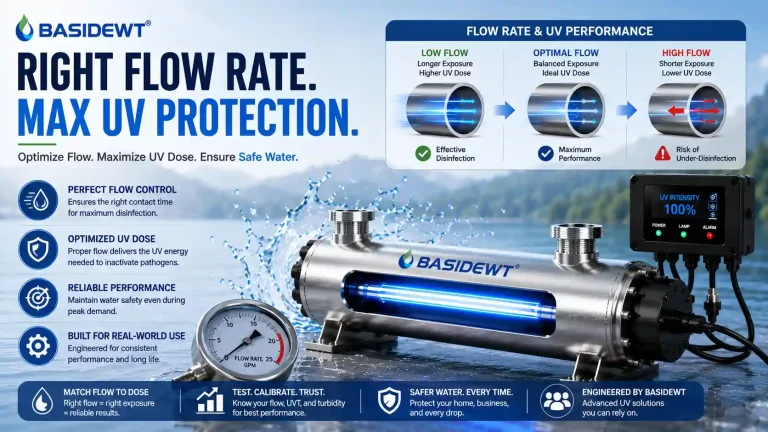
UV Water Sterilizer Flow Rate: How to Calculate and Optimize Performance
Whole House Reverse Osmosis System: Complete Buyer’s Guide for Clean Water at Home

Spot Free Rinse vs Hand Drying: Which One Actually Protects Your Finish?

Is Reverse Osmosis Water Good for You? A Complete Guide to RO Water Benefits and Safety