BasideWT- Whole Home Water Filtration System & Replacement

How to Choose the Right Deionized Water System for Your Business
How to Choose the Right Deionized Water System is one of the most important decisions for any business that relies on high-quality water treatment. Choosing the wrong system can increase operating costs, reduce efficiency, and create long-term maintenance challenges. Whether you need a DI system for manufacturing, laboratories, pharmaceuticals, or commercial cleaning, selecting the right solution starts with understanding your water quality requirements and production goals.
This guide explains how to choose the right deionized water system by covering the key factors to evaluate, common buying mistakes to avoid, and the questions you should ask before making a purchase. If you’re new to the technology, our guide on What Is a Deionized Water System provides a helpful introduction before exploring the buying process.
Why Choosing the Right DI Water System Matters
Water treatment equipment represents a long-term investment. A poor match between system capacity and actual demand creates problems that surface months, sometimes years, after installation.
Undersized systems struggle to keep pace with production, forcing frequent resin regeneration and shortened equipment life. Oversized systems, on the other hand, tie up capital that could go toward other priorities.
Beyond sizing, purity mismatches cause their own headaches. A laboratory that installs commercial-grade equipment may find its water doesn’t meet analytical standards. A car wash that installs lab-grade equipment pays for purity it doesn’t need.
Getting this decision right from the start saves money and prevents operational disruptions down the road.
Factors to Consider Before Buying
Several variables shape which system fits your business best. Reviewing each one carefully avoids costly guesswork.
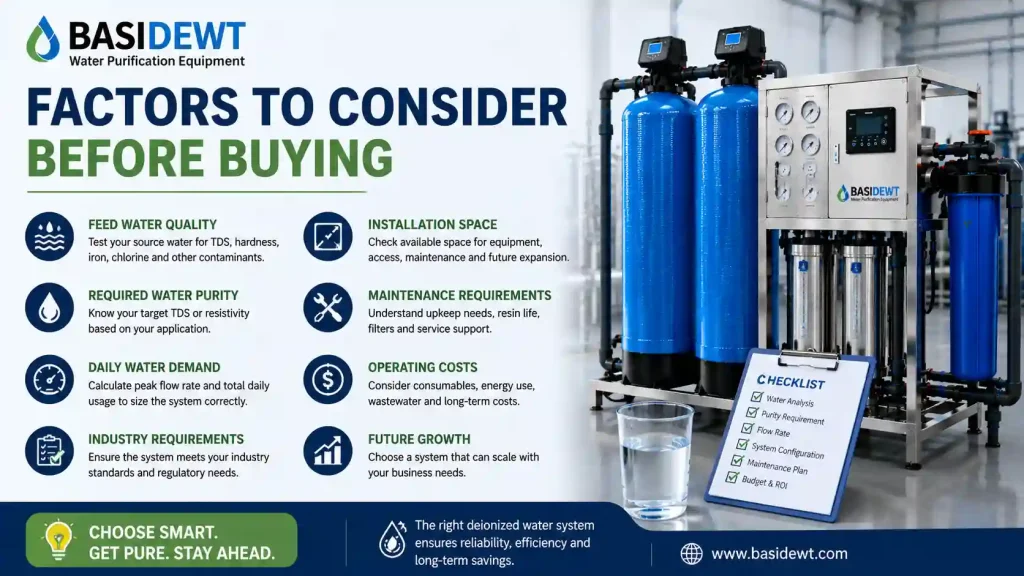
Feed Water Quality
Source water varies significantly depending on location and municipal treatment practices. Hard water with high mineral content places extra strain on resin, shortening its usable life.
Before selecting equipment, test your feed water for hardness, TDS, and common contaminants like iron or chlorine. This data determines what pretreatment stages you’ll need and how large your resin tanks should be.
Facilities relying on well water or groundwater often face more variability than those on municipal supply, making regular testing even more important.
Required Water Purity
Purity requirements differ enormously between industries. Semiconductor manufacturing needs resistivity levels far beyond what a commercial car wash requires.
Define your purity target early, whether that’s measured in resistivity, conductivity, or TDS. This single decision influences almost every other choice in your system design, from resin type to the number of treatment stages.
Daily Water Demand
Flow rate and daily volume determine tank sizing and resin capacity. A laboratory using a few liters per day has very different needs than a manufacturing plant running continuous production shifts.
Calculate peak demand, not just average daily usage. Systems sized only for average use often struggle during high-demand periods, leading to inconsistent water quality when it matters most.
Industry Requirements
Some industries operate under regulatory standards that dictate water quality directly. Pharmaceutical production, for example, follows strict purity and monitoring requirements that shape equipment selection.
Even without formal regulation, industry norms matter. Electronics manufacturers typically expect resistivity close to theoretical maximums, while food and beverage producers balance purity against taste and mineral content.
Installation Space
Physical space constraints affect which system configuration makes sense. Compact commercial units suit businesses with limited utility room space, while industrial operations often have room for larger, multi-stage setups.
Consider not just the footprint of the equipment itself, but also space needed for maintenance access, resin tank swaps, and pretreatment components like carbon filters or RO membranes.
Maintenance Requirements
Every DI system needs ongoing maintenance, but the intensity varies by design. Some setups require frequent resin replacement, while others use larger tanks or dual-bed configurations that extend service intervals.
Think about who will handle maintenance day to day. Facilities without dedicated water treatment staff may prefer systems with simpler monitoring and longer service intervals, even if the upfront cost runs slightly higher.
Our Deionized Water System Maintenance guide covers what ongoing upkeep typically involves, which is worth reviewing before finalizing your purchase.
Different Types of Deionized Water Systems
DI systems generally fall into a few common configurations, each suited to different needs.
Cation and anion exchange systems use separate tanks for positive and negative ion removal. This setup works well for applications that don’t require the highest purity levels.
Mixed bed systems combine cation and anion resins in a single tank, producing higher purity output. Laboratories and electronics manufacturers often favor this configuration for its consistent water quality.
Portable or cartridge-style DI systems suit smaller applications, like window cleaning or benchtop lab use, where flow demand stays relatively low. Larger operations typically move toward skid-mounted or centralized systems that support continuous, high-volume production.
Understanding the ion-exchange process behind these configurations makes comparison easier. Our article on How Does a Deionized Water System Work breaks down the mechanics in plain terms.
Should You Choose RO + DI or DI Only?
This is one of the most common questions buyers face, and the answer depends largely on feed water quality and purity targets.
DI-only systems work fine for applications with relatively clean feed water and moderate purity requirements. However, resin exhausts faster when it has to remove a heavy mineral load on its own.
Combining reverse osmosis with deionization addresses this directly. RO removes the bulk of dissolved solids before water ever reaches the resin tank, significantly extending resin life and reducing regeneration frequency.
For most industrial and commercial applications, especially those with hard or variable feed water, RO-DI combinations offer better long-term value despite a higher upfront cost. Our detailed comparison, Deionized Water vs Reverse Osmosis Water, walks through this decision in more depth.
Common Buying Mistakes to Avoid
A few recurring mistakes lead buyers toward equipment that doesn’t fit their actual needs.
Choosing based on price alone often backfires. Cheaper systems may lack proper pretreatment, leading to higher long-term resin costs that outweigh initial savings.
Ignoring future growth is another common misstep. A system sized exactly for current demand leaves no room for expansion, forcing an early upgrade if production scales up.
Skipping feed water testing before purchase also causes problems. Without accurate water quality data, sizing decisions become guesswork, often resulting in systems that underperform once installed.
Finally, some buyers overlook resin selection entirely, assuming all resin performs the same. In reality, resin type and grade directly impact both water quality and how often replacement becomes necessary. This guide on industrial ion exchange resin tank selection explains that contaminant chemistry, salinity, and water volume should all factor into resin and vessel choice, since these variables directly affect long-term system performance.
Questions to Ask Your Supplier Before Purchasing
A good supplier should be able to answer these questions clearly, without vague reassurances.
- What feed water quality assumptions does this system design rely on?
- What flow rate and daily capacity does the system support at rated purity?
- Does the design include adequate pretreatment for our specific water source?
- What resin type is recommended, and how often will it need replacement?
- How is water quality monitored, and what happens if readings drift?
- Can the system scale if production volume increases later?
- What ongoing maintenance and service support is available after installation?
Suppliers who welcome these questions, rather than deflecting them, tend to offer more reliable long-term partnerships.
Final Thoughts
Working through How to Choose the Right Deionized Water System comes down to matching equipment to your actual water quality, volume, and industry requirements, not just picking the most affordable option on paper.
Feed water testing, realistic capacity planning, and honest conversations with suppliers all reduce the risk of costly missteps. Businesses that plan for growth upfront also avoid premature upgrades down the line.
For a complete framework covering system types, sizing, and long-term planning, our Deionized Water System Buying Guide brings these considerations together in one place. If you’re also exploring cleaning-specific applications, our Industrial Deionized Water Cleaning System and broader Water Filtration Systems range offer additional options worth reviewing as part of your evaluation.
RELATED POSTS
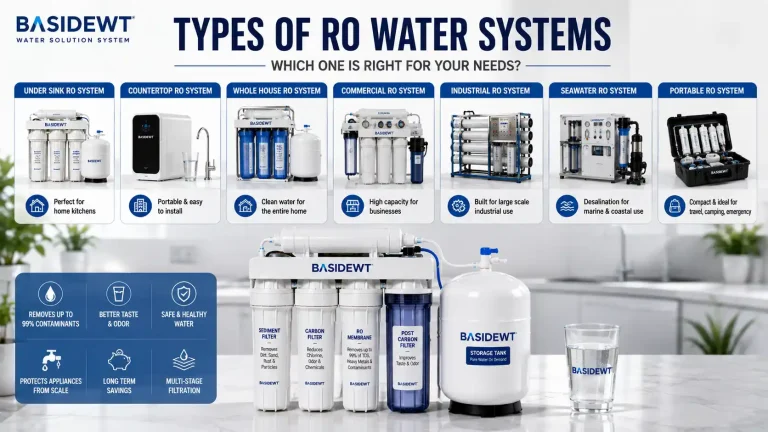
Types of RO Water Systems: Which One Is Right for Your Needs?
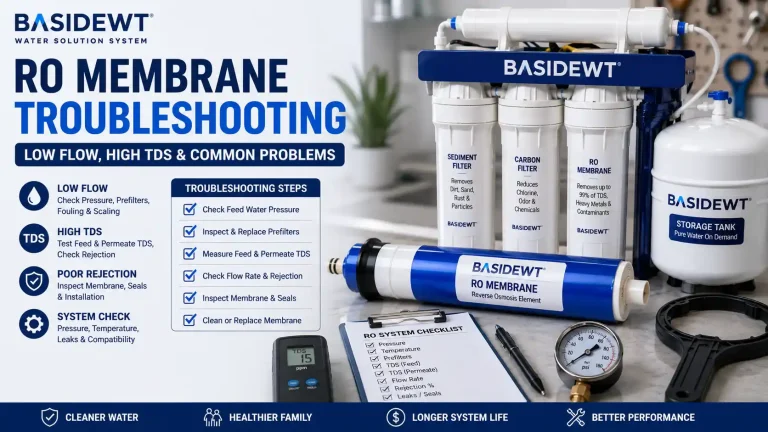
RO Membrane Troubleshooting: Low Flow, High TDS & Common Problems
RO Membrane Replacement: When, Why & How to Replace It
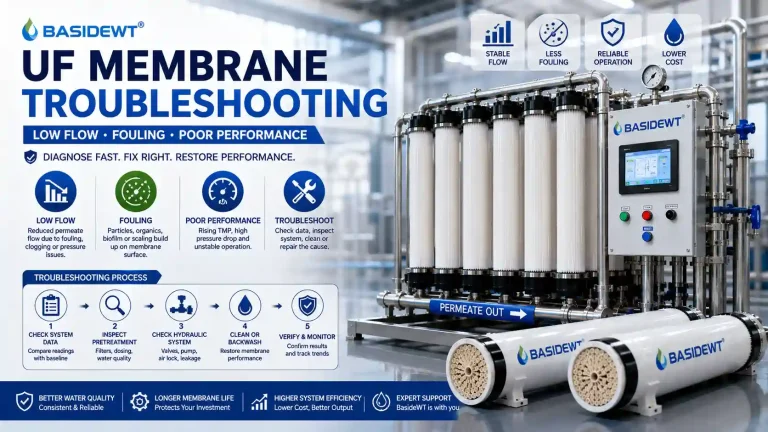
UF Membrane Troubleshooting: Low Flow, Fouling & Poor Performance
How Much To Install Water Filter Under Sink