BasideWT- Whole Home Water Filtration System & Replacement


Types of RO Water Systems: Which One Is Right for Your Needs?
Choosing clean, safe drinking water starts with understanding your options. If you have been researching water purification, you have likely come across many types of RO water systems, each designed for different needs, spaces, and budgets. From compact under sink units to massive industrial setups, reverse osmosis technology adapts to nearly every application.
This guide breaks down every major type of RO water system available today. You will learn how each one works, where it fits best, and how to choose the right option for your home, business, or industrial facility.
What Are RO Water Systems?
An RO water system uses a semi-permeable membrane to remove contaminants from water. Water passes through this membrane under pressure, leaving behind dissolved solids, chemicals, bacteria, and other impurities.
The result is clean, great-tasting drinking water. Unlike basic filters, a reverse osmosis system targets particles as small as 0.0001 microns. This makes it one of the most effective water purification systems available today.
Most homeowners and businesses choose RO technology because it removes what other filtration methods cannot. Sediment filters catch dirt and rust. Carbon filters absorb chlorine and odors. However, only a true RO membrane can strip out heavy metals, fluoride, arsenic, and dissolved salts.
If you want a deeper technical breakdown, our complete guide to RO water systems covers benefits, installation, and long-term maintenance in detail.
Why Different Types of RO Systems Exist
Not every household or facility has the same water needs. A family of four uses far less water than a restaurant kitchen or a manufacturing plant. That is why manufacturers developed multiple types of RO water systems.
Some factors that influence system design include:
- Daily water consumption volume
- Available installation space
- Water source (municipal, well, or seawater)
- Budget and long-term operating costs
- Required purity level for specific use cases
Understanding these factors early helps you avoid buying an undersized or oversized system. Let’s explore each type in detail.
Under Sink RO Water Systems
An under sink RO system is the most popular choice for residential kitchens. It fits neatly beneath the sink cabinet and connects directly to your cold water line.
This type of reverse osmosis system typically includes three to five filtration stages. Water flows through sediment and carbon pre-filters, then through the RO membrane, and finally through a post-filter before reaching your faucet.
Best for: Apartments, small to medium homes, and anyone wanting clean drinking water at a single tap.
Homeowners appreciate under sink units because they stay out of sight and require minimal counter space. To explore available models, check out our under sink RO purifier collection.
Advantages of Under Sink Systems
These systems offer consistent water pressure and steady output. They also tend to have lower upfront costs compared to whole house systems. Installation is straightforward for most plumbers, and replacement filters are widely available.
Countertop RO Systems
Countertop RO systems sit directly on your kitchen counter. They connect to your faucet using a simple diverter valve, so there is no need for permanent plumbing modifications.
This makes countertop units ideal for renters or anyone who wants a temporary or portable drinking water system. Setup usually takes just a few minutes, and the unit can move with you if you relocate.
Best for: Renters, small kitchens, and people who prefer no-drill installation.
While countertop systems offer convenience, they generally produce less filtered water per hour than under sink models. They also take up visible counter space, which some buyers find less appealing.
Whole House RO Systems
A whole house RO system treats water at the point where it enters your home. This means every faucet, shower, and appliance receives filtered water, not just your kitchen sink.
These systems require a larger footprint, typically installed in a basement, garage, or utility room. They also demand higher water pressure and storage tank capacity to serve an entire household.
Best for: Large families, homes with well water, and buyers wanting comprehensive filtration throughout the property.
If your water source struggles with hardness, sediment, or contamination throughout the plumbing system, a well water reverse osmosis system can address the problem at its source.
Whole House System Considerations
Because these units treat higher water volumes, they need more frequent filter changes. They also cost more upfront. However, many buyers find the investment worthwhile for protecting appliances and plumbing from scale buildup.
Commercial RO Water Systems
Commercial RO systems serve restaurants, offices, hotels, and retail spaces. These units handle significantly more daily water output than residential systems, often ranging from 500 to 5,000 gallons per day.
Businesses choose commercial-grade reverse osmosis water systems because consistency matters. A coffee shop needs reliable water quality for every cup. A restaurant needs safe water for cooking and ice production.
Best for: Restaurants, cafes, offices, hotels, and small manufacturing operations.
Our commercial RO system line is built to handle continuous daily demand without sacrificing purification quality.
Key Features of Commercial Systems
Commercial units often include multiple membranes working in parallel. This design increases output capacity while maintaining consistent water pressure. Many models also feature automated flushing cycles that extend membrane lifespan.
Industrial RO Water Systems
Industrial RO systems represent the largest scale of reverse osmosis technology. Factories, power plants, pharmaceutical facilities, and food processing plants rely on these systems for massive water treatment needs.
These setups can process tens of thousands of gallons daily. They often include pretreatment stages like multimedia filtration, softening, and chemical dosing before water reaches the RO membrane itself.
Best for: Manufacturing plants, pharmaceutical production, power generation, and large-scale food and beverage processing.
For businesses managing high-volume filtration needs, browsing our commercial RO water filter system options is a practical starting point before scaling toward full industrial infrastructure.
Why Industrial Systems Cost More
Industrial RO water systems require custom engineering. Facility managers must account for water chemistry, flow rates, and regulatory compliance. This complexity naturally increases both equipment and installation costs.
Seawater RO Systems
Seawater reverse osmosis, often called SWRO, converts ocean water into drinkable fresh water. This process requires significantly higher pressure than freshwater systems because seawater contains much higher salt concentrations.
Coastal communities, islands, and ships commonly use seawater RO systems where freshwater sources are limited. The technology has become essential for regions facing water scarcity.
Best for: Coastal facilities, boats, yachts, and desalination plants.
If you operate a vessel or coastal property, our watermaker solutions are specifically engineered for marine desalination needs.
How Seawater RO Differs from Standard RO
Standard reverse osmosis systems work with pressures around 60 to 150 psi. Seawater systems, however, often require pressures exceeding 800 psi to overcome the ocean’s natural osmotic pressure. This is why specialized high-pressure pumps and reinforced membranes are essential components.
Portable RO Systems
Portable RO systems are compact, lightweight units designed for travel, camping, boating, or emergency preparedness. They typically run on manual pumping or battery power rather than standard household water pressure.
These systems sacrifice some output speed for mobility. Still, they provide a reliable purification method when access to clean water is uncertain.
Best for: Campers, boaters, off-grid living, and emergency water preparedness.
For boat owners specifically, a dedicated boat watermaker offers a purpose-built alternative to generic portable units.
Comparison of Different RO System Types
The table below summarizes each system type to help you compare options quickly.
| RO System Type | Daily Output | Best Application | Installation Complexity |
|---|---|---|---|
| Under Sink | 50–100 gallons | Home kitchens | Low |
| Countertop | 30–75 gallons | Renters, small spaces | Very low |
| Whole House | 500–2,000 gallons | Entire households | Moderate |
| Commercial | 500–5,000 gallons | Restaurants, offices | Moderate to high |
| Industrial | 10,000+ gallons | Factories, plants | High |
| Seawater | Varies by unit | Coastal, marine use | High |
| Portable | 5–30 gallons | Travel, emergencies | Very low |
Which RO System Is Best for Home Use?
For most households, an under sink RO system offers the best balance of performance, cost, and convenience. It delivers clean drinking water directly at the kitchen faucet without major plumbing changes.
However, homeowners dealing with well water or wanting filtered water at every tap should consider a whole house system instead. This choice depends heavily on your water source and household size.
Families with limited installation flexibility, such as renters, often find countertop units more practical despite the smaller output capacity.
Which RO System Is Best for Business or Industry?
Business owners should assess daily water usage before choosing a system. A small cafe with modest foot traffic may only need a commercial RO system rated for a few hundred gallons daily.
Larger operations, like hotels or food processing facilities, typically require industrial-grade infrastructure. Consulting with a water treatment professional ensures the system matches actual demand rather than guesswork.
According to this detailed explanation of reverse osmosis technology, understanding membrane pressure requirements is essential when scaling systems for higher water volumes.
Key Factors to Consider Before Buying
Selecting the right water filtration system involves more than comparing price tags. Consider these factors carefully before making a purchase decision.
Water Source and Quality
Test your water first. Well water often contains more sediment and minerals than municipal water, which affects filter lifespan and system requirements.
Daily Water Usage
Calculate how many gallons your household or business consumes daily. This number determines whether a residential or commercial-grade system suits your needs.
Space and Installation Requirements
Measure available space under your sink or in your utility area. Whole house and industrial systems need considerably more room than compact residential units.
Budget for Long-Term Maintenance
Factor in filter replacement costs, membrane lifespan, and potential professional servicing when calculating total ownership costs.
Common Buying Mistakes
Many first-time buyers make avoidable errors when purchasing an RO water system. Here are the most frequent mistakes to watch for.
- Choosing a system based on price alone, ignoring output capacity
- Skipping a water quality test before purchasing
- Underestimating installation space requirements
- Overlooking filter replacement frequency and costs
- Buying industrial-grade equipment for residential needs, wasting money
Avoiding these mistakes early saves both money and frustration down the road.
Maintenance Requirements for Different RO Systems
Every reverse osmosis system needs regular maintenance to perform effectively. However, maintenance schedules vary depending on system type and usage volume.
| System Type | Filter Change Frequency | Membrane Lifespan |
|---|---|---|
| Under Sink | 6–12 months | 2–3 years |
| Whole House | 3–6 months | 1–2 years |
| Commercial | 1–3 months | 1–2 years |
| Industrial | Weekly to monthly | 1–3 years |
Consistent maintenance prevents bacterial growth, maintains water pressure, and extends the overall lifespan of your system. Neglecting filter changes is one of the leading causes of reduced water quality complaints.
Expert Buying Recommendations
Water treatment professionals generally recommend starting with a water test before selecting any system. This step reveals contaminants specific to your location, whether that means chlorine, arsenic, nitrates, or hardness minerals.
Next, match system capacity to actual usage rather than assumptions. Oversized systems waste money, while undersized units struggle to keep up with demand.
Finally, prioritize systems with accessible replacement parts and clear maintenance schedules. This ensures your investment continues performing well for years.
For a broader understanding of how these systems function internally, our article on how an RO water system works step by step walks through the entire filtration process.
Conclusion
Understanding the different types of RO water systems makes choosing the right one far easier. Whether you need a compact under sink unit for your kitchen or an industrial-grade system for manufacturing, reverse osmosis technology offers a solution for nearly every situation.
Start by evaluating your water source, daily usage, and available space. From there, match those needs to the system type that fits best, whether residential, commercial, or industrial.
If you are still deciding between options, our RO water system versus water filter comparison can help clarify which purification method truly fits your goals.
Ready to find the right solution for your home or business? Explore BasideWT’s full range of RO water systems and discover a filtration system built for your exact water needs.
RELATED POSTS
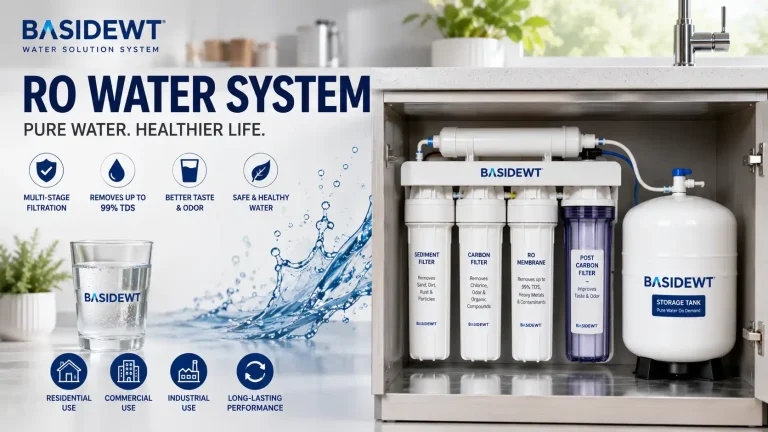
RO Water System: Complete Guide to Types, Benefits, Installation & Maintenance
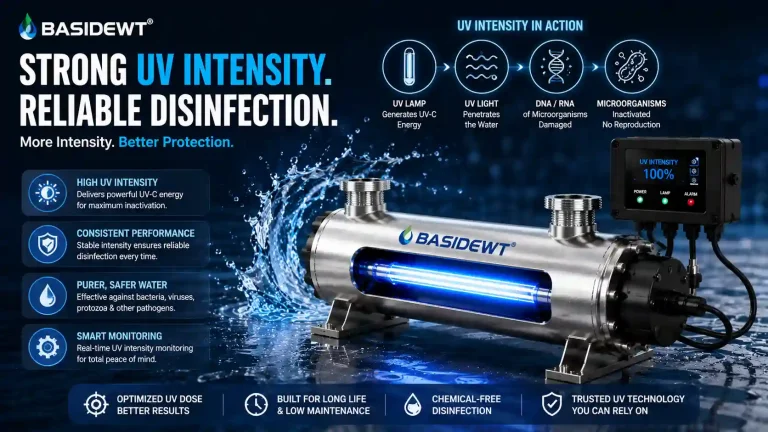
UV Intensity in Water Sterilization: How It Affects Performance
What is an FRP Tank?

Spotless Water System Guide: End Water Spots for Good
What Is the Best Home Water Filter?