BasideWT- Whole Home Water Filtration System & Replacement


UV Transmittance (UVT) in Water Treatment Explained
UV transmittance (UVT) measures the percentage of ultraviolet light that passes through water. Water absorbs or scatters the rest before it reaches the far side of the sample. Operators usually measure UVT at 254 nanometers, the germicidal wavelength most UV systems use. UVT for water treatment matters because it shows how much UV energy actually reaches microorganisms, not just how much a lamp produces. A UV system can have a powerful lamp and still under-disinfect water if UVT is low.
Why UV Transmittance for Water Treatment Is a Core Design Value
Every UV disinfection calculation starts with UVT. Reactor manufacturers use it, along with flow rate and target dose, to size lamps correctly. Engineers use it to decide whether the water needs pretreatment before it reaches the UV stage.
Without an accurate UVT value, engineers can undersize a system for real conditions. It may pass validation on clean test water, then fail on-site. That gap is one reason UVT deserves attention early in a project. Teams should not treat it as an afterthought after they select equipment.
How UV Light Travels Through Water
UV light moves through water in a straight line until something interrupts it. Dissolved and suspended material can absorb photons, scatter them, or both. Each interaction reduces the amount of light that keeps traveling toward the far wall of the reactor.
This is why engineers express UVT as a percentage over a fixed path length, typically one centimeter. A 90% UVT reading means 90% of the UV light entering that centimeter of water exits the other side. A 50% reading means the water loses half the light over that same short distance.
Path length compounds quickly in a full-size reactor. Water several centimeters from the lamp receives far less UV energy than water right next to it. UV intensity naturally weakens with distance from the lamp surface. Readers who want the fundamentals of that lamp-to-water relationship can review how a UV water sterilizer works for a step-by-step explanation.
UVT and UV Dose: How They Work Together
UV dose is the total UV energy microorganisms actually receive. It depends on three factors working together: UV intensity, exposure time, and UVT.
A simple way to picture the relationship:
| Factor | Role in Disinfection |
|---|---|
| UV intensity | How strong the lamp output is at the source |
| Exposure time | How long water stays in the UV chamber (tied to flow rate) |
| UVT | How much of that intensity actually reaches microorganisms across the water |
If UVT drops, less intensity reaches organisms even when the lamp output and flow rate stay the same. Operators sometimes compensate by slowing flow, increasing lamp power, or adding pretreatment. This guide to UV dose for water disinfection covers the full mechanics of dose calculation. It pairs naturally with UVT when you evaluate system performance.
UVT vs. Turbidity: Two Different Measurements
UVT and turbidity are related, but they are not the same thing. Confusing them leads to poor system decisions.
| Measurement | What It Actually Measures | Common Misconception |
|---|---|---|
| Turbidity | Cloudiness caused by suspended particles, measured optically at visible wavelengths | Clear water always has good turbidity |
| UVT | How much UV light (usually at 254 nm) transmits through water over a fixed path | Clear-looking water always has high UVT |
Water can look perfectly clear and still have low UVT. Dissolved organic compounds, tannins, and certain minerals absorb UV light without creating visible cloudiness. That is why clear-looking water does not guarantee high UVT, and operators should not assume it does.
Conversely, UV systems designed for high turbidity can still manage that water well. But a low-UVT stream with almost no visible particles can under-dose a system sized for clearer water. For background on how particle load affects UV performance more broadly, see this overview of what a UV water sterilizer removes from water.
What Causes Low UVT in Water
Several water quality factors reduce UVT. Understanding them helps operators diagnose why a system’s performance may be changing.
- Natural organic matter: Humic and fulvic acids from soil and decaying vegetation absorb UV light strongly.
- Color: Tannins and other colored compounds, common in surface water and well water, lower UVT even at low visible turbidity.
- Iron and manganese: These metals absorb UV light and can also coat quartz sleeves over time, indirectly reducing delivered dose.
- Dissolved solids and industrial contaminants: Certain chemical compounds in industrial wastewater absorb UV strongly, sometimes far more than domestic water.
- Suspended particles: These scatter UV light in addition to any absorption effects, compounding the loss.
These factors do not act alone. A stream can have moderate turbidity and high organic content at the same time. The combined effect on UVT is often larger than either factor alone.
How UVT Is Measured
Technicians measure UVT with a UV transmittance meter or spectrophotometer. The instrument shines UV light, usually at 254 nm, through a water sample of known path length. It then compares the light that exits to the light that entered.
Two general approaches exist:
- Benchtop or portable meters: Technicians test a grab sample in a lab or with an on-site device. This works well for periodic checks or system commissioning.
- Online UVT monitors: These continuously measure UVT as water flows past a sensor. They give real-time data for systems where water quality varies throughout the day.
Continuous monitoring works well for sources with fluctuating quality, such as rivers after rainfall or industrial streams with variable discharge. A single grab sample from a river on a dry day can overstate UVT compared to conditions during a storm event.
Why UVT Matters for UV Reactor Design and Sizing
Reactor manufacturers validate their equipment against a UVT curve, not a single number. A system rated for 95% UVT water may need a very different lamp configuration than one built for 65% UVT water.
When designing or selecting a system, engineers typically ask for:
- The minimum expected UVT of the source water, not just the average
- Seasonal variation in UVT, if the source changes throughout the year
- Any known contaminants that could further depress UVT beyond typical ranges
This is also where flow rate interacts with UVT. Slower flow gives water more exposure time, which can help offset lower UVT. This only works within the limits of the reactor’s design. Readers evaluating flow-related sizing questions may find it useful to review the system components covered in UV water sterilizer parts and components explained.
Actual UVT requirements vary by reactor design, lamp type, and manufacturer specification. No single UVT percentage applies universally across all UV systems. Always check published dose tables against the specific equipment you use.
How UVT Can Change With Source Water Conditions
UVT is not a fixed property of a water source. It shifts with weather, season, and upstream activity.
Surface water sources, such as rivers and reservoirs, often see UVT drop after heavy rainfall. Runoff carries organic matter and sediment into the water. Groundwater tends to be more stable, though iron and manganese content can still cause meaningful swings between wells or aquifer zones.
Industrial and municipal wastewater can vary even more. UVT depends on what upstream processes discharge into the stream at any given time. Systems treating these sources often need wider UVT design margins than a typical residential or commercial drinking-water application. For background on how these applications differ, UV water sterilizer types, working, and applications offers a broader look. It shows how system type connects to source water conditions.
Practical UVT Examples Across Applications
The following illustrative examples show how UVT considerations differ by setting. They are examples only, not documented case studies.
Residential well water example: A homeowner with well water containing naturally occurring iron may see UVT readings lower than the typical municipal supply. A system built only for high-UVT conditions could under-treat the water without any visible warning sign. The water may still look clear.
Commercial facility example: A commercial building on municipal water usually sees a more stable UVT range. Municipal treatment already removes much of the organic load. Even so, seasonal shifts at the treatment plant can still cause measurable UVT changes worth checking periodically.
Industrial process water example: A facility recycling process water for reuse may see UVT fluctuate significantly between batches. The fluctuation depends on what the water contacted upstream. In this setting, continuous UVT monitoring is often more valuable than periodic testing.
Homeowners and installers weighing which UV configuration fits their water source may also want to compare equipment types in UV water sterilizer vs. UV water purifier: what is the difference. UVT considerations can influence that choice too.
What Operators Should Do When UVT Changes
A drop in UVT does not always require a new system. It usually calls for one of a few responses, depending on how large and how frequent the change is.
- Check whether the shift is temporary (a rain event) or a longer-term trend (seasonal or source degradation).
- Compare current UVT against the reactor’s validated range from the manufacturer.
- Consider pretreatment, such as filtration, if organic load or iron is consistently reducing UVT below the system’s design margin.
- Increase monitoring frequency during known high-variability periods, such as spring runoff.
UV lamp output, wavelength, and dose all interact with UVT. Because of that, operators should isolate UVT as the cause of a performance issue before they adjust other settings. For a closer look at the wavelength side of that relationship, see UV-C wavelength for water sterilization explained. It covers why 254 nm remains the reference point for most UVT readings. Readers building up their background first can also check what is a UV water sterilizer: a complete beginner’s guide for a foundational explanation.
For additional independent technical detail on how professionals derive and apply UVT in water quality monitoring, see In-Situ’s overview of UV transmittance and absorbance.
Conclusion
UV transmittance for water treatment describes how much UV light water actually lets through. It directly shapes how well a UV system disinfects. UVT works alongside UV dose, UV intensity, and flow rate. It stays separate from turbidity, even though people often confuse the two. Water that looks clear can still have low UVT. No single UVT figure applies to every reactor or every source.
UVT can shift with season, weather, and source type. Checking it regularly and understanding what it means for your system is worth the effort. BasideWT builds UV water treatment solutions around real water quality data, including UVT, rather than generic assumptions. If you are evaluating a system for a source with variable or uncertain UVT, review your water quality data first. That step is a practical way to move toward reliable disinfection performance.
RELATED POSTS
Water Softener System: Types, Benefits, Installation & Buying Guide
Ro Membrane Change
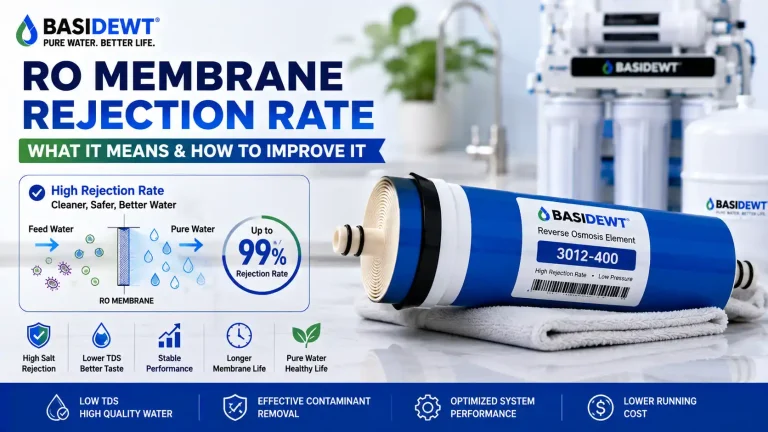
RO Membrane Rejection Rate: What It Means & How to Improve It
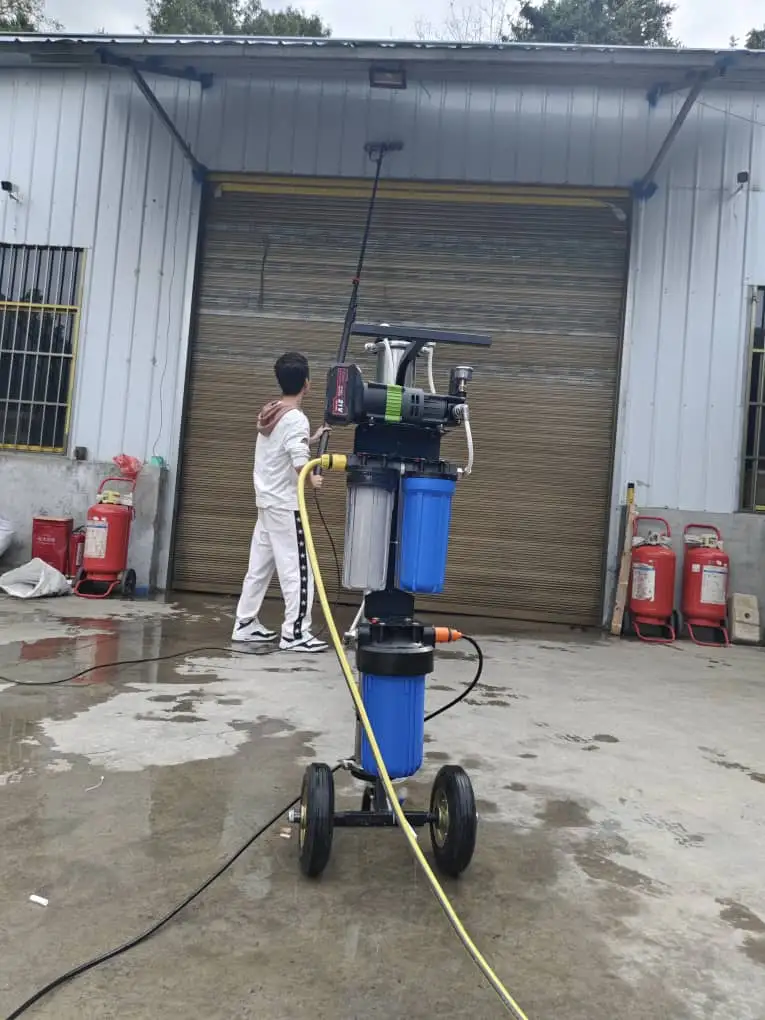
Water Fed Pole Equipment: What You Need for Professional Window Cleaning
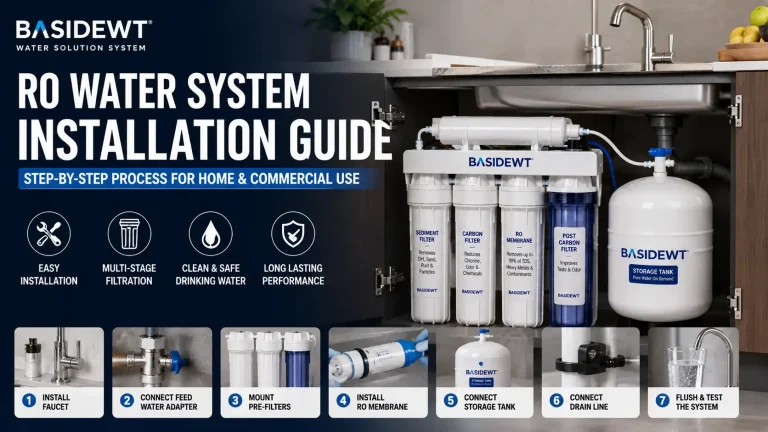
RO Water System Installation Guide: Step-by-Step Process for Home & Commercial Use