BasideWT- Whole Home Water Filtration System & Replacement


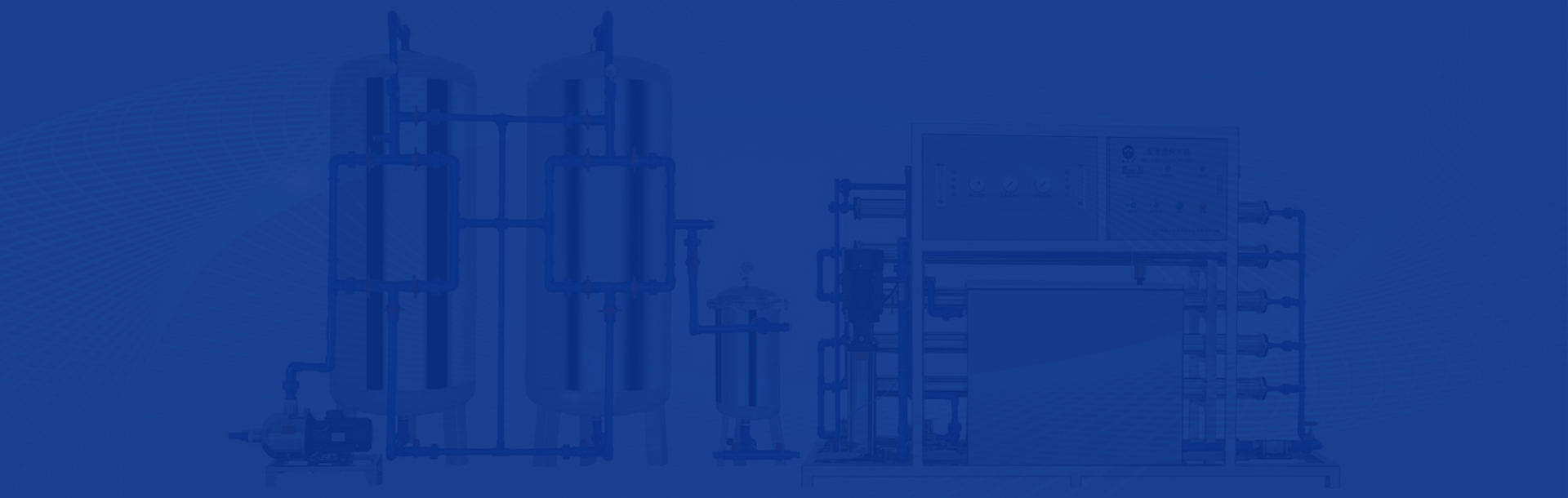
Best Water Filter Housing for Well Water: Complete Buying Guide
Choosing the best water filter housing for well water starts with understanding what your well is actually delivering. Municipal water goes through treatment before it reaches your home, but well water arrives straight from the ground, carrying sediment, iron, and sometimes manganese along with it. That difference changes everything about which housing you should buy.
This guide breaks down the contaminants well owners commonly face, compares the housing styles built to handle them, and walks through the sizing decisions that determine whether your system performs well for years or clogs within weeks. By the end, you will know exactly how to match a housing to your well’s specific water profile.
Why Well Water Requires the Right Filter Housing
Well water behaves differently depending on the season, the aquifer, and even recent rainfall. A housing that works fine in spring can struggle once summer runoff pushes sediment levels higher. Because of this variability, well owners generally need more robust filtration than city water users.
Flow rate is another major factor. Wells rely on a pump to push water through the entire plumbing system, and an undersized housing creates a bottleneck. This bottleneck reduces pressure at every fixture in the house, from showers to irrigation lines.
Housing durability matters too, since well systems often sit in basements, crawl spaces, or outdoor utility rooms exposed to temperature swings. A housing built for consistent municipal conditions may crack or degrade faster under these harsher conditions.
Common Well Water Contaminants
Before selecting a housing, it helps to understand what you are actually filtering out. Most well water problems fall into a handful of predictable categories.
Sediment covers the general category of solid particles suspended in water, including fine silt and larger debris. Sediment is usually the first thing a well filtration system needs to address.
Sand enters the water supply when a well casing or screen degrades, or when the pump draws water too aggressively near the bottom of the well. Sand particles are abrasive and can damage plumbing fixtures over time.
Rust typically comes from aging galvanized pipes or iron-rich groundwater. It gives water a reddish-brown tint and can stain sinks, tubs, and laundry.
Iron dissolved in well water often appears clear at first but turns orange or brown once exposed to air. High iron levels are one of the most common reasons well owners upgrade their filtration.
Manganese behaves similarly to iron, though it produces black or dark brown staining instead. It frequently occurs alongside iron in the same water source.
Silt consists of extremely fine particles that pass through basic sediment filters. Removing silt effectively usually requires a lower micron rating than removing sand or rust.
Organic matter, including decomposed plant material, can enter shallow wells and contribute to taste and odor issues. While it is less abrasive than sediment, it can shorten cartridge lifespan considerably.
In practice, most wells present a combination of these contaminants rather than just one. A property with sandy soil often deals with both sediment and iron simultaneously, which means the housing and cartridge selection needs to address multiple issues at once rather than a single problem in isolation.
Which Water Filter Housing Works Best for Well Water?
Not every housing style handles well water equally well. Some are built for light residential use, while others are designed specifically for heavier sediment loads and higher flow demands.
Standard housings work adequately for wells with low to moderate sediment and manageable flow needs. They are compact, affordable, and simple to service, making them a reasonable starting point for smaller households.
Big Blue housings offer a larger cartridge capacity, which translates directly into longer intervals between cartridge changes. For well owners dealing with consistent sediment, this larger surface area reduces the frequency of maintenance visits.
High flow housings are built for households or facilities with significant water demand, such as farms or multi-bathroom homes running several fixtures simultaneously. Because they maintain pressure even under heavy draw, they suit wells feeding irrigation systems alongside household plumbing. Our guide to high flow water filter housings covers flow capacity and application details in more depth.
Stainless steel housings provide the strongest resistance to corrosion and pressure stress, which makes them a smart choice for wells with aggressive water chemistry or high iron content. If you are weighing material options, our comparison of plastic versus stainless steel water filter housings explains how each material performs under different conditions.
| Housing Type | Best For | Sediment Capacity | Typical Flow Rate | Maintenance Frequency |
|---|---|---|---|---|
| Standard Housing | Light residential wells | Low to moderate | Up to 10 GPM | Every 1–2 months |
| Big Blue Housing | Moderate to heavy sediment | High | Up to 15 GPM | Every 3–6 months |
| High Flow Housing | Farms, multi-bathroom homes | Moderate to high | 15–25+ GPM | Every 3–4 months |
| Stainless Steel Housing | Corrosive or high-iron water | Moderate to high | Varies by size | Every 3–6 months |
How to Choose the Right Water Filter Housing for Well Water
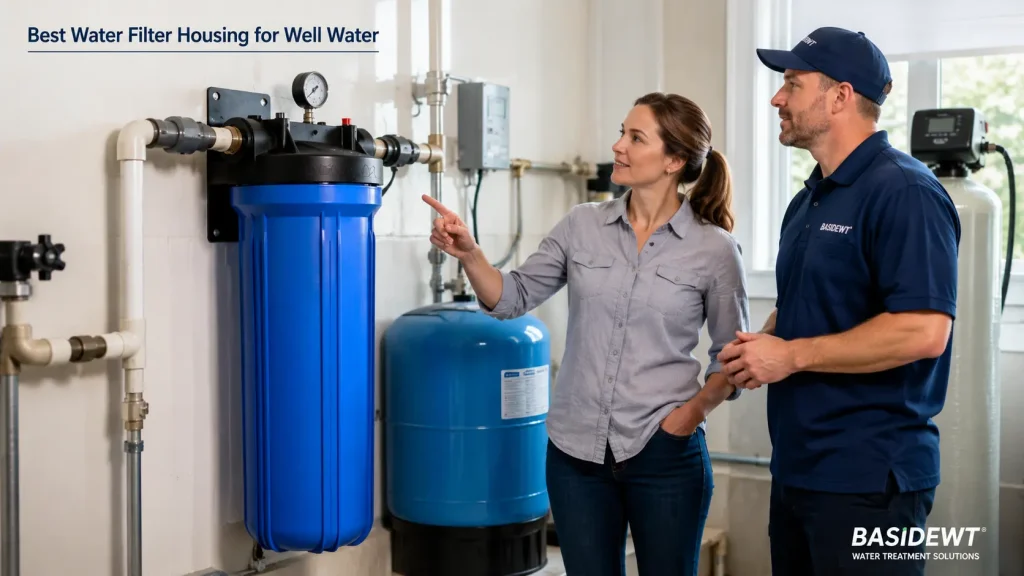
Selecting the right housing involves matching several technical factors to your well’s actual conditions, rather than guessing based on housing size alone.
Flow rate should match your peak household demand, not just average daily usage. If several fixtures run at once, undersized housings create noticeable pressure drops throughout the home.
Pressure rating determines how much stress a housing can safely handle during pump cycling and pressure surges. Wells often experience pressure spikes when the pump kicks on, so choosing a housing rated above your system’s maximum pressure adds a useful safety margin.
Cartridge size affects both filtration capacity and how often you need to service the system. Larger cartridges hold more sediment before clogging, which matters significantly for wells with consistently high particulate levels.
Micron rating determines what size particles the cartridge actually captures. A 20-micron cartridge handles visible sediment, while a 5-micron or lower rating targets fine silt and smaller particles that standard filters miss.
Installation location influences housing material choice. Outdoor or unheated installations benefit from freeze-resistant materials, while indoor installations have more flexibility.
Water quality testing is the step many well owners skip, yet it is arguably the most important. Testing reveals your actual iron, manganese, and sediment levels, which removes the guesswork from sizing decisions entirely. A simple lab test, done annually, prevents both undersized and oversized filtration purchases.
Best Filter Cartridges for Well Water
Housing selection only solves half the equation, since cartridge compatibility determines actual filtration performance. Sediment cartridges rated between 5 and 20 microns handle most sand, rust, and silt effectively, while pleated cartridges offer more surface area for heavier sediment loads.
For iron-heavy water, specialized iron reduction cartridges outperform standard sediment media, though they typically require more frequent replacement. Carbon block cartridges address taste and odor concerns from organic matter, and they pair well as a secondary stage after sediment removal.
Cartridge lifespan varies considerably based on water quality, so well owners should expect shorter intervals than municipal water users. Confirming cartridge dimensions against your housing’s specifications avoids the poor sealing issues covered in our water filter housing size guide.
Consider a farmhouse pulling water from a shallow well with visible sand during heavy rain. A two-stage setup, a 20-micron pleated cartridge followed by a 5-micron polishing filter, typically handles this scenario far better than a single cartridge trying to catch every particle size at once. Staging filtration this way also extends the life of the finer, more expensive cartridge downstream.
Common Mistakes When Choosing a Well Water Filter Housing
Well owners frequently underestimate sediment levels, choosing a housing sized for municipal water instead of raw groundwater. This mismatch leads to clogged cartridges within days rather than weeks.
Skipping water testing before purchase is another frequent misstep. Without knowing actual iron or manganese concentrations, buyers often select the wrong cartridge type entirely, which wastes money on replacements that never solve the underlying problem.
Ignoring pressure ratings causes premature housing failure, especially in wells with strong pump cycling. Meanwhile, choosing plastic housings for corrosive or high-iron water shortens service life considerably compared to stainless steel alternatives.
Finally, some buyers overlook flow rate compatibility with their well pump. A housing rated below your pump’s output creates a bottleneck that reduces water pressure throughout the entire home.
Maintenance Tips for Well Water Systems
Well water systems generally need more frequent attention than municipal setups, simply because raw groundwater carries more contaminant load. Establishing a consistent cartridge replacement schedule prevents the gradual pressure loss that comes with a clogged filter.
Visual inspection during every cartridge change catches early warning signs, such as cracking or discoloration in the housing itself. Our water filter housing maintenance guide covers the preventive steps that extend service life across residential and commercial systems alike.
For farms and commercial facilities running higher volumes, scheduled maintenance intervals matter even more, since unexpected downtime affects operations directly. Larger properties sometimes benefit from the same principles used in industrial water filter housing selection, particularly around flow capacity and multi-housing coordination.
Watch pressure gauges before and after the housing whenever your system includes them. A widening gap between the two readings signals a clogging cartridge long before flow problems become noticeable at the tap. Tracking this trend over a few months also helps predict how often your specific well needs cartridge changes, rather than relying on a generic replacement calendar.
Expert Buying Recommendations
Experienced installers generally recommend starting with a water test before purchasing anything. This single step prevents the majority of sizing and compatibility mistakes well owners make.
For households with moderate sediment and standard flow needs, a Big Blue housing paired with a 5-micron pleated cartridge covers most situations well. Farms and larger properties typically benefit from high flow housings sized generously above current peak demand, which accommodates future expansion without requiring a full system upgrade.
If your water testing reveals elevated iron or aggressive pH levels, investing in stainless steel construction pays off through reduced replacement frequency. Our water filter housing pressure ratings guide can help confirm your housing choice matches your well pump’s operating pressure safely.
For homeowners specifically dealing with well water, a purpose-built whole house well water filter system often simplifies the selection process by combining the right housing, cartridge compatibility, and flow capacity into a single coordinated solution.
Final Thoughts
Finding the best water filter housing for well water comes down to matching housing style, material, and cartridge compatibility to your specific water conditions. Sediment, iron, and manganese levels vary from well to well, so what works for a neighbor’s property may not suit yours.
Start with water testing, confirm your flow rate and pressure requirements, and choose a housing built to handle your sediment load consistently. With the right combination in place, a well water filtration system delivers clean, reliable water while keeping long-term maintenance manageable.
For additional technical background on treating sediment, iron, and manganese in private well systems, Pentair’s educational resource on home water filtration solutions offers useful context on contaminant-specific treatment approaches.
RELATED POSTS
Water Softener System: Types, Benefits, Installation & Buying Guide
Water Filter Housing Cartridge Compatibility: How to Choose the Right Filter
What Is a Water Filter Housing? Complete Guide for Beginners
How to Choose the Right RO Water System: Complete Buying Guide
UF Membrane Pore Size: 0.01 vs 0.03 Micron Explained