BasideWT- Whole Home Water Filtration System & Replacement


Water Softener Salt Guide: Types, Benefits & How to Choose the Right Salt
This Water Softener Salt Guide exists because the salt you pour into your brine tank matters just as much as the system itself. Many buyers focus entirely on choosing the right unit, then grab whatever salt bag sits on the shelf. That decision affects regeneration efficiency, resin lifespan, and the overall quality of your softened water.
Salt is not a generic commodity. Different types dissolve differently, leave behind different amounts of residue, and suit different water conditions. Picking the wrong one can quietly reduce your system’s performance for months before anyone notices.
This guide breaks down every major salt type, compares their strengths and weaknesses, and shows you how to match the right product to your home, restaurant, hotel, or industrial facility. If you still need a broader overview of how these systems work, our complete water softener system guide covers the fundamentals in detail.
Why Water Softener Salt Matters
Water softeners rely on an ion exchange process. Resin beads inside the tank capture calcium and magnesium ions, then release sodium or potassium ions in their place. Once the resin becomes saturated, it needs regeneration, and that process depends entirely on a properly mixed brine solution.
Low-quality salt often contains insoluble impurities. These leftover particles accumulate at the bottom of the brine tank, forming a thick layer of sludge. Over time, this sludge clogs valves, injectors, and float assemblies, which forces the system to work harder than necessary.
High-purity salt, by contrast, dissolves cleanly and produces a consistent brine concentration. This consistency directly improves regeneration efficiency, meaning your system uses less salt and less water to achieve the same softening result. If you’re still deciding between softening technologies altogether, our comparison of salt-based and salt-free water softeners explains how salt fits into the bigger picture.
Salt purity also protects the resin bed itself. Contaminants can coat resin beads, reducing their ion exchange capacity permanently. Choosing the right salt from day one extends resin life and delays costly replacement.
Water quality is the other side of this equation. Softened water depends on a complete regeneration cycle, and incomplete regeneration allows hardness minerals to slip through unnoticed. Homeowners sometimes assume their softener has failed when, in reality, the salt they chose simply cannot dissolve efficiently enough to maintain full resin capacity.
There is also a cost dimension that many buyers overlook. Systems running on low-purity salt often need more frequent regeneration cycles to compensate for reduced efficiency. That translates into higher water consumption, higher salt consumption, and a shorter service interval overall. Spending slightly more on purer salt often pays for itself through lower long-term operating costs.
Different Types of Water Softener Salt
Four main salt types dominate the market today. Each one differs in purity, dissolution rate, and ideal application.
Rock Salt
Rock salt comes from mined underground deposits. It offers the lowest cost among all salt types, which makes it attractive for budget-conscious buyers. However, rock salt typically contains 0.5% to 1% insoluble matter, sometimes higher depending on the source.
This impurity level means rock salt tends to leave sediment behind. Facilities that choose rock salt often need to clean their brine tanks more frequently than those using purer alternatives.
Rock salt also dissolves more slowly than other options because the crystals form dense, irregular shapes. In colder climates, this slower dissolution rate can leave incomplete brine solutions during winter months, which reduces regeneration effectiveness right when hard water demand often peaks.
Solar Salt
Solar salt forms when seawater evaporates naturally under the sun, leaving behind salt crystals or pellets. It offers higher purity than rock salt, generally reaching around 99.6% sodium chloride.
Because solar salt dissolves more cleanly, it produces less residue than rock salt. Many residential users prefer solar salt as a middle-ground option between cost and performance.
Solar salt typically comes in two shapes: crystals and pellets. Pellets tend to work better in most modern softeners because they resist bridging more effectively than loose crystals. Buyers should check their owner’s manual before choosing between the two shapes, since some valve designs strongly favor one over the other.
Evaporated Salt
Evaporated salt undergoes a controlled industrial evaporation process that removes nearly all impurities. This method produces the purest salt available, often exceeding 99.9% sodium chloride.
Since evaporated salt dissolves almost completely, it minimizes sludge buildup and supports the most efficient regeneration cycles. Facilities that demand consistent water quality, such as hotels or medical buildings, frequently choose evaporated salt despite its higher price.
The extra cost usually reflects the processing involved. Manufacturers heat and evaporate the brine under controlled conditions, removing calcium sulfate and other trace minerals that lower-grade salts leave behind. This extra step is exactly why evaporated salt causes so little maintenance trouble over the life of a system.
Potassium Chloride
Potassium chloride works as a sodium-free alternative for households managing sodium intake or properties with strict wastewater discharge regulations. It performs the same ion exchange function as sodium chloride, though it typically costs more and requires slightly higher dosing for equivalent hardness removal.
Some regions now restrict sodium discharge from residential softeners entirely, which makes potassium chloride the only practical option in those areas. Facility managers working near sensitive waterways or agricultural land should confirm local regulations before defaulting to sodium-based salt.
Organizations researching ion exchange chemistry in greater depth can review the Purolite Knowledge Center, which offers detailed technical resources on resin behavior and regeneration science.
Comparison Table: Water Softener Salt Types
| Salt Type | Purity Level | Residue Level | Best For | Relative Cost |
|---|---|---|---|---|
| Rock Salt | 90–99.5% | High | Budget residential use | Low |
| Solar Salt | ~99.6% | Moderate | Standard households | Moderate |
| Evaporated Salt | 99.9%+ | Very Low | Commercial and high-purity needs | High |
| Potassium Chloride | 99%+ | Low | Sodium-restricted or regulated sites | Highest |
How to Choose the Right Water Softener Salt
Selecting the correct salt depends on several practical factors, not personal preference alone.
Water hardness plays the biggest role. Households or facilities dealing with extremely hard water benefit from purer salts because they support more frequent, efficient regeneration cycles without excessive residue accumulation.
Water usage volume matters too. High-usage properties, such as multi-family buildings or commercial kitchens, regenerate more often. Choosing a purer salt reduces the maintenance burden that comes with frequent cycling. For guidance on matching capacity to usage patterns, see our water softener sizing guide.
Salt purity should match your system type. Some manufacturers specify minimum purity requirements to maintain warranty coverage, so checking your unit’s documentation before buying salt in bulk is worthwhile.
System compatibility deserves attention as well. Certain valve designs and injector systems handle pellet-form salt better than crystal or block forms. Mismatched salt shapes can cause bridging, where a hardened salt crust forms above the water line and prevents proper dissolution.
Budget naturally influences the decision. Rock salt saves money upfront, but the added maintenance and potential resin damage can offset those savings over time.
Environmental considerations are increasingly relevant. Potassium chloride reduces sodium discharge into wastewater systems, which some municipalities now regulate closely. If you’re comparing systems from the ground up, our buying guide for choosing the right water softener walks through these considerations alongside equipment selection.
Which Salt Works Best for Different Applications?
Different settings create different salt requirements based on usage patterns, water quality goals, and regulatory pressure.
Residential homes generally do well with solar salt pellets. This option balances affordability with dependable performance for typical daily water consumption.
Apartments with shared systems often benefit from evaporated salt. Consistent, high-purity brine reduces maintenance visits, which matters when a single unit serves multiple households.
Restaurants depend on soft water for dishwashers, coffee equipment, and ice machines. Mineral buildup directly affects equipment lifespan and beverage taste, so evaporated salt is usually the smarter long-term investment.
Hotels face similar pressures at a larger scale. Guest-facing water quality, from showers to laundry, influences satisfaction scores. High-purity salt helps hotels maintain consistent softness across large distribution systems.
Commercial facilities with variable water demand should prioritize salt that supports efficient, predictable regeneration. Unexpected downtime affects operations, so reliability outweighs upfront cost in most commercial decisions.
Industrial water treatment applications often involve strict discharge regulations and high-volume processing. These facilities frequently combine evaporated salt with potassium chloride depending on local environmental requirements. Businesses exploring dedicated equipment for these needs can review our water softener system product line for options built to handle demanding conditions.
Common Mistakes When Buying Water Softener Salt
Even experienced buyers make avoidable errors when purchasing softener salt.
Choosing the cheapest option without checking purity often backfires. Rock salt’s low price tag can lead to higher long-term costs through increased maintenance and resin degradation.
Mixing salt types in the same tank creates uneven dissolution rates. This inconsistency disrupts brine concentration and can reduce softening efficiency.
Ignoring manufacturer recommendations sometimes voids warranty coverage. Always check the system’s documentation before switching salt types.
Overfilling the brine tank seems harmless, but it can actually reduce dissolution efficiency. Salt needs adequate water contact to dissolve properly, and overfilling limits that contact.
Storing salt improperly allows moisture to cause premature clumping. Bags left in damp basements or garages often harden before they even reach the brine tank.
Skipping regular tank inspections allows sludge and bridging to go unnoticed. Left unresolved, these issues can force the system into inefficient cycles for extended periods before anyone catches the problem.
Buying more salt than the tank can hold wastes money and invites moisture problems. Extra bags stored near the unit often absorb humidity from the surrounding air, which encourages clumping before the salt ever reaches the tank.
Assuming all pellets are identical leads some buyers to switch brands without checking purity ratings. Two pellet bags can look similar while containing very different mineral content, so reading the label matters more than the shape of the product.
Expert Tips to Improve Water Softener Performance
A few practical habits help maximize the value of whichever salt you choose.
Keep the brine tank at least one-third full at all times. This ensures the system always has enough salt available to produce properly saturated brine during regeneration.
Break up any visible salt bridges immediately. A long-handled tool works well for gently pushing through hardened crust without damaging the tank.
Choose pellet or nugget forms over block salt when your system allows it. Pellets generally dissolve more evenly and reduce the likelihood of bridging.
Inspect the tank every few months, even if performance seems normal. Catching sediment buildup early prevents larger issues down the line. For a deeper walkthrough of upkeep routines, our maintenance guide offers additional detail beyond salt selection.
Finally, match your salt purchase to your actual usage pattern rather than buying in bulk out of convenience. Salt sitting unused for long periods can absorb humidity and clump before you need it.
Conclusion
This Water Softener Salt Guide makes one point clear: salt selection directly shapes how well your system performs. Rock salt suits tight budgets, solar salt fits typical households, evaporated salt serves commercial and high-purity needs, and potassium chloride answers sodium-sensitive or regulated situations.
Matching salt type to water hardness, usage volume, and system compatibility protects your resin, reduces maintenance, and keeps water quality consistent. Whether you manage a single household or a large commercial facility, the right salt choice pays off over time.
For a broader look at selecting, installing, and maintaining your entire system, explore our full water softener system guide to see how salt selection fits into the complete picture of reliable water treatment.
RELATED POSTS
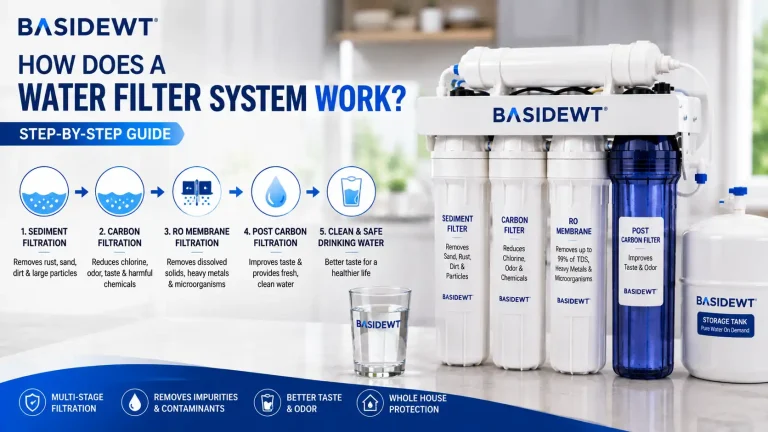
How Does a Water Filter System Work? Step-by-Step Guide
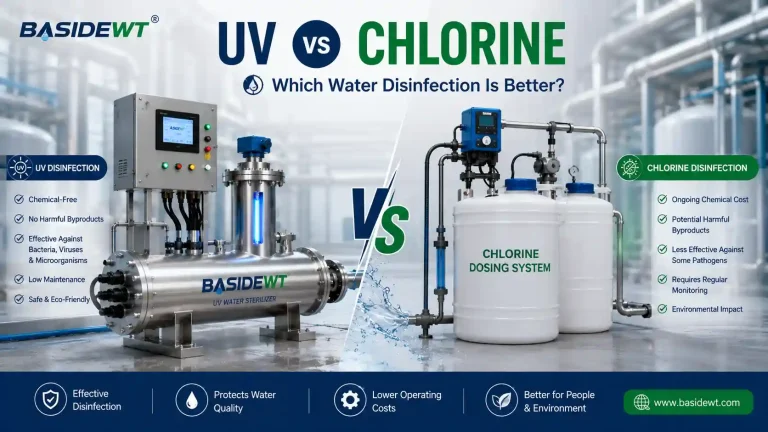
UV vs Chlorine Water Disinfection: Which Is Better?
Will A Water Filter Help With Hard Water?
DI Water System For Window Cleaning
What Is a UV Water Sterilizer? Complete Beginner’s Guide