BasideWT- Whole Home Water Filtration System & Replacement


Why Is My Water Filter Flow Slow? Causes & Solutions
A water filter that suddenly trickles instead of flows is one of the most common complaints homeowners bring up. In most cases, slow water filter flow happens because something is physically restricting water on its way through the system. That restriction could sit inside the filter itself, in the pipes leading to it, or in your home’s overall water pressure.
The good news is that slow flow rarely means your filtration system has failed completely. It usually means one specific part of the setup needs attention. Once you know where to look, most causes are easy to identify and fix without professional help.
This guide walks through every major cause of slow water filter flow, how to test for each one, and what to do once you’ve found the problem.
Quick Answer: Main Causes of Slow Water Filter Flow
Before digging into details, here is a fast overview.
Slow water filter flow is usually caused by one of these issues:
- A clogged or exhausted filter cartridge that needs replacing
- Low incoming water pressure from your home’s supply
- A valve that isn’t fully open
- Kinked, undersized, or blocked tubing and fittings
- Incorrect installation, such as reversed filter stages
- Trapped air in the system after installation or a filter change
- A restricted or fouled membrane in reverse osmosis systems
- Cold water temperature slowing flow through dense filter media
Start with three quick checks before assuming the worst. First, confirm every shut-off valve on the line is fully open. Second, check whether other taps in your home also have weak pressure. Third, look at how long the current filter has been in use compared with its rated lifespan.
These three checks alone resolve a large share of slow-flow complaints.
Understanding Why Flow Slows Down in the First Place
A water filter’s job is to force water through a barrier fine enough to trap sediment, chlorine, or other contaminants. That barrier naturally creates some resistance. Different types of water filter systems create different amounts of resistance depending on how many stages the water passes through and how fine the filtration media is.
A small drop in pressure after installing a filter is expected and normal. Problems start when that resistance becomes excessive, either because the filter media is overloaded or because something else in the water path is restricting flow on top of it.
Flow rate and water pressure are related but not identical. Pressure is the force pushing water through your pipes, usually measured in psi. Flow rate is how much water actually comes out over time, usually measured in gallons or liters per minute. The resistance a filtration system creates as water passes through it is sometimes called pressure drop, and it can lower flow rate even when household pressure looks normal, which is why troubleshooting needs to check both.
Cause 1: Clogged or Exhausted Filter Cartridge
This is by far the most common reason for gradually worsening flow. As a cartridge filters more water, sediment, rust particles, and organic matter physically fill the pores in the filter media. Water is forced through an increasingly narrow path, and flow drops slowly over weeks or months rather than all at once.
How to check it:
Compare how long you’ve had the current cartridge against its rated capacity or replacement interval. If your household has hard water, well water, or high sediment levels, cartridges can clog far sooner than the label suggests. Reviewing how often a water filter should be changed and the signs it needs replacing can help you tell whether your cartridge is simply due, or clogging faster than it should.
How to fix it:
Replace the cartridge. If a new filter reaches capacity unusually fast, your water may carry more contaminant load than the filter was designed to handle. It helps to check what a water filter actually removes, from sediment to heavy metals, to confirm you’re using media rated for your water conditions.
Cause 2: Low Incoming Water Pressure
Sometimes the filter isn’t the problem at all. If your home’s overall water pressure is already low, adding a filter simply makes a weak flow feel weaker.
How to check it:
Test flow at a tap that bypasses the filter entirely. If pressure is weak there too, the issue sits upstream of your filtration system, not inside it. Municipal supply fluctuations, a partially closed main shut-off valve, or a failing pressure regulator can all cause this.
How to fix it:
If low pressure is confirmed elsewhere in the home, contact your water provider or a licensed plumber. Only consider filter-side solutions, such as a booster pump, once you’ve ruled out a house-wide pressure issue.
Cause 3: Partially Closed or Faulty Valves
Every filtration system has at least one shut-off or bypass valve. If a valve isn’t turned fully open, it restricts flow even though water technically still passes through.
How to check it:
Locate the inlet and outlet valves on your system, along with any bypass valve. Turn each one to make sure it’s fully open, not just partially. On multi-stage systems, check every valve along the line, not just the main one.
How to fix it:
Open any valve found partially closed. If a valve feels stiff, corroded, or won’t turn smoothly, it may need cleaning or replacement rather than force, since forcing a seized valve can crack the housing.
Cause 4: Blocked, Kinked, or Undersized Tubing
Flexible tubing is common in under-sink and point-of-use systems. It’s also one of the easiest things to overlook.
How to check it:
Trace the tubing from the water line to the filter and inspect for sharp bends, pinches, or visible kinks. Also check fittings for trapped sediment or scale buildup where the tubing connects to the housing.
How to fix it:
Straighten out any kinks or reroute the tubing to avoid sharp angles. If the tubing diameter is smaller than what your system is rated for, standard ¼-inch tubing carries meaningfully less water than ⅜-inch tubing, so upgrading the tubing size can noticeably improve flow.
Cause 5: Incorrect Installation
Installation mistakes often masquerade as a clogged filter because the symptoms look identical: flow drops and stays low.
How to check it:
Confirm filter stages are installed in the correct order, typically sediment filtration before carbon filtration. A reversed sequence causes the carbon stage to clog prematurely, since it ends up trapping sediment it wasn’t designed to handle. Also check that O-rings sit correctly and housings are threaded on straight rather than cross-threaded.
How to fix it:
Follow the manufacturer’s installation sequence carefully. If you’re unsure whether your system is installed correctly, this step-by-step water filter system installation guide walks through proper filter order and housing assembly.
Cause 6: Trapped Air in the System
Air pockets are a frequent, often-missed cause of weak or sputtering flow right after installing a new filter or restarting the system after maintenance.
How to check it:
If flow is inconsistent, surges, or spits rather than running smoothly, air is a likely culprit rather than a clog.
How to fix it:
Run the tap for several minutes after installation or a filter change to flush trapped air out of the lines. Whole-house systems sometimes need this done at multiple fixtures, not just one, to fully clear air from the system.
Cause 7: Membrane Restriction in Reverse Osmosis Systems
Reverse osmosis systems add another possible cause: the membrane itself. RO membranes are far finer than standard cartridge media, so even small amounts of fouling reduce flow noticeably.
How to check it:
If pre-filters are fresh but flow to the RO faucet is still slow, and the storage tank is filling slowly, the membrane may be scaled, fouled, or simply near the end of its service life.
How to fix it:
Confirm pre-filters are current first, since a fouled sediment or carbon pre-filter overworks the membrane. If flow stays weak afterward, the membrane likely needs replacing. RO systems also typically need a minimum incoming pressure, often around 40 psi, to operate properly, so low household pressure affects these systems more noticeably than standard filters.
Cause 8: Cold Water Temperature
This cause is easy to miss because it isn’t a malfunction at all. Cold water is more viscous than warm water, and it takes marginally more pressure to move it through dense filter media.
How to check it:
If flow seems slower during colder months or with cold water specifically, but returns to normal with warmer water, temperature is likely a factor rather than a defect.
How to fix it:
No repair is needed here. This is a normal physical effect, not a sign of a failing filter, though it can compound with other causes like an aging cartridge.
Troubleshooting Table: Symptom, Cause, and Solution
| Symptom | Likely Cause | Solution |
|---|---|---|
| Flow slowed gradually over weeks or months | Clogged or exhausted cartridge | Replace the filter cartridge |
| All taps in the home have weak flow, filtered or not | Low household water pressure | Check main supply, contact provider or plumber |
| Flow is weak right after installation | Trapped air or a partially closed valve | Flush the line; check all valves are fully open |
| Flow is fine at some fixtures, weak at others | Localized blockage, such as a clogged aerator | Clean or replace the affected fixture’s aerator |
| Cartridge clogs unusually fast, again and again | Filter undersized for water quality | Match filter capacity and micron rating to your water |
| RO faucet flow is slow but tank eventually fills | Fouled membrane or spent pre-filters | Replace pre-filters first, then inspect the membrane |
| Flow drops only with cold water | Water viscosity at low temperature | No fix needed; normal seasonal effect |
Step-by-Step Troubleshooting Process
Work through these steps in order rather than jumping straight to replacing parts. This avoids unnecessary spending and gets to the actual cause faster.
- Test an unfiltered tap. This tells you immediately whether the issue is house-wide pressure or specific to the filter.
- Check every valve on the line. Confirm the inlet, outlet, and any bypass valve are fully open.
- Inspect tubing and fittings. Look for kinks, pinches, or visible buildup at connection points.
- Review filter age against its rated lifespan. If it’s near or past capacity, replace it before testing further.
- Flush the system. Run water for several minutes to clear any trapped air, especially after recent installation or maintenance.
- Confirm correct installation order. Verify filter stages and housing assembly match the manufacturer’s instructions.
- For RO systems, check the membrane last. Rule out pre-filters and incoming pressure first, since those are more common causes.
Safety note: Always shut off the water supply before opening any filter housing. Avoid forcing a stuck housing with excessive pressure, since this can crack plastic components. If a housing won’t budge, gentle, even pressure or a proper filter wrench is safer than force.
When to Call a Professional
Most slow-flow issues are solvable without a technician. Call a plumber or water treatment professional if:
- Pressure is low throughout the entire home and shows no obvious cause
- You suspect a leak, a failing pressure regulator, or damaged supply lines
- A whole-house system’s flow has never matched its rated capacity, even when new, which can point to a system that wasn’t sized correctly for your household
- You’ve worked through every step above and flow is still consistently weak
If you’re unsure whether your current setup matches your household’s water quality and usage, comparing your needs against how to choose a water filter system for your water quality can confirm whether the filter itself is a good match.
Conclusion
Slow water filter flow almost always traces back to one of a handful of causes: a clogged or exhausted cartridge, low household pressure, a partially closed valve, restricted tubing, installation errors, trapped air, membrane fouling, or simple temperature effects. Working through the checks in order, starting with the simplest, usually identifies the real cause without guesswork or unnecessary part replacement.
If you’ve gone through this process and your current filter still can’t keep up with your household’s water quality or demand, it may be time for a system better matched to your needs. BasideWT’s water filtration systems are worth a look if you’re ready to compare options built for consistent, reliable flow.
RELATED POSTS
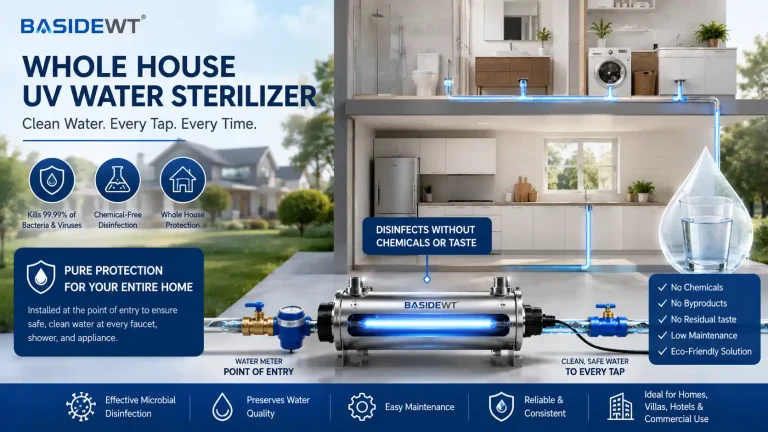
Whole House UV Water Sterilizer: How It Works and When You Need One
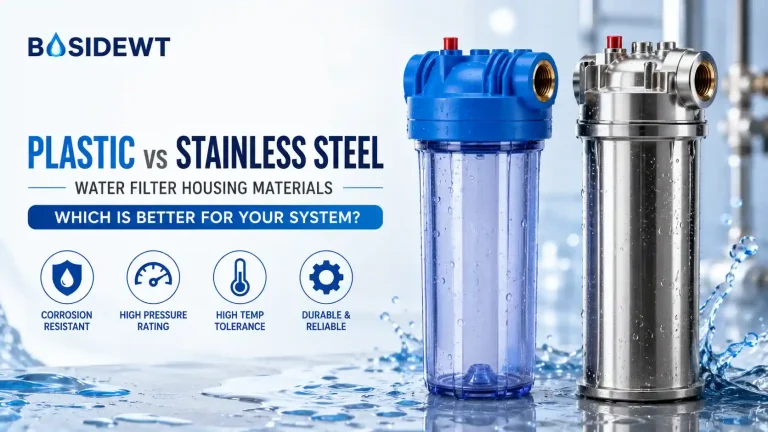
Water Filter Housing Materials: Plastic vs Stainless Steel – Which Is Better?
Best Water Softener System: Complete Buyer’s Guide Before You Purchase
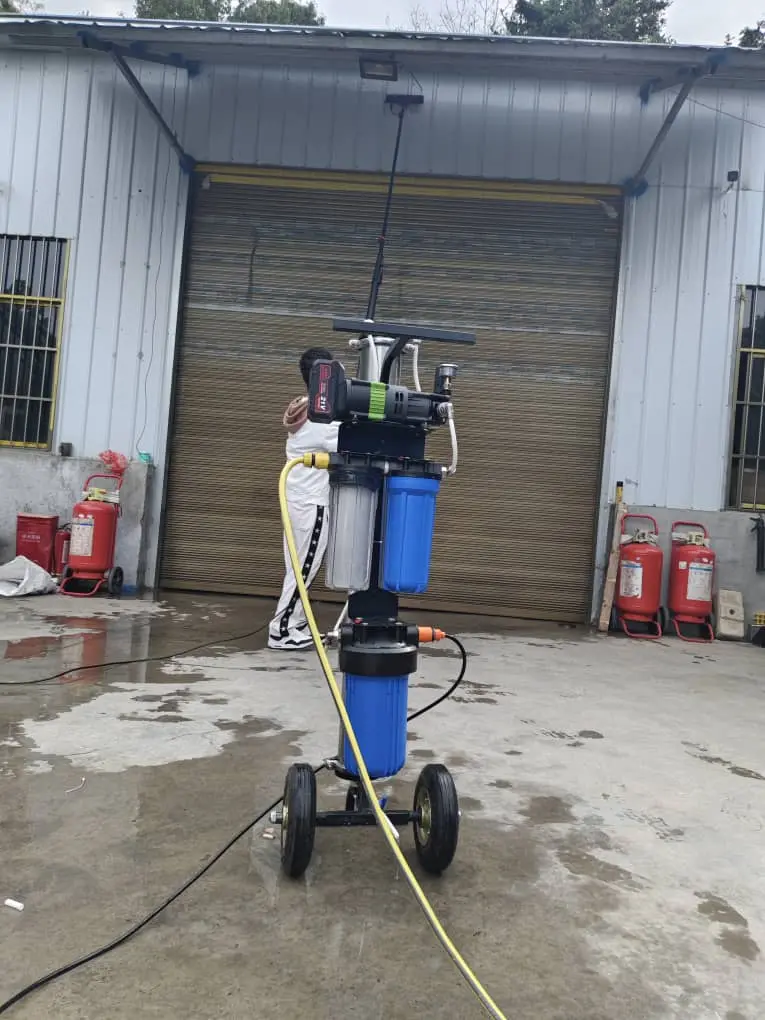
Water Fed Pole System: Complete Guide to Pure Water Window Cleaning
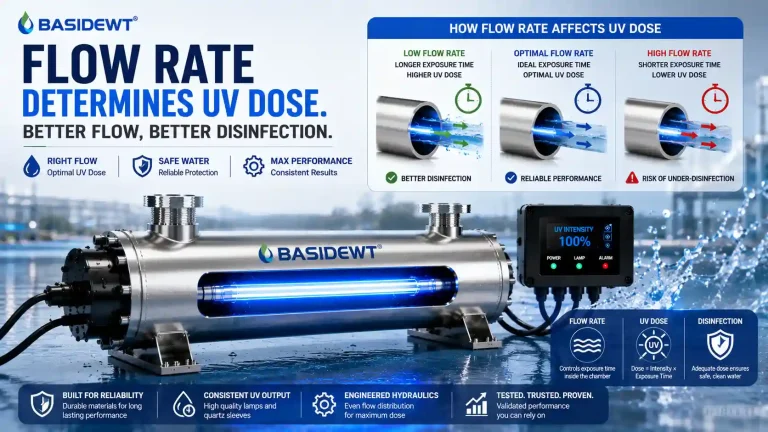
How Flow Rate Affects UV Dose and Disinfection Performance